
By William H. Benson
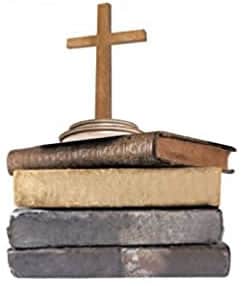
The Parallel Lives
Of The NOBLE AMERICAN RELIGIOUS THINKERS AND BELIEVERS:
Roger Williams VS. Cotton Mathers

NEW ARTICLES
Two Veterans
Two Veterans
David McCullough, biographer and historian, passed away on August 7, 2022, at age 89. His biographies—on Harry Truman, John Adams, and Theodore Roosevelt; and his histories on the Johnstown Flood, the Panama Canal, and the Brooklyn Bridge—earned him prizes and fame.
In addition to writing, McCullough was the primary narrator on several documentaries, including Ken Burns’s nine episodes on “The Civil War,” first aired the last week of September of 1990, thirty-two years ago. His gentleman’s voice carried the series: calm, factual, without emotion.
His first words in the first episode: “The Civil War was fought in ten thousand places. More than three million fought in the war, and 600,000, 2% of the population, died in it. Americans slaughtered one another wholesale, here in America, in corn fields and in peach orchards.”
Minutes later he says, “Two ordinary soldiers: one from Providence, Rhode Island, and the other from Columbia, Tennessee, who each served four years, and both seemed to be everywhere during the war, and yet lived to tell the tale.” The two fought on opposing sides, and neither were killed in battle.
Sam R. Watkins fought for the Confederacy. From Columbia, Tennessee, he enlisted in the spring of 1861, at the age of 21, and served in Company H of the First Tennessee Infantry.
Elisha Hunt Rhodes fought for the Union. From Pawtuxet, Rhode Island, he enlisted on June 5, 1861, at the age of 19, and served in Companies C and B, of the 2nd Rhode Island Volunteer Infantry.
Watkins saw action mainly in the western states, at the bloody battles at Chickamauga, and at Franklin, Tennessee, among several others.
Rhodes saw action mainly in the eastern states, from the First Bull Run Battle in 1861; through Antietam, Fredericksburg, and Gettysburg; to the end at Appomattox Court House, Virginia, in 1865.
Watkins wrote a memoir twenty years after the war, that he published in 1882, “Company Aytch [H], A Side Show of the Big Show: A Memoir of the Civil War.”
Rhodes kept a journal and wrote letters to family at home, that his great-grandson, Robert H. Rhodes, published in 1985, “All For the Union! Civil War Diary and Letters of Elisha Hunt Rhodes.”
Whereas Watkins wrote his memoir twenty years after the events occurred, Rhodes jotted his entries into his journal and letters as they happened. Watkins’s is more reflective; Rhodes’s is more immediate. Yet, each provide a wealth of details for a serious Civil War student.
In “Company Aytch,” the Confederate Watkins says, “A soldier’s life is not a pleasant one. It is always at best, one of privations and hardships. The emotions of patriotism and pleasure hardly counterbalance the toil and suffering that he has to undergo to enjoy his patriotism and pleasure.
“Dying on the field of battle and glory is about the easiest duty a soldier has to undergo.”
Towards the end of Watkins’s memoir, he admits, “Our cause was lost from the beginning. Our greatest victories—at Chickamauga and Franklin—were our greatest defeats. Our people were divided upon the question of Union and secession. The private soldier fought and starved and died for naught.”
On July 4, 1864, the Union soldier, Elisha Hunt Rhodes, wrote, “A glorious 4th has come again, and we have had quite a celebration with guns firing shot and shell into Petersburg to remind them [the Confederates] of the day. This day marks four 4th of July’s I have passed in the army.
“A first at Camp Clark, a second at Harrison’s Landing, a third at Gettysburg, and today at Petersburg.”
Towards the end of Rhodes’s memoir, he writes, “I have been successful in my army life simply because I have been ready and willing to do my duty. I have endured this life for nearly four years, and I sometimes think that I enjoy it.
“Great events are to happen in a few days, and I want to be there to see the end. The end of the war will be the end of slavery, and then our land will be the Land of the Free.”
One wonders why those two soldiers survived four years of one bloody battle after another when hundreds of thousands of other young men were wounded, maimed, or killed? There is no easy answer.
Ken Burns incorporated the two soldiers’ words from their respective books into the nine episodes of his “Civil War” series, and so viewers listened as narrators read the two men’s words.
Watkins said, “America has no north, no south, no east, no west. The sun rises over the hills and sets over the mountains. The compass just points up and down. And we can laugh now at the absurd notion of there being a north or a south. We are one and undivided.”
Rhodes said, “Sunday, a Soldier of Company A died and was buried. Everything went on as if nothing had happened. Death is so common that little sentiment is wasted. It is not like death at home.”
Veterans Day, 2022. It is sobering—a jolt to our far easier and soft lives—to reflect upon all that those two soldiers, only in their early twenties, suffered and endured, and they were very lucky.
Bill Benson, of Sterling, is a dedicated historian.
FREIDRICH VON SPEE
FREIDRICH VON SPEEFREIDRICH VON SPEE by William H. Benson October 25, 2001 In 1631 Freidrich von Spee (pronounced Shpay) published his book Cautio Criminalis which means Precautions for Prosecutors. In it he exposed the Church/State's brand of terrorism against,...
ROGER WILLIAMS – SEPARATION OF CHURCH AND STATE
ROGER WILLIAMS SEPARATION OF CHURCH AND STATEROGER WILLIAMS - SEPARATION OF CHURCH AND STATE by William H. Benson October 11, 2001 Almost immediately upon his arrival in 1631 at Massachusetts Bay, Roger Williams argued with the colony's governing church...
“It Ain’t Necessarily So”
"It Ain't Necessarily So""It Ain't Necessarily So" by William H. Benson September 27, 2001 George Gershwin was born on September 26, 1898, and thirty-seven years later, almost to the day, his musical Porgy & Bess premiered in Boston. One of the big hits from...
MYSTERY WRITERS
MYSTERY WRITERSMYSTERY WRITERS by William H. Benson September 13, 2001 Last Saturday evening on television John Travolta played the starring character in the movie, "Get Shorty", adapted from a book written by the mystery writer, Elmore Leonard. To read any of...
LABOR DAY
LABOR DAYLABOR DAY by William H. Benson August 30, 2001 The Labor Day weekend approaches--a welcome relief. It means that summer is about over, and school has begun. Labor Day honors the nation's working people, sometimes called the laborforce or the...
CHANCE
CHANCECHANCE by William H. Benson August 16, 2001 There is a word that has inspired more hope and opened more new lands than any other, and that word is gold. On August 17, 1896 three guys (whom no one today remembers) -- George Carmack, Skookum Jim, and...
Older Posts
KATHARINE GRAHAM
KATHARINE GRAHAMKATHARINE GRAHAMby William H. BensonAugust 2, 2001 The right to criticize our government and its leaders extends back beyond the Constitution to the colonial days. On August 4, 1735 the New York Governor William Cosby acquitted John Peter Zenger,...
WOMEN’S RIGHTS
WOMEN'S RIGHTSWOMEN'S RIGHTS by William H. Benson July 19, 2001 Anna Quindlen, the "Newsweek" columnist, describes her defining moment as a mother when she walked into the pediatrician's waiting room with two children under the age of five, and she herself...
JOHN ADAMS
JOHN ADAMSJOHN ADAMSby William H. BensonJuly 4, 2001 Both John Adams and Thomas Jefferson died on the same day, July 4, 1826, exactly fifty years to the day after the 2nd Continental Congress had voted for Independence for the thirteen colonies. Despite...
CUSTER AT THE LITTLE BIG HORN
CUSTER AT THE LITTLE BIG HORNCUSTER AT THE LITTLE BIG HORNby William H. BensonJune 25, 2001 What Custer did not know was that the village of Native Americans--Sioux, Cheyenne, and Arapaho--had swelled in just a week's time from 3000 to 7000 people, from 800 to at...
ANNE FRANK
ANNE FRANKANNE FRANK by William H. Benson June 6, 1944 In his recent book The O'Reilly Factor Bill O'Reilly wrote that the mean-spirited and truly evil- minded people of the world have a run of power, but only for so long, and then they are over powered. For...
GRADUATION
GRADUATIONGRADUATION by William H. Benson May 24, 2001 On May 26, 1954 archaeologists digging in the sand next to Cheops's Great Pyramid at Giza discovered a pit carved into the bedrock and covered with blocks of stone. Once inside, the Egyptianologists found a...

One of University of Northern Colorado’s 2020 Honored Alumni
William H. Benson
Local has provided scholarships for history students for 15 years
A Sterling resident is among five alumni selected to be recognized this year by the University of Northern Colorado. Bill Benson is one of college’s 2020 Honored Alumni.
Each year UNC honors alumni in recognition for their outstanding contributions to the college, their profession and their community. This year’s honorees were to be recognized at an awards ceremony on March 27, but due to the COVID-19 outbreak that event has been cancelled. Instead UNC will recognize the honorees in the fall during homecoming Oct. 10 and 11……
Newspaper Columns

The Duodecimal System
For centuries, the ancient Romans calculated sums with their clunky numerals: I, V, X, L, C, D, and M; or one, five, ten, 50, 100, 500, and 1,000. They knew nothing better.

The Thirteenth Amendment
On Jan. 1, 1863, President Abraham Lincoln signed the Emancipation Proclamation, and by it, he declared that “all persons held as slaves” within the rebellious states “are and henceforward shall be free.” Lincoln’s Proclamation freed some 3.1 million slaves within the Confederacy.

The Fourteenth Amendment
After Congress and enough states ratified the thirteenth amendment that terminated slavery, Congress passed the Civil Rights Act of 1866. This law declared that “all people born in the United States are entitled to be citizens, without regard to race, color, or previous condition of slavery or involuntary servitude.” The Act equated birth to citizenship.

The New-York Packet and the Constitution
Jill Lepore, the Harvard historian, published her newest book a month ago, These Truths: A History of the United States. In a short introduction, she describes in detail the Oct. 30, 1787 edition of a semi-weekly newspaper, The New-York Packet.
Mr. Benson’s writings on the U.S. Constitution are a great addition to the South Platte Sentinel. Its inspiring to see the history of the highest laws of this country passed on to others.
– Richard Hogan
Mr. Benson, I cannot thank you enough for this scholarship. As a first-generation college student, the prospect of finding a way to afford college is a very daunting one. Thanks to your generous donation, my dream of attending UNC and continuing my success here is far more achievable
– Cedric Sage Nixon
Donec bibendum tortor non vestibulum dapibus. Cras id tempor risus. Curabitur eu dui pellentesque, pharetra purus viverra.
– Extra Times
FUTURE BOOKS
- Thomas Paine vs. George Whitefield
- Ralph Waldo Emerson vs. Joseph Smith
- William James vs. Mary Baker Eddy
- Mark Twain vs. Billy Graham
- Henry Louis Mencken vs. Jim Bakker
