
By William H. Benson
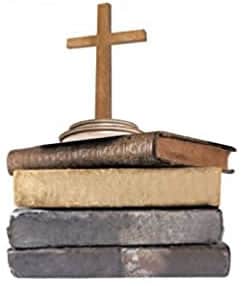
The Parallel Lives
Of The NOBLE AMERICAN RELIGIOUS THINKERS AND BELIEVERS:
Roger Williams VS. Cotton Mathers

NEW ARTICLES
To Prepare for the University
Ramsey ridicules the idea that high school graduates should embark upon an expensive university course toward a degree that has little chance of generating income.
His most often-cited example is “German polka dancing.” Such a course may exist, but one knows it is not worthwhile. Another scapegoat is “basketweaving.” Another I heard years ago is to study the works of the Spanish poet and playwright, Lope de Vega.
Yes, there are courses of study at the university considered soft, with little potential.
Some courses considered difficult but with far greater potential include: Engineering, Physics, Mathematics, Biology, Chemistry, Business Law, Medicine, and Accounting. Some considered of medium difficulty include: Music, History, English, Geography, Political Science.
Yet, most all courses at the university level demand hours of study, lots of exams, and stress.
Before enrolling at a university, students should consider a course’s level of difficulty, their preferences, skills, intelligence, and whether that degree will translate into paid employment.
Nat King Cole started as a jazz pianist in the late 1930’s, but he transitioned into a solo vocalist career and enjoyed remarkable success in the 1950’s. He explained, “singing had greater commercial appeal than did the piano.” Few can forget his signature song, “Unforgettable.”
In mid-twentieth century, one college student dared to approach the wildly successful novelist James Michener and ask for an interview. The two met. Michener told the student,
“Nothing that I studied in college has been of use to me in my various jobs. But what I did learn was how to learn, how to organize, how to write term papers.”
Indeed, Michener wins the prize for the hardest working novelist. He said that to write a 500,000 word book, like “Hawaii,” he had to type some 3 million words and then cut most of the rough draft pages.
He consulted several thousand research books. He conducted 200 personal interviews. He told the student, “When I was finally ready to write, I rented a bare-wall, no-telephone Waikiki room and stuck at my typewriter every morning for eighteen months, seven days a week.”
Michener admonished college students. “They fail to realize that men and women who wish to accomplish anything must apply themselves to tasks of tremendous magnitude. The good work of the world is accomplished by people who dedicate themselves to the big tasks at hand.
“Adults who are unwilling to reeducate themselves are doomed to mediocrity. The best a college can do is to inspire a student with the urge to reeducate him or herself constantly.”
I say all knowledge has some value, even if modest. Two examples follow.
On May 5, 1809, President James Madison signed a patent to Mary Kies, the first American woman to receive a patent, for her straw-and-silk weaving technique to create hats, not baskets.
Jonathan Bate ended his 1997 book, “The Genius of Shakespeare,” with a nod to Lope de Vega. Bate wrote, “Lope de Vega was the Mozart of Literature.”
“Shakespeare wrote between 30 and 40 plays. Lope de Vega—who lived concurrent with Shakespeare, but in Spain—wrote between 500 and 1800, although only 300 survive.”
To acquire knowledge on any subject is not a bad thing, but one should consider, “Will it provide me with employment and income?” Another question, “Will I enjoy the work once I have the education and training?” A final question, “How much debt will I incur?”
I wish for those students university-bound the best luck. College is page-by-page, or one baby step after another. I envy you.
People and their specializations
During the first World War, Henry Ford brought suit against the “Chicago Tribune,” because a reporter wrote that Ford was an “ignoramus.” At the trial, the newspaper’s attorneys peppered Ford with trivia questions, each designed to prove Ford’s ignorance. To each...
Thoughts on Jack Nicholson
Columbia Pictures released “Easy Rider” on July 14, 1969, fifty-five years ago last Sunday. I missed seeing it that summer, because I was busy on the farm driving a 92 Massey Harris combine in wheat harvest. I missed the film later, because I was busy my sophomore...
Frederick Douglass’s Speech, July 5, 1852
At the inception of America’s Revolutionary War against King George III and Parliament, certain Pennsylvania Quakers urged a policy of abolishment of slavery within their colony. In 1775, a Quaker named Anthony Benezet founded the Pennsylvania Society for the...
Incarceration of celebrities and a president
In 2022, a jury convicted Elizabeth Holmes, founder of biotech firm Theranos, of four counts of defrauding investors. A judge sentenced Holmes to 11 years and 3 months in prison. The film producer Harvey Weinstein was declared guilty of inappropriate relations with...
Desegregation at Little Rock’s Central High School in 1957
Last time in these pages I discussed the Supreme Court’s decision in the 1954 Brown v. Board of Education case, out of Topeka, Kansas. It attempted to rollback the premise that, if schools were “equal” in quality, then they may remain “separated” between blacks and...
Brown vs. Board of Education of Topeka, Kansas
In Topeka, Kansas, on February 20, 1943, a black girl named Linda Brown was born. When still a child in the early 1950’s, her father, Oliver Brown, was required to drive Linda to an all-black school five miles across Topeka, when an all-white school, the Sumner...
Older Posts
Memoirs and mothers
In 1995, the author David Pelzer’s book, “A Child Called It,” was first published. In it, he claimed that his mother beat him, starved him, terrorized him, and banished him to the garage, where he slept on a cot. Gruesome beyond words, the book sold 1.6 million copies in five years.
I read it then and thought throughout, “No mother would do that.”
In 1996, Frank McCourt’s book, “Angela’s Ashes: A Memoir,” was first published. In it, he listed his impressions as a child growing up in poverty-stricken
Thoughts on College Bowl and University Challenge
The quiz show, “College Bowl,” was first broadcast on radio in 1953, 71 years ago. The show transitioned to television in 1959 and stayed there until 1970. Its first host was Allen Ludden, the future husband of Betty White. He hosted the show until 1962 when he left...
4th Amendment: Sections 4 and 5
Two weeks ago in these pages, I looked at the second and third sections of the 14th Amendment. Today I continue with its two final sections, the fourth and the fifth. Section 4 clarifies which debts the U.S. Federal government will honor as valid. The first sentence...
4th Amendment: Sections 2 and 3
Last time in these pages I looked at Section 1 of the 14th Amendment. Today I continue. The last phrase in Section 1 of the 14th Amendment declares that no state can “deny to any person within its jurisdiction the equal protection of the law.” All races are equal...
14th Amendment, Section 1
In early 1866, the Joint Committee of Fifteen on Reconstruction in the 39th Congress wrestled with the idea that they must write a 14th Amendment to address certain issues: Who is a citizen? How does the country’s laws apply to former slaves and slave owners? Will...

Black History Month: Reconstruction, 1865-1866
In December of 1863, in the midst of the Civil War, President Abraham Lincoln suggested a plan to reinstate the seceded states back into the Union, his “Ten Percent Plan.”
He would permit each Confederate state to form a new state government after ten percent of the voters in a state took loyalty oaths to the Union and recognized the former slaves’ freedom.
Following Lincoln’s assassination on April 9, 1865, his successor, former Vice-President Andrew Johnson, decided to run with Lincoln’s Ten Percent Plan.
Throughout the summer and fall of 1866, the Southern states

One of University of Northern Colorado’s 2020 Honored Alumni
William H. Benson
Local has provided scholarships for history students for 15 years
A Sterling resident is among five alumni selected to be recognized this year by the University of Northern Colorado. Bill Benson is one of college’s 2020 Honored Alumni.
Each year UNC honors alumni in recognition for their outstanding contributions to the college, their profession and their community. This year’s honorees were to be recognized at an awards ceremony on March 27, but due to the COVID-19 outbreak that event has been cancelled. Instead UNC will recognize the honorees in the fall during homecoming Oct. 10 and 11……
Newspaper Columns

The Duodecimal System
For centuries, the ancient Romans calculated sums with their clunky numerals: I, V, X, L, C, D, and M; or one, five, ten, 50, 100, 500, and 1,000. They knew nothing better.

The Thirteenth Amendment
On Jan. 1, 1863, President Abraham Lincoln signed the Emancipation Proclamation, and by it, he declared that “all persons held as slaves” within the rebellious states “are and henceforward shall be free.” Lincoln’s Proclamation freed some 3.1 million slaves within the Confederacy.

The Fourteenth Amendment
After Congress and enough states ratified the thirteenth amendment that terminated slavery, Congress passed the Civil Rights Act of 1866. This law declared that “all people born in the United States are entitled to be citizens, without regard to race, color, or previous condition of slavery or involuntary servitude.” The Act equated birth to citizenship.

The New-York Packet and the Constitution
Jill Lepore, the Harvard historian, published her newest book a month ago, These Truths: A History of the United States. In a short introduction, she describes in detail the Oct. 30, 1787 edition of a semi-weekly newspaper, The New-York Packet.
Mr. Benson’s writings on the U.S. Constitution are a great addition to the South Platte Sentinel. Its inspiring to see the history of the highest laws of this country passed on to others.
– Richard Hogan
Mr. Benson, I cannot thank you enough for this scholarship. As a first-generation college student, the prospect of finding a way to afford college is a very daunting one. Thanks to your generous donation, my dream of attending UNC and continuing my success here is far more achievable
– Cedric Sage Nixon
Donec bibendum tortor non vestibulum dapibus. Cras id tempor risus. Curabitur eu dui pellentesque, pharetra purus viverra.
– Extra Times
FUTURE BOOKS
- Thomas Paine vs. George Whitefield
- Ralph Waldo Emerson vs. Joseph Smith
- William James vs. Mary Baker Eddy
- Mark Twain vs. Billy Graham
- Henry Louis Mencken vs. Jim Bakker
