
By William H. Benson
The Parallel Lives
Of The NOBLE AMERICAN RELIGIOUS THINKERS AND BELIEVERS:
Roger Williams VS. Cotton Mathers

NEW ARTICLES
Tact
Tact
News broke early this month that school officials at New York University fired an adjunct organic chemistry professor named Dr. Maitland Jones, after 82 of his class of 350 students signed a petition, that charged Jones with making the class too hard. The mean grade on one midterm was 30%.
In their petition, the students did not ask school officials to terminate Jones’s employment, but just to address his degree of difficulty when grading.
Jones is eighty-four years old, and was a well-respected and long-time professor at Princeton, where he wrote 225 academic papers, plus the 1300-page textbook, “Organic Chemistry.”
In his defense he said that the students, “weren’t coming to class; that’s for sure. They weren’t watching the videos, and they weren’t able to answer the questions. Students were misreading exam questions at an astonishing rate.”
Some sided with Jones, saying that organic chemistry is, by its nature, hard, “that it has a mythical status as one of the most difficult classes in undergrad science education, and that it serves as a filter or a gatekeeper to determine which students get into medical school,” and which do not.
Another chemistry professor at NYU, Paramjit Arora, said, “[Jones] learned to teach during a time when the goal was to teach at a very high and rigorous level. We hope that students will see that putting them through that rigor is doing them good.”
To succeed at organic chemistry, a student must learn “to mix memorization and problem-solving. She or he must commit to memory dozens of flow charts, as each type of reaction will need different conditions and catalysts depending on the precise nature of the starting materials.”
Once a student has jammed the flowcharts into his or her memory banks, she or he can then solve problems, “which combinations of reactions will build simple raw materials into a complex chemical, like an antibiotic or a polymer.”
John Beckman, NYU official said, that the school was justified in terminating Jones, because “his course evaluation scores were the worst of any undergraduate science courses, and multiple student complaints about his dismissiveness, unresponsiveness, condescension, and opacity about grading.”
Was Dr. Maitland Jones too hard? Or were the students unprepared for a course of this difficulty, or were they failing to work hard to the level required? The truth lies somewhere in between.
This past weekend I attended my fifty-year high school class reunion. I listened to numerous stories of my fellow students’ lives: where they lived now, what educations they attained, what careers they completed, and what families they created.
One friend explained that in the 1970s, he was studying music at the University of Northern Colorado, when his Music Theory professor suggested that he should drop the course, that he had an “F” now, that it would not improve much, and that he should drop Music and study Speech instead.
So my friend said he stopped studying Music one day, and began to study Radio and Television production in the Speech and Communications department the next. After graduation he worked at a station in Denver, producing television shows. He enjoyed it, but he still longed to play music.
He began playing classic rock on his guitar evenings wherever asked, and was soon making more money than he did at his day job. At one point he grew tired of playing a prescribed set of songs, and began to request songs from his audiences, for fun, too keep him sharp and ready.
He said, “that decision saved my career. If no one in the audience mentioned a song, I would just stand there, on stage, with guitar in hand, and wait until someone did.” His audiences dictated his performances, what he played, what he sang.
I find my friend’s story most interesting. His level of knowledge of playing and singing classic rock guitar songs was so deep that whatever the audience tossed at him, he could play it, in an instant, with little thought. Because he had memorized hundreds of flowcharts, his confidence soared.
Columbus’s “Nina” and “Pinta” were caravels, ships with lateen or triangular-shaped sails, that allowed them to tact, that is to “sail in a forward zig-zag direction against a headwind.” In other words, moving sideways, at an angle, the ship could make forward progress into a headwind.
To master any body of knowledge—albeit chemistry or music—requires a trained mind, the ability to imagine files and rows and cells on a spreadsheet, a series of flowcharts, or an entire wall of pigeon-holes, and in each cell or pigeon hole lies an incredible amount of data, available to withdraw and use.
In life, we sometimes have a tailwind, and we soar. Other times a crosswind, like Music Theory or Organic Chemistry, flips us over. Yet, sometimes we face worse, a ferocious headwind, and it is then that we learn to tact, at a forty-five degree angle, in a zig-zag style, making slow progress forward.
IMPEACHMENT
IMPEACHMENTIMPEACHMENT by William H. Benson May 10, 2001 Just weeks after gaining the Vice-Presidency, Andrew Johnson moved into the White House and the Oval Office after John Wilkes Booth had done his damage in Ford's Theatre. The new President sought to...
CHERNOBYL
CHERNOBYLCHERNOBYL by William H. Benson April 26, 2001 Mount Vesuvius covered Pompei. An earthquake struck San Francisco. The Titanic bumped an ice berg and sank, and the Hindenburg was destroyed by fire at a tower mooring. But the world's biggest and worst...
BRUCE CATTON
BRUCE CATTONBRUCE CATTON by William H. Benson April 12, 2001 My favorite writer on the Civil War is Bruce Catton. He wrote easy-to-read and popularized versions of the Civil War that still line the shelves of most libraries. At age 49 Bruce chucked...
TIME
TIMETIME by William H. Benson March 29, 2001 Time travel has always fascinated. The ancient Egyptian pharaohs' wanted to preserve their bodies to travel forward into that future world; hence, the need for pyramids and mummification. In H. G. Wells's...
FRANK McCOURT
FRANK McCOURTFRANK McCOURT by William H. Benson March 15, 2001 On St. Patrick's Day we ordinarily think of green, an Emerald Island, shamrocks, four-leaf clovers, and leprechauns that dispense lucky charms. We understand that, except for the green, this...
DR. SEUSS
DR. SEUSSDR. SEUSS by William H. Benson March 1, 2001 A couple of weeks ago in her Newsweek column, Anna Quindlen wrote about the importance of pre-school education. "Children, it turns out, begin learning at an astonishingly early age. . . . Toddlers are...
Older Posts
PRESIDENTS DAY
PRESIDENTS DAYPRESIDENTS DAY by William H. Benson February 15, 2001 There is the joke about a guy who asks a taxi-cab driver in New York City how to get to Carnegie Hall. The taxi-cab driver smiles and replies, "Practice, practice, practice." The joke...
THE SUPREME COURT
THE SUPREME COURTTHE SUPREME COURT by William H. Benson February 1, 2001 With his left hand on the Bible and his right hand raised, George W. Bush stood before Chief Justice William H. Rehnquist and swore to uphold the Constitution while members of Congress and...
AFGHANISTAN
AFGHANISTANAFGHANISTAN by William H. Benson January 18, 2001 Afghanistan was again in the news in a small blurb on the back page. The ruling group, called the Taliban, imposed the death penalty for anyone who converts from Islam to another religion. ...
VINCE LOMBARDI
VINCE LOMBARDIVINCE LOMBARDI by William H. Benson January 3, 2001 As a boy growing up in the 1960's, I believed that there was really only ONE great professional football team--the Green Bay Packers. I also believed that there was only ONE great...
JOHN WALKER LINDH
JOHN WALKER LINDHJOHN WALKER LINDH by William H. Benson January 3, 2001 Born on January 3, 106 B.C., Cicero, the Roman orator, politician, and philosopher sent his son, Marcus, to study in Athens, the center of Greek learning. Soon, reports floated back...
CLOSE ELECTIONS
CLOSE ELECTIONSCLOSE ELECTIONS by William H. Benson December 21, 2000 Along with the legal debacle that followed the 2000 Presidential election, pieces of the past jumped forward into the present. Bush and Gore as well as the media reached back into the past for...
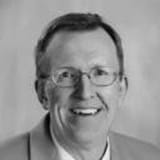
One of University of Northern Colorado’s 2020 Honored Alumni
William H. Benson
Local has provided scholarships for history students for 15 years
A Sterling resident is among five alumni selected to be recognized this year by the University of Northern Colorado. Bill Benson is one of college’s 2020 Honored Alumni.
Each year UNC honors alumni in recognition for their outstanding contributions to the college, their profession and their community. This year’s honorees were to be recognized at an awards ceremony on March 27, but due to the COVID-19 outbreak that event has been cancelled. Instead UNC will recognize the honorees in the fall during homecoming Oct. 10 and 11……
Newspaper Columns

The Duodecimal System
For centuries, the ancient Romans calculated sums with their clunky numerals: I, V, X, L, C, D, and M; or one, five, ten, 50, 100, 500, and 1,000. They knew nothing better.

The Thirteenth Amendment
On Jan. 1, 1863, President Abraham Lincoln signed the Emancipation Proclamation, and by it, he declared that “all persons held as slaves” within the rebellious states “are and henceforward shall be free.” Lincoln’s Proclamation freed some 3.1 million slaves within the Confederacy.

The Fourteenth Amendment
After Congress and enough states ratified the thirteenth amendment that terminated slavery, Congress passed the Civil Rights Act of 1866. This law declared that “all people born in the United States are entitled to be citizens, without regard to race, color, or previous condition of slavery or involuntary servitude.” The Act equated birth to citizenship.

The New-York Packet and the Constitution
Jill Lepore, the Harvard historian, published her newest book a month ago, These Truths: A History of the United States. In a short introduction, she describes in detail the Oct. 30, 1787 edition of a semi-weekly newspaper, The New-York Packet.
Mr. Benson’s writings on the U.S. Constitution are a great addition to the South Platte Sentinel. Its inspiring to see the history of the highest laws of this country passed on to others.
– Richard Hogan
Mr. Benson, I cannot thank you enough for this scholarship. As a first-generation college student, the prospect of finding a way to afford college is a very daunting one. Thanks to your generous donation, my dream of attending UNC and continuing my success here is far more achievable
– Cedric Sage Nixon
Donec bibendum tortor non vestibulum dapibus. Cras id tempor risus. Curabitur eu dui pellentesque, pharetra purus viverra.
– Extra Times
FUTURE BOOKS
- Thomas Paine vs. George Whitefield
- Ralph Waldo Emerson vs. Joseph Smith
- William James vs. Mary Baker Eddy
- Mark Twain vs. Billy Graham
- Henry Louis Mencken vs. Jim Bakker
