
By William H. Benson
The Parallel Lives
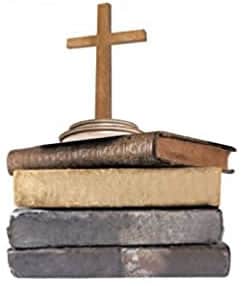
Of The NOBLE AMERICAN RELIGIOUS THINKERS AND BELIEVERS:
Roger Williams VS. Cotton Mathers

NEW ARTICLES

‘On Writing’ and ‘Why I Write’
‘On Writing’ and ‘Why I Write’
In the year 2000, the horror fiction writer Stephen King came out with a different kind of book, a nonfiction book that he entitled, “On Writing: a Memoir of the Craft.” He begins with a series of scenes from his childhood, and explains how he launched his career of writing popular fiction.
King uses a metaphor, that of a toolbox, to describe how he works when he writes. At the bottom of the toolbox lie the fundamentals: appropriate vocabulary, sticking with accepted grammar, the use of active verbs rather than passive, and avoiding adverbs.
The toolbox’s second layer contains distinct styles: light, thin, and airy fluff; or serious and detailed information. Often the reading audience determines an appropriate style. King points out that dense and packed paragraphs are for scholars, but thin, underweighted paragraphs make reading easier.
King offers an opinion. “The paragraph, not the sentence, is the basic unit of writing.” In other words, he urges writers to write a functional paragraph—one with a topic sentence and a number of supporting sentences—rather than a series of sentences strung together without reason.
Winston Churchill once glared at a dessert, and shouted, “Take away this pudding. It has no theme.”
The toolbox’s third and top layer contains wisdom and good judgment; in other words, selecting the right tool for the job. A hammer will nail down a screw, but a screwdriver works better.
For example, leave out humor, satire, and ridicule when describing a crime or battle scene, and steer clear of a hostile, strident, or even angry tone. Leave that for the zealots and demagogues.
Stephen King advises all want-to-be writers to “Read a lot, and write a lot.” He says to read all kinds, good or even excellent written works, as well as mediocre and rotten, just to gain the experience of knowing what sparkles and what shines dim.
He says that he “reads seventy to eighty books every year, mostly fiction.” Because he writes for several hours every morning, he reads every afternoon.
King remains infatuated with Strunk and White’s small text of 78 pages, “The Elements of Style,” a standard for College Freshman composition classes. Although some writers have jettisoned this classic work, King believes that the list of 21 suggestions at the book’s end points writers in a good direction.
“1. Place yourself in the background. 2. Write in a way that comes naturally. 3. Work from a suitable design. 4. Write with nouns and verbs. 5. Revise and rewrite. 6. Do not overwrite. 7. Do not overstate. And, 21. Prefer the standard to the offbeat. ie. Steer clear of the eccentricities in language.”
Stephen King’s advice to writers holds merit, but not all enjoy his horror fiction. Others may prefer non-fiction: an essay, an opinion column, a history, a memoir, a sketch of an event, or a biography. Yet, King’s tool box remains, for the most part, the same for both fiction and non-fiction writers.
In 1946, a British author named George Orwell wrote an essay that he entitled, “Why I Write.” He gave four reasons: sheer egoism, a desire to seem clever; aesthetic enthusiasm, the beauty in words and phrases; historical impulse, a wish to identify “true facts and store them up for posterity’s use.”
His fourth reason, political purpose, is “a desire to push the world in a certain direction, to alter other people’s idea of the kind of society that they should strive after.”
Orwell wrote in the mid-twentieth century, a time when the democracies of the world were under attack, when totalitarian governments were on the rise, when the outcome of the conflict was unknown.
He said, “The Spanish war and other events in 1936-7 turned the scale. Every line of serious work that I have written since 1936 has been written against totalitarianism and for a democratic” form of government. “It seems nonsense to think that one can avoid writing of such subjects.”
Toward the end of the essay, Orwell underscores Strunk and White’s first suggestion. He writes, “And yet it is also true that one can write nothing readable unless one constantly struggles to efface one’s own personality.” In other words, he wants to “place himself in the background.”
Orwell then finishes the essay, with a startling sentence.
“And looking back through my work, I see that it is invariably where I lacked a political purpose that I wrote lifeless books and was betrayed into purple passages, sentences without meaning, decorative adjectives, and humbug generally.”
Orwell believed that he wrote his best pieces when he wrote with a political purpose, when he tried, “to push the world in a certain direction, to alter people’s idea about the proper society,” to suggest a better path for a government and its people to follow. Courageous he was.
Although Stephen King wanted to entertain, and George Orwell wanted to change the way people thought about political issues, yet each relied upon tools from similar toolboxes.
One final thought, writing well requires years of diligent effort. Chaucer said, “Not years enough, in life so short, to learn a craft so long.”
Bill Benson, of Sterling, is a dedicated historian.
PRESIDENTS DAY
PRESIDENTS DAYPRESIDENTS DAY by William H. Benson February 15, 2001 There is the joke about a guy who asks a taxi-cab driver in New York City how to get to Carnegie Hall. The taxi-cab driver smiles and replies, "Practice, practice, practice." The joke...
THE SUPREME COURT
THE SUPREME COURTTHE SUPREME COURT by William H. Benson February 1, 2001 With his left hand on the Bible and his right hand raised, George W. Bush stood before Chief Justice William H. Rehnquist and swore to uphold the Constitution while members of Congress and...
AFGHANISTAN
AFGHANISTANAFGHANISTAN by William H. Benson January 18, 2001 Afghanistan was again in the news in a small blurb on the back page. The ruling group, called the Taliban, imposed the death penalty for anyone who converts from Islam to another religion. ...
VINCE LOMBARDI
VINCE LOMBARDIVINCE LOMBARDI by William H. Benson January 3, 2001 As a boy growing up in the 1960's, I believed that there was really only ONE great professional football team--the Green Bay Packers. I also believed that there was only ONE great...
JOHN WALKER LINDH
JOHN WALKER LINDHJOHN WALKER LINDH by William H. Benson January 3, 2001 Born on January 3, 106 B.C., Cicero, the Roman orator, politician, and philosopher sent his son, Marcus, to study in Athens, the center of Greek learning. Soon, reports floated back...
CLOSE ELECTIONS
CLOSE ELECTIONSCLOSE ELECTIONS by William H. Benson December 21, 2000 Along with the legal debacle that followed the 2000 Presidential election, pieces of the past jumped forward into the present. Bush and Gore as well as the media reached back into the past for...
Older Posts
PEARL HARBOR
PEARL HARBORPEARL HARBOR by William H. Benson December 7, 2000 At first, Admiral Isoroku Yamamoto refused to consider attacking the U.S. He had lived and studied in the U.S. in the 1920's and had also served as a Japanese attache in Washington. He fully...
ELOQUENCE AT GETTYSBURG
ELOQUENCE AT GETTYSBURGELOQUENCE AT GETTYSBURG by William H. Benson November 22, 2000 At the dedication of the cemetery at Gettyburg, Pennsylvania on November 19, 1863, the featured oration was delivered by Edward Everett, the prominent orator, and following him...
ARMISTICE DAY
ARMISTICE DAYARMISTICE DAY by William H. Benson November 9, 2000 The Great War introduced to the world the trench--an end-to-end grave, international in length. Deep gashes in the idyllic French countryside, the trenches became the scenes of repeated mass...
PALESTINIAN VS. ISRAELI
PALESTINIAN VS. ISRAELIPALESTINIAN VS. ISRAELI by William H. Benson October 26, 2000 James Michener in his 1955 article on Islam pointed out a crucial point about this religion that most Americans do not realize. Michener wrote, "Islam differs from most other...
CARL SAGAN AND CHRISTOPHER COLUMBUS
CARL SAGAN AND CHRISTOPHER COLUMBUSCARL SAGAN AND CHRISTOPHER COLUMBUS by William H. Benson October 12, 2000 Carl Sagan was a bona fide scientist, but to fill in his gaps of what science could offer humanity in the future, he could also write fiction. Recently,...
SURVIVOR
SURVIVORSURVIVOR by William H. Benson September 28, 2000 Marooned on a deserted tropical island seems to be a favorite theme for writers and other story creators. These stories promise adventure but do not always deliver. The first survivor story I read was...

One of University of Northern Colorado’s 2020 Honored Alumni
William H. Benson
Local has provided scholarships for history students for 15 years
A Sterling resident is among five alumni selected to be recognized this year by the University of Northern Colorado. Bill Benson is one of college’s 2020 Honored Alumni.
Each year UNC honors alumni in recognition for their outstanding contributions to the college, their profession and their community. This year’s honorees were to be recognized at an awards ceremony on March 27, but due to the COVID-19 outbreak that event has been cancelled. Instead UNC will recognize the honorees in the fall during homecoming Oct. 10 and 11……
Newspaper Columns

The Duodecimal System
For centuries, the ancient Romans calculated sums with their clunky numerals: I, V, X, L, C, D, and M; or one, five, ten, 50, 100, 500, and 1,000. They knew nothing better.

The Thirteenth Amendment
On Jan. 1, 1863, President Abraham Lincoln signed the Emancipation Proclamation, and by it, he declared that “all persons held as slaves” within the rebellious states “are and henceforward shall be free.” Lincoln’s Proclamation freed some 3.1 million slaves within the Confederacy.

The Fourteenth Amendment
After Congress and enough states ratified the thirteenth amendment that terminated slavery, Congress passed the Civil Rights Act of 1866. This law declared that “all people born in the United States are entitled to be citizens, without regard to race, color, or previous condition of slavery or involuntary servitude.” The Act equated birth to citizenship.

The New-York Packet and the Constitution
Jill Lepore, the Harvard historian, published her newest book a month ago, These Truths: A History of the United States. In a short introduction, she describes in detail the Oct. 30, 1787 edition of a semi-weekly newspaper, The New-York Packet.
Mr. Benson’s writings on the U.S. Constitution are a great addition to the South Platte Sentinel. Its inspiring to see the history of the highest laws of this country passed on to others.
– Richard Hogan
Mr. Benson, I cannot thank you enough for this scholarship. As a first-generation college student, the prospect of finding a way to afford college is a very daunting one. Thanks to your generous donation, my dream of attending UNC and continuing my success here is far more achievable
– Cedric Sage Nixon
Donec bibendum tortor non vestibulum dapibus. Cras id tempor risus. Curabitur eu dui pellentesque, pharetra purus viverra.
– Extra Times
FUTURE BOOKS
- Thomas Paine vs. George Whitefield
- Ralph Waldo Emerson vs. Joseph Smith
- William James vs. Mary Baker Eddy
- Mark Twain vs. Billy Graham
- Henry Louis Mencken vs. Jim Bakker
