
By William H. Benson
The Parallel Lives
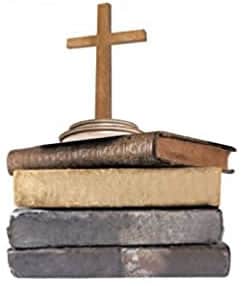
Of The NOBLE AMERICAN RELIGIOUS THINKERS AND BELIEVERS:
Roger Williams VS. Cotton Mathers

NEW ARTICLES

Recap of Queen Elizabeth II
Queen Elizabeth II of New Zealand
Queen Elizabeth passed away last week, Thursday, September 8, 2022, at 96. She was born on April 21, 1926, and had one sibling, a younger sister named Margaret, born August 21, 1930.
When ten, Elizabeth discovered she was next in line to inherit England’s throne, whenever her father, King George VI, would pass away. Eight-year-old Margaret asked Elizabeth, “Does this mean you have to be the next Queen?” Elizabeth replied, “Someday.” Margaret said, “Poor you.”
When a child, Elizabeth understood that her life was mapped out in front of her.
On November 20, 1947, when twenty-one, Elizabeth married Philip, and they had four children: Charles, Anne, Andrew, and Edward.
Her father, King George VI, passed away on February 6, 1952, and that same day her privy and executive councils named her Queen of England. At twenty-five, she ascended to the throne.
Her coronation though did not convene until June 2, 1953, and was held at Westminster Abbey, in London. At Prince Philip’s suggestion, it was televised, and millions across the world watched as the twenty-seven-year girl and mother was crowned Queen of England.
She marked her silver jubilee, after twenty-five years, in 1977; her golden jubilee, after fifty years, in 2002; and her platinum jubilee, after seventy years, on the first weekend in June 2022. She sat on England’s throne for seventy years, 214 days, the longest of any British monarch.
After the Queen passed forty years on the throne, she gave a remarkable speech on November 24, 1992, and said, “1992 is not a year on which I shall look back with undiluted pleasure. It has turned out to be an ‘Annus Horribilis.’” a Latin phrase meaning a “horrible year.” What was going on?
On Friday, November 20, 1992, a tragic fire broke out in Windsor Castle, her main residence, and destroyed 115 rooms. The fire had started when a spotlight had pressed against a curtain.
Beyond that, and more at home, in 1992, three of her oldest children’s marriages were unravelling: Charles and Diana, Anne and Mark Phillips, and Andrew and Sarah Ferguson.
Charles and Lady Diana had created a series of scandals that year when rumors surfaced that the two were not getting along, due to incompatibility and the twelve years age difference. She said, “He made me feel so inadequate in every possible way. Each time I came up for air, he pushed me down.”
Lady Diana charged Prince Charles with loving Camilla, a former girlfriend, more than herself. In light of Charles and Camilla’s long-term marriage after his and Diana’s 1996 divorce, that accusation may have been true.
Lady Diana said, “There were three of us in this marriage, so it was a bit crowded.”
On December 20, 1995, when the Queen had had enough of the tabloids and scandals, she wrote letters to her son and daughter-in-law, and advised them to divorce. It was finalized August 28, 1996, and a year later, on August 31, 1997, at 36, in a Paris tunnel, in a tragic car crash, Lady Diana died.
The nation wept.
Prince Anne divorced her first husband, Mark Phillips, in 1992; and in early 1992, after six years of marriage, Andrew and Sarah Ferguson legally separated. Their divorce was final four years later.
Further into that speech on November 24, 1992, the Queen said, “Criticism is good for people, but we are all part of the same fabric of our national society, and that scrutiny can be just as effective if it is made with a touch of gentleness, good humor, and understanding.”
A disgusting event occurred a decade before. At 7:15 a.m., on July 9, 1982, Michael Fagan, an Englishman with a checkered past, crawled over a wall at Buckingham Palace, climbed up a drainpipe, entered the Queen’s bedroom, and woke the Queen. Security arrived soon to escort Fagan out the door.
Prince Philip, Duke of Edinburgh, passed away on April 9, 2021, at the age of 99, 62 days short of his 100th birthday.
During Elizabeth’s reign, 179 individuals served as her Commonwealth’s prime ministers, in places as far apart as Antigua and Barburda in the Caribbean, to Uganda in east Africa.
There were fifteen United Kingdom prime ministers, beginning with Winston Churchill in 1952, and ending with Liz Truss, the newest, who met the Queen at Balmoral Castle, in Scotland, on September 6, 2022, two days before the Queen’s passing.
Along the way, there was Margaret Thatcher, Tony Blair, Theresa May, and Boris Johnson.
The Queen knighted twenty seven Americans during her seventy-year rein, including: Bill and Melinda Gates, Angelina Jolie, Ralph Lauren, Steven Spielberg, Michael Bloomberg, George H. W. Bush, Ronald Reagan, Rudy Giuliani, Alan Greenspan, and Billy Graham.
Three world famous Englishmen also received that designation: Elton John, Mick Jagger, and Paul McCartney. That is why the former Beatle, in all due respect, is called Sir Paul McCartney.
A trivia question, “Queen Elizabeth’s last name?” Windsor, perhaps named after the castle.
PEARL HARBOR
PEARL HARBORPEARL HARBOR by William H. Benson December 7, 2000 At first, Admiral Isoroku Yamamoto refused to consider attacking the U.S. He had lived and studied in the U.S. in the 1920's and had also served as a Japanese attache in Washington. He fully...
ELOQUENCE AT GETTYSBURG
ELOQUENCE AT GETTYSBURGELOQUENCE AT GETTYSBURG by William H. Benson November 22, 2000 At the dedication of the cemetery at Gettyburg, Pennsylvania on November 19, 1863, the featured oration was delivered by Edward Everett, the prominent orator, and following him...
ARMISTICE DAY
ARMISTICE DAYARMISTICE DAY by William H. Benson November 9, 2000 The Great War introduced to the world the trench--an end-to-end grave, international in length. Deep gashes in the idyllic French countryside, the trenches became the scenes of repeated mass...
PALESTINIAN VS. ISRAELI
PALESTINIAN VS. ISRAELIPALESTINIAN VS. ISRAELI by William H. Benson October 26, 2000 James Michener in his 1955 article on Islam pointed out a crucial point about this religion that most Americans do not realize. Michener wrote, "Islam differs from most other...
CARL SAGAN AND CHRISTOPHER COLUMBUS
CARL SAGAN AND CHRISTOPHER COLUMBUSCARL SAGAN AND CHRISTOPHER COLUMBUS by William H. Benson October 12, 2000 Carl Sagan was a bona fide scientist, but to fill in his gaps of what science could offer humanity in the future, he could also write fiction. Recently,...
SURVIVOR
SURVIVORSURVIVOR by William H. Benson September 28, 2000 Marooned on a deserted tropical island seems to be a favorite theme for writers and other story creators. These stories promise adventure but do not always deliver. The first survivor story I read was...
Older Posts
A FAREWELL ADDRESS
A FAREWELL ADDRESSA FAREWELL ADDRESS by William H. Benson September 14, 2000 On a Thursday in mid-August, President Bill Clinton stood before 4,500 parishoners and listeners via satellite at the Willow Creek Community Church in South Barrington, Illinois...
LABOR
LABORLABOR by William H. Benson August 31, 2000 A hundred years ago management and labor fought a bitter war. The workers struggled for a measure of collective power to ease their individual burdens. They wanted safer and better working conditions, a...
NAPOLEON BONAPARTE
NAPOLEON BONAPARTENAPOLEON BONAPARTE by William H. Benson August 17, 2000 He was born Napoleon Bonaparte on August 15, 1769 to Italian-speaking parents living in Corsica, an island in the Mediterranean, but it was in and through France that he achieved control of all...
CAMPAIGNS
CAMPAIGNSCAMPAIGNS by William H. Benson August 3, 2000 Who do you like--Nixon or Kennedy? In the close 1960 election Kennedy was given the win but only because he won Texas and Illinois. Evidence existed that those electoral votes were fraudulently...
J. K. ROWLING VS. U. S. GRANT
J. K. ROWLING VS. U. S. GRANT K. ROWLING VS. U. S. GRANT by William H. Benson July 20, 2000 Harry Potter made the cover of Newsweek this week with the release on July 8th of the fourth book, Harry Potter and the Goblet of Fire, in the seven-book series. ...
THE AMERICAN REVOLUTION
THE AMERICAN REVOLUTIONTHE AMERICAN REVOLUTION by William H. Benson July 5, 2000 George III was the King of England, and he was young, self confident, ignorant, opinionated, and inflexible. His appointments to administer his vast empire were a succession of...

One of University of Northern Colorado’s 2020 Honored Alumni
William H. Benson
Local has provided scholarships for history students for 15 years
A Sterling resident is among five alumni selected to be recognized this year by the University of Northern Colorado. Bill Benson is one of college’s 2020 Honored Alumni.
Each year UNC honors alumni in recognition for their outstanding contributions to the college, their profession and their community. This year’s honorees were to be recognized at an awards ceremony on March 27, but due to the COVID-19 outbreak that event has been cancelled. Instead UNC will recognize the honorees in the fall during homecoming Oct. 10 and 11……
Newspaper Columns

The Duodecimal System
For centuries, the ancient Romans calculated sums with their clunky numerals: I, V, X, L, C, D, and M; or one, five, ten, 50, 100, 500, and 1,000. They knew nothing better.

The Thirteenth Amendment
On Jan. 1, 1863, President Abraham Lincoln signed the Emancipation Proclamation, and by it, he declared that “all persons held as slaves” within the rebellious states “are and henceforward shall be free.” Lincoln’s Proclamation freed some 3.1 million slaves within the Confederacy.

The Fourteenth Amendment
After Congress and enough states ratified the thirteenth amendment that terminated slavery, Congress passed the Civil Rights Act of 1866. This law declared that “all people born in the United States are entitled to be citizens, without regard to race, color, or previous condition of slavery or involuntary servitude.” The Act equated birth to citizenship.

The New-York Packet and the Constitution
Jill Lepore, the Harvard historian, published her newest book a month ago, These Truths: A History of the United States. In a short introduction, she describes in detail the Oct. 30, 1787 edition of a semi-weekly newspaper, The New-York Packet.
Mr. Benson’s writings on the U.S. Constitution are a great addition to the South Platte Sentinel. Its inspiring to see the history of the highest laws of this country passed on to others.
– Richard Hogan
Mr. Benson, I cannot thank you enough for this scholarship. As a first-generation college student, the prospect of finding a way to afford college is a very daunting one. Thanks to your generous donation, my dream of attending UNC and continuing my success here is far more achievable
– Cedric Sage Nixon
Donec bibendum tortor non vestibulum dapibus. Cras id tempor risus. Curabitur eu dui pellentesque, pharetra purus viverra.
– Extra Times
FUTURE BOOKS
- Thomas Paine vs. George Whitefield
- Ralph Waldo Emerson vs. Joseph Smith
- William James vs. Mary Baker Eddy
- Mark Twain vs. Billy Graham
- Henry Louis Mencken vs. Jim Bakker
