
By William H. Benson
The Parallel Lives
Of The NOBLE AMERICAN RELIGIOUS THINKERS AND BELIEVERS:
Roger Williams VS. Cotton Mathers

NEW ARTICLES
Vaclav Smil
Vaclav Smil
Vaclav Smil was born in 1943, during World War II, in Czechoslovakia, in the German Protectorate of Bohemia and Moravia. As a teenager, Smil’s parents expected him to chop wood, every four hours, to keep the fires burning in the house’s three stoves, “one downstairs and two up.”
One writer suspected that Smil may have thought then that “this is hardly an efficient way to live.”
A bright student, with a strong work ethic, Smil left his small hometown in the Bohemian forest and made his way to Charles University, in Prague, the capital, where he studied natural sciences, “35 classes a week, 10 months a year, for 5 years.” And I thought I studied hard at college.
Smil married his wife Eva, and then in 1969, after she completed a medical degree, and after Soviet troops invaded Czechoslovakia, the couple fled to the United States. Two years later, Smil received a doctorate in Geography at Pennsylvania State University, in State College, Pennsylvania.
He took a job teaching small classes of students environmental science—global energy, populations, material production, trade, food, and policy—at the University of Manitoba, in Winnipeg, Canada.
For the final of his introductory environmental science class, he gave his students 10 multiple choice questions. Each question offered the same options: none of the answers may be correct; they all may be correct; or one, two, or three may be correct. A student had to decide.
After fifty years, Vaclav and Eva Smil still live in Winnipeg, where Smil is now Professor Emeritus.
Over the decades, Smil has written countless numbers of articles, plus almost fifty books. The first, in 1976, he entitled China’s Energy: Achievements, Problems, Prospects, and the most recent, in 2022, How the World Really Works: The Science Behind How We Got Here and Where We’re Going.
Each of his books are short, but filled with pages of endnotes. He sells only a few thousand copies. Yet, among the wiser sorts, Smil’s books have established his reputation as a piercing intellectual.
Elizabeth Wilson at Dartmouth, said of Smil, “You could take a paragraph from one of his books and make a whole career out of it. He does a really good job of being nuanced.”
After Bill Gates read, for the first time, one of Smil’s books, he said that he “felt a little beat up.” He wondered, “Am I ever going to be able to understand all of this?”
In the introduction to his latest book, Smil comments upon his need to see a big picture, as opposed to diving deep into a specialized nook of learning.
“Drilling the deepest hole and being an unsurpassed master of a tiny sliver of the sky visible from its bottom has never appealed to me. I have always preferred to scan as far and as wide as my limited capabilities have allowed me to do. My main area of interest has been energy studies.”
In the first chapter, Smil makes a “grim announcement that every fundamental aspect of modern civilization rests on fossil fuel combustion.” From the wood of his childhood, he has witnessed the transition to coal, to crude oil, to natural gas.
For example, he points out that the food that each of us eats arrives in our supermarkets, because some unit of carbon product was expended to first produce and then distribute it.
Ever a numbers guy, Smil says that “a humble loaf of sourdough bread requires the equivalent of about 5.5 tablespoons of diesel fuel, a tomato 6 tablespoons.” He then asks, “How many vegans enjoying a salad are aware of its substantial fossil fuel pedigree?”
“In 2020, an average Earthling has every year about 800 kilograms of crude oil, or 1.5 tons of good bituminous coal at her or his disposal.”
Smil is uncertain about renewables. For example, a wind tower. Fossil fuel is expended to build that tower. He says, “Heavy equipment powered by diesel fuel dug its foundation, kilns fired with natural gas baked each dry sack of concrete, and the steel towers were forged with coal.”
“And an electric semi-truck and trailer can now haul about the weight of their batteries.”
He closes that first chapter with a wry observation. “Both the relative high share and the scale of our dependence on fossil carbon make any rapid substitutions impossible. Not a sudden abandonment, nor a rapid demise, but a gradual decline.”
Smil claims that he is neither a pessimist or an optimist, and that his goal is not to forecast. Instead, he “champions uncertainty, insists upon an agnostic view, and displays humility, the rarest earth metal of all.” He admits that “a breakthrough in cheap energy storage would change the game.”
In cold Winnipeg, Vaclav and his wife Eva live in a 2,000 square foot house “stuffed with 50% more insulation into its walls, its windows triple-paned.” He says, “My house is a very efficient machine for living,” different than the three wood-burning stoves of his childhood home.
A FAREWELL ADDRESS
A FAREWELL ADDRESSA FAREWELL ADDRESS by William H. Benson September 14, 2000 On a Thursday in mid-August, President Bill Clinton stood before 4,500 parishoners and listeners via satellite at the Willow Creek Community Church in South Barrington, Illinois...
LABOR
LABORLABOR by William H. Benson August 31, 2000 A hundred years ago management and labor fought a bitter war. The workers struggled for a measure of collective power to ease their individual burdens. They wanted safer and better working conditions, a...
NAPOLEON BONAPARTE
NAPOLEON BONAPARTENAPOLEON BONAPARTE by William H. Benson August 17, 2000 He was born Napoleon Bonaparte on August 15, 1769 to Italian-speaking parents living in Corsica, an island in the Mediterranean, but it was in and through France that he achieved control of all...
CAMPAIGNS
CAMPAIGNSCAMPAIGNS by William H. Benson August 3, 2000 Who do you like--Nixon or Kennedy? In the close 1960 election Kennedy was given the win but only because he won Texas and Illinois. Evidence existed that those electoral votes were fraudulently...
J. K. ROWLING VS. U. S. GRANT
J. K. ROWLING VS. U. S. GRANT K. ROWLING VS. U. S. GRANT by William H. Benson July 20, 2000 Harry Potter made the cover of Newsweek this week with the release on July 8th of the fourth book, Harry Potter and the Goblet of Fire, in the seven-book series. ...
THE AMERICAN REVOLUTION
THE AMERICAN REVOLUTIONTHE AMERICAN REVOLUTION by William H. Benson July 5, 2000 George III was the King of England, and he was young, self confident, ignorant, opinionated, and inflexible. His appointments to administer his vast empire were a succession of...
Older Posts
NATIONAL RELIGIOUS LEADERS
NATIONAL RELIGIOUS LEADERSNATIONAL RELIGIOUS LEADERS by William H. Benson June 22, 2000 Those religious leaders from America's past who achieve notoriety on a national scale are not always well treated and accepted. It is a sobering footnote in our nation's...
FREEDOM OF THE PRESS
FREEDOM OF THE PRESSFREEDOM OF THE PRESS by William H. Benson June 7, 2000 Wednesday of this week, June 7th, is Freedom of the Press Day. Originally designated by the Inter-American Press Association, it is not a widely celebrated day, but the Founding...
DINOSAURS
DINOSAURS DINOSAURS by William H. Benson May 25, 2000 Human intelligence is naturally fascinated by prehistoric life, especially the dinosaurs, and a child will tell you why. "They're big, fierce, and extinct." Dinomania peaked in 1993 with the movie...
BOOKS
BOOKSBOOKS by William H. Benson May 10, 2000 We need the stimulus of differing opinions and opposing ideas. Human beings are mortal; they die, but the ideas and thoughts that they can conceive and propose can then live forever. Certain ideas that...
WILLIAM SHAKESPEARE
WILLIAM SHAKESPEAREWILLIAM SHAKESPEARE by William H. Benson April 26, 2000 Because William Shakespeare was baptized on April 26, 1564, historians hypothesize that he was probably born on either April 22 or 23. But they definitely know that he died exactly...
FLAGS
FLAGSFLAGS by William H. Benson April 13, 2000 Last week the two major news items continued to puzzle. Elian Gonzalez's father arrived on Thursday in Miami demanding his son's return to Cuba with him. And then, the Confederate flag is still popping in the wind...
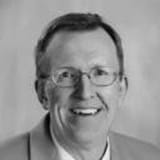
One of University of Northern Colorado’s 2020 Honored Alumni
William H. Benson
Local has provided scholarships for history students for 15 years
A Sterling resident is among five alumni selected to be recognized this year by the University of Northern Colorado. Bill Benson is one of college’s 2020 Honored Alumni.
Each year UNC honors alumni in recognition for their outstanding contributions to the college, their profession and their community. This year’s honorees were to be recognized at an awards ceremony on March 27, but due to the COVID-19 outbreak that event has been cancelled. Instead UNC will recognize the honorees in the fall during homecoming Oct. 10 and 11……
Newspaper Columns

The Duodecimal System
For centuries, the ancient Romans calculated sums with their clunky numerals: I, V, X, L, C, D, and M; or one, five, ten, 50, 100, 500, and 1,000. They knew nothing better.

The Thirteenth Amendment
On Jan. 1, 1863, President Abraham Lincoln signed the Emancipation Proclamation, and by it, he declared that “all persons held as slaves” within the rebellious states “are and henceforward shall be free.” Lincoln’s Proclamation freed some 3.1 million slaves within the Confederacy.

The Fourteenth Amendment
After Congress and enough states ratified the thirteenth amendment that terminated slavery, Congress passed the Civil Rights Act of 1866. This law declared that “all people born in the United States are entitled to be citizens, without regard to race, color, or previous condition of slavery or involuntary servitude.” The Act equated birth to citizenship.

The New-York Packet and the Constitution
Jill Lepore, the Harvard historian, published her newest book a month ago, These Truths: A History of the United States. In a short introduction, she describes in detail the Oct. 30, 1787 edition of a semi-weekly newspaper, The New-York Packet.
Mr. Benson’s writings on the U.S. Constitution are a great addition to the South Platte Sentinel. Its inspiring to see the history of the highest laws of this country passed on to others.
– Richard Hogan
Mr. Benson, I cannot thank you enough for this scholarship. As a first-generation college student, the prospect of finding a way to afford college is a very daunting one. Thanks to your generous donation, my dream of attending UNC and continuing my success here is far more achievable
– Cedric Sage Nixon
Donec bibendum tortor non vestibulum dapibus. Cras id tempor risus. Curabitur eu dui pellentesque, pharetra purus viverra.
– Extra Times
FUTURE BOOKS
- Thomas Paine vs. George Whitefield
- Ralph Waldo Emerson vs. Joseph Smith
- William James vs. Mary Baker Eddy
- Mark Twain vs. Billy Graham
- Henry Louis Mencken vs. Jim Bakker
