
By William H. Benson
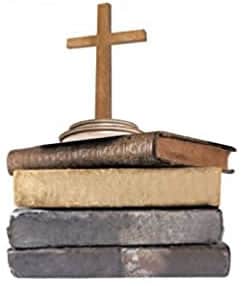
The Parallel Lives
Of The NOBLE AMERICAN RELIGIOUS THINKERS AND BELIEVERS:
Roger Williams VS. Cotton Mathers

NEW ARTICLES
Learning Methods
Whichever course a young person chooses, learning should be and can be a life-long process.
In recent days, I came across a 2016 book, by Anders Ericsson, “Peak: Secrets from the New Science of Expertise.” In it, Ericsson, tells the story of how Benjamin Franklin played chess all his life, and yet he never became very good, even though he played thousands of hours.
Ericsson wrote, “This failing was a source of great frustration to Franklin, but he had no idea why he couldn’t get better.” Ericsson explained, “He never pushed himself, never got out of his comfort zone, never put in the hours of ‘deliberate practice’ it would take to improve.”
A search reveals the following for would-be top chess players. Learn to play a series of moves in response to however your opponent opens. Control the center. Develop your pieces. Castle in the first ten moves. Learn an end game with just a rook and a pawn.
Ericsson said that top players recognize patterns of chess pieces at a glance. “They are old friends. These positions are called ‘chunks,’ that they hold in reserve in long-term memory.”
In addition, Franklin often read a daily magazine called the “Spectator,” that Joseph Addison and Sir Richard Steele wrote. Because Franklin admired those two writers’ literary skills, he set for himself a course of deliberate practice.
On paper he copied down their sentences, broke them apart, mixed up the words, turned them into verse, into poetry, and then re-assembled them. He then compared his sentences with theirs.
Whereas Franklin failed to make much headway with chess, he became a first-rate writer.
A question: Why is it that Asian students win the top awards in mathematics competitions?
A search reveals certain reasons. First, those students spend weeks and even months re-learning the basic fundamentals of fractions, multiplication tables, and long division.
Teachers insist that students solve a problem three ways. For example, to solve a quadratic equation, they will use factorization, the quadratic formula, and completing the square.
Teacher insist that their students keep a mathematics notebook where they solve their assigned problems, rather than on random sheets of paper. They call errors “feedback,” rather than “mistakes,” and they note those mistakes in a special section inside their notebook.
Asian students have frequent timed practices, fifteen questions in ten minutes. Teachers allow Asian students to teach others in the classroom. Because they study mathematics every day, the Asian students’ minds are directed to think often in terms of numbers, processes, solutions.
In a 1989 scholarly article, that Allan Collins, John Seely Brown, and Susan E. Brown wrote, “Cognitive Apprenticeship: Teaching the Crafts of Reading, Writing, and Mathematics,” its three authors presented six methods for an effective apprenticeship.
First is “modeling.” Students watch an expert perform a skill. Second is “coaching.” The expert offers hints and challenges, as the students replicate that skill. Third is “scaffolding.” The expert provides formulas, steps, or equations that guide the students.
Fourth is “articulation.” The students explain their thoughts about the skill. Fifth is “reflection.” The students compare their understanding with those of the expert. Sixth is “exploration.” The students seek out more problems to solve.
The goal is to highlight a practical thinking process.
Best wishes to this year’s crop of graduates. You have choices: deliberate practice and the science of expertise, or cognitive apprenticeship.
Memoirs and mothers
In 1995, the author David Pelzer’s book, “A Child Called It,” was first published. In it, he claimed that his mother beat him, starved him, terrorized him, and banished him to the garage, where he slept on a cot. Gruesome beyond words, the book sold 1.6 million copies in five years.
I read it then and thought throughout, “No mother would do that.”
In 1996, Frank McCourt’s book, “Angela’s Ashes: A Memoir,” was first published. In it, he listed his impressions as a child growing up in poverty-stricken
Thoughts on College Bowl and University Challenge
The quiz show, “College Bowl,” was first broadcast on radio in 1953, 71 years ago. The show transitioned to television in 1959 and stayed there until 1970. Its first host was Allen Ludden, the future husband of Betty White. He hosted the show until 1962 when he left...
4th Amendment: Sections 4 and 5
Two weeks ago in these pages, I looked at the second and third sections of the 14th Amendment. Today I continue with its two final sections, the fourth and the fifth. Section 4 clarifies which debts the U.S. Federal government will honor as valid. The first sentence...
4th Amendment: Sections 2 and 3
Last time in these pages I looked at Section 1 of the 14th Amendment. Today I continue. The last phrase in Section 1 of the 14th Amendment declares that no state can “deny to any person within its jurisdiction the equal protection of the law.” All races are equal...
14th Amendment, Section 1
In early 1866, the Joint Committee of Fifteen on Reconstruction in the 39th Congress wrestled with the idea that they must write a 14th Amendment to address certain issues: Who is a citizen? How does the country’s laws apply to former slaves and slave owners? Will...
Black History Month: Reconstruction, 1865-1866
In December of 1863, in the midst of the Civil War, President Abraham Lincoln suggested a plan to reinstate the seceded states back into the Union, his “Ten Percent Plan.”
He would permit each Confederate state to form a new state government after ten percent of the voters in a state took loyalty oaths to the Union and recognized the former slaves’ freedom.
Following Lincoln’s assassination on April 9, 1865, his successor, former Vice-President Andrew Johnson, decided to run with Lincoln’s Ten Percent Plan.
Throughout the summer and fall of 1866, the Southern states
Older Posts
Black History Month: Phillis Wheatley and Billy Lee
Two African-American slaves from the eighteenth century: Phillis Wheatley and William “Billy” Lee. The first a woman, the second a man. The first a poet, the second a valet. The two received their freedom from their respective owners, and they each knew George...

National Freedom Day and Black History Month
On Feb. 7, 1926, Carter G. Woodson, a professor of history, announced that he would celebrate and highlight for the first time ever a single week devoted to African-American history, and he called it “Negro History Week.”
He selected the second week in February because of its proximity to Abraham Lincoln and Frederick Douglass’s birthdays, Lincoln on Feb. 12, and Douglass on a day in February.
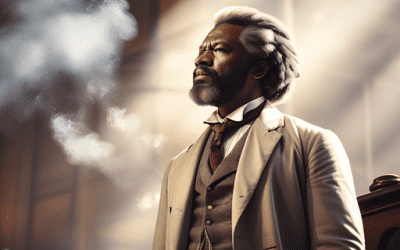
Frederick Douglass’ “Slaveholder’s Sermon”
On May 11, 2017, the newly-elected U.S. President, Donald Trump, issued an executive order to form a Presidential Advisory Commission on Election Integrity. He appointed Vice-President Mike Pence as chair, and Kansas State’s Secretary of State Kris Kobach as vice-chair.
Assertion is not evidence
On May 11, 2017, the newly-elected U.S. President, Donald Trump, issued an executive order to form a Presidential Advisory Commission on Election Integrity. He appointed Vice-President Mike Pence as chair, and Kansas State’s Secretary of State Kris Kobach as vice-chair.
Unique words in history
December 16 marked the 250th anniversary of the Boston Tea Party, when colonial Bostonians dressed as Mohawk Indians boarded three ships—Dartmouth, Eleanor, and Beaver—split open 340 chests filled with tea, and dumped their contents into Boston’s harbor.
This defiant act was directed as a protest against Parliament’s insistence that the consignees of the tea in the American colonies pay an import tax, to keep afloat the struggling British East India Company, which brought the tea to the colonists.
The colonists were angry. They paid taxes to their

Secession and Abraham Lincoln
Abraham Lincoln faced an absolute calamity on March 4, 1861, the day when Chief Justice Roger Taney administered the oath of office to Lincoln at his inauguration.
Already seven states from the South had seceded, or withdrawn, from the Union because voters had elected Lincoln President of the United States. Southern voters believed that Lincoln opposed the expansion of slavery into western territories, like Kansas and Nebraska.
South Carolina voted to secede on December 20, 1860, forty-four days…

One of University of Northern Colorado’s 2020 Honored Alumni
William H. Benson
Local has provided scholarships for history students for 15 years
A Sterling resident is among five alumni selected to be recognized this year by the University of Northern Colorado. Bill Benson is one of college’s 2020 Honored Alumni.
Each year UNC honors alumni in recognition for their outstanding contributions to the college, their profession and their community. This year’s honorees were to be recognized at an awards ceremony on March 27, but due to the COVID-19 outbreak that event has been cancelled. Instead UNC will recognize the honorees in the fall during homecoming Oct. 10 and 11……
Newspaper Columns

The Duodecimal System
For centuries, the ancient Romans calculated sums with their clunky numerals: I, V, X, L, C, D, and M; or one, five, ten, 50, 100, 500, and 1,000. They knew nothing better.

The Thirteenth Amendment
On Jan. 1, 1863, President Abraham Lincoln signed the Emancipation Proclamation, and by it, he declared that “all persons held as slaves” within the rebellious states “are and henceforward shall be free.” Lincoln’s Proclamation freed some 3.1 million slaves within the Confederacy.

The Fourteenth Amendment
After Congress and enough states ratified the thirteenth amendment that terminated slavery, Congress passed the Civil Rights Act of 1866. This law declared that “all people born in the United States are entitled to be citizens, without regard to race, color, or previous condition of slavery or involuntary servitude.” The Act equated birth to citizenship.

The New-York Packet and the Constitution
Jill Lepore, the Harvard historian, published her newest book a month ago, These Truths: A History of the United States. In a short introduction, she describes in detail the Oct. 30, 1787 edition of a semi-weekly newspaper, The New-York Packet.
Mr. Benson’s writings on the U.S. Constitution are a great addition to the South Platte Sentinel. Its inspiring to see the history of the highest laws of this country passed on to others.
– Richard Hogan
Mr. Benson, I cannot thank you enough for this scholarship. As a first-generation college student, the prospect of finding a way to afford college is a very daunting one. Thanks to your generous donation, my dream of attending UNC and continuing my success here is far more achievable
– Cedric Sage Nixon
Donec bibendum tortor non vestibulum dapibus. Cras id tempor risus. Curabitur eu dui pellentesque, pharetra purus viverra.
– Extra Times
FUTURE BOOKS
- Thomas Paine vs. George Whitefield
- Ralph Waldo Emerson vs. Joseph Smith
- William James vs. Mary Baker Eddy
- Mark Twain vs. Billy Graham
- Henry Louis Mencken vs. Jim Bakker
