
By William H. Benson
The Parallel Lives
Of The NOBLE AMERICAN RELIGIOUS THINKERS AND BELIEVERS:
Roger Williams VS. Cotton Mathers

NEW ARTICLES
Five Useful Books
Take a break from the present, and consider the better books from the past.
Of all the books published since the days of the ancients, I consider five most useful: Fibonacci’s “Liber Abaci,” Isaac Newton’s “Principia Mathematica,” Charles Darwin’s “On the Origin of the Species,” the “King James Bible,” and William Shakespeare’s plays.
Each added to the world’s body of knowledge an immeasurable amount that affects our modern lives, even yet today.
Leonard de Pisa, or aka “Fibonacci,” was born in Italy in 1170. His father, a customs agent, took Leonardo to Algiers, and there in school he learned the common people’s math skills.
In 1202, he published his book, “Liber Abaci,” and in it he introduced the Hindu-Arabic numeral system of 0 to 9, suggesting that it was superior to Europe’s Roman numerals. He also described methods for converting currencies, for calculating interest, and using fractions.
Everyday, you and I rely upon Fibonacci’s ideas and math tricks.
Isaac Newton—an Englishman, scientist, and mathematician—published his “Principia Mathematica,” on July 5, 1687. Written in Latin, it introduced to the world laws of motion and gravitation. By them, Newton showed how planets and comets cycle through space.
A foundation for modern physics and astronomy, Newton’s book “is considered one of the most important scientific books ever written.” NASA’s Artemis Mission relied upon his book.
Charles Darwin—also an Englishmen, and a scientist—published his “On the Origin of the Species by Means of Natural Selection,” November 24, 1859. It unified the biological sciences into a single working theory. Darwin’s last sentence says much.
“There is grandeur in this view of life, with its several powers, having been originally breathed into a few forms or into one; and that, whilst this planet has gone cycling on according to the fixed law of gravity, from so simple a beginning, endless forms most beautiful and most wonderful have been, and are being, evolved.”
A total of 47 English scholars worked for seven years, 1604 to 1611, on the King James translation of the Bible. Each company of scholars were tasked to translate sections of the Old and New Testaments and the Apocrypha, from Hebrew, Greek, and Aramaic into English.
The King James Bible has endured ever since, because of its “majestic literary style,” its “linguistic beauty,” its “imagery.” If anyone wants to read poetry, turn to the Psalms. If anyone wants to read great stories, turn to Genesis. For spiritual sustenance, read the entire book.
Two English actors from London, John Heminges and Henry Condell, made a diligent search and collected 36 of Shakespeare’s plays and published them under the title, “Mr. William Shakespeare’s Comedies, Histories, and Tragedies, Published According to the Original Copies.”
The year was 1623. Their book is now called the “First Folio.” Some 750 copies were printed, but only 235 are known to exist, and of those, 82 are in the Folger Library in Washington D.C.
Heminges and Condell’s gift to the world occurred 7 years after Shakespeare’s passing at the age of 52 years, on April 23, 1616. He was born the same day, April 23, 1564.
Yes, his words are difficult for readers to understand, and yet within his plays, he explored “universal human emotions, like love, ambition, grief, and jealousy.” He “tackled enduring themes, like tyranny, power, and inequality.” For insights into humanity, read Shakespeare.
Ralph Waldo Emerson wrote, “If we tire of the saints, Shakespeare is our city of refuge.”
Fibonacci, Newton, Darwin, the English Bible, and Shakespeare, I and others consider their works useful. Take a break from the present, and read them, or read about them.
Black History Month: Phillis Wheatley and Billy Lee
Two African-American slaves from the eighteenth century: Phillis Wheatley and William “Billy” Lee. The first a woman, the second a man. The first a poet, the second a valet. The two received their freedom from their respective owners, and they each knew George...
National Freedom Day and Black History Month
On Feb. 7, 1926, Carter G. Woodson, a professor of history, announced that he would celebrate and highlight for the first time ever a single week devoted to African-American history, and he called it “Negro History Week.”
He selected the second week in February because of its proximity to Abraham Lincoln and Frederick Douglass’s birthdays, Lincoln on Feb. 12, and Douglass on a day in February.
Frederick Douglass’ “Slaveholder’s Sermon”
On May 11, 2017, the newly-elected U.S. President, Donald Trump, issued an executive order to form a Presidential Advisory Commission on Election Integrity. He appointed Vice-President Mike Pence as chair, and Kansas State’s Secretary of State Kris Kobach as vice-chair.
Assertion is not evidence
On May 11, 2017, the newly-elected U.S. President, Donald Trump, issued an executive order to form a Presidential Advisory Commission on Election Integrity. He appointed Vice-President Mike Pence as chair, and Kansas State’s Secretary of State Kris Kobach as vice-chair.
Unique words in history
December 16 marked the 250th anniversary of the Boston Tea Party, when colonial Bostonians dressed as Mohawk Indians boarded three ships—Dartmouth, Eleanor, and Beaver—split open 340 chests filled with tea, and dumped their contents into Boston’s harbor.
This defiant act was directed as a protest against Parliament’s insistence that the consignees of the tea in the American colonies pay an import tax, to keep afloat the struggling British East India Company, which brought the tea to the colonists.
The colonists were angry. They paid taxes to their
Secession and Abraham Lincoln
Abraham Lincoln faced an absolute calamity on March 4, 1861, the day when Chief Justice Roger Taney administered the oath of office to Lincoln at his inauguration.
Already seven states from the South had seceded, or withdrawn, from the Union because voters had elected Lincoln President of the United States. Southern voters believed that Lincoln opposed the expansion of slavery into western territories, like Kansas and Nebraska.
South Carolina voted to secede on December 20, 1860, forty-four days…
Older Posts
Election of 1864
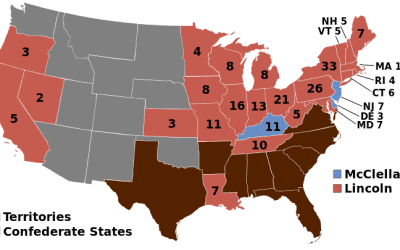
Throughout the year of 1864, President Abraham Lincoln believed that he would lose the election in November. He admitted in August, “I am going to be beaten, and unless some great change takes place, badly beaten.” The odds were stacked against him.
Plenty of voters in the Union had reason to despise, even hate, Lincoln.

Tunnels and war coincide
People burrow into the subsoil, build tunnels, plus storage rooms, and stockpile food and water, for one reason, and that is to stay alive. Atop the ground, in the open air, in the sunshine, they feel oppressed, insecure, and poised to die or suffer an injury.
On July 4, 1863, thirty-one thousand Confederate soldiers, trapped inside Vicksburg, on the Mississippi River, surrendered to the Union’s commanding officer, Ulysses S. Grant, on the forty-eighth day of Grant’s siege of that town.
During the siege, civilians had dug some five hundred caves into the hillsides, and fitted them out with “rugs, beds, and chairs.” One cave dweller said, “We were in hourly dread of snakes. The vines and thickets were full of them.”
What can I achieve with Greek mythology?
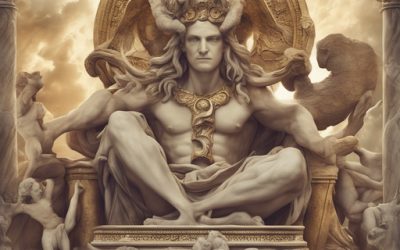
What is the good that comes from knowing even a little about the ancient Greeks’ religion?
I prefer to learn of actual people who once lived in a historical setting, a time and a place. Greek mythology, instead, is a collection of make-believe fantasy stories I would like to know more of, but I find it hard to gain much traction from them, practical use. I wonder.
Mark Twain disparaged the whole notion. “Classics,” he said, “are the books that everybody wants to claim to have read, but nobody wants to read.”
After all, Greek religion is mythology, a series of stories about the gods and the goddesses whom the Greeks believed resided on or near Mount Olympus.
They included a dozen Olympians: Zeus, Poseidon, Hades, Hestia, Her

Steve Inskeep’s new book: “Differ We Must”
Since 2004, radio personality Steve Inskeep has hosted National Public Radio’s “Morning Edition.” During Covid lockdown in 2020, at home with time to spare, Inskeep researched and wrote a book that was published this past week.
Inskeep found its title, “Differ We Must: How Lincoln Succeeded in a Divided America,” in a letter that Abraham Lincoln wrote to his good friend Joshua Speed, dated August 24, 1855.
Last week, Inskeep explained to Amna Nawaz of PBS News Hour, and Scott Simon of NPR, that Speed was from Kentucky, that he was from a rich family that owned more than 50 slaves. Speed approved of slavery. Lincoln also was from Kentucky, but his family was poor, and Lincoln hated slavery.

Peering into the future
Peering into the futureSome people possess a talent to peer deep into the future. In Biblical times people called them prophets. In the Middle Ages, people believed them wizards. Today they are economists who make projections based upon previous business data. Thomas...

The discovery near Motza, Israel
The main highway running east to west across Israel’s width is Highway One. It connects Tel Aviv and Jerusalem to the Jordan River Valley, near Jericho.
In 2012, highway contractors working 5 kilometers west of Jerusalem near the town of Motza uncovered a Neolithic town, home to perhaps 3,000 people at one time.
A new thing, an interstate highway, led to a discovery of an old thing, a town.
Tel Motza is now the largest Neolithic site in Israel. Archaeologists define a Tel as “a mound or small hill that has built up over centuries of occupation.” Excavators dig down through the layers until they find a bottom layer.
Archaeologists uncovered stone tools made of flint—arrowheads, axes, sickle blades, and knives—as well as human bones, clay figurines, grain silos, and a temple.

One of University of Northern Colorado’s 2020 Honored Alumni
William H. Benson
Local has provided scholarships for history students for 15 years
A Sterling resident is among five alumni selected to be recognized this year by the University of Northern Colorado. Bill Benson is one of college’s 2020 Honored Alumni.
Each year UNC honors alumni in recognition for their outstanding contributions to the college, their profession and their community. This year’s honorees were to be recognized at an awards ceremony on March 27, but due to the COVID-19 outbreak that event has been cancelled. Instead UNC will recognize the honorees in the fall during homecoming Oct. 10 and 11……
Newspaper Columns

The Duodecimal System
For centuries, the ancient Romans calculated sums with their clunky numerals: I, V, X, L, C, D, and M; or one, five, ten, 50, 100, 500, and 1,000. They knew nothing better.

The Thirteenth Amendment
On Jan. 1, 1863, President Abraham Lincoln signed the Emancipation Proclamation, and by it, he declared that “all persons held as slaves” within the rebellious states “are and henceforward shall be free.” Lincoln’s Proclamation freed some 3.1 million slaves within the Confederacy.

The Fourteenth Amendment
After Congress and enough states ratified the thirteenth amendment that terminated slavery, Congress passed the Civil Rights Act of 1866. This law declared that “all people born in the United States are entitled to be citizens, without regard to race, color, or previous condition of slavery or involuntary servitude.” The Act equated birth to citizenship.

The New-York Packet and the Constitution
Jill Lepore, the Harvard historian, published her newest book a month ago, These Truths: A History of the United States. In a short introduction, she describes in detail the Oct. 30, 1787 edition of a semi-weekly newspaper, The New-York Packet.
Mr. Benson’s writings on the U.S. Constitution are a great addition to the South Platte Sentinel. Its inspiring to see the history of the highest laws of this country passed on to others.
– Richard Hogan
Mr. Benson, I cannot thank you enough for this scholarship. As a first-generation college student, the prospect of finding a way to afford college is a very daunting one. Thanks to your generous donation, my dream of attending UNC and continuing my success here is far more achievable
– Cedric Sage Nixon
Donec bibendum tortor non vestibulum dapibus. Cras id tempor risus. Curabitur eu dui pellentesque, pharetra purus viverra.
– Extra Times
FUTURE BOOKS
- Thomas Paine vs. George Whitefield
- Ralph Waldo Emerson vs. Joseph Smith
- William James vs. Mary Baker Eddy
- Mark Twain vs. Billy Graham
- Henry Louis Mencken vs. Jim Bakker
