
By William H. Benson
The Parallel Lives
Of The NOBLE AMERICAN RELIGIOUS THINKERS AND BELIEVERS:
Roger Williams VS. Cotton Mathers

NEW ARTICLES
Dilemma
Jeffrey W. Kitchen has taught an intense course on screenwriting to a series of small groups of just six people over the past 35 years. In recent weeks, I came across Kitchen on YouTube, and I was impressed by his skill, that of a classical dramatist.
Kitchen says, “What I teach is plot construction and dramatic principle—the craft of the dramatist, the ancient art of adapting a story for a theatrical presentation, whether in film, on TV, or onstage. It’s about making a story actable so that it will grip an audience.”
He dares to say that Hollywood producers reject 90 to 95% of all screenplays submitted, as unreadable or un-actable. Others say that the percentage of rejects is closer to 98%.
I would suggest that those movies that Hollywood produces, the 2% that make the cut, most are poor to fair. It is rare to see a good movie. I wonder, What makes a good movie?
Kitchen answers by pointing his students back to Aristotle, who lived 2400 years ago in ancient Athens. In Aristotle’s book “Poetics,” he noticed that the better plays, those that thrilled audiences, included at least five elements: Dilemma, Crisis, Decision, Action, and Resolution.
A complication arises, a knot of events occurs that reaches a crisis and then unravels toward a resolution. The play is a unified whole, a series of interconnected actions, not random events.
In addition, Kitchen rediscovered William Thompson Price, a pioneer in American drama, an early authority on play construction. Price wrote at least two books, “The Technique of the Drama,” (1892), and “The Analysis of Play Construction and Dramatic Principle,” (1908).
It was Aristotle, “who searched out the first group of basic principles” but it was “Mr. Price two thousand years and more afterward who was to enlarge, correlate, and define them.”
For years Price taught playwriting in New York City, and edited scripts for producers. “He defined drama as a cohesive, coherent, and compelling series of events that engage an audience’s interest and engenders feelings of suspense throughout the performance.”
Kitchen teaches both Aristotle and Price’s classical techniques. Above all else, he emphasizes the first of Aristotle’s five elements: dilemma.
Dilemma is a Greek word, meaning “a situation requiring a choice between two equally undesirable alternatives,” or a “double premise,” or a “horned argument.” Often both of the dilemma’s two horns conflict with moral principles, and neither option is acceptable.
For example, consider individual rights vs. those of a community, national security vs. men and women’s freedoms, speaking truth to a king who insists upon loyalty, choosing adventure rather than security, or leaving a bad marriage to suffer in a void of loneliness.
In “Training Day,” Denzil Washington plays the role of Detective Alonzo Harris of the LAPD, who introduces Officer Jake Hoyt, played by Ethan Hawke, to the unpolished methods needed, as an undercover cop, to nab criminals in the worst parts of the city, over a single day.
Hoyt is appalled to learn of Harris’s outrageous corruption, his criminality, his use of raw force, his unchecked ambition, and yet Hoyt needs this job. He cannot quit. Harris forces Hoyt to become a criminal to catch criminals. Hoyt choses adventure over security, but should he?
Kitchen writes, “The more powerful the dilemma is, the more powerful the script will be. There is no hiding from a compelling dilemma, no pretending that it is not happening.”
I agree that dilemma within a script is required, but often scriptwriters drench their scripts with unnecessary violence that make them, for me, unwatchable. Scriptwriting is a complex literary exercise, but the final product is entertainment, not as profound as a history or an essay.
Election of 1864
Throughout the year of 1864, President Abraham Lincoln believed that he would lose the election in November. He admitted in August, “I am going to be beaten, and unless some great change takes place, badly beaten.” The odds were stacked against him.
Plenty of voters in the Union had reason to despise, even hate, Lincoln.
Tunnels and war coincide
People burrow into the subsoil, build tunnels, plus storage rooms, and stockpile food and water, for one reason, and that is to stay alive. Atop the ground, in the open air, in the sunshine, they feel oppressed, insecure, and poised to die or suffer an injury.
On July 4, 1863, thirty-one thousand Confederate soldiers, trapped inside Vicksburg, on the Mississippi River, surrendered to the Union’s commanding officer, Ulysses S. Grant, on the forty-eighth day of Grant’s siege of that town.
During the siege, civilians had dug some five hundred caves into the hillsides, and fitted them out with “rugs, beds, and chairs.” One cave dweller said, “We were in hourly dread of snakes. The vines and thickets were full of them.”
What can I achieve with Greek mythology?
What is the good that comes from knowing even a little about the ancient Greeks’ religion?
I prefer to learn of actual people who once lived in a historical setting, a time and a place. Greek mythology, instead, is a collection of make-believe fantasy stories I would like to know more of, but I find it hard to gain much traction from them, practical use. I wonder.
Mark Twain disparaged the whole notion. “Classics,” he said, “are the books that everybody wants to claim to have read, but nobody wants to read.”
After all, Greek religion is mythology, a series of stories about the gods and the goddesses whom the Greeks believed resided on or near Mount Olympus.
They included a dozen Olympians: Zeus, Poseidon, Hades, Hestia, Her
Steve Inskeep’s new book: “Differ We Must”
Since 2004, radio personality Steve Inskeep has hosted National Public Radio’s “Morning Edition.” During Covid lockdown in 2020, at home with time to spare, Inskeep researched and wrote a book that was published this past week.
Inskeep found its title, “Differ We Must: How Lincoln Succeeded in a Divided America,” in a letter that Abraham Lincoln wrote to his good friend Joshua Speed, dated August 24, 1855.
Last week, Inskeep explained to Amna Nawaz of PBS News Hour, and Scott Simon of NPR, that Speed was from Kentucky, that he was from a rich family that owned more than 50 slaves. Speed approved of slavery. Lincoln also was from Kentucky, but his family was poor, and Lincoln hated slavery.
Peering into the future
Peering into the futureSome people possess a talent to peer deep into the future. In Biblical times people called them prophets. In the Middle Ages, people believed them wizards. Today they are economists who make projections based upon previous business data. Thomas...
The discovery near Motza, Israel
The main highway running east to west across Israel’s width is Highway One. It connects Tel Aviv and Jerusalem to the Jordan River Valley, near Jericho.
In 2012, highway contractors working 5 kilometers west of Jerusalem near the town of Motza uncovered a Neolithic town, home to perhaps 3,000 people at one time.
A new thing, an interstate highway, led to a discovery of an old thing, a town.
Tel Motza is now the largest Neolithic site in Israel. Archaeologists define a Tel as “a mound or small hill that has built up over centuries of occupation.” Excavators dig down through the layers until they find a bottom layer.
Archaeologists uncovered stone tools made of flint—arrowheads, axes, sickle blades, and knives—as well as human bones, clay figurines, grain silos, and a temple.
Older Posts

Books and censorship
The list of banned, censored, and challenged books is long and illustrious.
“Decameron” (1353) by Giovanni Boccaccio, and “Canterbury Tales” (1476) by Geoffrey Chaucer were banned from U. S. mail because of the Federal Anti-Obscenity Law of 1873, known as the Comstock Law.
That law “banned the sending or receiving of works containing ‘obscene, ‘filthy,’ or ‘inappropriate’ material.
William Pynchon, a prominent New England landowner and founder of Springfield, Massachusetts, wrote a startling critique of Puritanism, that he mailed to London and had it published there in 1650. He entitled it “The Meritorious Price of Our Redemption.”

A summer’s day
Popular song writers will, on occasion, dub into their lyrics references to summer.
In 1970, Mungo Jerry sang, “In the summertime, when the weather is high, you can stretch right up and touch the sky.” In 1972, Bobby Vinton sang, “Yes, it’s going to be a long, lonely summer.” In 1973, Terry Jacks sang about enjoying his “Seasons in the Sun.”
In 1977, in the film Grease, John Travolta and Olivia Newton John sang a back-and-forth duet about their “summer days drifting away, to summer nights.”

70th Anniversary of the Korean Armistice Agreement
Last Thursday, July 27, 2023, North Korea’s leader Kim Jon Un presided over a military parade that celebrated the 70th anniversary of the signing of the Korean Armistice Agreement that ended the Korean conflict, from June 25, 1950, to July 27, 1953.
North Korea’s Foreign Ministry announced

Abraham Lincoln: infidel or faithful?
Abraham Lincoln: infidel or faithful?The two books that Abraham Lincoln read often and loved the most throughout his life were the King James Bible, published in 1611, and William Shakespeare’s works, first published as the First Folio in 1623, both the best of...
Four trials
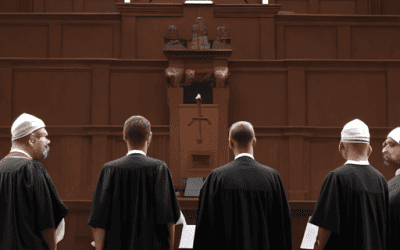
Two trials in American history stand out above the others, the Salem Witch Trials and the Scopes Monkey Trial. Both were of a religious nature.
The two serve as bookends on America’s history, the first in 1693, in the years after New England’s founding, and the second in 1925, early in the twentieth century.
The trial at Salem Village, Massachusetts sought to identify and then execute those unseen spiritual forces, the witches, who, the village’s officials believed, went about in secret performing evil deeds in and around their community.
Servants of the people
Edward Muir is president of the American Historical Association. In the May issue of that non-profit’s magazine, “Perspectives on History,” he wrote a column he entitled, “The United States Needs Historians.”
Muir states in his thesis, “Our culture needs historians who can look behind today’s headlines and the latest ‘fake news’ to think about longer patterns in the past, even as they engage in current struggles.”

One of University of Northern Colorado’s 2020 Honored Alumni
William H. Benson
Local has provided scholarships for history students for 15 years
A Sterling resident is among five alumni selected to be recognized this year by the University of Northern Colorado. Bill Benson is one of college’s 2020 Honored Alumni.
Each year UNC honors alumni in recognition for their outstanding contributions to the college, their profession and their community. This year’s honorees were to be recognized at an awards ceremony on March 27, but due to the COVID-19 outbreak that event has been cancelled. Instead UNC will recognize the honorees in the fall during homecoming Oct. 10 and 11……
Newspaper Columns

The Duodecimal System
For centuries, the ancient Romans calculated sums with their clunky numerals: I, V, X, L, C, D, and M; or one, five, ten, 50, 100, 500, and 1,000. They knew nothing better.

The Thirteenth Amendment
On Jan. 1, 1863, President Abraham Lincoln signed the Emancipation Proclamation, and by it, he declared that “all persons held as slaves” within the rebellious states “are and henceforward shall be free.” Lincoln’s Proclamation freed some 3.1 million slaves within the Confederacy.

The Fourteenth Amendment
After Congress and enough states ratified the thirteenth amendment that terminated slavery, Congress passed the Civil Rights Act of 1866. This law declared that “all people born in the United States are entitled to be citizens, without regard to race, color, or previous condition of slavery or involuntary servitude.” The Act equated birth to citizenship.

The New-York Packet and the Constitution
Jill Lepore, the Harvard historian, published her newest book a month ago, These Truths: A History of the United States. In a short introduction, she describes in detail the Oct. 30, 1787 edition of a semi-weekly newspaper, The New-York Packet.
Mr. Benson’s writings on the U.S. Constitution are a great addition to the South Platte Sentinel. Its inspiring to see the history of the highest laws of this country passed on to others.
– Richard Hogan
Mr. Benson, I cannot thank you enough for this scholarship. As a first-generation college student, the prospect of finding a way to afford college is a very daunting one. Thanks to your generous donation, my dream of attending UNC and continuing my success here is far more achievable
– Cedric Sage Nixon
Donec bibendum tortor non vestibulum dapibus. Cras id tempor risus. Curabitur eu dui pellentesque, pharetra purus viverra.
– Extra Times
FUTURE BOOKS
- Thomas Paine vs. George Whitefield
- Ralph Waldo Emerson vs. Joseph Smith
- William James vs. Mary Baker Eddy
- Mark Twain vs. Billy Graham
- Henry Louis Mencken vs. Jim Bakker
