
By William H. Benson
The Parallel Lives
Of The NOBLE AMERICAN RELIGIOUS THINKERS AND BELIEVERS:
Roger Williams VS. Cotton Mathers

NEW ARTICLES
Words: “What’s in a Name?”
In Shakespeare’s play, “Romeo and Juliet,” Juliet stands upon her balcony, and complains that Romeo has the wrong last name. Her family, the Capulet’s, and Romeo’s family, the Montague’s, were bitter enemies, locked in a bloody feud. She says,
“’Tis but thy name that is my enemy; Thou are thyself, though not a Montague. What’s Montague? O be some other name! What’s in a name? that which we call a rose by any other name would smell as sweet. So Romeo would, were he not Romeo call’d.”
Shakespeare points out that if a rose carried a different name, for example, “spef,” that name would still fill people’s minds with thoughts of a pleasant smell, a lovely sight, nature’s finest. Change the name, but the effect from hearing remains the same.
Shakespeare liked to coin new words. He is credited with adding 1700 words to the English language. Others may have said them, but he wrote them down first.
He liked to change nouns into verbs, or co-join two words into one word, or add a prefix or suffix to a word. For example, he was fond of adding un- or dis- to an existing word. Hence, “uncomfortable,” and “disturbed.”
In the Bee Gee’s love song, “Words,” they sing, “Talk in everlasting words, and dedicate them all to me. You think that I don’t even mean a single word I say. It’s only words, and words are all I have to take your heart away.”
People choose to drop certain names from common usage. In Germany, since World War II, only fifteen baby boys on average each year receive the name Adolf.
On the night of July 22-23, 1995, in New Mexico, an astronomer named Alan Hale saw a comet slipping into our solar system. At the same time, in Arizona, an amateur astronomer named Thomas Bopp peered through a home-built telescope and saw the same comet.
The International Astronomical Union gave both men credit by naming it “Hale-Bopp.” It was visible from May 1996 until September 1997, eighteen months, a record duration, and was brighter than Sirius, the brightest star in the night sky.
It reached its perihelion, its closet point to the sun, on April 1, 1997, 29 years ago, next week.
Behind Hale-Bopp stretched twin tails, visible with the naked eye: “first, a white, curved dust tail, composed of microscopic grains reflecting sunlight; and also a straight blue ion or gas tail, created by ionized gas blown back by the solar wind.”
Yet, the comet’s name “Hale-Bopp” remains glued to a cult’s name, “Heaven’s Gate.”
On March 26, 1997, an anonymous welfare check call suggested that police should peer inside a mansion in the Rancho Santa Fe subdivision of San Diego. There, police discovered 39 bodies, 21 women and 18 men, disciples of Marshall Applewhite’s cult, including Applewhite.
Each wore black shirts, black sweat pants, and athletic shoes, and were lying on a bed. Police found a $5.00 bill and three quarters inside their pockets.
Each of the dead believed in Applewhite’s UFO religion, New Age plus science fiction. He convinced them that a spaceship was inside Hale-Bopp’s twin tails and that through suicide their souls would leave their “human containers” and ascend to a “Next Level” on a mother ship.
In addition, Applewhite had insisted that followers call him Do (pronounced Doe).
Alan Hale labeled Heaven’s Gate with two words, “ignorance and superstition.” Shall we call it “ignorstition?” Hale said, “Comets are lovely objects, but have no apocalyptic significance. We must use our minds.”
What is in a name? Shakespeare, Montague, a rose, Hale-Bopp, Heaven’s Gate, Applewhite, or Do? “It’s only words, and words are all I have,” the Bee Gee’s sang.
Books and censorship
The list of banned, censored, and challenged books is long and illustrious.
“Decameron” (1353) by Giovanni Boccaccio, and “Canterbury Tales” (1476) by Geoffrey Chaucer were banned from U. S. mail because of the Federal Anti-Obscenity Law of 1873, known as the Comstock Law.
That law “banned the sending or receiving of works containing ‘obscene, ‘filthy,’ or ‘inappropriate’ material.
William Pynchon, a prominent New England landowner and founder of Springfield, Massachusetts, wrote a startling critique of Puritanism, that he mailed to London and had it published there in 1650. He entitled it “The Meritorious Price of Our Redemption.”
A summer’s day
Popular song writers will, on occasion, dub into their lyrics references to summer.
In 1970, Mungo Jerry sang, “In the summertime, when the weather is high, you can stretch right up and touch the sky.” In 1972, Bobby Vinton sang, “Yes, it’s going to be a long, lonely summer.” In 1973, Terry Jacks sang about enjoying his “Seasons in the Sun.”
In 1977, in the film Grease, John Travolta and Olivia Newton John sang a back-and-forth duet about their “summer days drifting away, to summer nights.”
70th Anniversary of the Korean Armistice Agreement
Last Thursday, July 27, 2023, North Korea’s leader Kim Jon Un presided over a military parade that celebrated the 70th anniversary of the signing of the Korean Armistice Agreement that ended the Korean conflict, from June 25, 1950, to July 27, 1953.
North Korea’s Foreign Ministry announced
Abraham Lincoln: infidel or faithful?
Abraham Lincoln: infidel or faithful?The two books that Abraham Lincoln read often and loved the most throughout his life were the King James Bible, published in 1611, and William Shakespeare’s works, first published as the First Folio in 1623, both the best of...
Four trials
Two trials in American history stand out above the others, the Salem Witch Trials and the Scopes Monkey Trial. Both were of a religious nature.
The two serve as bookends on America’s history, the first in 1693, in the years after New England’s founding, and the second in 1925, early in the twentieth century.
The trial at Salem Village, Massachusetts sought to identify and then execute those unseen spiritual forces, the witches, who, the village’s officials believed, went about in secret performing evil deeds in and around their community.
Servants of the people
Edward Muir is president of the American Historical Association. In the May issue of that non-profit’s magazine, “Perspectives on History,” he wrote a column he entitled, “The United States Needs Historians.”
Muir states in his thesis, “Our culture needs historians who can look behind today’s headlines and the latest ‘fake news’ to think about longer patterns in the past, even as they engage in current struggles.”
Older Posts
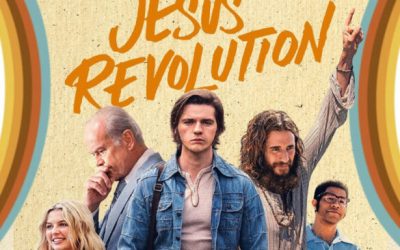
Explo ’72
This last week I watched the new Lionsgate film, “Jesus Revolution.” The film did better than expected, grossing $50 million in the first months after its release in February.
The screenplay is based upon a memoir that Greg Laurie, and co-writer Ellen Vaughn, published in 2018, “Jesus Revolution: How God Transformed an Unlikely Generation and How He Can Do It Again Today.”

Native Americans and education
In “National Geographic’s” May edition, the writer Suzette Brewer, member of the Cherokee Nation, wrote an article about “the some 500 federally funded boarding schools for Native children opened in the U.S and Canada in the 1800s.”

Stories
This past week I listened to Craig Wortmann’s book, “What’s Your Story: Using Stories to Ignite Performance and Be More Successful.” Craig encourages readers to place their stories into a matrix of sixteen cells, four columns by four rows.
He identifies four columns, top to bottom: success, failure, fun, and legends. A success story is how a project succeeded. A failure story is how a project failed. A fun story is a joke. A legend story is a once-upon-a-time story, that of a hero.
The idea of a matrix appears too complicated, a spreadsheet to arrange jokes. Ronald Reagan kept it simpler. He wrote his stories on 3 x 5 cards and kept them in boxes. To write a speech, for example, to inspire, he withdrew cards from his stack.
Roger Williams and William Shakespeare
William Shakespeare was born close to April 23, 1564, in Stratford-on-the-Avon, in England, 100 miles northwest of London. Roger Williams was born either as early as December of 1603, or as late as April 5, 1604, in Smithfield, a section of London.
Shakespeare’s father, John, was a glover in Stratford-on-the-Avon, in that he stitched gloves out of animal skins. Williams’s father, James, bought, sold, and traded textiles.
Shakespeare became a famous playwright in London at the Globe Theater, but Williams sailed to Massachusetts in 1631, and later founded Providence, Rhode Island.
Shakespeare died close to his 52nd birthday, on April 23, 1616, in Stratford-on-the Avon. Roger Williams died in early March of 1683, near his 79th birthday, in Providence.
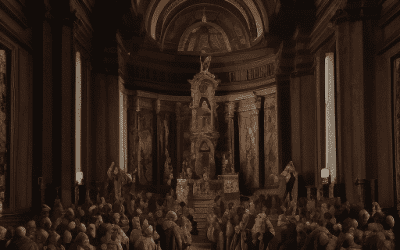
Roger Williams vs. the Puritans
Last time in these pages, I mentioned Jonathan Winthrop’s “city on a hill” sermon, “that all the eyes of all people are upon us.” Winthrop considered himself a type of Moses who was leading his people, like Israel, to a new land, to build a new Jerusalem.
This is spelled out in John Barry’s 2012 book, “Roger Williams and the Creation of the American Soul: Church, State, and the Birth of Liberty.”
Winthrop and his fellow Puritans believed the city on a hill should have a church and a state, and that the two should work together, like left and right hands. In essence, Winthrop wanted to build a theocracy, in New England, in 1630.
The Puritans expected the magistrates to support the church by compelling people to attend worship, to recite oaths, to pray prescribed prayers, and to tithe.

Jonathan Winthrop’s ‘A Model of Christian Charity’
In recent days, I have begun reading John Barry’s book, “Roger Williams and the Creation of the American Soul: Church, State, and the Birth of Liberty.”
Although published in 2012, Barry tells the story of how the Puritans chose to leave old England to build a plantation on the rocky New England coast of Massachusetts.
In England, the Puritans wanted to purify and simplify their church. Hence, the title of Puritans. They wanted a rustic sanctuary, without stained glass windows and gaudy artwork. Also, they wanted the Anglican clerics to dress without cassock, cap, or gown.
King James I, his son Charles I, and Charles’s archbishop William Laud disagreed. Laud and his henchmen hunted the Puritans down, jailed them, and even tortured them. For these Puritans, exile to North American represented a better choice.

One of University of Northern Colorado’s 2020 Honored Alumni
William H. Benson
Local has provided scholarships for history students for 15 years
A Sterling resident is among five alumni selected to be recognized this year by the University of Northern Colorado. Bill Benson is one of college’s 2020 Honored Alumni.
Each year UNC honors alumni in recognition for their outstanding contributions to the college, their profession and their community. This year’s honorees were to be recognized at an awards ceremony on March 27, but due to the COVID-19 outbreak that event has been cancelled. Instead UNC will recognize the honorees in the fall during homecoming Oct. 10 and 11……
Newspaper Columns

The Duodecimal System
For centuries, the ancient Romans calculated sums with their clunky numerals: I, V, X, L, C, D, and M; or one, five, ten, 50, 100, 500, and 1,000. They knew nothing better.

The Thirteenth Amendment
On Jan. 1, 1863, President Abraham Lincoln signed the Emancipation Proclamation, and by it, he declared that “all persons held as slaves” within the rebellious states “are and henceforward shall be free.” Lincoln’s Proclamation freed some 3.1 million slaves within the Confederacy.

The Fourteenth Amendment
After Congress and enough states ratified the thirteenth amendment that terminated slavery, Congress passed the Civil Rights Act of 1866. This law declared that “all people born in the United States are entitled to be citizens, without regard to race, color, or previous condition of slavery or involuntary servitude.” The Act equated birth to citizenship.

The New-York Packet and the Constitution
Jill Lepore, the Harvard historian, published her newest book a month ago, These Truths: A History of the United States. In a short introduction, she describes in detail the Oct. 30, 1787 edition of a semi-weekly newspaper, The New-York Packet.
Mr. Benson’s writings on the U.S. Constitution are a great addition to the South Platte Sentinel. Its inspiring to see the history of the highest laws of this country passed on to others.
– Richard Hogan
Mr. Benson, I cannot thank you enough for this scholarship. As a first-generation college student, the prospect of finding a way to afford college is a very daunting one. Thanks to your generous donation, my dream of attending UNC and continuing my success here is far more achievable
– Cedric Sage Nixon
Donec bibendum tortor non vestibulum dapibus. Cras id tempor risus. Curabitur eu dui pellentesque, pharetra purus viverra.
– Extra Times
FUTURE BOOKS
- Thomas Paine vs. George Whitefield
- Ralph Waldo Emerson vs. Joseph Smith
- William James vs. Mary Baker Eddy
- Mark Twain vs. Billy Graham
- Henry Louis Mencken vs. Jim Bakker
