
By William H. Benson
The Parallel Lives
Of The NOBLE AMERICAN RELIGIOUS THINKERS AND BELIEVERS:
Roger Williams VS. Cotton Mathers

NEW ARTICLES
thoughts on William Franklin
William Franklin was born in Philadelphia in 1730. His father was Benjamin Franklin. His mother was unknown. Ben brought William, his illegitimate son, into his home, that same year.
Ben and his common-law wife, Deborah Reed, agreed to raise William together.
On June 10, 1752, when William was twenty-one, Ben conducted his experiment with a kite, a key, and a lightning bolt, near their home in Philadelphia.
In 1757, Ben and William sailed to London. Ben remained there for the next sixteen years.
In 1759, William began to study law at the Inns of the Court in the Middle Temple in London. In 1760, he too acknowledged an illegitimate son, named William Temple Franklin. His mother also was unknown. William placed Temple Franklin into foster care.
In 1762, Ben secured a position for William as royal governor of New Jersey. William sailed back to America, but Ben remained in London. Father and son wrote letters back and forth.
Ben worked to keep the thirteen colonies and England’s King and Parliament united, but he saw the corruption of the English government, and he idealized Americans.
William though saw British law as supreme, and obedience to King as a path to prosperity.
After the Boston Tea Party, on December 16, 1773, William wrote to Ben and said, “Nothing can make the Bostonians acknowledge the right of the Parliament to tax them. To do justice, the Bostonians must pay for the tons of tea that have been destroyed.”
Ben replied back to William, “The British have extorted many thousands of pounds from America unconstitutionally and with an armed force. Of this money, they ought to make restitution. But you are a thorough courtier, and you see everything with government eyes.”
In the spring of 1775, Ben gave up negotiating with the British, and sailed back to America, eager to work for independence. He took with him his grandson, Temple, then fifteen years old.
One day, William, the son, visited Benjamin, the father, and there William met Temple, his son and Ben’s grandson.
Ben urged his son William to join the Patriot cause for independence, but William refused, thinking a reconciliation with King still possible. “They argued all night. At another meeting, neighbors heard them shouting. They went their separate ways.”
William was the last colonial governor of New Jersey, forced out in 1776, when colonial militiamen placed him under arrest. The new state congress of New Jersey took William into custody, and officials incarcerated him in Connecticut for two years for spying on the Patriots.
He then was held in solitary confinement at Litchfield, Connecticut for eight months.
When released, William fled to New York City, where he set up a spy network, and coordinated the Associated Loyalists, a military unit that attacked Patriots in secret.
In 1782, after Washington defeated Cornwallis at Yorktown, William fled to England.
On August 16, 1784, Ben wrote to William and said, “Nothing has ever hurt me so much, as to find myself deserted in my old age by my only son, and not only deserted, but to find him taking up arms against me.”
William met Ben for the last time in 1785, in England. That day Ben insisted that William sign deeds to transfer ownership of his property in America to Temple, the son and grandson.
In his will, Benjamin left little to William, and said, “The part he acted against me in the late war, which is of public notoriety, will account for my leaving him no more of an estate [than that] he endeavored to deprive me of.”
The American Revolution divided families. “That’s what happens when a real civil war happens in a country.”
‘On Writing’ and ‘Why I Write’
n the year 2000, the horror fiction writer Stephen King came out with a different kind of book, a nonfiction book that he entitled, “On Writing: a Memoir of the Craft.” He begins with a series of scenes from his childhood, and explains how he launched his career of writing popular fiction.
King uses a metaphor, that of a toolbox, to describe how he works when he writes. At the bottom of the toolbox lie the fundamentals: appropriate vocabulary, sticking with accepted grammar, the use of active verbs rather than passive, and avoiding adverbs.
Recap of Queen Elizabeth II
Queen Elizabeth II of New ZealandQueen Elizabeth passed away last week, Thursday, September 8, 2022, at 96. She was born on April 21, 1926, and had one sibling, a younger sister named Margaret, born August 21, 1930. When ten, Elizabeth discovered she was next in line...
Vaclav Smil
Vaclav Smil was born in 1943, during World War II, in Czechoslovakia, in the German Protectorate of Bohemia and Moravia. As a teenager, Smil’s parents expected him to chop wood, every four hours, to keep the fires burning in the house’s three stoves, “one downstairs and two up.”
One writer suspected that Smil may have thought then that “this is hardly an efficient way to live.”
Bill Russell and Retirement
Three weeks ago, on July 31, 2022, the former Boston Celtics’ imposing center, Bill Russell, passed away, at age eighty-eight. Over thirteen seasons at Boston, from 1957 to 1969, he collected a total of eleven championship rings, a record never since eclipsed or matched.
When he retired in 1969, he moved to Mercer Island, in Seattle, Washington, and it was there he passed away. For fifty-three years, he enjoyed a well-deserved retirement in the cool Pacific Northwest, although he coached seven seasons in the NBA in the 70s and 80s.
Battle at Rzhev
In the early days of World War II, 1939 to 1940, the Nazi German war machine advanced across eastern Europe, until its soldiers stood on the outskirts of Moscow, deep into the Soviet Union, poised and ready to attack the Russian capital city.
However, the Battle of Moscow stalled when the Soviet’s Red Army found sufficient strength to initiate a counter offensive, at Joseph Stalin’s insistence, that pushed Germany’s 9th Army west, some distance from Moscow. The counter-offensive worked for a time, until the German army stopped.
IN RETROSPECT: Pestilence
IN RETROSPECT: Pestilence On June 26, 1284, officials in a German town called Hamelin hired a musician to rid the town of its rats. The “rat-catcher’s magical flute” hypnotized the rats that followed the piper out of Hamelin’s gates and into the Weser River, where...
Older Posts
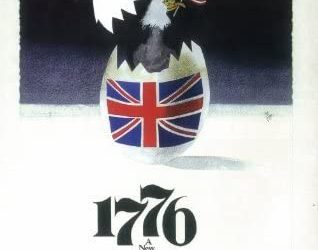
1776
The logo for the Broadway musical “1776” features an eaglet inside a broken eggshell, biting down on a flagpole. The small flag atop the pole shows its colors: red and white stripes, and a blue field in the upper left corner. Across the bottom portion of the egg appears a larger English flag.
The musical begins with John Adams alone in the Pennsylvania State House’s belfry, four floors up, leaning on a massive bell. A messenger approaches and informs him that he must return to the hall.
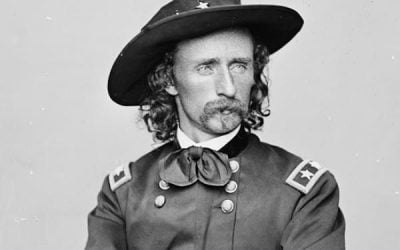
George Armstrong Custer
George Armstrong Custer The Native American tribes had pet names for George Armstrong Custer. The Crow called him Child of the Morning Star, the Cheyenne labeled him Yellow Hair, but the Lakota Sioux referred to him as Long Hair, even though a barber had cut off his...
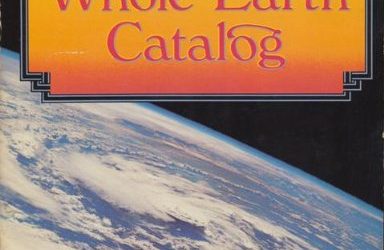
Stewart Brand: “The Whole Earth Catalog”
Steve Jobs gave the commencement address at Stanford University on June 14, 2005. In it, he told three stories. The first was how he dropped out of Reed College, in Portland, Oregon. The second was how a manager fired him from the company that he and Steve Wozniak had started in a garage.
The third story was about his pending death, due to a pancreatic cancer diagnosis a year before.
Then, after he finished the three stories, he said, “When I was young, there was an amazing publication called “The Whole Earth Catalog,” which was one of the bibles of my generation. It was created by a fellow named Stewart Brand, not far from here in Menlo Park, California.
Mythology
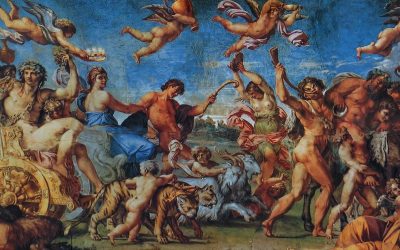
Tony Hillerman grew up in Oklahoma, and attended St. Mary’s Academy, a boarding school intended for Native American girls. One of the few boys permitted to attend, he developed a sensitivity for the various Native American cultures, mythologies, and religions.
Traditions
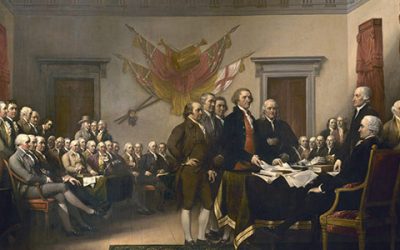
In recent days, I have re-read David L. Lindsay’s novel, Body of Truth. In it, he describes a cruel and gruesome civil war that terrorized the people of Guatemala for thirty-six years, from 1960 until 1996. It was the federal government, then run by a series of generals, who attacked the poorest of its citizens.
A United Nations report, dated March 1, 1999, declared that, “An estimated 200,000 Guatemalans were killed during the civil war, including at least 40,000 persons who disappeared.”
Truth vs. lies
It might be fabricated, but a story I heard years ago was that Bill Cosby warned a young Oprah Winfrey, to “always balance your own check book.” In other words, he cautioned her to trust only herself, and not any paid employee, with that simple task.
Another piece of advice for the up-and-coming, who are now, after years of struggle, experiencing some success, “Do not believe your own press reports.” In other words, no matter how wonderful and great the journalists and reporters say you are, keep in reserve some small measure of humility.

One of University of Northern Colorado’s 2020 Honored Alumni
William H. Benson
Local has provided scholarships for history students for 15 years
A Sterling resident is among five alumni selected to be recognized this year by the University of Northern Colorado. Bill Benson is one of college’s 2020 Honored Alumni.
Each year UNC honors alumni in recognition for their outstanding contributions to the college, their profession and their community. This year’s honorees were to be recognized at an awards ceremony on March 27, but due to the COVID-19 outbreak that event has been cancelled. Instead UNC will recognize the honorees in the fall during homecoming Oct. 10 and 11……
Newspaper Columns

The Duodecimal System
For centuries, the ancient Romans calculated sums with their clunky numerals: I, V, X, L, C, D, and M; or one, five, ten, 50, 100, 500, and 1,000. They knew nothing better.

The Thirteenth Amendment
On Jan. 1, 1863, President Abraham Lincoln signed the Emancipation Proclamation, and by it, he declared that “all persons held as slaves” within the rebellious states “are and henceforward shall be free.” Lincoln’s Proclamation freed some 3.1 million slaves within the Confederacy.

The Fourteenth Amendment
After Congress and enough states ratified the thirteenth amendment that terminated slavery, Congress passed the Civil Rights Act of 1866. This law declared that “all people born in the United States are entitled to be citizens, without regard to race, color, or previous condition of slavery or involuntary servitude.” The Act equated birth to citizenship.

The New-York Packet and the Constitution
Jill Lepore, the Harvard historian, published her newest book a month ago, These Truths: A History of the United States. In a short introduction, she describes in detail the Oct. 30, 1787 edition of a semi-weekly newspaper, The New-York Packet.
Mr. Benson’s writings on the U.S. Constitution are a great addition to the South Platte Sentinel. Its inspiring to see the history of the highest laws of this country passed on to others.
– Richard Hogan
Mr. Benson, I cannot thank you enough for this scholarship. As a first-generation college student, the prospect of finding a way to afford college is a very daunting one. Thanks to your generous donation, my dream of attending UNC and continuing my success here is far more achievable
– Cedric Sage Nixon
Donec bibendum tortor non vestibulum dapibus. Cras id tempor risus. Curabitur eu dui pellentesque, pharetra purus viverra.
– Extra Times
FUTURE BOOKS
- Thomas Paine vs. George Whitefield
- Ralph Waldo Emerson vs. Joseph Smith
- William James vs. Mary Baker Eddy
- Mark Twain vs. Billy Graham
- Henry Louis Mencken vs. Jim Bakker
