
By William H. Benson
The Parallel Lives
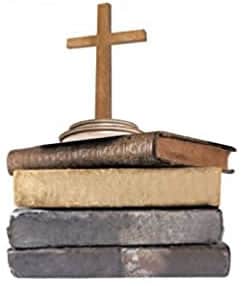
Of The NOBLE AMERICAN RELIGIOUS THINKERS AND BELIEVERS:
Roger Williams VS. Cotton Mathers

NEW ARTICLES
Choose a College
Derek Bok, Harvard University’s president, 1971 to 1991, said, “If you think education is expensive, try ignorance.” Bok’s quote is often mis-attributed to Benjamin Franklin.
Franklin did write, “The good education of youth has been esteemed by wise men in all ages, as the surest foundation of the happiness both of private families and of Commonwealths.”
In Franklin’s 1749 pamphlet, “Proposals Relating to the Education of Youth in Pennsylvania,” he insisted that his adopted colony needed a school similar to Boston’s Harvard and Haven, Connecticut’s Yale. In 1791, his school became known as the University of Pennsylvania.
Near his pamphlet’s beginning, Franklin writes, “It is therefore proposed that they learn those things that are likely to be most useful and most ornamental; But art is long and their time is short,” a reference back to Hippocrates.
Franklin then presented his thoughts upon an ideal curriculum.
He writes, “All should be taught to write a fair hand, and swift, as that is useful to all.” Here, Franklin encourages legible penmanship and quick sentences.
Next, he insists upon, “arithmetic, accounts, and some geometry and astronomy,” and follows that with, “The English language might be taught by grammar, in which some of the our best writers and their styles to be cultivated, being the clear and concise.”
Then, he emphasizes reading, that it “should also be taught,” and “pronouncing the words properly, not with an even tone, which under-does, nor a theatrical, which over-does.”
“To form the students’ style, they should be put on writing letters to each other, making abstracts of what they read, or writing the same things in their own words.”
In other words, Franklin recognized the importance of communication skills, through writing and speaking, plus reading classic writers, plus mastering mathematical skills.
Lee Iacocca, the 20th-century automobile industry expert, championed communication skills.
“You can have brilliant ideas, but if you can’t get them across, your brains won’t get you anywhere. When I was young, I was surrounded by brilliant people, and yet I surpassed them all, because of my ability to speak, read, write, and motivate others.”
Harold Bloom, Yale’s literary scholar, 1930 to 2019, said, and here, I paraphrase, “If you don’t learn to read deeply, you will end up where we are today. That is not a joke.”
Bloom encouraged the young to read the English dramatist Shakespeare, the Italian poet Dante, and the Spanish novelist Cervantes. He claimed that “people who read deeply become more human.”
If at college, you choose one of the humanities—English, literature, history, philosophy; or one of the sciences—biology or chemistry; or one of the pure mathematics—algebra, trigonometry, or calculus; and you want to live in a small town, then you will be expected to teach that subject at the local school or community college. That is the reality in the job market.
I say to anyone who has a hankering to know a subject, choose to attend college today.
A true story. A high school basketball coach and science teacher back in the early 1970’s, then in his thirties, quit teaching, and attended dental school. He practiced dentistry for decades.
Someone else remarked, “If I attend college now, after four years of school, I will be almost forty.” Someone replied, “How old will you be in four years if you do not go to college?”
“The principal end of education is to form us as wise and good creatures, useful to others and happy to ourselves.” “Art is long, but life is short.”
July 4 Speeches
In 1834, Ralph Waldo Emerson, lecturer and essayist, moved to Concord, Massachusetts. The following year he bought a home in the town of 2000 residents, where he remained for all his remaining days, with his wife Lidian and their children. Concord lies...
To Prepare for the University
Dave Ramsey, host of the popular call-in radio show, helps listeners pry themselves free from debt by a series of “Baby Steps.” That debt often stems from houses, vehicles, or college. Ramsey ridicules the idea that high school graduates should embark upon an...
Learning Methods
May is for graduations, for ceremonies and parties. Some high school graduates will give up on further formal education and instead will enter straight into the work force. Others will pursue a challenging course of study at a university: mathematics, science,...
Five Useful Books
Take a break from the present, and consider the better books from the past. Of all the books published since the days of the ancients, I consider five most useful: Fibonacci’s “Liber Abaci,” Isaac Newton’s “Principia Mathematica,” Charles Darwin’s “On the Origin of...
Dilemma
Jeffrey W. Kitchen has taught an intense course on screenwriting to a series of small groups of just six people over the past 35 years. In recent weeks, I came across Kitchen on YouTube, and I was impressed by his skill, that of a classical dramatist. Kitchen says,...
Words: “What’s in a Name?”
In Shakespeare’s play, “Romeo and Juliet,” Juliet stands upon her balcony, and complains that Romeo has the wrong last name. Her family, the Capulet’s, and Romeo’s family, the Montague’s, were bitter enemies, locked in a bloody feud. She says, “’Tis but thy name that...
Older Posts
two peace marches
On Sunday, March 7, 1965, some 600 nonviolent, civil rights activists, mostly black, gathered at the Edmund Pettus Bridge in Selma, Alabama, intending to march to Montgomery, Alabama, the state capital, a distance of 54 miles, to demand their constitutional right to...
The American Revolution, Small Pox, and Black Soldiers
George Washington was from Virginia, born February 22, 1732, noted last Sunday. Only once during Washington’s life, did he leave the North American continent, and that was in 1751, when he was 19, when he sailed to Barbados, an island in the south Caribbean Sea,...
Three Events on February 11, 1861
Black History Month began Sunday, February 1, and will end Sunday, March 1. At least three events occurred on February 11, 1861, that deserve our attention during Black History Month. On that day, the U.S. House of Representatives received a formal written...
thoughts on William Franklin
William Franklin was born in Philadelphia in 1730. His father was Benjamin Franklin. His mother was unknown. Ben brought William, his illegitimate son, into his home, that same year. Ben and his common-law wife, Deborah Reed, agreed to raise William together. ...
Benjamin Franklin
Benjamin Franklin was born on January 17, 1706 in Boston, Massachusetts, 320 years ago. In recent days, I discovered Ken Burns’s two episodes on Benjamin Franklin that aired in April 2022 on PBS. The second part is more interesting, his efforts during the...
Colonel Tom Parker and Elvis Presley
Elvis Presley died on August 16, 1977, at the age of 42, in his Graceland Mansion in Memphis, Tennessee. His heart gave out after years of obesity and prescription drugs. His long-time talent agent and promoter, cigar-chomping Colonel Tom Parker, lived for...

One of University of Northern Colorado’s 2020 Honored Alumni
William H. Benson
Local has provided scholarships for history students for 15 years
A Sterling resident is among five alumni selected to be recognized this year by the University of Northern Colorado. Bill Benson is one of college’s 2020 Honored Alumni.
Each year UNC honors alumni in recognition for their outstanding contributions to the college, their profession and their community. This year’s honorees were to be recognized at an awards ceremony on March 27, but due to the COVID-19 outbreak that event has been cancelled. Instead UNC will recognize the honorees in the fall during homecoming Oct. 10 and 11……
Newspaper Columns

The Duodecimal System
For centuries, the ancient Romans calculated sums with their clunky numerals: I, V, X, L, C, D, and M; or one, five, ten, 50, 100, 500, and 1,000. They knew nothing better.

The Thirteenth Amendment
On Jan. 1, 1863, President Abraham Lincoln signed the Emancipation Proclamation, and by it, he declared that “all persons held as slaves” within the rebellious states “are and henceforward shall be free.” Lincoln’s Proclamation freed some 3.1 million slaves within the Confederacy.

The Fourteenth Amendment
After Congress and enough states ratified the thirteenth amendment that terminated slavery, Congress passed the Civil Rights Act of 1866. This law declared that “all people born in the United States are entitled to be citizens, without regard to race, color, or previous condition of slavery or involuntary servitude.” The Act equated birth to citizenship.

The New-York Packet and the Constitution
Jill Lepore, the Harvard historian, published her newest book a month ago, These Truths: A History of the United States. In a short introduction, she describes in detail the Oct. 30, 1787 edition of a semi-weekly newspaper, The New-York Packet.
Mr. Benson’s writings on the U.S. Constitution are a great addition to the South Platte Sentinel. Its inspiring to see the history of the highest laws of this country passed on to others.
– Richard Hogan
Mr. Benson, I cannot thank you enough for this scholarship. As a first-generation college student, the prospect of finding a way to afford college is a very daunting one. Thanks to your generous donation, my dream of attending UNC and continuing my success here is far more achievable
– Cedric Sage Nixon
Donec bibendum tortor non vestibulum dapibus. Cras id tempor risus. Curabitur eu dui pellentesque, pharetra purus viverra.
– Extra Times
FUTURE BOOKS
- Thomas Paine vs. George Whitefield
- Ralph Waldo Emerson vs. Joseph Smith
- William James vs. Mary Baker Eddy
- Mark Twain vs. Billy Graham
- Henry Louis Mencken vs. Jim Bakker
