
By William H. Benson
The Parallel Lives
Of The NOBLE AMERICAN RELIGIOUS THINKERS AND BELIEVERS:
Roger Williams VS. Cotton Mathers

NEW ARTICLES
“Frankenstein” and “Hamnet”
Two movies were released this past November, “Frankenstein” on the 7th, and “Hamnet” on the 26th. Both were based, in part, on well-known fictional works from previous centuries, Mary Shelley’s “Frankenstein; or the Modern Prometheus,” and William Shakespeare’s “Hamlet.”
Mary Shelley, girlfriend, lover, and future wife of the poet Percy Shelley, began writing her Gothic horror novel, “Frankenstein,” in the summer of 1816, when just 18.
The English poet Lord Byron had suggested that she, and Percy Shelley, and a group of like-minded literary artists should each try to write a ghost story that summer while the writers enjoyed the rainy, cool summer days near Lake Geneva in Switzerland.
In mid-June, Mary’s imagination kept her awake. She wondered, “Perhaps a corpse would be reanimated. Galvanism had given token of such things.”
She later wrote, “I saw the pale student of unhallowed arts kneeling beside the thing he had put together. I saw the hideous phantasm of a man stretched out, and then, on the working of some powerful engine, show signs of life, and stir with an uneasy, half vital motion.”
Mary Shelley finished her fictional tale of Victor Frankenstein—a surgeon, and his recreated being built from a body—in 1817, when she turned 20. The novel was published in 1818, in three volumes, but without Mary’s name listed as author. It was “an overwhelming success.”
Guillermo del Toro, a filmmaker, author, and artist from Mexico, has filmed the latest of untold numbers of film adaptations. Del Toro is drawn to monsters, Gothic stories, and horror.
Del Toro says, “There is a difference between eye candy and eye protein. Eye candy is just pretty, but eye protein is telling a story, and it is pretty.”
Maggie O’Farrell is a writer from Northern Ireland, part of the United Kingdom. The copper-colored hair, blue eyes, and fair skin indicate Irish ancestry.
In 2020, Maggie published “Hamnet: A Novel of the Plague,” during the covid pandemic, to universal acclaim. The “New York Times Book Review” named it one of the five best works of fiction that year, and O’Farrell won the U.K.’s “Women’s Prize for Fiction” that year.
Historians acknowledge that William Shakespeare married Anne Hathaway in November 1582, when he was 18, and she 26. Six months later, in May 1583, Anne gave birth to Susanna.
Then, in February of 1585, Anne gave birth to twins: a second daughter named Judith, and a son Hamnet. William relocated to London, where he luxuriated in a phenomenal success as a poet, playwright, and actor at the Globe Theater.
Anne remained at home in Stratford-on-the Avon, carrying on with the duties of raising three children alone. In August of 1596, William and Anne suffered a “devastating loss” when Hamnet died at age 11, perhaps due to the bubonic plague, although the exact cause is not known.
Maggie O’Farrell reimagines life in Anne’s home without husband or father. Maggie never mentions William’s first or last name. She gives Anne the name of “Agnes,” pronounced “ann-yes,” a close variation, and she points out that Hamnet was sometimes spelled as Hamlet.
Maggie builds her story around the grief that the couple endured, due to Hamnet’s passing.
She shows how William channelled his grief in his best tragic play, “Hamlet,” about a Danish prince who buries his father, the king, because the prince’s uncle murdered Hamlet’s father.
Chloé Zhao directed the movie, “Hamnet.” Critics give it either four or five stars, calling it “stunning,” “a masterpiece.” Some critics suggest the film may win Best Picture award.
Take your pick, Mary Shelley’s “Frankenstein,” or Maggie O’Farrell’s “Hamnet,” a dose of eye protein either way.
Insurrection on the Capitol: January 6, 2021
Donald Trump lost the 2020 election on Nov. 3, 2020. Although some 74.2 million voters voted for him, 81.2 voted for Biden, a difference of over 7.0 million. Then, Biden won 306 electoral votes to Trump’s 232. Despite those facts, Donald Trump vowed he would never concede.
Stars
The one constellation I can identify without much effort is Ursa Major, “the greater or larger Bear,” or the Big Dipper, in the northern sky.
Last time in these pages, I talked about Ralph Waldo Emerson’s fruit trees, and that the wise men, who came from the east to Judea, came bearing expensive gifts, three minerals, and yet today we give three types of foods—fruits, nuts, and sweets—to our children on Christmas Day.
Fruits
In 1905, the USDA published a bulletin: Nomenclature of the Apple: A Catalog, that listed 17,000 names. After removing the duplicate names, it still listed 14,000 different varieties of the apple.
Between Captain John Smith in Jamestown, Virginia, in 1607, and the beginning of the 20th century,
A look at the amendments of the U.S. Constitution
On Sept. 25, 1789, James Madison submitted 12 amendments to the new Constitution. This is the story of what happened to those amendments.
Milton Hershey School, part II
Last time in these pages I began a review of a recent book, Invisible Child: Poverty, Survival and Hope in an American City. Its author, Andrea Elliott, focused on a middle school girl named Dasani, who grew up in a series of New York City housing projects, a step away from homelessness.
After Elliott published an expose in the New York Times on Dasani’s plight, the girl was awarded a scholarship to attend Milton Hershey’s middle school, in Hershey, Pennsylvania. She arrived at the private school in late January of 2015, as a 14-year-old African-American girl, lonely and scared.
Milton Hershey School
Earlier this month, a New York Times reporter named Andrea Elliott published a book, Invisible Child: Poverty, Survival and Hope in an American City.
In the book, Andrea delves into the life of a family: Chanel, the mother; Supreme, her husband; and her seven children. In 2012, the family resided in a single room in the Auburn Family Residence, in Brooklyn, New York.
Andrea started her investigative reporting on the city’s poor and destitute by drifting around the Auburn’s front door. In October of 2012, she met Chanel, whose seven children would follow her out the building and down the sidewalk. The family soon let Andrea into their home, via the fire escape.
Older Posts
Tuskegee University
Tuskegee UniversityTuskegee University is a “private, historically black, land-grant university” in east central Alabama, with an endowment of $129 million, as of 2019. That same year 2,876 students were enrolled, and of those, 2,379 were black. Of the 560 degrees...
Smallpox
Called “the most dreadful scourge of the human species,” smallpox begins with fever, muscle pain, headache, and fatigue. Days later lesions will appear first inside the mouth and on the tongue, and later, lesions will attack the skin on forehead, face, trunk, and arms.
The Road to 9-11
During the 1990’s, the Clinton administration received sufficient warnings that Osama bin Laden’s terrorist organization, al-Qaeda, intended to continue to carry out attacks upon U. S. citizens and their property, by enlisting suicide bombers.
Afghanistan
The United States will depart Afghanistan on Aug. 31, after almost 20 years of nation-building, the most recent foreign power to surrender that harsh, cold, Himalayan terrain, “the graveyard of empires,” back to the Afghan people.
The British tried three times to tame the poor but fierce Afghan fighters. In the first Afghan War, 1839-1840,
Euclid’s Elements
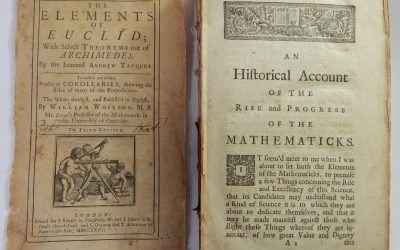
The Greek mathematician Euclid, who wrote Elements of Geometry, “the most successful textbook of all time,” around 300 BCE, in Alexandria, in Egypt, in northern Africa. Lincoln though took to heart Euclid’s talent for making sense out of the bewildering. Euclid started with 35 definitions, a handful of postulates, a dozen or more axioms, a series of postulates, and argued for a set of theorems, all about triangles, lines, angles, squares, and circles.

Plagues
Rarely do men and women seem free, even for a moment, from the evils that have plagued human beings for millennium: war, poverty, famine, slavery, racism, diseases, pestilence, and natural disasters.
The U.S. armed forces first attacked the Taliban in Afghanistan on October 7, 2001, and now, the twin wars in Afghanistan and Iraq are winding down after two decades, wars that have cut short many human lives and caused painful, debilitating injuries. On the horizon is a menacing conflict with China.

One of University of Northern Colorado’s 2020 Honored Alumni
William H. Benson
Local has provided scholarships for history students for 15 years
A Sterling resident is among five alumni selected to be recognized this year by the University of Northern Colorado. Bill Benson is one of college’s 2020 Honored Alumni.
Each year UNC honors alumni in recognition for their outstanding contributions to the college, their profession and their community. This year’s honorees were to be recognized at an awards ceremony on March 27, but due to the COVID-19 outbreak that event has been cancelled. Instead UNC will recognize the honorees in the fall during homecoming Oct. 10 and 11……
Newspaper Columns

The Duodecimal System
For centuries, the ancient Romans calculated sums with their clunky numerals: I, V, X, L, C, D, and M; or one, five, ten, 50, 100, 500, and 1,000. They knew nothing better.

The Thirteenth Amendment
On Jan. 1, 1863, President Abraham Lincoln signed the Emancipation Proclamation, and by it, he declared that “all persons held as slaves” within the rebellious states “are and henceforward shall be free.” Lincoln’s Proclamation freed some 3.1 million slaves within the Confederacy.

The Fourteenth Amendment
After Congress and enough states ratified the thirteenth amendment that terminated slavery, Congress passed the Civil Rights Act of 1866. This law declared that “all people born in the United States are entitled to be citizens, without regard to race, color, or previous condition of slavery or involuntary servitude.” The Act equated birth to citizenship.

The New-York Packet and the Constitution
Jill Lepore, the Harvard historian, published her newest book a month ago, These Truths: A History of the United States. In a short introduction, she describes in detail the Oct. 30, 1787 edition of a semi-weekly newspaper, The New-York Packet.
Mr. Benson’s writings on the U.S. Constitution are a great addition to the South Platte Sentinel. Its inspiring to see the history of the highest laws of this country passed on to others.
– Richard Hogan
Mr. Benson, I cannot thank you enough for this scholarship. As a first-generation college student, the prospect of finding a way to afford college is a very daunting one. Thanks to your generous donation, my dream of attending UNC and continuing my success here is far more achievable
– Cedric Sage Nixon
Donec bibendum tortor non vestibulum dapibus. Cras id tempor risus. Curabitur eu dui pellentesque, pharetra purus viverra.
– Extra Times
FUTURE BOOKS
- Thomas Paine vs. George Whitefield
- Ralph Waldo Emerson vs. Joseph Smith
- William James vs. Mary Baker Eddy
- Mark Twain vs. Billy Graham
- Henry Louis Mencken vs. Jim Bakker
