
By William H. Benson
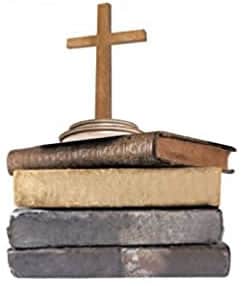
The Parallel Lives
Of The NOBLE AMERICAN RELIGIOUS THINKERS AND BELIEVERS:
Roger Williams VS. Cotton Mathers

NEW ARTICLES
Mexico’s Revolution, Part 2
Last time, I discussed the first phase of Mexico’s Revolution, when Francisco Madero challenged the three decades-long dictator, Porfirio Díaz, in the 1910 election.
Díaz won the election, but Madero called for a revolt against Díaz on November 20, 1910. Madero’s forces defeated the army’s forces, causing Porfirio Díaz to resign and flee to Paris.
Because Madero failed to hold together a strong government, a power vacuum spread across Mexico that lasted for the next ten years. Mexico’s Revolution turned violent and bloody.
Strong personalities, powerful warlords, vied and jockeyed for top position. Among others, there was Victoriano Huerta, Pascual Orozco, Pancho Villa, Emiliano Zapata, Venustiano Carranza, and finally Álvaro Obregón.
It helps to contrast Mexico’s Revolution to the United States Civil War.
Whereas the U.S. Civil War was fought between North and South, Mexico’s Revolution had a number of competing generals, each with an army, and each attacking another army.
Whereas the U.S. Civil War had two functioning governments, with Lincoln presiding in the North and Jefferson Davis in the South, Mexico’s Revolution lacked a functioning government.
Whereas the U.S. Civil War battles were fought between soldiers, Mexico’s Revolution massacred civilians en masse, without hesitation, no mercy.
Whereas the U.S. Civil War caused the deaths of some 600,000 soldiers, from both North and South, historians hesitate to fix a number for the Mexican Revolution, due to a lack of statistics.
Best estimates place the number between one million on the low side, and two and a half million people on the high side.
Whereas the percentage of casualties in the U.S. Civil War was about 2%, from a population of 30 million, the percentage of casualties in the Mexican Revolution was almost 7% on the low side to almost 17% on the high side, from a population of 15 million, per the 1910 census.
Whereas the U.S. Civil War lasted for four years, April 1961 to April 1965, Mexico’s Revolution lasted for ten years, from November 20, 1910, until near the day, November 30, 1920, when Álvaro Obregón was inaugurated President, and the fighting began to subside.
The Mexican people endured an immense amount of pain, death, and bloodshed.
Historians believe that between 1 and 2 million of Mexico’s citizens immigrated north into the U.S. during Mexico’s Revolution, near 10% +/- of its population. Again, statistics are difficult to determine. Some migrated north in a given year but then returned months later.
Migration north did not cease once the fighting subsided. In one year alone, 1923, some 1000 people crossed the border everyday throughout the year.
This migration into the U.S. was due to the Revolution’s bloody violence, devastation, severe unemployment, plus economic and political collapse.
Peace began to appear a possibility in 1920, when a Constitutional faction led by Venustiano Carranza called for a new constitution. Delegates from across the country arrived in Querétaro in November 2016, and on February 5, 1917, delegates voted for a new Constitution for Mexico.
Article 27 insisted upon land reform, Article 123 spelled out labor rights for factory workers, and Article 3 called for a secular state that restricted the Catholic church and provided for free, mandatory, and secular education.
Although an assassin’s bullet ended Carranza’s life and his presidency, on May 21, 1920, his death is considered close to the end of the Revolution’s violent phase.
My vote for best quote on the Mexican Revolution, “the proud country’s citizens endured a horrible present to escape an intolerable past to forge a better future.”
Tuskegee University
Tuskegee UniversityTuskegee University is a “private, historically black, land-grant university” in east central Alabama, with an endowment of $129 million, as of 2019. That same year 2,876 students were enrolled, and of those, 2,379 were black. Of the 560 degrees...
Smallpox
Called “the most dreadful scourge of the human species,” smallpox begins with fever, muscle pain, headache, and fatigue. Days later lesions will appear first inside the mouth and on the tongue, and later, lesions will attack the skin on forehead, face, trunk, and arms.
The Road to 9-11
During the 1990’s, the Clinton administration received sufficient warnings that Osama bin Laden’s terrorist organization, al-Qaeda, intended to continue to carry out attacks upon U. S. citizens and their property, by enlisting suicide bombers.
Afghanistan
The United States will depart Afghanistan on Aug. 31, after almost 20 years of nation-building, the most recent foreign power to surrender that harsh, cold, Himalayan terrain, “the graveyard of empires,” back to the Afghan people.
The British tried three times to tame the poor but fierce Afghan fighters. In the first Afghan War, 1839-1840,
Euclid’s Elements
The Greek mathematician Euclid, who wrote Elements of Geometry, “the most successful textbook of all time,” around 300 BCE, in Alexandria, in Egypt, in northern Africa. Lincoln though took to heart Euclid’s talent for making sense out of the bewildering. Euclid started with 35 definitions, a handful of postulates, a dozen or more axioms, a series of postulates, and argued for a set of theorems, all about triangles, lines, angles, squares, and circles.
Plagues
Rarely do men and women seem free, even for a moment, from the evils that have plagued human beings for millennium: war, poverty, famine, slavery, racism, diseases, pestilence, and natural disasters.
The U.S. armed forces first attacked the Taliban in Afghanistan on October 7, 2001, and now, the twin wars in Afghanistan and Iraq are winding down after two decades, wars that have cut short many human lives and caused painful, debilitating injuries. On the horizon is a menacing conflict with China.
Older Posts
Iceland
In recent days a native Icelander named Egill Bjarnason published a book, “How Iceland Changed the World.” I wonder about that title’s bold claim, but nonetheless he writes well, is entertaining.
He begins with the Vikings, and then steps forward, chapter by chapter, until he finishes in the 21st century. Along the way, he brings in plenty of fascinating details about the island’s towns, people, weather, government, and the Northern Lights, an enjoyable and readable geography primer.
Patriot vs. Loyalist
As the year 1776 unfolded, American colonists were confronted with the question of independence. Some favored it, others rejected it, and a third group remained uncommitted.
Juneteenth
You and I, and all others who claim American citizenship, now have reason to celebrate a new Federal holiday, Juneteenth, our 12th legal public holiday.
Last week, on Tuesday, June 15, the Senate unanimously passed legislation to make June 19, or Juneteenth, a national holiday. On Wednesday, June 16, the House passed it with only 14 “no” votes.
On Thursday, June 17, President Joe Biden signed into law the Juneteenth National Independence Day Act in the White House’s East Room.

Equations
How does one recognize great writing in a novel, a work of history, or a scientific treatise? The typical answers include: if it sells 5,000 copies, if it makes the “New York Times Best Seller” list, if it wins a literary prize, if a literary critic gives his or her stamp of approval, or if it is printed for decades.
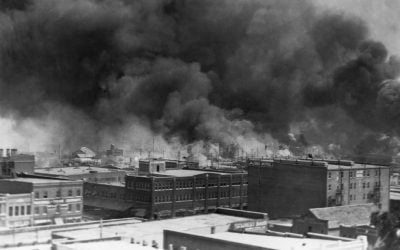
Tulsa Race Riot Marks Its Centennial
Here are some thoughts on the 1921 Tulsa race riot.The 1921 race riot in Tulsa began on Monday, May 30, Memorial Day, when a young black man stepped into an elevator, tripped, and either grabbed a young white girl’s arm to steady himself, or stepped on her foot. She...

Words to the Graduates
In recent days, an editor at the New York Times asked readers to send in their wise words that they try to live by. The best responses appeared in two Sunday editions in April. A few examples follow. A Missouri resident named Dave Dillon said, “Always behave as if...

One of University of Northern Colorado’s 2020 Honored Alumni
William H. Benson
Local has provided scholarships for history students for 15 years
A Sterling resident is among five alumni selected to be recognized this year by the University of Northern Colorado. Bill Benson is one of college’s 2020 Honored Alumni.
Each year UNC honors alumni in recognition for their outstanding contributions to the college, their profession and their community. This year’s honorees were to be recognized at an awards ceremony on March 27, but due to the COVID-19 outbreak that event has been cancelled. Instead UNC will recognize the honorees in the fall during homecoming Oct. 10 and 11……
Newspaper Columns

The Duodecimal System
For centuries, the ancient Romans calculated sums with their clunky numerals: I, V, X, L, C, D, and M; or one, five, ten, 50, 100, 500, and 1,000. They knew nothing better.

The Thirteenth Amendment
On Jan. 1, 1863, President Abraham Lincoln signed the Emancipation Proclamation, and by it, he declared that “all persons held as slaves” within the rebellious states “are and henceforward shall be free.” Lincoln’s Proclamation freed some 3.1 million slaves within the Confederacy.

The Fourteenth Amendment
After Congress and enough states ratified the thirteenth amendment that terminated slavery, Congress passed the Civil Rights Act of 1866. This law declared that “all people born in the United States are entitled to be citizens, without regard to race, color, or previous condition of slavery or involuntary servitude.” The Act equated birth to citizenship.

The New-York Packet and the Constitution
Jill Lepore, the Harvard historian, published her newest book a month ago, These Truths: A History of the United States. In a short introduction, she describes in detail the Oct. 30, 1787 edition of a semi-weekly newspaper, The New-York Packet.
Mr. Benson’s writings on the U.S. Constitution are a great addition to the South Platte Sentinel. Its inspiring to see the history of the highest laws of this country passed on to others.
– Richard Hogan
Mr. Benson, I cannot thank you enough for this scholarship. As a first-generation college student, the prospect of finding a way to afford college is a very daunting one. Thanks to your generous donation, my dream of attending UNC and continuing my success here is far more achievable
– Cedric Sage Nixon
Donec bibendum tortor non vestibulum dapibus. Cras id tempor risus. Curabitur eu dui pellentesque, pharetra purus viverra.
– Extra Times
FUTURE BOOKS
- Thomas Paine vs. George Whitefield
- Ralph Waldo Emerson vs. Joseph Smith
- William James vs. Mary Baker Eddy
- Mark Twain vs. Billy Graham
- Henry Louis Mencken vs. Jim Bakker
