
By William H. Benson
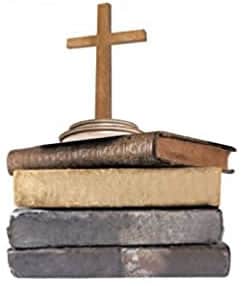
The Parallel Lives
Of The NOBLE AMERICAN RELIGIOUS THINKERS AND BELIEVERS:
Roger Williams VS. Cotton Mathers

NEW ARTICLES
Small Pox and Modernity
On May 8, 1980, forty-five years ago, the World Health Organization, a part of the United Nations, announced that officials had eradicated small pox from the world’s population. The last case occurred in Somalia in 1977, and the last case in the United States occurred in 1949.
This news delighted everyone, in that small pox had plagued humanity for centuries. Human ingenuity had defeated small pox, a triumph of science, of technology, and of a strategy.
Whenever WHO officials heard of a breakout of small pox, they would rush into the nearby villages and neighborhoods and vaccinate as much of the population as they could to prevent the epidemic from spreading too far. Done again and again, they circled and beat down the disease.
Small pox is caused by variola virus. It is contagious and will spread from person to person. A fever gives way to a rash, that turns into numerous poxes, skin eruptions that fill with fluid.
An estimated three out of ten people died from the disease. If they lived, their skin, especially their face, was pockmarked. The most famous of those so afflicted was George Washington.
Cotton Mather was a Puritan clergyman in colonial Boston at the North Church. Mather noticed that, beginning in 1630, a small pox epidemic would arrive about every twelve years.
Kenneth Silverman, Mather’s biographer, wrote, “The small pox epidemic that struck Boston in April of 1721 lasted a full twelve months and infected half the city’s population. By February 1722, 5,889 persons had suffered an infection, and of those 844 had died.”
As the epidemic gathered momentum, Cotton decided he must fight back.
From the Royal Society in London, Cotton learned about inoculation as a preventative treatment. In addition, an African slave named Onesimus, who lived in Cotton’s home in Boston, told the clergyman about his experience in Africa and what his people, the Guramantese, did.
Onesimus explained,
“People take Juice of Small-Pox; and cutty-skin, and putt in a Drop; then by and by a little sicky, sicky; then very few little things like Small-Pox; and no body die of it; and no body have Small-Pox any more.” Onesimus showed Cotton the scar on his arm.
Cotton convinced a doctor in Boston, Zabdiel Boylston, to inoculate some three hundred people in Boston. Only one person, a lady with other health issues, died, and none of the three hundred came down with the disease. Dozens lived who may have died without inoculation.
James Franklin, Benjamin Franklin’s older brother, owned a Boston newspaper, the “New England Courant.” Scathing and vicious, James attacked in print Cotton and Boylston, for trying an untested preventative technology, but James’s hateful words did not stop the two men.
Much of the credit for inoculation though is given to a British physician named Edward Jenner. Late in the 18th century, in Gloucestershire, England, Jenner noticed that milkmaids who suffered from cowpox lesions upon their hands were immune to small pox.
Cowpox was benign when contrasted to small pox, just a few lesions on the hands.
In 1796, Jenner conducted a daring experiment. He withdrew fluid from a cowpox lesion on the hand of a milkmaid named Sarah Nelmes, and injected that fluid into a cut on the arm of an eight-year-old boy named James Phipps, son of Jenner’s gardener.
Later, Jenner exposed the young Phipps to small pox, but the lad did not demonstrate small pox’s symptoms, proving that the lad now enjoyed immunity to small pox.
Jenner’s process received the name “vaccination,” taken from the Latin word for cow, vacca.
While others screamed their opposition, science, co-joined with technology and a working strategy, subdued and then eradicated small pox, a triumph of human ingenuity.
Modernity demanded vaccination. Because of it, the dreaded small pox disease evaporated.
Pilgrims and Puritans
Pilgrims and Puritans Bill Benson November 26, 2020 The first people to live in eastern Massachusetts were the Native Americans. A tribe called the Wampanoags lived on that rocky coast for perhaps 10,000 years. The Mayflower arrived at Plymouth Harbor on Nov. 11,...
Gaza Strip
Gaza Strip Bill Benson November 12, 2020 Only Palestinians live inside the Gaza Strip, a skinny stretch of flat coastal plain on the eastern shore of the Mediterranean Sea, sandwiched between Egypt and Israel. Gaza is only 25 miles long, and an average of four miles...
Books: Abandoned or preserved
Books: Abandoned or preserved Bill Benson October 29, 2020 Forty years ago, in 1980, Aaron Lansky was a 23-year old student, of Jewish heritage, living in Massachusetts, when he stumbled upon his life’s work and ambition, rescue all the books he could find, printed...
Good writing
Good writingBill Benson October 2, 2020 Mark Twain once said, “The difference between the right word and the wrong word is really a large matter. ‘Tis the difference between the lightning bug and the lightning.” Some writers choose big words to fill up a typewritten...
West Bank Settlements
West Bank Settlements by William H. Benson October 15, 2020 In June of 1967, Israel’s army captured the Sinai and Gaza Strip from Egypt, the Golan Heights from Syria, and East Jerusalem and the West Bank from the Jordanians. Although Israel returned the Sinai to Egypt...
Coincidences
Coincidences Bill Benson September 17, 2020 Ian Fleming divided his 7th James Bond novel, “Goldfinger,” into three parts: “Happenstance,” “Coincidence,” and “Enemy Action.” Three times Bond intervened in Auric Goldfinger’s diabolical plans to enrich himself, and after...
Older Posts
Time and Labor Day
Time and Labor Day Bill Benson September 8, 2020 On a calm summer day in 1823, in northwest South Dakota, a mountain man named Hugh Glass experienced absolute terror when he stumbled across a she-grizzly bear and her two cubs. He was alone. She stood on her hind legs,...
The Guns of August
The Guns of AugustBill Benson August 20, 2020 at 9:00 a.m. In 1962, the historian Barbara Tuchman published her work, “The Guns of August.” In it, she described the 30 days in August of 1914, when Europe’s governments prodded their countries into a Great War. Germany...
Authoritarianism versus liberal democracy
Authoritarianism versus liberal democracy Certain individuals desire a headstrong official to govern. They submit to that man or woman who claims all power belongs to him or herself. They follow. They obey. They do what they are told. They cease thinking for...
Inspectors General
Inspectors GeneralInspectors General by William H. Benson July 20, 2020 On Saturday night, Oct. 20, 1973, President Richard Nixon instructed Attorney General, Elliot Richards, to fire Watergate Special Prosecutor Archibald Cox. Elliot Richards though refused to comply...
Kerner Commission
Kerner CommissionKerner Commission by William H. Benson July 7, 2020 Rosa Parks and her husband Raymond lost their jobs in the backlash from Montgomery, Alabama’s successful bus boycott to end segregation on that city’s buses. In the late 1950’s, the couple moved to...
Zane Grey, Fran Striker, and the Texas Rangers
Zane Grey, Fran Striker, and the Texas RangersZane Grey, Fran Striker, and the Texas Rangers by William H. Benson June 25, 2020 Zane Grey was a most prolific author who wrote more than ninety books, mainly fictional westerns, but also non-fiction books on...

One of University of Northern Colorado’s 2020 Honored Alumni
William H. Benson
Local has provided scholarships for history students for 15 years
A Sterling resident is among five alumni selected to be recognized this year by the University of Northern Colorado. Bill Benson is one of college’s 2020 Honored Alumni.
Each year UNC honors alumni in recognition for their outstanding contributions to the college, their profession and their community. This year’s honorees were to be recognized at an awards ceremony on March 27, but due to the COVID-19 outbreak that event has been cancelled. Instead UNC will recognize the honorees in the fall during homecoming Oct. 10 and 11……
Newspaper Columns

The Duodecimal System
For centuries, the ancient Romans calculated sums with their clunky numerals: I, V, X, L, C, D, and M; or one, five, ten, 50, 100, 500, and 1,000. They knew nothing better.

The Thirteenth Amendment
On Jan. 1, 1863, President Abraham Lincoln signed the Emancipation Proclamation, and by it, he declared that “all persons held as slaves” within the rebellious states “are and henceforward shall be free.” Lincoln’s Proclamation freed some 3.1 million slaves within the Confederacy.

The Fourteenth Amendment
After Congress and enough states ratified the thirteenth amendment that terminated slavery, Congress passed the Civil Rights Act of 1866. This law declared that “all people born in the United States are entitled to be citizens, without regard to race, color, or previous condition of slavery or involuntary servitude.” The Act equated birth to citizenship.

The New-York Packet and the Constitution
Jill Lepore, the Harvard historian, published her newest book a month ago, These Truths: A History of the United States. In a short introduction, she describes in detail the Oct. 30, 1787 edition of a semi-weekly newspaper, The New-York Packet.
Mr. Benson’s writings on the U.S. Constitution are a great addition to the South Platte Sentinel. Its inspiring to see the history of the highest laws of this country passed on to others.
– Richard Hogan
Mr. Benson, I cannot thank you enough for this scholarship. As a first-generation college student, the prospect of finding a way to afford college is a very daunting one. Thanks to your generous donation, my dream of attending UNC and continuing my success here is far more achievable
– Cedric Sage Nixon
Donec bibendum tortor non vestibulum dapibus. Cras id tempor risus. Curabitur eu dui pellentesque, pharetra purus viverra.
– Extra Times
FUTURE BOOKS
- Thomas Paine vs. George Whitefield
- Ralph Waldo Emerson vs. Joseph Smith
- William James vs. Mary Baker Eddy
- Mark Twain vs. Billy Graham
- Henry Louis Mencken vs. Jim Bakker
