
By William H. Benson
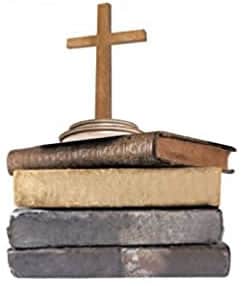
The Parallel Lives
Of The NOBLE AMERICAN RELIGIOUS THINKERS AND BELIEVERS:
Roger Williams VS. Cotton Mathers

NEW ARTICLES
Mexico’s Revolution
Porfirio Díaz assumed the office of President of Mexico, on November 28, 1876, and for the next thirty-four years, he acted as the nation’s Strong Man, a tyrant, a despot, an autocrat. He won elections in 1877, 1884, 1888, 1892, 1896, 1900, 1904, and 1910.
Díaz’s rule was by force. His slogan was “Pan o palo,” meaning “Bread or Bludgeon.”
The Latin-American historian from California, Lesley Bird Simpson, wrote this about Porfirio Díaz, in his book Many Mexicos, “The benefactors of Díaz’s tyranny and strong-armed rule were to enjoy the most efficient despotism ever seen in the western world.” How did he do that?
Simpson says, “He gave his generals little jobs and restored them to their rightful place at the public trough; he kept them apart and played them off against each other.”
Díaz set up the Rurales, a national police force composed of gunmen from the cities and towns loyal to him only. “They were given showy uniforms, good salaries, and the power to shoot on sight, and no questions asked.”
By them, he eradicated the bandits. “Mexico was now the best policed country in the world.”
Díaz next encouraged foreigners from the United States, England, and France to bring money to Mexico, to build railroads, mines, smelters, and to set up massive plantations where the well-healed hacendados grew coffee, sugar, and bananas. “The foreigner was king.”
Soon, “There was no law but the will of Porfirio Díaz. Elections were such a farce that hardly anyone took the trouble to vote.”
Then, “Between 1883 and 1884, Díaz gave away to foreigners and friends 134,500,000 acres of the public domain, about one-fifth of the entire area of the Republic. Only a smattering of the Indian communities had any land whatsoever.” Foreigners clamored to grab even that land.
This was a massive plunder, “a denial of elementary justice to a large part of the population.”
In essence, Porfirio Díaz was skillful at political manipulation. He kept the church under his control. He pampered foreign investors. He crushed and silenced all opposition. He controlled the generals. He protected the wealthy, the families that owned the huge haciendas.
Simpson writes, “As the years rolled by, Mexico lay quiet in her straight jacket.”
In 1908, a young businessman from a wealthy family in Coahuila, just south of Texas, named Francisco Madero, wrote a book, The Presidential Succession in 1910. In it, he asked an innocent question, “who would succeed Díaz?” What? Will Díaz not live forever?
Although Madero stood only five feet, two inches tall, spoke in a squeaky voice, and lacked biceps, he dared to mobilize a political campaign for himself as Mexico’s next President. His slogan, Effective suffrage, No re-election! Enthusiastic crowds followed him across Mexico.
On September 30, 1910, Porfirio Díaz won the election. His Rurales jailed Madero for four months, but while incarcerated the young man wrote his “Plan of San Luis Potosi,” calling for a revolt against Díaz. Madero escaped prison on October 6, 1910, and fled to San Antonio, Texas.
There, he learned that others—in pockets around Mexico—also wanted a revolution: two men from the state of Chihuahua, in northern Mexico, Pascual Orozco and a vicious bandit nick-named Pancho Villa; and also Emiliano Zapata, from the state of Morelos, south of Mexico City.
Zapata urged the Indians to take back their land. His motto: Land and Liberty, and Death to the Hacendados! He wore a leather belt, slung over a shoulder, lined with bullet cartridges.
Madero urged the armies to revolt against Díaz’s regime on November 20, 1910.
Orozco and Villa’s armies pushed aside Díaz’s army at Ciudad Juarez, south of El Paso, and marched to Mexico City. Porfirio dated his resignation letter May 23, 2011, and fled to Paris.
Mexico’s citizens celebrate November 20, the anniversary of when Mexico’s Revolution began. Next time, I will look at how Mexico’s Revolution progressed over the following decade.
Iceland
In recent days a native Icelander named Egill Bjarnason published a book, “How Iceland Changed the World.” I wonder about that title’s bold claim, but nonetheless he writes well, is entertaining.
He begins with the Vikings, and then steps forward, chapter by chapter, until he finishes in the 21st century. Along the way, he brings in plenty of fascinating details about the island’s towns, people, weather, government, and the Northern Lights, an enjoyable and readable geography primer.
Patriot vs. Loyalist
As the year 1776 unfolded, American colonists were confronted with the question of independence. Some favored it, others rejected it, and a third group remained uncommitted.
Juneteenth
You and I, and all others who claim American citizenship, now have reason to celebrate a new Federal holiday, Juneteenth, our 12th legal public holiday.
Last week, on Tuesday, June 15, the Senate unanimously passed legislation to make June 19, or Juneteenth, a national holiday. On Wednesday, June 16, the House passed it with only 14 “no” votes.
On Thursday, June 17, President Joe Biden signed into law the Juneteenth National Independence Day Act in the White House’s East Room.
Equations
How does one recognize great writing in a novel, a work of history, or a scientific treatise? The typical answers include: if it sells 5,000 copies, if it makes the “New York Times Best Seller” list, if it wins a literary prize, if a literary critic gives his or her stamp of approval, or if it is printed for decades.
Tulsa Race Riot Marks Its Centennial
Here are some thoughts on the 1921 Tulsa race riot.The 1921 race riot in Tulsa began on Monday, May 30, Memorial Day, when a young black man stepped into an elevator, tripped, and either grabbed a young white girl’s arm to steady himself, or stepped on her foot. She...
Words to the Graduates
In recent days, an editor at the New York Times asked readers to send in their wise words that they try to live by. The best responses appeared in two Sunday editions in April. A few examples follow. A Missouri resident named Dave Dillon said, “Always behave as if...
Older Posts
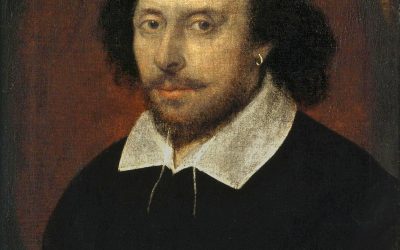
William Shakespeare
William Shakespeare passed away on April 23, 1616, at the age of 53, leaving behind some 39 plays that he wrote alone or assisted in writing, for his acting company, the Kings' Men. Two others in that company, John Heminges and Henry Condell, published in 1623, 36 of...
“What the Constitution Means to Me”
“When I was fifteen years old, I traveled the country giving speeches about the Constitution at American Legion halls for prize money. This was a scheme invented by my mom, a debate coach, to help pay for college. I would travel to big cities like Denver and Fresno,...
Truth vs. Illusion
Two weeks ago, there appeared in “The New York Times Book Review” a review of Derk DelGaudio’s just-published memoir, “Amoralman: A True Story, and Other Lies,” even though he says, “It is not a memoir.” Rather, he says, “I had a story to tell about my days as a...
The Ides of March
In the first scene of William Shakespeare’s play “Julius Caesar,” a military official named Flavius reveals his disgust with a dashing military and political official named Julius Caesar, by asking, “Who else would soar above the view of men, And keep us all in...
Dualism
A 17th century philosopher named René Descartes struggled to make sense of the mind-body problem. He understood that thoughts originate in the brain, but he observed that mental activity is ephemeral, without physical substance. How can this be? he wondered.Ever...
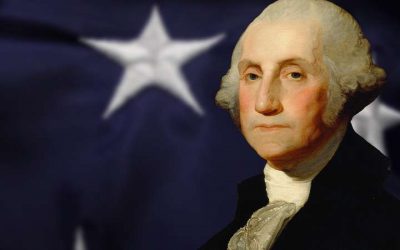
George Washington
The Father of our Country was born on Feb. 22, 1732, and he died on Dec. 14, 1799, at 67 years of age. He was a proud Virginian, fourth generation. His father Augustine married twice, and George was the eldest child by the second wife. Augustine died when George was...
One of University of Northern Colorado’s 2020 Honored Alumni
William H. Benson
Local has provided scholarships for history students for 15 years
A Sterling resident is among five alumni selected to be recognized this year by the University of Northern Colorado. Bill Benson is one of college’s 2020 Honored Alumni.
Each year UNC honors alumni in recognition for their outstanding contributions to the college, their profession and their community. This year’s honorees were to be recognized at an awards ceremony on March 27, but due to the COVID-19 outbreak that event has been cancelled. Instead UNC will recognize the honorees in the fall during homecoming Oct. 10 and 11……
Newspaper Columns

The Duodecimal System
For centuries, the ancient Romans calculated sums with their clunky numerals: I, V, X, L, C, D, and M; or one, five, ten, 50, 100, 500, and 1,000. They knew nothing better.

The Thirteenth Amendment
On Jan. 1, 1863, President Abraham Lincoln signed the Emancipation Proclamation, and by it, he declared that “all persons held as slaves” within the rebellious states “are and henceforward shall be free.” Lincoln’s Proclamation freed some 3.1 million slaves within the Confederacy.

The Fourteenth Amendment
After Congress and enough states ratified the thirteenth amendment that terminated slavery, Congress passed the Civil Rights Act of 1866. This law declared that “all people born in the United States are entitled to be citizens, without regard to race, color, or previous condition of slavery or involuntary servitude.” The Act equated birth to citizenship.

The New-York Packet and the Constitution
Jill Lepore, the Harvard historian, published her newest book a month ago, These Truths: A History of the United States. In a short introduction, she describes in detail the Oct. 30, 1787 edition of a semi-weekly newspaper, The New-York Packet.
Mr. Benson’s writings on the U.S. Constitution are a great addition to the South Platte Sentinel. Its inspiring to see the history of the highest laws of this country passed on to others.
– Richard Hogan
Mr. Benson, I cannot thank you enough for this scholarship. As a first-generation college student, the prospect of finding a way to afford college is a very daunting one. Thanks to your generous donation, my dream of attending UNC and continuing my success here is far more achievable
– Cedric Sage Nixon
Donec bibendum tortor non vestibulum dapibus. Cras id tempor risus. Curabitur eu dui pellentesque, pharetra purus viverra.
– Extra Times
FUTURE BOOKS
- Thomas Paine vs. George Whitefield
- Ralph Waldo Emerson vs. Joseph Smith
- William James vs. Mary Baker Eddy
- Mark Twain vs. Billy Graham
- Henry Louis Mencken vs. Jim Bakker
