
By William H. Benson
The Parallel Lives
Of The NOBLE AMERICAN RELIGIOUS THINKERS AND BELIEVERS:
Roger Williams VS. Cotton Mathers

NEW ARTICLES
Battle of the Blue Water
Anthropologists divide the Lakota Sioux into seven bands. One band is called the Brulé or the Sicangu, or the Burnt Thighs. In August of 1854, a village of the Brulé people, led by chief Conquering Bear, were encamped along the North Platte River just into Wyoming.
One day, a cow that belonged to a Mormon settler wandered into the Brulé camp and one of the band’s warriors, High Forehead, shot and killed the cow. He wanted to eat steak.
Conquering Bear rode the ten miles to Fort Laramie, Wyoming, midway between Lingle and Guernsey, Wyoming, and offered a horse to the Mormon settler as compensation for his cow.
Lieutenant John Grattan, 24-years-old and fresh out out West Point, was determined to arrest High Forehead. He and 29 soldiers marched to the Brulé camp, and demanded the warrior.
One U.S. Army soldier panicked and fired a first shot. The Brulé warriors surrounded Grattan and the other 29 soldiers and shot them. Conquering Bear also was killed during the melee.
In November of 1854, three Brulé warriors assaulted a mail coach near Fort Laramie, and killed three white men, taking the coach’s gold.
The Brulé, now led by Chief Little Thunder, headed east into Nebraska to hunt buffalo.
Reports of these two incidents enraged government officials back east. President Franklin Pierce assigned Brigadier General William S. Harney to lead an attack upon the Lakota Brulé.
Blue Water Creek begins in central Garden County, Nebraska, and runs more or less straight south until it joins the North Platte River just west of Lewellen, Nebraska. North of that junction a mere three or so miles is where the Lakota Brulé were encamped in early September 1855.
A sixteen-page article, with text and colored pictures about the Battle of Blue Water, appeared last November in the magazine, the Smithsonian, published by the Washington D.C. museum.
Tim Madigan, the article’s author, wrote,
“Some 40 tepees, home to about 200 people, stood beside the water. Women would have been at work tanning hides for tepees, moccasins, shirts, and breeches, and drying and curing meat for the coming northern winter. Warriors would have seen to weapons and horses.”
On September 3, the Lakota Brulé women and men looked to the southern horizon and saw General Harney and his troops riding their way. Fearing for their lives, the women pulled down their tepees, grabbed their buffalo hides and cured meat, and fled north.
Chief Little Thunder negotiated with Harney, but the General ordered his soldiers to attack.
By accounts written later, the Battle of Blue Water was a massacre, for 86 Lakota Brulé men, women, and children were killed, but only four U.S. Army soldiers.
A 25-year-old officer and West Point graduate named Lieutenant Gouverneur K. Warren, a mapmaker who did not take part in the attack, recorded in his diary the atrocities he witnessed.
“After getting to camp I dressed their wounds. The feeling of sympathy for the wounded women and children and deep regret for their being so, I found universal. It could not be helped.”
At the massacre’s site, Warren collected dozens of Brulé handcrafted items, including dolls, moccasins, buckskin pants, feather bonnets, and war shirts, taken “from the bodies of the slain.”
He carried the artifacts back east in 1856, and donated the 69 items to the Smithsonian.
In recent years, the descendants of Chief Little Thunder—Karen, Phil, and Harry Little Thunder—have asked Smithsonian officials to return the Warren donations to the Lakota people.
On August 27, 2025, Tim Madigan wrote a followup article for the Smithsonian and reported that Smithsonian officials turned over the Warren donations to the Lakota people during that last week of August, just over two weeks ago, in time for the 170th anniversary of the Battle.
For the next two years, the Lakota will store the donations in a building atop a hill at the Ash Hollow State Historical Park, perhaps a dozen miles south of the battle site, until “the Lakota people decide their ultimate disposition. Only the Lakota will have access to them.”
First Memorial Day
First Memorial DayFirst Memorial Day by William H. Benson May 29, 2020 On Feb. 15, 1865, General Beauregard of the Confederate States Army ordered the evacuation of all Confederate forces from Charleston, South Carolina. He knew that his army could not stop General...
App shouldn’t be necessary to identify family
Phone App that Prevents Incest?Bill Benson, In Retrospect by William H. Benson June 12, 2013 Recent news tells of a cell phone app for Iceland’s 325,000 residents. Because nearly all are descendents of about 15,000 Vikings who settled there late in the ninth century,...
Israel’s Independence Day
Israel’s Independence DayIsrael's Independence Day by William H. Benson May 14, 2020 On May 14, 1948, David Ben-Gurion proclaimed Israel’s Declaration of Independence. He said that the new State of Israel will “uphold the full social and political equality of all its...
America’s Civil War—final days
America’s Civil War—final daysAmerica’s Civil War—final day by William H. Benson April 28, 2020 Abraham Lincoln won a second term as president in the 1864 election in November, and he was inaugurated on Saturday, March 4, 1865, on the Capitol’s east front. Crowds...
The Fourteenth Amendment
The Fourteenth AmendmentAfter Congress and enough states ratified the thirteenth amendment that terminated slavery, Congress passed the Civil Rights Act of 1866. This law declared that “all people born in the United States are entitled to be citizens, without regard...
Shakespeare and the plague
Shakespeare and the plagueShakespeare and the plague by William H. Benson April 13, 2020 In Thomas Dekker’s first pamphlet, The Wonderfull Yeare, he highlights three events that occurred in England in the year 1603. First, on March 24, 1603, Queen Elizabeth of England...
Older Posts
War, pestilence, famine
War, pestilence, famineWar, pestilence, famine by William H. Benson March 30, 2020 Voltaire, the French philosopher, stated his creed in his Philosophical Dictionary. “I believe that theological disputes are at once the most ridiculous farce, and the most dreadful...
Karl Marx
Karl MarxKarl Marx by William H. Benson March 17, 2020 A month ago, I happened to catch a “Planet Money” podcast called “Overrated / Underrated.” An economist named Tyler Cowen, a professor at George Mason University, fielded a series of questions, and one was, “Who...
Adam Smith
Adam SmithAdam Smith by William H. Benson March 6, 2020 Last week, I happened to hear an economist named Tyler Cowen, professor at George Mason University, play a game called “Overrated / Underrated” on National Public Radio’s podcast “Planet Money.” An interviewer...
Coronavirus / COVID-19
Coronavirus / COVID-19Coronavirus / COVID-19 by William H. Benson February 20, 2020 In October of last year, Eric Toner, a scientist at Johns Hopkins, ran a simulation of a pandemic of a coronavirus. After six months, his simulation indicated that all countries would...
Queen Elizabeth II
Queen Elizabeth IIQueen Elizabeth II by William H. Benson February 5, 2020 After George VI, King of England, passed away on Feb. 6, 1952, his eldest daughter, Elizabeth, then just 25, became Queen Elizabeth II on that day, although her coronation at Westminster Abbey...
Time’s illusions
Time’s illusionsTime’s illusions by William H. Benson January 24, 2020 Mother Nature builds chunks of time: a day, a month, a year. From one sunup to the next defines a day. One full moon to another full moon—29 ½ days—defines a month. On occasion though, two full...
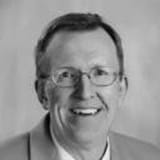
One of University of Northern Colorado’s 2020 Honored Alumni
William H. Benson
Local has provided scholarships for history students for 15 years
A Sterling resident is among five alumni selected to be recognized this year by the University of Northern Colorado. Bill Benson is one of college’s 2020 Honored Alumni.
Each year UNC honors alumni in recognition for their outstanding contributions to the college, their profession and their community. This year’s honorees were to be recognized at an awards ceremony on March 27, but due to the COVID-19 outbreak that event has been cancelled. Instead UNC will recognize the honorees in the fall during homecoming Oct. 10 and 11……
Newspaper Columns

The Duodecimal System
For centuries, the ancient Romans calculated sums with their clunky numerals: I, V, X, L, C, D, and M; or one, five, ten, 50, 100, 500, and 1,000. They knew nothing better.

The Thirteenth Amendment
On Jan. 1, 1863, President Abraham Lincoln signed the Emancipation Proclamation, and by it, he declared that “all persons held as slaves” within the rebellious states “are and henceforward shall be free.” Lincoln’s Proclamation freed some 3.1 million slaves within the Confederacy.

The Fourteenth Amendment
After Congress and enough states ratified the thirteenth amendment that terminated slavery, Congress passed the Civil Rights Act of 1866. This law declared that “all people born in the United States are entitled to be citizens, without regard to race, color, or previous condition of slavery or involuntary servitude.” The Act equated birth to citizenship.

The New-York Packet and the Constitution
Jill Lepore, the Harvard historian, published her newest book a month ago, These Truths: A History of the United States. In a short introduction, she describes in detail the Oct. 30, 1787 edition of a semi-weekly newspaper, The New-York Packet.
Mr. Benson’s writings on the U.S. Constitution are a great addition to the South Platte Sentinel. Its inspiring to see the history of the highest laws of this country passed on to others.
– Richard Hogan
Mr. Benson, I cannot thank you enough for this scholarship. As a first-generation college student, the prospect of finding a way to afford college is a very daunting one. Thanks to your generous donation, my dream of attending UNC and continuing my success here is far more achievable
– Cedric Sage Nixon
Donec bibendum tortor non vestibulum dapibus. Cras id tempor risus. Curabitur eu dui pellentesque, pharetra purus viverra.
– Extra Times
FUTURE BOOKS
- Thomas Paine vs. George Whitefield
- Ralph Waldo Emerson vs. Joseph Smith
- William James vs. Mary Baker Eddy
- Mark Twain vs. Billy Graham
- Henry Louis Mencken vs. Jim Bakker
