
By William H. Benson
The Parallel Lives
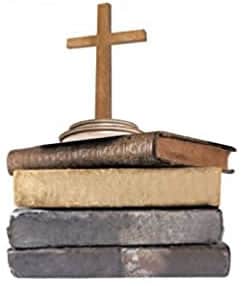
Of The NOBLE AMERICAN RELIGIOUS THINKERS AND BELIEVERS:
Roger Williams VS. Cotton Mathers

NEW ARTICLES
Imitating Shakespeare
Strange how certain books captivate my interest, others not as much. I find myself going back again and again to reread Mark Forsyth’s 2013 book, “The Elements of Eloquence.”
In Forsyth’s “Preface,” he writes, “Shakespeare was not a genius. He was the most wonderful writer who ever breathed. But not a genius. Instead, he learned rhetorical techniques and tricks.”
Of Shakespeare’s first plays—“Love’s Labour’s Lost,” “Titus Andronicus,” and “Henry VI, Part 1”—Forsyth says, “there is not a single memorable line in them.” But the young poet / playwright kept learning, and transformed himself into a word craftsman.
Forsyth argues that Shakespeare’s first memorable line was from “Henry VI, Part 2,” when one peasant says to another, “The first thing we do, let’s kill all the lawyers.” Then in “Henry VI, Part 3,” a character says, “I can smile, and murder while I smile,” an example of anastrophe.
In each additional play, Shakespeare learned to lay down a series of thought-provoking lines. In “Much Ado About Nothing,” “Julius Caesar,” “King Lear,” “Macbeth,” “Hamlet,” and “Romeo and Juliet,” he chocked each full of wonderful lines.
A wit once called those illuminating lines, “Jewels in your mouth.”
A favorite of mine is found in “Julius Caesar,” “O that a man might know the end of this day’s business, ere it come, but it sufficeth that it will end and then the end is known.”
Forsyth writes a series of quick chapters, 39 in all, and in each he describes a single rhetorical trick. The first chapter he entitles “Alliteration,” and then says, “Nobody knows why we love to hear words that begin with the same letter, but we do.”
For example, “Full fathom five thy father lies,” comes from “The Tempest,” and, “The barge she sat like a burnished throne, Burned on the water,” from “Antony and Cleopatra.”
In recent years, people would say, “ban the bomb,” “power to the people,” “put a tiger in your tank,” “it’s enough to get your goat,” “cool as a cucumber,” and “dead as a doornail.”
On page 12, Forsyth makes a startling statement. “You can spend all day trying to think of some universal truth to set down on paper, and some poets try that. Shakespeare knew that it’s much easier to string together some words beginning with the same letter.”
“Alliteration is the simplest way to turn a memorable phrase.”
In chapter 16, Forsyth considers the “Tricolon.” Three is a magic number. “Eat, drink, and be merry.” “The Good, the Bad, and the Ugly.” “Truth, justice, and the American way.” “Faith, hope, and love.” “Friends, Romans, countrymen.” “We few, we happy few, we band of brothers.”
Not one, not two, and not four, but three items points to completeness.
In chapter 21, Forsyth explains that Shakespeare surrendered to iambic pentameter, what Forsyth calls, “the Rolls-Royce of verse forms,” or “the king of English verse forms.”
An iamb is an unstressed syllable followed by a stressed syllable, “te-TUM.” A series of five iambs in a row, a single line, is a pentameter: te-TUM, te-TUM, te-TUM, te-TUM, te-TUM.
Two examples: “If music be the food of love, play on,” from “Twelfth Night,” and “The lady doth protest too much, methinks,” from “Hamlet.” Each line contains just ten syllables.
Tuesday of this week, November 19, marked the 161st anniversary of Abraham Lincoln’s delivery of his address at the dedication of the cemetery at Gettysburg, Pennsylvania.
I wonder, how did Lincoln learn to write like that? Brief, to the point, only 272 words, inspirational, motivating. Lincoln read a lot, most often Shakespeare’s tragedies. He read and re-read “Macbeth” throughout his life, often aloud to others whom he forced to listen.
John Hay said of Lincoln, “He read Shakespeare more than all the other writers together.”
Near the end of the Gettysburg Address, Lincoln tried his hand at the elements of eloquence when he tied alliteration to a tricolon, “of the people, by the people, and for the people.”
The New York-Packet and the Constitution
The New York-Packet and the ConstitutionThe New York-Packet and the Constitution by William H. Benson November 1, 2018 Jill Lepore, the Harvard historian, published her newest book a month ago, These Truths: A History of the United States. In a short...
Segregation in Oklahoma City
Segregation in Oklahoma CitySegregation in Oklahoma City by William H. Benson October 18, 2018 In Sam Anderson's recent book, Boom Town, The Fantastical Saga of Oklahoma City, he mentions three individuals, African-Americans who grew up in OKC, when segregation...
The Oklahoma City Thunder
The Oklahoma City ThunderThe Oklahoma City Thunder by William H. Benson October 4, 2018 Early in the twenty-first century, Oklahoma City's citizens were desperate to bring to their city their first professional sports team. The city's fathers had already built a...
Boom Town
Boom TownBoom Town by William H. Benson September 20, 2018 Before Federal government officials granted Oklahoma statehood in 1907, people called it the “Indian Territory,” a reserve between Texas and Kansas that the Federal government had granted to certain...
London Blitzkrieg
London BlitzkriegLondon Blitzkrieg by William H. Benson September 6, 2018 The German Nazis decided to launch an aerial attack upon London, England, on September 6, 1940. The command to attack England came from no less than Hermann Göring, commander-in-chief of...
Pete Rose, Mike Tyson, Lance Armstrong, and Roger Clemens
Pete Rose, Mike Tyson, Lance Armstrong, and Roger ClemensPete Rose, Mike Tyson, Lance Armstrong, and Roger Clemens by William H. Benson August 23, 2018 On August 23, 1989, Pete Rose accepted a settlement with Major League Baseball's authorities that included a...
Older Posts
“Good Morning, Vietnam”
“Good Morning, Vietnam”“Good Morning, Vietnam” by William H. Benson August 9, 2018 Two Viet Cong terrorists—Hynh Phi Long and Le Van Ray—parked their bicycles on the riverbank across from My Canh, the Mekong Floating Restaurant, in Saigon, and left behind bags...
Liberia and Universal Basic Income
Liberia and Universal Basic IncomeLiberia and Universal Basic Income by William H. Benson July 26, 2018 According to the World Bank, of the world's 872.3 million people who lived below the poverty line in 2014, 179.6 million, or 20% of the total, lived in India,...
J. K. Rowling
J. K. RowlingJ. K. Rowling by William H. Benson July 13, 2018 Recently, I discovered that I can watch on YouTube certain commencement addresses at Harvard. In May this year, Mark Zuckerberg spoke, and last year it was Steven Spielberg's turn. In 2013, Oprah...
The Point of Decision
The Point of DecisionThe Point of Decision by William H. Benson July 12, 2018 In the harsh winter of 1836-1837, the New York City editor Horace Greeley wondered about how the city might rescue the homeless, and the destitute. In his newspaper, Greeley encouraged...
John Wayles, Thomas Jefferson, and Sally Hemings
John Wayles, Thomas Jefferson, and Sally HemingsJohn Wayles, Thomas Jefferson, and Sally Hemings by William H. Benson June 28, 2018 John Wayles was born in Lancaster, England, in 1715. When a teenager, he sailed to Virginia, and there he acquired vast landholdings,...
The Stasi and the Overcoat
The Stasi and the OvercoatThe Stasi and the Overcoat by William H. Benson June 14, 2018 The East German communist government collapsed in late 1989, and soon thereafter, its people were amazed to learn that the Stasi secret police had a bulging manila-colored file on...

One of University of Northern Colorado’s 2020 Honored Alumni
William H. Benson
Local has provided scholarships for history students for 15 years
A Sterling resident is among five alumni selected to be recognized this year by the University of Northern Colorado. Bill Benson is one of college’s 2020 Honored Alumni.
Each year UNC honors alumni in recognition for their outstanding contributions to the college, their profession and their community. This year’s honorees were to be recognized at an awards ceremony on March 27, but due to the COVID-19 outbreak that event has been cancelled. Instead UNC will recognize the honorees in the fall during homecoming Oct. 10 and 11……
Newspaper Columns

The Duodecimal System
For centuries, the ancient Romans calculated sums with their clunky numerals: I, V, X, L, C, D, and M; or one, five, ten, 50, 100, 500, and 1,000. They knew nothing better.

The Thirteenth Amendment
On Jan. 1, 1863, President Abraham Lincoln signed the Emancipation Proclamation, and by it, he declared that “all persons held as slaves” within the rebellious states “are and henceforward shall be free.” Lincoln’s Proclamation freed some 3.1 million slaves within the Confederacy.

The Fourteenth Amendment
After Congress and enough states ratified the thirteenth amendment that terminated slavery, Congress passed the Civil Rights Act of 1866. This law declared that “all people born in the United States are entitled to be citizens, without regard to race, color, or previous condition of slavery or involuntary servitude.” The Act equated birth to citizenship.

The New-York Packet and the Constitution
Jill Lepore, the Harvard historian, published her newest book a month ago, These Truths: A History of the United States. In a short introduction, she describes in detail the Oct. 30, 1787 edition of a semi-weekly newspaper, The New-York Packet.
Mr. Benson’s writings on the U.S. Constitution are a great addition to the South Platte Sentinel. Its inspiring to see the history of the highest laws of this country passed on to others.
– Richard Hogan
Mr. Benson, I cannot thank you enough for this scholarship. As a first-generation college student, the prospect of finding a way to afford college is a very daunting one. Thanks to your generous donation, my dream of attending UNC and continuing my success here is far more achievable
– Cedric Sage Nixon
Donec bibendum tortor non vestibulum dapibus. Cras id tempor risus. Curabitur eu dui pellentesque, pharetra purus viverra.
– Extra Times
FUTURE BOOKS
- Thomas Paine vs. George Whitefield
- Ralph Waldo Emerson vs. Joseph Smith
- William James vs. Mary Baker Eddy
- Mark Twain vs. Billy Graham
- Henry Louis Mencken vs. Jim Bakker
