
By William H. Benson
The Parallel Lives
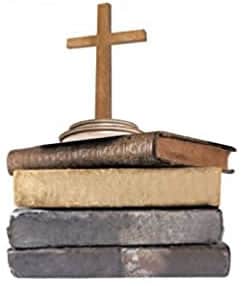
Of The NOBLE AMERICAN RELIGIOUS THINKERS AND BELIEVERS:
Roger Williams VS. Cotton Mathers

NEW ARTICLES
The 1790’s: Fierce Political Fights
Last time in these pages, I wrote about the sharp division within George Washington’s Presidential administration, that between Alexander Hamilton, founder of the Federalist Party, and Thomas Jefferson, founder of the Democratic-Republican Party.
That division between the two parties accelerated throughout the 1790’s.
In the election of 1796, John Adams won the presidency with 71 electoral votes to Thomas Jefferson’s 68 votes. Per the Constitution then, the one with the most votes would serve as President, and the one with the second most votes would serve as Vice-President.
It was an unpleasant situation, Adams as President and Jefferson as Vice-President. In their respective newspapers, the two parties pummeled each other and fell into vicious name calling.
Newspaper editors who favored the Jeffersonians called John Adams “a hideous character, who has neither the force and firmness of a man nor the gentleness and sensibility of a woman.” The same editors labeled Adams “a fool, a hypocrite, and a tyrant.”
Editors who supported Adams called Jefferson “a mean-spirited, low-lived fellow, a weakling, an atheist, and a libertine.” In addition, they called into question Jefferson’s English parentage.
A certain Federalist was convinced that Jefferson intended to “unleash the terrible evils of democracy,” allowing the unwashed masses to seek office in the Federal government. Another Federalist said that “when the pot boils, the scum will rise.”
In early 1798, Matthew Lyon, a fierce anti-Federalist and a Congressman from Vermont, drifted into a war of words, trading back and forth put-downs, with Roger Griswold, a volatile Democratic-Republican, also a Congressman, but from Connecticut.
On January 31, Lyon propelled tobacco juice into Griswold’s eyes.
Two weeks later, on February 15, Griswold “walked up to Lyon’s desk and hit him about the head and shoulders with a hickory walking stick. Lyon grabbed a pair of fireplace iron tongs and beat Griswold back. The two men dropped their weapons and threw fists at each other.”
Because the Federalists had the votes in Congress, they passed four laws that summer.
On June 18, 1798, Congress passed the Naturalization Act, that extended the residency requirement for immigrants from five to fourteen years before they could attain citizenship.
On June 25, Congress passed the Alien Friends Act, that authorized the President to deport any non-citizen deemed dangerous to the peace and safety of the U.S.
On July 6, Congress passed the Alien Enemies Act, that authorized the President to detain or deport immigrants from a hostile nation during wartime.
On July 14, Congress passed the Sedition Act, that made criminal any “false, scandalous, or malicious writing against the government,” in pamphlets or newspapers.
Jefferson and his fellow Democratic-Republicans were aghast. They perceived those four laws as a political attack upon their party. The four laws raised questions about the proper balance between the two parties, and the limits of free speech and a free press.
The Alien Friends Act and the Sedition Act both expired in 1800, and Congress repealed the Naturalization Act in 1802. The Alien Enemies Act (AEA) though is still the law of the land.
Presidents have used it four times: the War of 1812, World War I, and World War II. The AEA was used to intern in camps certain Japanese, German, and Italian people during World War II.
Last March, Donald Trump attempted to use the 1798 AEA to “justify deporting Venezuelans to El Salvador, that they were members of a Venezuelan gang that had infiltrated the U.S.”
In the election of 1800, Thomas Jefferson received 73 votes, the same as Aaron Burr. A vote in Congress made Jefferson President and Burr Vice-President. The Federalists were swept out.
Watergate—Cracks in the Coverup
Watergate—Cracks in the CoverupWatergate—Cracks in the Coverup by William H. Benson April 4, 2019 Martha Mitchell was the flamboyant and outspoken wife of John Mitchell, Richard Nixon's former Attorney General and then, in the summer of 1972, the head of Nixon's...
Watergate—Conspiracy to Coverup
Watergate—Conspiracy to CoverupWatergate—Conspiracy to Coverup by William H. Benson March 21, 2019 On June 17, 1972, police nabbed five burglars inside the Democratic National Party's headquarters, in a sixth floor suite in the Watergate Hotel, alongside the...
Watergate—Crimes Committed
Watergate—Crimes CommittedWatergate—Crimes Committed by William H. Benson March 7, 2019 John Mitchell smoked a pipe when he served as Attorney General in Nixon's White House, and also as chair of the Committee for the Re-Election of the President, CREEP, in 1971,...
Spiro Agnew and “Bagman”
Spiro Agnew and “Bagman”Spiro Agnew and “Bagman” by William H. Benson February 21, 2019 News of two separate scandals rocked the White House and stunned the American people in 1973. The first was President Nixon's coverup of his election committee's burglary...
California’s Housing Crisis
California's Housing CrisisCalifornia's Housing Crisis by William H. Benson February 7, 2019 Last time in these pages, I discussed Michael Greenberg's recent article in the New York Review on the plight of migrant workers in California's central valley, Indians...
California’s Farmworkers
California's FarmworkersCalifornia's Farmworkers by William H. Benson January 24, 2019 Michael Greenberg, reporter for the New York Review, examined California in two recent articles, the first in December on agriculture, and the second in January on housing's...
Older Posts
Exit, Voice, and Loyalty
Exit, Voice, and LoyaltyExit, Voice, and Loyalty by William H. Benson January 10, 2019 Economic and political ruin strikes one country after another. Yes, it seems that, on occasion, the world's nearly two hundred countries will suffer a disaster, a...
The Emancipation Proclamation
The Emancipation ProclamationThe Emancipation Proclamation by William H. Benson December 27, 2018 Jill Lepore, Professor of history at Harvard, published this fall her most recent book, These Truths, A History of the United States. In it, she writes a most...
Antarctica’s Summer Races
Antarctica's Summer RacesAntarctica's Summer Races by William H. Benson December 13, 2018 Fifty-three runners will compete in the fourteenth annual Antarctica Ice Marathon on Thursday, December 13, 2018. A Russian-made Ilyushin-Il-76TD aircraft will transport the...
Gaza
GazaGaza by William H. Benson November 29, 2018 On November 29, 1947, 71 years ago today, the United Nations voted to partition Palestine between first, the Palestinians, the people and families who had resided on that land for centuries, and second, the recent...
Gettysburg and Armistice Day
Gettysburg and Armistice DayGettysburg and Armistice Day by William H. Benson November 15, 2018 At Gettysburg, Pennsylvania, on July 1, 2, and 3, 1863, the Southern General Robert E. Lee dared to invade the north, in a false hope that President Abraham Lincoln...
The New York-Packet and the Constitution
The New York-Packet and the ConstitutionThe New York-Packet and the Constitution by William H. Benson November 1, 2018 Jill Lepore, the Harvard historian, published her newest book a month ago, These Truths: A History of the United States. In a short...

One of University of Northern Colorado’s 2020 Honored Alumni
William H. Benson
Local has provided scholarships for history students for 15 years
A Sterling resident is among five alumni selected to be recognized this year by the University of Northern Colorado. Bill Benson is one of college’s 2020 Honored Alumni.
Each year UNC honors alumni in recognition for their outstanding contributions to the college, their profession and their community. This year’s honorees were to be recognized at an awards ceremony on March 27, but due to the COVID-19 outbreak that event has been cancelled. Instead UNC will recognize the honorees in the fall during homecoming Oct. 10 and 11……
Newspaper Columns

The Duodecimal System
For centuries, the ancient Romans calculated sums with their clunky numerals: I, V, X, L, C, D, and M; or one, five, ten, 50, 100, 500, and 1,000. They knew nothing better.

The Thirteenth Amendment
On Jan. 1, 1863, President Abraham Lincoln signed the Emancipation Proclamation, and by it, he declared that “all persons held as slaves” within the rebellious states “are and henceforward shall be free.” Lincoln’s Proclamation freed some 3.1 million slaves within the Confederacy.

The Fourteenth Amendment
After Congress and enough states ratified the thirteenth amendment that terminated slavery, Congress passed the Civil Rights Act of 1866. This law declared that “all people born in the United States are entitled to be citizens, without regard to race, color, or previous condition of slavery or involuntary servitude.” The Act equated birth to citizenship.

The New-York Packet and the Constitution
Jill Lepore, the Harvard historian, published her newest book a month ago, These Truths: A History of the United States. In a short introduction, she describes in detail the Oct. 30, 1787 edition of a semi-weekly newspaper, The New-York Packet.
Mr. Benson’s writings on the U.S. Constitution are a great addition to the South Platte Sentinel. Its inspiring to see the history of the highest laws of this country passed on to others.
– Richard Hogan
Mr. Benson, I cannot thank you enough for this scholarship. As a first-generation college student, the prospect of finding a way to afford college is a very daunting one. Thanks to your generous donation, my dream of attending UNC and continuing my success here is far more achievable
– Cedric Sage Nixon
Donec bibendum tortor non vestibulum dapibus. Cras id tempor risus. Curabitur eu dui pellentesque, pharetra purus viverra.
– Extra Times
FUTURE BOOKS
- Thomas Paine vs. George Whitefield
- Ralph Waldo Emerson vs. Joseph Smith
- William James vs. Mary Baker Eddy
- Mark Twain vs. Billy Graham
- Henry Louis Mencken vs. Jim Bakker
