
By William H. Benson
The Parallel Lives
Of The NOBLE AMERICAN RELIGIOUS THINKERS AND BELIEVERS:
Roger Williams VS. Cotton Mathers

NEW ARTICLES
Habits
Universities opened their doors a week or two ago. Freshman students moved into their dorm rooms, met their roommates, hung pictures on the walls, and completed their class schedules.
Most students want to do well, even just ok, at college, but not everyone does.
How well any student completes his or her mastery of course work at a college depends upon that student’s preparation, his or her readiness, his or her skill at reading and writing, plus his or her ambition, hustle, and drive.
Yet, above all those variables, a person’s success at college depends upon his or her habits.
Without steady, unswerving habits—studying for several hours everyday of the week—a very intelligent person with great reading and writing skills and sufficient preparation will fare poorly.
Because success at college is often geared around examinations, a student should begin to prepare for each examination several days before, perhaps the day the class begins.
A student, who builds that habit of preparing for an examination days before, will do ok.
Still, few students ever feel great about their examination grade. Most are disappointed, believing that they should have performed better or should have received a better grade.
In recent days, I have been re-reading William James’s fourth chapter, “Habit,” in his 1890 book, “The Principles of Psychology.”
William James taught anatomy, psychology, and philosophy at Harvard College for thirty-four years, from 1872 until 1907, which means he gave a lot of examinations to a lot of students.
At the chapter’s beginning, he writes,
“When we look at [animals], the first thing that strikes us is that they are bundles of habits.
“In wild animals, the usual round of daily behavior seems implanted at birth; in animals domesticated, and especially in man, it seems to a great extent, to be the result of education.”
James is saying that parents, grandparents, aunts, uncles, teachers, and adults must teach boys and girls the best, most civilized, of the habits, if the young are ever to learn them.
James then quotes from a doctor named Dr. Carpenter, who said, “Our nervous system grows to the modes in which it has been exercised.”
In other words, our minds in coordination with our bodies build habits by exercising our free will, forcing ourselves to do something again and again, until the habit is set, fixed.
James writes that “a habit simplifies the movements required to achieve a given result, makes them more accurate and diminishes fatigue.” In other words, once a person memorizes a sequence of actions—a, b, c, d, e, f, g, etc.—the outcome is superior and requires less effort.
When I read James’s words here, I am reminded of the handful of hours I devoted to solving a Rubik’s cube the first time. The same is true of any procedure on the computer.
Further into his chapter, he writes,
“Habit is thus the enormous fly-wheel of society, its most precious conservative agent. It alone prevents the hardest and most repulsive walks of life from being deserted by those brought up to tread therein. It keeps the fisherman and the deck-hand at sea through the winter.
“It holds the miner in his darkness.”
In James’s final paragraph of the chapter, he cautions young people.
“Could the young but realize how soon they will become mere walking bundles of habits, they would give more heed to their conduct while in the plastic [or malleable] state.
“We are spinning our own fates, good or evil, and never to be undone. Every smaller stroke or virtue or of vice leaves its never so little scar.”
I say to each college-bound student, “build the best habits you can now, today, at college.”
Mikhail Gorbachev
Mikhail GorbachevMikhail Gorbachev by William H. Benson September 21, 2017 Mikhail Gorbachev was born in the village of Privolnoye, near the city of Stavropol, 700 miles south of Moscow, on March 2, 1931, a most horrible time for all Soviet Union citizens. The...
Creations that Last
Creations that LastCreations that Last by William H. Benson September 7, 2017 Isaac Asimov wrote 515 books over 75 years, until his passing in 1992. He wrote mainly science fiction, but he also wrote plenty of non-fiction books: on physics, chemistry, biology,...
School is Boring
School is BoringSchool is Boring by William H. Benson August 24, 2017 Generations of students have said, “School is boring!” One person pointed out that school bores students because learning is difficult, and that “boredom” and “difficult” are one-in-the-same....
SETI
SETISETI by William H. Benson August 10, 2017 One day in the 1940's, a group of atomic scientists were discussing the possibility of intelligent life on planets outside our solar system, when one of them, Enrico Fermi, asked a blunt question, “So? Where is...
Heroes
HeroesHeroes by William H. Benson July 27, 2017 The 50's and 60's presented me with a wonderful set of heroes: Roy Rogers, Superman, Sherlock Holmes, James Bond, Perry Mason, Neil Armstrong, Mickey Mantle, and Bart Starr. Some were real, others fictional. ...
Flattery and Shakespeare
Flattery and ShakespeareFlattery and Shakespeare by William H. Benson June 29, 2017 On July 9, 1850, Millard Fillmore, the Vice-President, became the thirteenth President of the United States, after the twelfth President, Zachary Taylor, died of cholera. On the...
Older Posts
The Bloody American Revolution
The Bloody American RevolutionThe Bloody American Revolution by William H. Benson June 15, 2017 On the morning of June 17, 1775, in Boston, British army officers stared up in amazement across the Charles River to Bunker Hill and Breed's Hill, north of...
George Orwell
George OrwellGeorge Orwell by William H. Benson June 1, 2017 On June 8, 1949, the English author George Orwell published his novel Nineteen Eighty-Four. His book continues to startle and warn readers of the dangers of totalitarian governments, and it also...
To the Graduates
To the GraduatesTo the Graduates by William H. Benson May 18, 2017 On August 10, 1979, there appeared in the New York Times, Woody Allen's article, “My Speech to the Graduates.” He began, “More than any other time in history, mankind faces a crossroads. One path...
Germany Reunited
Germany ReunitedGermany Reunited by William H. Benson May 4, 2017 The Iron Curtain split Europe into two parts: the free countries to the west, and the Soviet-controlled bloc to the east. On March 5, 1946, Winston Churchill stated in blunt words the case that,...
It Happened in April
It Happened in AprilIt Happened in April by William H. Benson April 20, 2017 Tragic events happen in April. For example, Confederate cannons fired on Union soldiers at Fort Sumter in April 1861, and the American Civil war began. Four years later, also in April,...
Willie Lincoln
Willie LincolnWillie Lincoln by William H. Benson April 6, 2017 Eleven-year-old Willie Lincoln died of typhoid fever, on Thursday, February 20 1862. The most likely cause was from drinking contaminated water drawn from the Potomac River. His mother, Mary Todd...
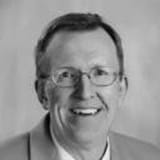
One of University of Northern Colorado’s 2020 Honored Alumni
William H. Benson
Local has provided scholarships for history students for 15 years
A Sterling resident is among five alumni selected to be recognized this year by the University of Northern Colorado. Bill Benson is one of college’s 2020 Honored Alumni.
Each year UNC honors alumni in recognition for their outstanding contributions to the college, their profession and their community. This year’s honorees were to be recognized at an awards ceremony on March 27, but due to the COVID-19 outbreak that event has been cancelled. Instead UNC will recognize the honorees in the fall during homecoming Oct. 10 and 11……
Newspaper Columns

The Duodecimal System
For centuries, the ancient Romans calculated sums with their clunky numerals: I, V, X, L, C, D, and M; or one, five, ten, 50, 100, 500, and 1,000. They knew nothing better.

The Thirteenth Amendment
On Jan. 1, 1863, President Abraham Lincoln signed the Emancipation Proclamation, and by it, he declared that “all persons held as slaves” within the rebellious states “are and henceforward shall be free.” Lincoln’s Proclamation freed some 3.1 million slaves within the Confederacy.

The Fourteenth Amendment
After Congress and enough states ratified the thirteenth amendment that terminated slavery, Congress passed the Civil Rights Act of 1866. This law declared that “all people born in the United States are entitled to be citizens, without regard to race, color, or previous condition of slavery or involuntary servitude.” The Act equated birth to citizenship.

The New-York Packet and the Constitution
Jill Lepore, the Harvard historian, published her newest book a month ago, These Truths: A History of the United States. In a short introduction, she describes in detail the Oct. 30, 1787 edition of a semi-weekly newspaper, The New-York Packet.
Mr. Benson’s writings on the U.S. Constitution are a great addition to the South Platte Sentinel. Its inspiring to see the history of the highest laws of this country passed on to others.
– Richard Hogan
Mr. Benson, I cannot thank you enough for this scholarship. As a first-generation college student, the prospect of finding a way to afford college is a very daunting one. Thanks to your generous donation, my dream of attending UNC and continuing my success here is far more achievable
– Cedric Sage Nixon
Donec bibendum tortor non vestibulum dapibus. Cras id tempor risus. Curabitur eu dui pellentesque, pharetra purus viverra.
– Extra Times
FUTURE BOOKS
- Thomas Paine vs. George Whitefield
- Ralph Waldo Emerson vs. Joseph Smith
- William James vs. Mary Baker Eddy
- Mark Twain vs. Billy Graham
- Henry Louis Mencken vs. Jim Bakker
