
By William H. Benson
The Parallel Lives
Of The NOBLE AMERICAN RELIGIOUS THINKERS AND BELIEVERS:
Roger Williams VS. Cotton Mathers

NEW ARTICLES
Attempts at Thought Experiments: To Assay, To Weigh, To Balance, to Evaluate
“When the debate is lost, slander becomes the loser’s tool.” -Socrates
“The propaganda machine is always looking for someone to hate.” -heard on National Public Radio, on Saturday, April 26, 2025
“He who can does; he who cannot teaches.” -George Bernard Shaw. I wonder if G. B. Shaw ever taught junior high or high school students. If he had, he might express a different opinion on teaching, and learn that it is hard work, not so well rewarded, but so worthwhile.
“He who can teach, teaches college; he who cannot teaches kids.” -an elaboration on Shaw’s quote above.
“People who can think, do not get things done, while people who get things done do not have time to think.” -a wise Norwegian author
“The best lack all conviction, while the worst are full of passionate intensity. They do not know what they do not know.” -H. L. Mencken
“The fundamental cause of trouble in the world today is that the stupid are [so] sure while the intelligent are full of doubt.” Bertrand Russell, from his “Christian Ethics,” in his book, Marriage and Morals
“Read not to contradict and confute; nor to believe and take for granted; nor to find talk and discourse; but to weigh and consider”. -Francis Bacon
In the above passage, Bacon underscores the importance of critical thinking, of pondering a passage, of hesitating to believe or act upon its words when first encountered.
“The people who know how to run the world are too busy cutting hair and driving taxi cabs.” -George Burns
“Ignorance more frequently begets confidence than does knowledge.” -Charles Darwin
“The whole aim of practical politics is to keep the populace alarmed, and hence clamorous to be led to safety, by menacing it with an endless series of hobgoblins, all of them imaginary.” -H. L. Mencken
The Dunning-Kruger Effect: “A cognitive bias when unskilled people reach erroneous conclusions and make unfortunate choices.
“Their incompetence robs them of their mental ability to realize it.
“If participants improved their skills in a tested area, their cognitive competence increased, and helped them to recognize the limitations of their abilities.
“As people gain more education and intelligence, they become more aware of their limitations. This awareness can be beneficial helping people avoid costly mistakes.”
A contractor once said of an experienced brick-layer, “he forgot more about brick-laying than most people ever learned.”
“A study in 2018 indicated that Americans who know little about politics and government are more likely than other Americans to overestimate their knowledge of those topics.”
“I know that up on top you are seeing great sights, but down here at the bottom, we, too, should have rights.” -Dr. Seuss, from “Yertle the Turtle”
MASH
MASHMASH by William H. Benson February 22, 2018 The Korean War and the draft swept up Richard Hornberger into the U.S. Army in the early 1950's. A recent graduate of Cornell University Medical School, Hornberger operated on wounded American boys in the the...
Whistleblowers
WhistleblowersWhistleblowers by William H. Benson February 8, 2018 In December of 1773, near the time of the Boston Tea Party, Benjamin Franklin admitted that he had passed on to the Boston Gazette twenty letters that the Massachusetts governor, Thomas Hutchison had...
Norway
NorwayNorway by William H. Benson January 25, 2018 On January 11, President Trump met with Senators in the Oval Office to discuss immigration. At one point a Senator mentioned that the U.S. should also “admit people from Haiti, El Salvador, and certain African...
Bad Weather
Bad WeatherBad Weather by Bill Benson January 11, 2018 People on the West Coast endure droughts and forest fires. People on the Northeast Coast endure minus degree temperatures and a foot of snow. People in the Southeast endure the ferocious winds, rain, and...
Odysseus and Paul
Odysseus and PaulOdysseus and Paul by William H. Benson December 28, 2017 “Tell me about a complicated man. Muse, tell me how he wandered and was lost when he had wrecked the holy town of Troy.” These are Homer's words, and they open The Odyssey, his poem from the...
Kim Jong Un
Kim Jong UnKim Jong Un by William H. Benson December 14, 2017 The news out of Korea is a mix of bad and good, but perhaps more lopsided on the side of bad. President Donald Trump continues to accelerate his war of words with North Korea, by calling the rogue nation's...
Older Posts
Mark Twain vs. Winston Churchill
Mark Twain vs. Winston ChurchillMark Twain vs. Winston Churchill by William H. Benson November 30, 2017 Samuel Clemens was born on November 30, 1835, in Florida, Missouri. His father, Judge John Clemens, died when Samuel was eleven years old, and his mother then...
Serendipity
SerendipitySerendipity by William H. Benson November 16, 2017 About fifty years ago, my dad lost his wallet while driving his tractor in a field. From a neighbor named Sam, he borrowed a metal detector, because he had some dimes and quarters in the coin purse in...
Luther vs. Lenin
Luther vs. LeninLuther vs. Lenin by William H. Benson November 2, 2017 Five hundred years ago, on October 31, 1517, Martin Luther nailed his ninety-five theses to his chapel's door, the closest thing to a bulletin board. To them, he prefixed an invitation, “Out...
Fake News
Fake NewsFake News by William H. Benson October 19, 2017 There are those who would deny that Neil Armstrong, and eleven other astronauts, ever walked on the surface of the moon, and that the whole mission to the moon was a hoax filmed on a stage in New Mexico....
Defection by Aircraft
Defection by AircraftDefection by Aircraft by William H. Benson October 5, 2017 No matter how powerful a dictatorial regime, certain people will want to escape, and they may try to escape by aircraft. Once a rogue government entrusts an airplane, a jet, or a...
Mikhail Gorbachev
Mikhail GorbachevMikhail Gorbachev by William H. Benson September 21, 2017 Mikhail Gorbachev was born in the village of Privolnoye, near the city of Stavropol, 700 miles south of Moscow, on March 2, 1931, a most horrible time for all Soviet Union citizens. The...
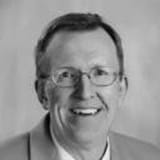
One of University of Northern Colorado’s 2020 Honored Alumni
William H. Benson
Local has provided scholarships for history students for 15 years
A Sterling resident is among five alumni selected to be recognized this year by the University of Northern Colorado. Bill Benson is one of college’s 2020 Honored Alumni.
Each year UNC honors alumni in recognition for their outstanding contributions to the college, their profession and their community. This year’s honorees were to be recognized at an awards ceremony on March 27, but due to the COVID-19 outbreak that event has been cancelled. Instead UNC will recognize the honorees in the fall during homecoming Oct. 10 and 11……
Newspaper Columns

The Duodecimal System
For centuries, the ancient Romans calculated sums with their clunky numerals: I, V, X, L, C, D, and M; or one, five, ten, 50, 100, 500, and 1,000. They knew nothing better.

The Thirteenth Amendment
On Jan. 1, 1863, President Abraham Lincoln signed the Emancipation Proclamation, and by it, he declared that “all persons held as slaves” within the rebellious states “are and henceforward shall be free.” Lincoln’s Proclamation freed some 3.1 million slaves within the Confederacy.

The Fourteenth Amendment
After Congress and enough states ratified the thirteenth amendment that terminated slavery, Congress passed the Civil Rights Act of 1866. This law declared that “all people born in the United States are entitled to be citizens, without regard to race, color, or previous condition of slavery or involuntary servitude.” The Act equated birth to citizenship.

The New-York Packet and the Constitution
Jill Lepore, the Harvard historian, published her newest book a month ago, These Truths: A History of the United States. In a short introduction, she describes in detail the Oct. 30, 1787 edition of a semi-weekly newspaper, The New-York Packet.
Mr. Benson’s writings on the U.S. Constitution are a great addition to the South Platte Sentinel. Its inspiring to see the history of the highest laws of this country passed on to others.
– Richard Hogan
Mr. Benson, I cannot thank you enough for this scholarship. As a first-generation college student, the prospect of finding a way to afford college is a very daunting one. Thanks to your generous donation, my dream of attending UNC and continuing my success here is far more achievable
– Cedric Sage Nixon
Donec bibendum tortor non vestibulum dapibus. Cras id tempor risus. Curabitur eu dui pellentesque, pharetra purus viverra.
– Extra Times
FUTURE BOOKS
- Thomas Paine vs. George Whitefield
- Ralph Waldo Emerson vs. Joseph Smith
- William James vs. Mary Baker Eddy
- Mark Twain vs. Billy Graham
- Henry Louis Mencken vs. Jim Bakker
