
By William H. Benson
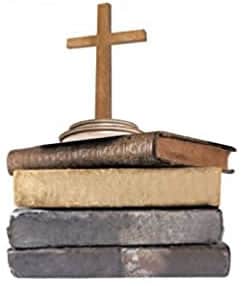
The Parallel Lives
Of The NOBLE AMERICAN RELIGIOUS THINKERS AND BELIEVERS:
Roger Williams VS. Cotton Mathers

NEW ARTICLES
Language and Literary History
In 1804, Meriwether Lewis and William Clark and their forty-three fellow explorers headed west up the Missouri River, bound for the west coast. As they met a succession of different Native American tribes, they were often amazed by the variety in the languages they heard.
They noted that some had complex grammars, some had unusual vocabularies, some had different pitches or tones for the same words, some spoke consonant clusters without vowels.
In what is now the United States, at the time that Europeans arrived, Native Americans spoke between 300 to 500 diverse languages. Today, most of those have vanished, gone extinct.
Linguists can divide some of their languages into families. For example, the Athabaskan family includes about 38 languages spoken by tribes in Alaska, western Canada, as well as by the Navaho, or the Dine, of Arizona and New Mexico.
What is unusual are the “isolates,” those languages that display no relationship to any other language. For example, the Zuni has no commonalities with any languages that surround them in eastern New Mexico or elsewhere. In total, there are about 30 to 40 isolates in North America.
Linguists still wonder, from where did those Native Americans originate?
What is most misfortunate is that the Native Americans had no written language. No doubt, they produced oral stories, histories, fables that they passed on to their children, but once the next generation stopped speaking their native language, most stories died with them.
One of the world’s larger language families is the Indo-European family. From it, linguists identify eight branches: Indo-Aryan, Iranian, Armenian, Greek, Balto-Slavic, Germanic, Italic, and Celtic. All languages within those branches share a common ancestor.
English, German, and Norwegian belong to the Germanic branch; Spanish, Portuguese, and French to the Italic; Scottish Gaelic and Irish to the Celtic; and Russian to the Balto-Slavic.
Because these European languages possessed a written language, over the centuries each recorded their stories, tales, myths, histories, and built a canon, a body of literary works. Thus, a few languages were bold enough to save their stories, but for others, the world lost their stories.
The greatest act of literary salvation ever occurred in 1623, seven years after Shakespeare expired. John Heminges and Henry Condell, two members of the King’s Men, Shakespeare’s acting company, collected and then published that year Shakespeare’s plays in the First Folio.
The Spanish saved Cervantes’s “Don Quixote,” and also Felix Lope de Vega’s 500 plays and 3000 sonnets, all from the late 16th and early 17th centuries.
Someone saved Plato and Aristotle’s Greek works. Others saved Ovid and Cicero’s Latin works. Yet, others saved Paul’s letters and the four Gospels. On it goes, and the world is richer.
Yiddish is another Germanic language. It began in Germany’s Rhine River valley in the ninth century and was the vernacular of the Jewish people of Central Europe for ten centuries. Mainly German, it was infused with vocabulary from Hebrew and Aramaic.
Prior to the Holocaust in mid-twentieth century, between eleven and thirteen million people spoke Yiddish. Some Yiddish words migrated into English: schtick, chutzpah, shmooze, klutz, kvetch, and anything that ends with “nik,” such as beatnik.
Some 85% of the six million Jewish people whom the Nazis murdered in mid-twentieth century spoke Yiddish. Many survivors came to America, lugging with them their Yiddish books.
However, the next generation preferred English over Yiddish. The Yiddish books were soon disregarded, then discarded, and some were pitched into dumpsters.
In late-twentieth century, a young Jewish guy named Aaron Lansky decided he would rescue the remaining books. He collected an estimated 1.5 million Yiddish books from all over the U.S., at his Yiddish Book Center, and made them available to libraries, universities, collectors.
Rutgers University estimates that in the United States there are only about 250,000 Yiddish speakers remaining, in Israel another 250,000, and elsewhere 100,000.
Languages live for centuries, but then in the face of a brutal attack, they will die off. What lives are the stories within their books. Save their books, save their stories.
Mark Twain vs. Winston Churchill
Mark Twain vs. Winston ChurchillMark Twain vs. Winston Churchill by William H. Benson November 30, 2017 Samuel Clemens was born on November 30, 1835, in Florida, Missouri. His father, Judge John Clemens, died when Samuel was eleven years old, and his mother then...
Serendipity
SerendipitySerendipity by William H. Benson November 16, 2017 About fifty years ago, my dad lost his wallet while driving his tractor in a field. From a neighbor named Sam, he borrowed a metal detector, because he had some dimes and quarters in the coin purse in...
Luther vs. Lenin
Luther vs. LeninLuther vs. Lenin by William H. Benson November 2, 2017 Five hundred years ago, on October 31, 1517, Martin Luther nailed his ninety-five theses to his chapel's door, the closest thing to a bulletin board. To them, he prefixed an invitation, “Out...
Fake News
Fake NewsFake News by William H. Benson October 19, 2017 There are those who would deny that Neil Armstrong, and eleven other astronauts, ever walked on the surface of the moon, and that the whole mission to the moon was a hoax filmed on a stage in New Mexico....
Defection by Aircraft
Defection by AircraftDefection by Aircraft by William H. Benson October 5, 2017 No matter how powerful a dictatorial regime, certain people will want to escape, and they may try to escape by aircraft. Once a rogue government entrusts an airplane, a jet, or a...
Mikhail Gorbachev
Mikhail GorbachevMikhail Gorbachev by William H. Benson September 21, 2017 Mikhail Gorbachev was born in the village of Privolnoye, near the city of Stavropol, 700 miles south of Moscow, on March 2, 1931, a most horrible time for all Soviet Union citizens. The...
Older Posts
Creations that Last
Creations that LastCreations that Last by William H. Benson September 7, 2017 Isaac Asimov wrote 515 books over 75 years, until his passing in 1992. He wrote mainly science fiction, but he also wrote plenty of non-fiction books: on physics, chemistry, biology,...
School is Boring
School is BoringSchool is Boring by William H. Benson August 24, 2017 Generations of students have said, “School is boring!” One person pointed out that school bores students because learning is difficult, and that “boredom” and “difficult” are one-in-the-same....
SETI
SETISETI by William H. Benson August 10, 2017 One day in the 1940's, a group of atomic scientists were discussing the possibility of intelligent life on planets outside our solar system, when one of them, Enrico Fermi, asked a blunt question, “So? Where is...
Heroes
HeroesHeroes by William H. Benson July 27, 2017 The 50's and 60's presented me with a wonderful set of heroes: Roy Rogers, Superman, Sherlock Holmes, James Bond, Perry Mason, Neil Armstrong, Mickey Mantle, and Bart Starr. Some were real, others fictional. ...
Flattery and Shakespeare
Flattery and ShakespeareFlattery and Shakespeare by William H. Benson June 29, 2017 On July 9, 1850, Millard Fillmore, the Vice-President, became the thirteenth President of the United States, after the twelfth President, Zachary Taylor, died of cholera. On the...
The Bloody American Revolution
The Bloody American RevolutionThe Bloody American Revolution by William H. Benson June 15, 2017 On the morning of June 17, 1775, in Boston, British army officers stared up in amazement across the Charles River to Bunker Hill and Breed's Hill, north of...

One of University of Northern Colorado’s 2020 Honored Alumni
William H. Benson
Local has provided scholarships for history students for 15 years
A Sterling resident is among five alumni selected to be recognized this year by the University of Northern Colorado. Bill Benson is one of college’s 2020 Honored Alumni.
Each year UNC honors alumni in recognition for their outstanding contributions to the college, their profession and their community. This year’s honorees were to be recognized at an awards ceremony on March 27, but due to the COVID-19 outbreak that event has been cancelled. Instead UNC will recognize the honorees in the fall during homecoming Oct. 10 and 11……
Newspaper Columns

The Duodecimal System
For centuries, the ancient Romans calculated sums with their clunky numerals: I, V, X, L, C, D, and M; or one, five, ten, 50, 100, 500, and 1,000. They knew nothing better.

The Thirteenth Amendment
On Jan. 1, 1863, President Abraham Lincoln signed the Emancipation Proclamation, and by it, he declared that “all persons held as slaves” within the rebellious states “are and henceforward shall be free.” Lincoln’s Proclamation freed some 3.1 million slaves within the Confederacy.

The Fourteenth Amendment
After Congress and enough states ratified the thirteenth amendment that terminated slavery, Congress passed the Civil Rights Act of 1866. This law declared that “all people born in the United States are entitled to be citizens, without regard to race, color, or previous condition of slavery or involuntary servitude.” The Act equated birth to citizenship.

The New-York Packet and the Constitution
Jill Lepore, the Harvard historian, published her newest book a month ago, These Truths: A History of the United States. In a short introduction, she describes in detail the Oct. 30, 1787 edition of a semi-weekly newspaper, The New-York Packet.
Mr. Benson’s writings on the U.S. Constitution are a great addition to the South Platte Sentinel. Its inspiring to see the history of the highest laws of this country passed on to others.
– Richard Hogan
Mr. Benson, I cannot thank you enough for this scholarship. As a first-generation college student, the prospect of finding a way to afford college is a very daunting one. Thanks to your generous donation, my dream of attending UNC and continuing my success here is far more achievable
– Cedric Sage Nixon
Donec bibendum tortor non vestibulum dapibus. Cras id tempor risus. Curabitur eu dui pellentesque, pharetra purus viverra.
– Extra Times
FUTURE BOOKS
- Thomas Paine vs. George Whitefield
- Ralph Waldo Emerson vs. Joseph Smith
- William James vs. Mary Baker Eddy
- Mark Twain vs. Billy Graham
- Henry Louis Mencken vs. Jim Bakker
