
By William H. Benson
The Parallel Lives
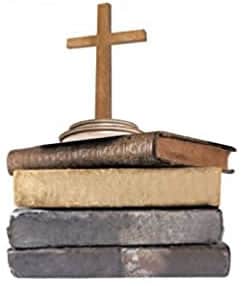
Of The NOBLE AMERICAN RELIGIOUS THINKERS AND BELIEVERS:
Roger Williams VS. Cotton Mathers

NEW ARTICLES
Mother Nature
Jane Goodall turned 90 years old last April. In the late 1950’s, Jane—then an English girl in her twenties—dared to travel to Africa. There she met the renowned anthropologist, Louis Leaky, who suggested she study chimpanzees at Gombe Stream National Park in Tanzania.
Jane arrived at Gombe on July 14, 1960, with her mother, who acted as Jane’s chaperone.
On December 22, 1965, a Wednesday, “National Geographic” ran a televised documentary on Jane’s work over the previous five years, entitled, “Miss Goodall and the Wild Chimpanzees.”
I watched that special on my grandparents’ black and white television.
Jane began, “Louis Leakey sent me to Gombe because he believed an understanding of chimpanzees would help him better guess how our stone-age ancestors may have behaved.”
In an instant, Jane was world-famous. She said, “It was because chimps are so eye-catching, so like us, that my work was recognized world wide.”
Days ago, I happened to re-watch a “60 Minutes” segment from April 9, 2006, on Daphne Sheldrick’s orphanage near Nairobi in Kenya, an orphanage for elephants. Poachers kill the parents for their ivory tusks, and leave the young alone, defenseless, grieving for their loss.
Daphne, now deceased, rescued them, fed them, and taught them how to survive in the wild.
Bob Simon, of CBS, asked Daphne, “What is the most extraordinary thing she has learned about elephants?”
She answered, “Their tremendous capacity for caring is I think perhaps the most amazing thing about them. Even at a very young age. Their sort of forgiveness, unselfishness. They have all the best attributes of us humans and not very many of the bad.”
“Indeed,” she says, “A loss of a parent can cause a baby elephant to grieve to death.”
Cephalopods are marine animals, and within this class of mollusks, one will find squid, octopus, cuttlefish, and nautilus. Scientist have discovered that a typical octopus displays advanced intelligence, the highest among the invertebrates.
For example, Inky, a former resident of New Zealand’s aquarium, escaped to freedom by slipping through a gap at the top of its tank, and then squeezing through a small drain pipe that led to the wider ocean. Workers followed a trail left by Inky’s suction marks.
Joshua Hawkins, in last week’s edition of BGR, Boy Genius Report, reveals that astronomers at the Max Planck Institute in Munich, Germany, have “discovered cosmic tunnels that connect our solar system to the star constellation Centaurus.”
“Using the eRosita x-ray instrument, researchers believe that the tunnel appears to move through the material that makes up the Local Hot Bubble, a feature of our solar system.”
In Ralph Waldo’s first book, “Nature,” published in 1836, he too mentions stars.
“But if a man would be alone, let him look at the stars. The rays that come from those heavenly worlds, will separate between him and what he touches. The stars awaken a certain reverence, because though always present, they are inaccessible.”
Emerson also mentions the woods. “In the woods, we return to reason and faith. To go into solitude, a man needs to retire as much from his chamber as from society.”
He concludes, “To speak truly, few adult persons can see nature.”
Henry David Thoreau, Emerson’s protege, said in his book, “Walden,” first published in 1854,
“I went to the woods because I wished to live deliberately, to front only the the essential facts of life, and see if I could not learn what it had to teach, and not, when I came to die, discover that I had not lived.” The woods called for Thoreau, and he answered.
Chimpanzees, elephants, octopi, cosmic tunnels, stars, the woods. Pick one. All of nature calls out, “Look at us!” A challenge. A resolution. Do we dare to devote 30 minutes per day over the next 365 days, 8760 hours, of 2025, to learning even a small slice of our natural world?
Mother Nature rewards those who pay attention to her.
Genocide and Ethnic Cleansing
Genocide and Ethnic CleansingGenocide and Ethnic Cleansing by William H. Benson April 7, 2016 On August 22, 1939, Nazi Germany's troops, tanks, and aircraft stood poised and prepared to attack Poland, its neighbor to the east, and on that day the Nazi's dictator,...
March Madness
March MadnessMarch Madness by William H. Benson March 24, 2016 The NCAA basketball games are upon us, and March Madness has arrived. The team to watch in recent years has been the University of Connecticut, where basketball is king. The men won their last...
Thoughts on Campaign 2016
Thoughts on Campaign 2016Thoughts on Campaign 2016 by William H. Benson March 10, 2016 The United States has had two father-son presidencies. The first was John Adams and his son, John Quincy Adams, and the second was George Bush and his son, George W. Bush....
“Feelings in History”
“Feelings in History”“Feelings in History” by William H. Benson February 25, 2016 Scientists want to quantify. First, they observe a phenomenon, record their observations, arrive at a set of numbers, and then build a hypothesis. This procedure—the scientific...
Presidents Day
Presidents DayPresidents Day by William H. Benson February 11, 2016 In September of 1796, President George Washington published a remarkable document, his Farewell Address “to the People of the United States on his declining of the Presidency.” After two...
“We Are the World” and Benghazi
“We Are the World” and Benghazi“We Are the World” and Benghazi by William H. Benson January 28, 2016 Late in 1984, the calypso singer Harry Belafonte decided to raise funds for the famine-starved Ethiopians in Africa. First, he approached Michael Jackson and...
Older Posts
American Divisiveness
American DivisivenessAmerican Divisiveness by William H. Benson January 14, 2016 Last month in Newsweek, a columnist named Kurt Eichenwald made a series of startling statements about the bitter divisiveness that separates Democrats and Republicans. He was...
Story and Myth
Story and MythStory and Myth by William H. Benson December 31, 2015 An article appeared in the New York Times two weeks ago, “Jane Austen's Guide to Alzheimer's.” In it, Carol J. Adams described her difficult days caring for her mother, who had lost the battle to...
Love Story
Love StoryLove Story by William H. Benson December 17, 2015 “What can you say about a twenty-five-year-old girl who died? That she was beautiful. And brilliant. That she loved Mozart and Bach. And the Beatles. And me.” So begins Oliver Barrett IV in Erich Segal's...
Lebanon’s Civil War
Lebanon's Civil WarLebanon's Civil War by William H. Benson December 3, 2015 In the book, The Black Swan: The Impact of the Highly Improbable, the book's author Nassim Nicholas Taleb describes the people in Lebanon, his native country. It was, he writes, “an...
China’s One-Child Policy
China's One-Child PolicyChina's One-Child Policy by William H. Benson November 5, 2015 The Chinese people felt an immediate sense of relief last Thursday when their government stated that it will permit married couples now to have two children. The government's...
Bobby Fischer and Steve Jobs
Bobby Fischer and Steve JobsBobby Fischer and Steve Jobs by William H. Benson October 22, 2015 Hollywood just released two biographical movies. The first was on Bobby Fischer entitled Pawn Sacrifice, and the other was on Steve Jobs, entitled Steve Jobs. Bobby's...

One of University of Northern Colorado’s 2020 Honored Alumni
William H. Benson
Local has provided scholarships for history students for 15 years
A Sterling resident is among five alumni selected to be recognized this year by the University of Northern Colorado. Bill Benson is one of college’s 2020 Honored Alumni.
Each year UNC honors alumni in recognition for their outstanding contributions to the college, their profession and their community. This year’s honorees were to be recognized at an awards ceremony on March 27, but due to the COVID-19 outbreak that event has been cancelled. Instead UNC will recognize the honorees in the fall during homecoming Oct. 10 and 11……
Newspaper Columns

The Duodecimal System
For centuries, the ancient Romans calculated sums with their clunky numerals: I, V, X, L, C, D, and M; or one, five, ten, 50, 100, 500, and 1,000. They knew nothing better.

The Thirteenth Amendment
On Jan. 1, 1863, President Abraham Lincoln signed the Emancipation Proclamation, and by it, he declared that “all persons held as slaves” within the rebellious states “are and henceforward shall be free.” Lincoln’s Proclamation freed some 3.1 million slaves within the Confederacy.

The Fourteenth Amendment
After Congress and enough states ratified the thirteenth amendment that terminated slavery, Congress passed the Civil Rights Act of 1866. This law declared that “all people born in the United States are entitled to be citizens, without regard to race, color, or previous condition of slavery or involuntary servitude.” The Act equated birth to citizenship.

The New-York Packet and the Constitution
Jill Lepore, the Harvard historian, published her newest book a month ago, These Truths: A History of the United States. In a short introduction, she describes in detail the Oct. 30, 1787 edition of a semi-weekly newspaper, The New-York Packet.
Mr. Benson’s writings on the U.S. Constitution are a great addition to the South Platte Sentinel. Its inspiring to see the history of the highest laws of this country passed on to others.
– Richard Hogan
Mr. Benson, I cannot thank you enough for this scholarship. As a first-generation college student, the prospect of finding a way to afford college is a very daunting one. Thanks to your generous donation, my dream of attending UNC and continuing my success here is far more achievable
– Cedric Sage Nixon
Donec bibendum tortor non vestibulum dapibus. Cras id tempor risus. Curabitur eu dui pellentesque, pharetra purus viverra.
– Extra Times
FUTURE BOOKS
- Thomas Paine vs. George Whitefield
- Ralph Waldo Emerson vs. Joseph Smith
- William James vs. Mary Baker Eddy
- Mark Twain vs. Billy Graham
- Henry Louis Mencken vs. Jim Bakker
