
By William H. Benson
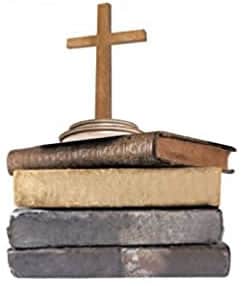
The Parallel Lives
Of The NOBLE AMERICAN RELIGIOUS THINKERS AND BELIEVERS:
Roger Williams VS. Cotton Mathers

NEW ARTICLES
Fire at Notre Dame
The fire began at 6:30 p.m., Paris local time, on Monday, April 15, 2019. An hour later, people, who watched from a distance, stared in horror as the top portion of the 300 foot spire broke off and crashed down through the cathedral’s roof.
Some 400 firefighters, working from the inside, extinguished the last of the flames by 3:40 a.m., on Tuesday, by pointing low-pressure water hoses at the flames, to minimize damage to the contents, pulling thousands of gallons of water from the Seine River via a pump boat.
At the same time, some 100 policemen and municipal workers formed a human chain and passed objects from inside to outside, in a valiant effort to preserve them.
The next morning authorities assessed the damage. The wooden-beamed lattice work inside the attic that ran the length of the cathedral was destroyed, but the twin bell towers at the west end stood intact, as did the organ’s 8,000 pipes, and the rose-tinted stained glass windows.
On Wednesday, April 17, President Emmanuel Macron promised the French people that the state would rebuild the cathedral in five years.
The first steps were to clear out the charred beams and the scorched limestones, secure the interior from the elements by a massive tarpaulin stretched over scaffolding, and work to ensure that the 28 flying buttresses that supported the exterior walls would stand and not collapse.
Once workers completed the clean-up, officials split the reconstruction work into 140 lots and requested bids. They selected some 250 businesses.
About 2000 oaks trees from across France were selected, cut down, dried, and transported to sawmills, where carpenters began to cut, hew, and assemble them into rafters for the attic.
Blacksmiths forged certain tools that the carpenters were required to use—two-man crosscut saws, broadaxes, etc.—the same tools that medieval workers used on the original attic.
Some 45,000 cubic feet of stone was transported to the site to rebuild the collapsed vaults.
On December 7, 2024, President Macron opened the doors of the re-created cathedral.
It is a miracle that the work was finished in five and a half years, just days before Christmas.
Builders began work on Notre Dame in 1163 A.D., and the work lasted for at least 180 years.
In 1804, Napoleon crowned himself emperor of France inside Notre Dame.
In the 19th century, the French writer, Victor Hugo, built his fictional tale, “The Hunchback of Notre Dame,” around Quasimodo, a bell-ringer in the towers.
In 1944, Notre Dame hosted Charles de Gaulle for France’s liberation from the Nazi’s.
There are those who insist upon a stupendous worship venue, like Notre Dame, massive, elaborate, and awe-inspiring. Others, including the 17th-century Puritans, argued for simplicity, and a reserved sanctuary, without stained-glass windows, statues, paintings, vestments, etc.
The Friends, aka the Quakers, are more extreme. They insist upon a barren meeting house, with wooden benches, no focal points, like altars or pulpits. “Their meeting houses often resemble local residential buildings and avoid ornamentation, spires, and steeples.”
Which kind of worship venue is correct? The answer depends upon a person’s preference. I like a pipe organ, a piano, a choir, an altar, a pulpit, and stained glass windows. Others may not.
Yet, one can argue for simplicity by reading Luke 2.
Shepherds at night on a rocky hillside, an angel, a heavenly choir sings, “Glory to God in the highest. Peace on earth. Goodwill to all men.” The shepherds find the child in Bethlehem lying in a manger, or a feed trough. Sheep, shepherds, a stable, a manger, not a refined venue.
One can argue for the opposite by reading Matthew 2. That writer mentions three Magi from the East bearing gifts of gold, frankincense, and myrrh, three of life’s finer things.
Whichever venue you prefer, with ornamentation or without, embellished or stark, enjoy the Christmas season. Peace to my readers.
American Divisiveness
American DivisivenessAmerican Divisiveness by William H. Benson January 14, 2016 Last month in Newsweek, a columnist named Kurt Eichenwald made a series of startling statements about the bitter divisiveness that separates Democrats and Republicans. He was...
Story and Myth
Story and MythStory and Myth by William H. Benson December 31, 2015 An article appeared in the New York Times two weeks ago, “Jane Austen's Guide to Alzheimer's.” In it, Carol J. Adams described her difficult days caring for her mother, who had lost the battle to...
Love Story
Love StoryLove Story by William H. Benson December 17, 2015 “What can you say about a twenty-five-year-old girl who died? That she was beautiful. And brilliant. That she loved Mozart and Bach. And the Beatles. And me.” So begins Oliver Barrett IV in Erich Segal's...
Lebanon’s Civil War
Lebanon's Civil WarLebanon's Civil War by William H. Benson December 3, 2015 In the book, The Black Swan: The Impact of the Highly Improbable, the book's author Nassim Nicholas Taleb describes the people in Lebanon, his native country. It was, he writes, “an...
China’s One-Child Policy
China's One-Child PolicyChina's One-Child Policy by William H. Benson November 5, 2015 The Chinese people felt an immediate sense of relief last Thursday when their government stated that it will permit married couples now to have two children. The government's...
Bobby Fischer and Steve Jobs
Bobby Fischer and Steve JobsBobby Fischer and Steve Jobs by William H. Benson October 22, 2015 Hollywood just released two biographical movies. The first was on Bobby Fischer entitled Pawn Sacrifice, and the other was on Steve Jobs, entitled Steve Jobs. Bobby's...
Older Posts
Mel Blanc: Comedy and Tragedy
Mel Blanc: Comedy and TragedyMel Blanc: Comedy and Tragedy by William H. Benson October 8, 2015 Mel Blanc was known as “the man with a thousand voices” because he created voices for numerous cartoon characters. For Warner Brothers, Mel was the voice of Wile...
A Fork in the Road
A Fork in the RoadA Fork in the Road by William H. Benson September 24, 2015 Yogi Berra played catcher for the New York Yankees for nineteen years, from 1946 until 1965. Noted for his funny expressions, such as, “It ain't over 'till it's over,” and “I didn't say...
Brandywine versus 9-11
Brandywine versus 9-11Brandywine versus 9-11 by William H. Benson September 10, 2015 Two historic events occurred on September 11. The first was at Brandywine Creek, west of Philadelphia, in 1777, and the second was 9-11-2001. In the first, General George...
Riff and Parade
Riff and ParadeRiff and Parade by William H. Benson August 27, 2015 “Life is a lot like jazz,” said George Gershwin. “It is best when you improvise.” During the 2004 political debates, the radio host Don Imus described the two vice-presidential candidates...
Linda Cliatt-Wayman
Linda Cliatt-WaymanLinda Cliatt-Wayman by William H. Benson August 13, 2015 “Miss! Miss! Why do you keep calling this a school?” asked Ashley. “This is not a school!” It was an awkward moment, at an assembly, in November of 2002. Because a fight had broken...
Hamilton, the Musical
Hamilton, the MusicalHamilton, the Musical by William H. Benson July 30, 2015 On Saturday afternoon, July 18, President Barack Obama and his two daughters, Malia and Sasha, were pleased to attend the new musical based upon Alexander Hamilton's life, Hamilton....

One of University of Northern Colorado’s 2020 Honored Alumni
William H. Benson
Local has provided scholarships for history students for 15 years
A Sterling resident is among five alumni selected to be recognized this year by the University of Northern Colorado. Bill Benson is one of college’s 2020 Honored Alumni.
Each year UNC honors alumni in recognition for their outstanding contributions to the college, their profession and their community. This year’s honorees were to be recognized at an awards ceremony on March 27, but due to the COVID-19 outbreak that event has been cancelled. Instead UNC will recognize the honorees in the fall during homecoming Oct. 10 and 11……
Newspaper Columns

The Duodecimal System
For centuries, the ancient Romans calculated sums with their clunky numerals: I, V, X, L, C, D, and M; or one, five, ten, 50, 100, 500, and 1,000. They knew nothing better.

The Thirteenth Amendment
On Jan. 1, 1863, President Abraham Lincoln signed the Emancipation Proclamation, and by it, he declared that “all persons held as slaves” within the rebellious states “are and henceforward shall be free.” Lincoln’s Proclamation freed some 3.1 million slaves within the Confederacy.

The Fourteenth Amendment
After Congress and enough states ratified the thirteenth amendment that terminated slavery, Congress passed the Civil Rights Act of 1866. This law declared that “all people born in the United States are entitled to be citizens, without regard to race, color, or previous condition of slavery or involuntary servitude.” The Act equated birth to citizenship.

The New-York Packet and the Constitution
Jill Lepore, the Harvard historian, published her newest book a month ago, These Truths: A History of the United States. In a short introduction, she describes in detail the Oct. 30, 1787 edition of a semi-weekly newspaper, The New-York Packet.
Mr. Benson’s writings on the U.S. Constitution are a great addition to the South Platte Sentinel. Its inspiring to see the history of the highest laws of this country passed on to others.
– Richard Hogan
Mr. Benson, I cannot thank you enough for this scholarship. As a first-generation college student, the prospect of finding a way to afford college is a very daunting one. Thanks to your generous donation, my dream of attending UNC and continuing my success here is far more achievable
– Cedric Sage Nixon
Donec bibendum tortor non vestibulum dapibus. Cras id tempor risus. Curabitur eu dui pellentesque, pharetra purus viverra.
– Extra Times
FUTURE BOOKS
- Thomas Paine vs. George Whitefield
- Ralph Waldo Emerson vs. Joseph Smith
- William James vs. Mary Baker Eddy
- Mark Twain vs. Billy Graham
- Henry Louis Mencken vs. Jim Bakker
