
By William H. Benson
The Parallel Lives
Of The NOBLE AMERICAN RELIGIOUS THINKERS AND BELIEVERS:
Roger Williams VS. Cotton Mathers

NEW ARTICLES
The Stamp of Criminality
Fintan O’Toole, a writer for “The New York Review of Books,” wrote in his July 18, 2024 column, that, “Being close to Trump was like being friends with a hurricane.” O’Toole lists a series of people’s names who worked for Trump, believed him, and then faced legal troubles.
Rudy Giuliani appeared in court in New York City, on Tuesday, November 26, 2024, because he failed to turn over all his assets to the court.
His crime: he defamed two election workers in the state of Georgia, Ruby Freeman and Shaye Moss, accusing them of election fraud in the 2020 election in that state. The pair took Giuliani to court, and a judge awarded them $148 million, reduced later to $146 million.
Giuliani pleaded with the judge, “I have no car, no credit card, no cash. They have put stop orders on my business accounts, and I can’t pay my bills.” The judge was less than sympathetic.
It gets worse. In July, officials disbarred Giuliani in the State of New York, and in September, Washington D.C. did the same. Thus, Giuliani has lost his means to a livelihood.
In November of 2018, Michael Cohen, Trump’s long-time attorney, pleaded guilty to lying to a Congressional committee. In December that year, a judge sentenced Cohen to three years in a federal prison. In all, he served thirteen and a half months, plus one and a half years at home.
Allen Weisselberg, the Trump Organization’s chief financial officer, sat in prison twice.
On August 18, 2022, Weisselberg pleaded guilty to 15 felony counts of evading $344,745 in taxes over fifteen years. He was required to pay back “almost $2 million in back taxes, interest, and penalties, without any right to appeal.” In 2023, he served 100 days in prison.
The second time, in 2024, Weisselberg served five months in prison, on Riker’s Island, for two counts of perjury, lying under oath, during Donald Trump’s civil business fraud trial.
Steve Bannon was released from prison on October 29, 2024, “after serving a four-month sentence for defying a subpoena in Congress’s investigation into the attack on the Capitol.”
Bannon’s next trial is now set for February 2025, this time for wire fraud and money laundering related to his scheme to raise funds for a charity, “We Build the Wall.” He and his cohorts raised $25 million but retained hundreds of thousands of dollars for themselves.
On the final day of Trump’s presidency, in January 2021, he pardoned Bannon of federal crimes, but Bannon faces state charges for the same crimes.
After almost four years, 944 defendants have had their cases adjudicated and received sentences for their criminal activity on January 6, 2021. About 562 have received prison sentences. The Justice Department continues to arrest and prosecute attackers, once identified.
On November 8, 2024, two Chicago men, Michael Mollo Jr., and Emil Kozeluh, were arrested for their participation in the criminal attack upon the Capitol Building.
Certain of Trump’s closest advisors in the White House have either faced prosecution or still may: Mark Meadows, Michael Flynn, Paul Manafort, Rick Gates, George Papadopoulus, Roger Stone, Peter Navarro, and Sidney Powell.
On November 12, 2024, the Supreme Court rejected a plea from Mark Meadows to move his Fulton County, Georgia election interference prosecution to a federal court.
Certain of Trump’s lawyers have faced indictment for their words and actions over the 2020 election: Jenna Ellis, Kenneth Cheseboro, Jeffrey Clark, and John Eastman.
Fintan O’Toole said, “each paid legal bills and will always bear the stamp of criminality.”
Certain of Trump’s enablers escaped legal trouble: Mike Pence, William Barr, James Mattis, H. R. McMaster, John Kelley, Chris Christie, and Mick Mulvaney. Yet, O’Toole said, each had to “face Trump’s sadistic ingratitude.”
O’Toole writes, “The ruler’s ultimate expression of power is the destruction of those on whom he has relied most, the ones who have been such good servants.”
A quote from F. Scott Fitzgerald’s novel, “The Great Gatsby,” sums it up. “They were careless people, Tom and Daisy—they smashed up things and creatures and then retreated back into their money or their vast carelessness.”
Mel Blanc: Comedy and Tragedy
Mel Blanc: Comedy and TragedyMel Blanc: Comedy and Tragedy by William H. Benson October 8, 2015 Mel Blanc was known as “the man with a thousand voices” because he created voices for numerous cartoon characters. For Warner Brothers, Mel was the voice of Wile...
A Fork in the Road
A Fork in the RoadA Fork in the Road by William H. Benson September 24, 2015 Yogi Berra played catcher for the New York Yankees for nineteen years, from 1946 until 1965. Noted for his funny expressions, such as, “It ain't over 'till it's over,” and “I didn't say...
Brandywine versus 9-11
Brandywine versus 9-11Brandywine versus 9-11 by William H. Benson September 10, 2015 Two historic events occurred on September 11. The first was at Brandywine Creek, west of Philadelphia, in 1777, and the second was 9-11-2001. In the first, General George...
Riff and Parade
Riff and ParadeRiff and Parade by William H. Benson August 27, 2015 “Life is a lot like jazz,” said George Gershwin. “It is best when you improvise.” During the 2004 political debates, the radio host Don Imus described the two vice-presidential candidates...
Linda Cliatt-Wayman
Linda Cliatt-WaymanLinda Cliatt-Wayman by William H. Benson August 13, 2015 “Miss! Miss! Why do you keep calling this a school?” asked Ashley. “This is not a school!” It was an awkward moment, at an assembly, in November of 2002. Because a fight had broken...
Hamilton, the Musical
Hamilton, the MusicalHamilton, the Musical by William H. Benson July 30, 2015 On Saturday afternoon, July 18, President Barack Obama and his two daughters, Malia and Sasha, were pleased to attend the new musical based upon Alexander Hamilton's life, Hamilton....
Older Posts
Lord Chamberlain’s Men
Lord Chamberlain's MenLord Chamberlain's Men by William H. Benson July 16, 2015 In the spring of 1594, twenty-six London actors joined together to create an acting company, the Lord Chamberlain's Men. These actors included London's leading dramatic actor at the...
Jay Walker – Library of Human Imagination
Jay WalkerLibrary of Human ImaginationJay Walker Library of Human Imagination by William H. Benson July 2, 2015 In 2002, the multi-millionaire Jay Walker designed and built his Library of Human Imagination. Located in Ridgefield, Connecticut, Walker's 3,600...
Suki Kim and Fathers’ Day
Suki Kim and Fathers' DaySuki Kim and Fathers' Day by William H. Benson June 18, 2015 On Sunday, June 25, 1950, North Korean bombs fell on Seoul, South Korea's capital, and the civil war began. It ended three years later, on July 27, 1953, with the same division...
Futurology
FuturologyFuturology by William H. Benson June 4, 2015 Fred and Wilma Flintstone lived in the past, George and Jane Jetson will live in the future, and Ralph and Alice Kramden live in the present. Although “The Flintstones” and “The Jetsons” were animated, the...
Pedro A. Noguera and The Trouble with Black Boys
Pedro A. Noguera and The Trouble with Black BoysPedro A. Noguera and The Trouble with Black Boys by William H. Benson May 21, 2015 Pedro A. Noguera teaches education and sociology at New York University. The son of Caribbean immigrants, he has a Spanish name, but...
Lyrics and Graduation
Lyrics and GraduationLyrics and Graduation by William H. Benson May 7, 2015 Fifty years ago, on the night of May 7, 1965, in a Florida hotel room, Keith Richards strummed his guitar while a cassette recorder taped a phrase that he had dreamed, “I Can't Get No...
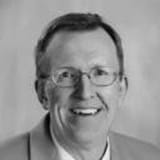
One of University of Northern Colorado’s 2020 Honored Alumni
William H. Benson
Local has provided scholarships for history students for 15 years
A Sterling resident is among five alumni selected to be recognized this year by the University of Northern Colorado. Bill Benson is one of college’s 2020 Honored Alumni.
Each year UNC honors alumni in recognition for their outstanding contributions to the college, their profession and their community. This year’s honorees were to be recognized at an awards ceremony on March 27, but due to the COVID-19 outbreak that event has been cancelled. Instead UNC will recognize the honorees in the fall during homecoming Oct. 10 and 11……
Newspaper Columns

The Duodecimal System
For centuries, the ancient Romans calculated sums with their clunky numerals: I, V, X, L, C, D, and M; or one, five, ten, 50, 100, 500, and 1,000. They knew nothing better.

The Thirteenth Amendment
On Jan. 1, 1863, President Abraham Lincoln signed the Emancipation Proclamation, and by it, he declared that “all persons held as slaves” within the rebellious states “are and henceforward shall be free.” Lincoln’s Proclamation freed some 3.1 million slaves within the Confederacy.

The Fourteenth Amendment
After Congress and enough states ratified the thirteenth amendment that terminated slavery, Congress passed the Civil Rights Act of 1866. This law declared that “all people born in the United States are entitled to be citizens, without regard to race, color, or previous condition of slavery or involuntary servitude.” The Act equated birth to citizenship.

The New-York Packet and the Constitution
Jill Lepore, the Harvard historian, published her newest book a month ago, These Truths: A History of the United States. In a short introduction, she describes in detail the Oct. 30, 1787 edition of a semi-weekly newspaper, The New-York Packet.
Mr. Benson’s writings on the U.S. Constitution are a great addition to the South Platte Sentinel. Its inspiring to see the history of the highest laws of this country passed on to others.
– Richard Hogan
Mr. Benson, I cannot thank you enough for this scholarship. As a first-generation college student, the prospect of finding a way to afford college is a very daunting one. Thanks to your generous donation, my dream of attending UNC and continuing my success here is far more achievable
– Cedric Sage Nixon
Donec bibendum tortor non vestibulum dapibus. Cras id tempor risus. Curabitur eu dui pellentesque, pharetra purus viverra.
– Extra Times
FUTURE BOOKS
- Thomas Paine vs. George Whitefield
- Ralph Waldo Emerson vs. Joseph Smith
- William James vs. Mary Baker Eddy
- Mark Twain vs. Billy Graham
- Henry Louis Mencken vs. Jim Bakker
