
By William H. Benson
The Parallel Lives
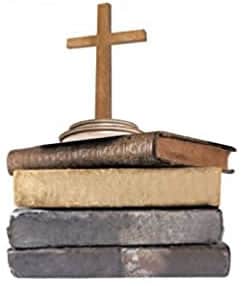
Of The NOBLE AMERICAN RELIGIOUS THINKERS AND BELIEVERS:
Roger Williams VS. Cotton Mathers

NEW ARTICLES
Immigrants
Music. Two Neil’s. The first is Neil Sadaka.
In 1974, Sadaka recorded a haunting song entitled “The Immigrant.” “Harbors opened their arms to the young searching foreigner, come to the light of the beacon of liberty. Was it anything like that when you arrived? A legend that spoke of a mystical magical land called America.
“It was a time when strangers were welcome here. Music would play. They tell me the days were sweet and clear. It was a sweeter tune, and there was so much room that people could come from everywhere. . . . To find they’ve closed the door, they don’t want him anymore.”
Sadaka dedicated the song to John Lennon, who was fighting deportation back to England.
The second Neil is Neil Diamond. In 1980, for his movie “The Jazz Singer,” Diamond recorded the song “America.”
“Far, we’ve been traveling far, without a home, but not without a star. Free. Only want to be free. We huddle close, hang on to a dream. On the boats and on the planes, they’re coming to America, never looking back again. They’re coming to America today!”
At certain concerts, Neil would introduce his song by projecting a picture of his grandmother, Molly Rapaport, then a Jewish girl, and explain.
“It was almost a hundred years ago. A little girl, twelve years old and alone, was put on a train in Kiev, then in Russia, and made the journey 1200 miles to Rotterdam in Holland. She then boarded a ship to make the great voyage to freedom in a place called America.
“That little girl was my grandmother. She and her daughter, Rose, inspired me to achieve everything that I have achieved in my life. Her courage will never be forgotten.”
Literature. In 1894, writing in Yiddish, Sholem Aleichem published a series of eight stories under the title, “Tevye the Dairyman.” The fictional Tevye tells stories about his seven trouble-prone daughters, his wife Golde, his poor life in Tsarist Russia, and his duty to his Jewish faith.
In a final story, entitled, “Lekh-Lekho,” (Get Thee Out), a Tsarist decree expels the family.
Theater. The musical, “Fiddler on the Roof,” is an adaptation of “Tevye the Dairyman,” In the final scene, Tevye, Golde, and the two youngest daughters leave for America.
History. In 1901, a family of Germans by the last name of Ament, or Amen, then living in Franken Cuter, or Frank, in Russia near the Volga River, prepared to migrate to America.
In Russia, “They lived in villages protected by a high fence, fearing Russian intrusion or the wolf packs that ran wild on the Russian steppes. The wolves were hungry in the winter’s snow.”
Conrad was the dad, Catherine the mother. Six of their nine children tagged along. The seventh child was David Amen, then 14 years old. The family settled in Culbertson, Nebraska, near McCook. They gravitated to farming, the work they knew best. They searched for land
In 1904 or 1905, two sisters, in their teens, also from Frank, Russia, migrated to America, fed up with a brutal step-mother’s abuse. Their names: Anna Mary and Anna Margaret Lebsack.
They too came to Nebraska. The older sister married David Strasheim, and settled in Lincoln, but Anna Margaret traveled west to McCook, and there, in 1907, she married David Amen. David and Anna Amen were my maternal great-grandparents.
In the fall of 1911, in Frank, Russia, the brother of the two Lebsack sisters, a farmer named Jacob, plus his wife Katherine, and their four children migrated to America. They settled in Hastings, Nebraska. In 1917, they too moved north of Proctor, Colorado.
There, the two families, the Amen’s and the Lebsack’s, farmed corn and hay.
Like other Volga Germans from Russia, the families became German Congregationalists.
Katherine Lebsack told her kids, “Be glad we are in America, or we might not be living.”
Christopher Columbus
Christopher Columbus’s three ships—the Nina, Pinta, and Santa Maria—first landed on a beach of a small island within the Bahama Islands, in the Caribbean Sea, on October 12, 1492. The natives called their tiny island, Guanahani, but Columbus re-christened it San...
Daniel Defoe
Years ago, in these pages, I confessed that I have read Daniel Defoe’s 1719 fictional tale, “The Adventures of Robinson Crusoe,” multiple times, as well as listened to the audio version. Crusoe’s ability to build a life alone on a deserted island in the Caribbean...
Battle of the Blue Water
Anthropologists divide the Lakota Sioux into seven bands. One band is called the Brulé or the Sicangu, or the Burnt Thighs. In August of 1854, a village of the Brulé people, led by chief Conquering Bear, were encamped along the North Platte River just into Wyoming. ...
Time, Space, and Work
In “A Brief History of Time,” first published in 1988, the British physicist Stephen Hawking explained how space and time are connected, interwoven, interdependent with each other. Since the universe displays massive amounts of space, it also displays massive...
“The CIA Book Club”
On Sunday, July 13, there appeared in the “New York Times Book Review” a quick look at Charlie English’s new non-fiction book, entitled, “The CIA Book Club: The Secret Mission to Win the Cold War with Forbidden Literature.” I have not read the book yet, but I will...
Wilbur and Orville Wright
Ken Burns, the filmmaker, met David McCullough, the historian, on the stage at the 92Y in New York City in May 2015, and together they discussed, before a live audience, McCullough’s most recent book, “The Wright Brothers,” published that year. McCullough gushes...
Older Posts
Alexander Hamilton vs. Aaron Burr
Last time in these pages, I wrote about the sharp division within George Washington’s Presidential administration, that between Alexander Hamilton, founder of the Federalist Party, and Thomas Jefferson, founder of the Democratic-Republican Party. That division...
The 1790’s: Fierce Political Fights
Last time in these pages, I wrote about the sharp division within George Washington’s Presidential administration, that between Alexander Hamilton, founder of the Federalist Party, and Thomas Jefferson, founder of the Democratic-Republican Party. That division...
Alexander Hamilton vs. Thomas Jefferson
George Washington was sworn in as the first U. S. President at an inauguration ceremony on April 30, 1789, held on the steps of Federal Hall, 26 Wall Street, a block east of what is now the New York Stock Exchange. Vice-President John Adams had been sworn in on April...
“Dunkirk and D-Day”
Nine months after World War II began, the German Nazi war machine drove French, British, and Belgian troops west across France into a town on the English Channel’s coast, called Dunkirk. By late May of 1940, the German army controlled almost all of France. Those...
Gettysburg and Memorial Day
On June 28, 1863, Robert E. Lee, Confederate General, dared to cross the border and invade Pennsylvania, a Union state. Lee hoped to force Lincoln into negotiations to end the war. Lincoln felt dismayed. He understood that Union troops must repel Lee’s advance....
Expatriated Americans
Penguin Press will publish Ron Chernow’s biography on Mark Twain, next week, on May 13. A recent article by Lauren Michele Jackson in this week’s edition of the magazine, the “New Yorker,” reviewed Chernow’s extensive biography on Twain. One sentence jumped out. “In...

One of University of Northern Colorado’s 2020 Honored Alumni
William H. Benson
Local has provided scholarships for history students for 15 years
A Sterling resident is among five alumni selected to be recognized this year by the University of Northern Colorado. Bill Benson is one of college’s 2020 Honored Alumni.
Each year UNC honors alumni in recognition for their outstanding contributions to the college, their profession and their community. This year’s honorees were to be recognized at an awards ceremony on March 27, but due to the COVID-19 outbreak that event has been cancelled. Instead UNC will recognize the honorees in the fall during homecoming Oct. 10 and 11……
Newspaper Columns

The Duodecimal System
For centuries, the ancient Romans calculated sums with their clunky numerals: I, V, X, L, C, D, and M; or one, five, ten, 50, 100, 500, and 1,000. They knew nothing better.

The Thirteenth Amendment
On Jan. 1, 1863, President Abraham Lincoln signed the Emancipation Proclamation, and by it, he declared that “all persons held as slaves” within the rebellious states “are and henceforward shall be free.” Lincoln’s Proclamation freed some 3.1 million slaves within the Confederacy.

The Fourteenth Amendment
After Congress and enough states ratified the thirteenth amendment that terminated slavery, Congress passed the Civil Rights Act of 1866. This law declared that “all people born in the United States are entitled to be citizens, without regard to race, color, or previous condition of slavery or involuntary servitude.” The Act equated birth to citizenship.

The New-York Packet and the Constitution
Jill Lepore, the Harvard historian, published her newest book a month ago, These Truths: A History of the United States. In a short introduction, she describes in detail the Oct. 30, 1787 edition of a semi-weekly newspaper, The New-York Packet.
Mr. Benson’s writings on the U.S. Constitution are a great addition to the South Platte Sentinel. Its inspiring to see the history of the highest laws of this country passed on to others.
– Richard Hogan
Mr. Benson, I cannot thank you enough for this scholarship. As a first-generation college student, the prospect of finding a way to afford college is a very daunting one. Thanks to your generous donation, my dream of attending UNC and continuing my success here is far more achievable
– Cedric Sage Nixon
Donec bibendum tortor non vestibulum dapibus. Cras id tempor risus. Curabitur eu dui pellentesque, pharetra purus viverra.
– Extra Times
FUTURE BOOKS
- Thomas Paine vs. George Whitefield
- Ralph Waldo Emerson vs. Joseph Smith
- William James vs. Mary Baker Eddy
- Mark Twain vs. Billy Graham
- Henry Louis Mencken vs. Jim Bakker
