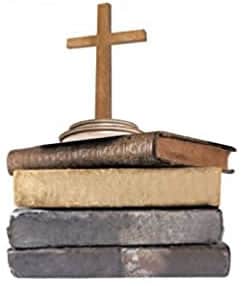

By William H. Benson
The Parallel Lives
Of The NOBLE AMERICAN RELIGIOUS THINKERS AND BELIEVERS:
Roger Williams VS. Cotton Mathers

NEW ARTICLES
Allen Guelzo’s “Our Ancient Faith,” Continued
Allen Guelzo, history professor at Princeton, tells a story about Lincoln that he included in his recent book, “Our Ancient Faith: Lincoln, Democracy, and the American Experiment.”
Abraham Lincoln issued the Emancipation Proclamation on September 22, 1862, one and a half years into the Civil War. He justified his Proclamation out of “military necessity.” Eleven states of the Union had rebelled and threatened the Federal Government’s very existence.
Freeing slaves in the Confederacy, Lincoln argued, would harm those rebellious states’ ability to further prosecute the war against the Union. Democracy was under attack. He had to act.
Yet, Lincoln chose to limit his Emancipation Proclamation’s scope.
For example, Lincoln chose not to set the slaves free who were living in Tennessee, a Confederate state then under the Union army’s control. There was no “military necessity” there.
In addition, Lincoln did not free slaves in Virginia’s forty-eight western counties that made up the new state of West Virginia that had chosen to remain inside the Union.
Lincoln did not free twelve parishes in Louisiana, also under the Federal army’s control.
Finally, Lincoln did not free slaves in the pro-slavery states that had chosen to remain within the Union: Delaware, Maryland, Kentucky, and Missouri.
Some disagreed and argued that Lincoln should free all slaves wherever they lived in all states, but Lincoln refused. He dared not to step outside the Constitution and the law.
Salmon Chase, Lincoln’s Secretary of Treasury, was one who urged Lincoln to cast away his justification by “military necessity” and to free all slaves now.
Lincoln replied to Salmon Chase on September 2, 1863. In his letter, Lincoln wrote,
“The original proclamation has no constitutional or legal justification, except as a military measure. If I take the step, without the argument of military necessity, it might be politically expedient and morally right.
“Would I not thus give up all footing upon constitution or law? Would I not thus be in the ‘boundless field of absolutism?’”
Lincoln’s last words—“the boundless field of absolutism”—was a quote that Lincoln had lifted from one of Jefferson’s letters from the 1820’s. The word “absolutism” refers to a monarch, a king, an autocrat, or a tyrant, someone who lives outside the law, unchecked and unrestrained.
On January 6, 2021, a guy named Kevin Seefried, then 51 years old, from Delaware, a former slave state but not one in the Confederacy, paraded a Confederate flag throughout the Capitol.
Two years later, on February 9, 2023, U.S. District Judge Trevor McFadden, told Seefried that his actions that day with that flag were “shocking,” and “outrageous.”
“McFadden criticized Seefried for jabbing the flagpole at a black U.S. Capitol Police officer.” The judge looked at Seefried and said, “I hope you realize how offensive it is.”
Seefried was convicted on five charges, including obstruction of an official proceeding—the joint session of Congress that was working to certify the Electoral College vote that day. Judge McFadden sentenced Kevin Seefried to three years in prison.
Last week, I took a few days off from work and flew to Charleston, South Carolina. I wanted to see Fort Sumter, the site of the Civil War’s first battle. The ferry ride to the small island in Charleston’s harbor lasted thirty minutes. I walked about the grounds for the next forty minutes.
A flagpole stands in the center of the island, the island’s highest point. I looked up and atop the pole I saw whipping in the wind a massive United States flag, the stars and stripes forever, hovering over Fort Sumter.
Self-Government and Modernity
Self-Government and ModernitySelf-Government and Modernity by William H. Benson January 29, 2015 Historians rank Frederick Jackson Turner one of the most noted of all American historians. In 1893, in Chicago at the American Historical Association, he delivered a...
Basketball
BasketballBasketball by William H. Benson January 15, 2015 Vivek Ranadivé coached his daughter's National Junior Basketball team at Redwood City, south of San Francisco, in Silicon Valley. Because Vivek had grown up in Mumbai, where he had played cricket and...
Cuba and North Korea
Cuba and North KoreaCuba and North Korea by William H. Benson January 1, 2015 The two Communist holdouts from the Cold War dominate the news again: Cuba on one page, and North Korea on the other. First, President Barak Obama wants to re-establish diplomatic...
Christmas
ChristmasChristmas by William H. Benson December 18, 2014 Della sold her hair to buy “a platinum watch fob” for Jim, her husband, and he sold his watch to buy “tortoise shell combs” for Della's hair. On Christmas Day they opened their presents, and neither he nor...
Space Flight
Space FlightSpace Flight by William H. Benson December 4, 2014 On November 23, a week ago last Sunday, another Soyuz rocket launched three astronauts into outer space from the Baikonur Cosmodrome in Kazakhstan, and after a six-hour flight they docked at the...
Camp David and Gettysburg
Camp David and GettysburgCamp David and Gettysburg by William H. Benson November 19, 2014 On November 9, 1977, Anwar Sadat, Egypt's president, set aside his speech to the Egyptian People's Assembly and said, “I am ready to travel to the ends of the earth. Israel...
Older Posts
Patricia Hearst
Patricia HearstPatricia Hearst by William H. Benson November 19, 2014 The Symbionese Liberation Army kidnapped nineteen-year-old Patty Hearst, a sophomore at the University of California, Berkley, on February 4, 1974. For the next 57 days, this small-time urban...
Longevity
LongevityLongevity by William H. Benson November 6, 2014 Billy Graham will celebrate another birthday this week, his ninety-sixth. As far as I know, he still lives, despite a lifetime of poor health: “hernias, retina clots, pleurisies, headaches, nauseas, removal...
Viruses
VirusesViruses by William H. Benson October 23, 2014 Fierce opposition has met the slightest steps forward in humankind's war upon any of the several viruses that inflict us. Fear of the unknown, religious persuasions, and lack of knowledge of the scientific...
The Yom Kippur War
The Yom Kippur WarThe Yom Kippur War by William H. Benson October 9, 2014 The twin attacks came at 1400 hours on October 9, 1973, on Yom Kippur, the holiest day in the Jewish calendar. First, Egypt's president, Anwar Sadat, dispatched his troops to cross the Suez...
Calendars
CalendarsCalendars by William H. Benson September 25, 2014 President Obama visited Stonehenge three weeks ago, on Friday, September 5. As he stepped around the stones, he said, “ How cool is this. This is spectacular! Knocked this off my bucket list.” ...
Stalin and Khrushchev’s Great Purge
Stalin and Khrushchev's Great PurgeStalin and Khrushchev's Great Purge by William H. Benson September 11, 2014 Although President Obama has ordered airstrikes on the Islamic State of Iraq and Syria (ISIS), the Pentagon is saying that “further strikes are needed...
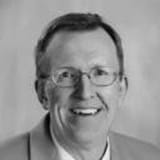
One of University of Northern Colorado’s 2020 Honored Alumni
William H. Benson
Local has provided scholarships for history students for 15 years
A Sterling resident is among five alumni selected to be recognized this year by the University of Northern Colorado. Bill Benson is one of college’s 2020 Honored Alumni.
Each year UNC honors alumni in recognition for their outstanding contributions to the college, their profession and their community. This year’s honorees were to be recognized at an awards ceremony on March 27, but due to the COVID-19 outbreak that event has been cancelled. Instead UNC will recognize the honorees in the fall during homecoming Oct. 10 and 11……
Newspaper Columns

The Duodecimal System
For centuries, the ancient Romans calculated sums with their clunky numerals: I, V, X, L, C, D, and M; or one, five, ten, 50, 100, 500, and 1,000. They knew nothing better.

The Thirteenth Amendment
On Jan. 1, 1863, President Abraham Lincoln signed the Emancipation Proclamation, and by it, he declared that “all persons held as slaves” within the rebellious states “are and henceforward shall be free.” Lincoln’s Proclamation freed some 3.1 million slaves within the Confederacy.

The Fourteenth Amendment
After Congress and enough states ratified the thirteenth amendment that terminated slavery, Congress passed the Civil Rights Act of 1866. This law declared that “all people born in the United States are entitled to be citizens, without regard to race, color, or previous condition of slavery or involuntary servitude.” The Act equated birth to citizenship.

The New-York Packet and the Constitution
Jill Lepore, the Harvard historian, published her newest book a month ago, These Truths: A History of the United States. In a short introduction, she describes in detail the Oct. 30, 1787 edition of a semi-weekly newspaper, The New-York Packet.
Mr. Benson’s writings on the U.S. Constitution are a great addition to the South Platte Sentinel. Its inspiring to see the history of the highest laws of this country passed on to others.
– Richard Hogan
Mr. Benson, I cannot thank you enough for this scholarship. As a first-generation college student, the prospect of finding a way to afford college is a very daunting one. Thanks to your generous donation, my dream of attending UNC and continuing my success here is far more achievable
– Cedric Sage Nixon
Donec bibendum tortor non vestibulum dapibus. Cras id tempor risus. Curabitur eu dui pellentesque, pharetra purus viverra.
– Extra Times
FUTURE BOOKS
- Thomas Paine vs. George Whitefield
- Ralph Waldo Emerson vs. Joseph Smith
- William James vs. Mary Baker Eddy
- Mark Twain vs. Billy Graham
- Henry Louis Mencken vs. Jim Bakker
