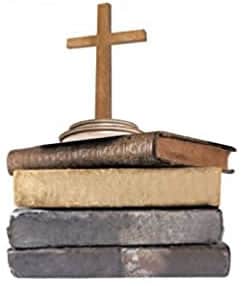

By William H. Benson
The Parallel Lives
Of The NOBLE AMERICAN RELIGIOUS THINKERS AND BELIEVERS:
Roger Williams VS. Cotton Mathers

NEW ARTICLES
Allen Guelzo and Abraham Lincoln’s religious faith
Two weeks ago in these pages, I discussed Allen Guelzo’s recent book, published on February 6, 2024, entitled, “Our Ancient Faith: Lincoln, Democracy, and the American Experiment.”
In it, the Civil War historian, Allen Guelzo, wrote a series of enlightening essays on his impressions of Lincoln’s thoughts on democracy and the President’s other astonishing attributes.
In an interview at a bookstore for a book signing months ago, the interviewer, Scott LaMar, asked Professor Guelzo, two questions. “Was Lincoln a religious man? Was he a Christian?”
Allen Guelzo answers, “No, not in any kind of formal sense. Lincoln never joined a church, and there is no evidence he every participated in any Christian sacrament.
“Yet, Lincoln attended the First Presbyterian Church in Springfield, Illinois, and the Seventh Avenue Presbyterian Church in Washington D.C.”
Guelzo explains that “Lincoln was a very private and yet complicated individual, who thought a great deal about religion, but he never discussed religion with his colleagues.
“Lincoln was brought up in a very strict religious household, but when an adolescent, he rebelled. In his twenties, he declared himself an unbeliever, an aggressive stance that lessened over time, as his adult years rolled forward.
Guelzo makes a startling statement, “When Lincoln was in the White House, he had more to say about God, with more scope and profundity, than any person who has occupied the office.
“The Arc of Lincoln’s rhetoric upon God progresses throughout his presidency until he drafts the Second Inaugural Address, a final written work that resembles a Puritan sermon, a jeremiad.”
In late 1862, still early in the war, Lincoln is tested because the Confederacy is wining the battles. Guelzo points out that Lincoln looked at the problem like a mathematician, in that he laid down a first axiom, that “the will of God always prevails,” and then he built upon that axiom.
Lincoln surmised, “God could have given an immediate victory to the Union or to the Confederacy, but He has not permitted that to happen. Why?
“If the Union and the Confederacy are still fighting, it is because God does not see that either of the two sides are where He wants them to be. There has to be a further step taken in this war. Lincoln wonders, ‘What is that additional step?’”
Guelzo insists that Lincoln concluded that “a great wrong was done in slavery, that both sides were complicit in that moral wrong, and that next step is to emancipate the slaves, set them free.”
This meditation upon Divine Will, Guelzo points out, reaches deep into Lincoln’s thinking throughout the war’s remaining months and years.
“Lincoln wonders how to make sense of this terrible and bloody war? How can anyone explain the catastrophe that has unfolded between North and South’s people?”
When Lincoln sat down to write his Second Inaugural Address, in early 1865, after his election win, “he refuses to talk about God the redeemer, a forgiving God, but instead he talks about a God who judges.”
Lincoln writes, “Let us judge not, that we be not judged.” “The Almighty has His own purposes.” “Woe unto the world because of offenses!” “American slavery is one of those offenses which in the providence of God must needs come.
“If God wills that it [the war] continue until every drop of blood drawn with the lash shall be paid by another drawn with the sword, as was said three thousand years ago, so still it must be said, ‘The judgments of the Lord are true and righteous altogether.’”
Near the close of Guelzo’s interview, he asks, “Is this formal religion?” Guelzo answers, “No, but it is not religion-less. It is Lincoln’s insight into Divine providence and God’s judgment.”
So be it.
Patricia Hearst
Patricia HearstPatricia Hearst by William H. Benson November 19, 2014 The Symbionese Liberation Army kidnapped nineteen-year-old Patty Hearst, a sophomore at the University of California, Berkley, on February 4, 1974. For the next 57 days, this small-time urban...
Longevity
LongevityLongevity by William H. Benson November 6, 2014 Billy Graham will celebrate another birthday this week, his ninety-sixth. As far as I know, he still lives, despite a lifetime of poor health: “hernias, retina clots, pleurisies, headaches, nauseas, removal...
Viruses
VirusesViruses by William H. Benson October 23, 2014 Fierce opposition has met the slightest steps forward in humankind's war upon any of the several viruses that inflict us. Fear of the unknown, religious persuasions, and lack of knowledge of the scientific...
The Yom Kippur War
The Yom Kippur WarThe Yom Kippur War by William H. Benson October 9, 2014 The twin attacks came at 1400 hours on October 9, 1973, on Yom Kippur, the holiest day in the Jewish calendar. First, Egypt's president, Anwar Sadat, dispatched his troops to cross the Suez...
Calendars
CalendarsCalendars by William H. Benson September 25, 2014 President Obama visited Stonehenge three weeks ago, on Friday, September 5. As he stepped around the stones, he said, “ How cool is this. This is spectacular! Knocked this off my bucket list.” ...
Stalin and Khrushchev’s Great Purge
Stalin and Khrushchev's Great PurgeStalin and Khrushchev's Great Purge by William H. Benson September 11, 2014 Although President Obama has ordered airstrikes on the Islamic State of Iraq and Syria (ISIS), the Pentagon is saying that “further strikes are needed...
Older Posts
Robin Williams
Robin WilliamsRobin Williams by William H. Benson August 28, 2014 Robin Williams was born in 1951, and I in 1953. Due to his rapid-fire wit, his zany antics, and his overabundance of comedic talents, success came quick for him, more so than it did for others of...
The Japanese National Exams
The Japanese National ExamsThe Japanese National Exams by William H. Benson August 14, 2014 In an effort to raise students' educational levels across the globe, the Program for International Student Assessment, encourages hundreds of thousands of 15-year-old...
Competition vs. Cooperation
Competition vs. CooperationCompetition vs. Cooperation by William H. Benson July 31, 2014 Two boys were playing badminton, and because Andy played better than Bob, Andy won all the games. Bob threw down his racket, sat on a tree stump, and said, “I won't play...
Dinosaurs and Asteroids
Dinosaurs and AsteroidsDinosaurs and Asteroids by William H. Benson July 17, 2014 In March of 1992, three astronomers, Carolyn and Eugene Shoemaker and David Levy discovered their ninth comet, hence its name, “Shoemaker-Levy 9.” The team determined that S-L9 was...
The Puritan Ethic and the American Revolution
The Puritan Ethic and the American RevolutionThe Puritan Ethic and the American Revolution by William H. Benson July 3, 2014 Joseph J. Ellis says in his book, Founding Brothers, “No event in American history, which was so improbable at the time, has seemed so...
President Obama and Chief Sitting Bull
President Obama and Chief Sitting BullPresident Obama and Chief Sitting Bull by William H. Benson June 19, 2014 Next week some five hundred visitors will convene at the Real Bird Ranch, adjacent to the Little Bighorn Battle site, near Hardin, Montana, to watch...
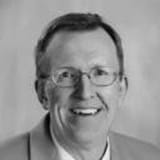
One of University of Northern Colorado’s 2020 Honored Alumni
William H. Benson
Local has provided scholarships for history students for 15 years
A Sterling resident is among five alumni selected to be recognized this year by the University of Northern Colorado. Bill Benson is one of college’s 2020 Honored Alumni.
Each year UNC honors alumni in recognition for their outstanding contributions to the college, their profession and their community. This year’s honorees were to be recognized at an awards ceremony on March 27, but due to the COVID-19 outbreak that event has been cancelled. Instead UNC will recognize the honorees in the fall during homecoming Oct. 10 and 11……
Newspaper Columns

The Duodecimal System
For centuries, the ancient Romans calculated sums with their clunky numerals: I, V, X, L, C, D, and M; or one, five, ten, 50, 100, 500, and 1,000. They knew nothing better.

The Thirteenth Amendment
On Jan. 1, 1863, President Abraham Lincoln signed the Emancipation Proclamation, and by it, he declared that “all persons held as slaves” within the rebellious states “are and henceforward shall be free.” Lincoln’s Proclamation freed some 3.1 million slaves within the Confederacy.

The Fourteenth Amendment
After Congress and enough states ratified the thirteenth amendment that terminated slavery, Congress passed the Civil Rights Act of 1866. This law declared that “all people born in the United States are entitled to be citizens, without regard to race, color, or previous condition of slavery or involuntary servitude.” The Act equated birth to citizenship.

The New-York Packet and the Constitution
Jill Lepore, the Harvard historian, published her newest book a month ago, These Truths: A History of the United States. In a short introduction, she describes in detail the Oct. 30, 1787 edition of a semi-weekly newspaper, The New-York Packet.
Mr. Benson’s writings on the U.S. Constitution are a great addition to the South Platte Sentinel. Its inspiring to see the history of the highest laws of this country passed on to others.
– Richard Hogan
Mr. Benson, I cannot thank you enough for this scholarship. As a first-generation college student, the prospect of finding a way to afford college is a very daunting one. Thanks to your generous donation, my dream of attending UNC and continuing my success here is far more achievable
– Cedric Sage Nixon
Donec bibendum tortor non vestibulum dapibus. Cras id tempor risus. Curabitur eu dui pellentesque, pharetra purus viverra.
– Extra Times
FUTURE BOOKS
- Thomas Paine vs. George Whitefield
- Ralph Waldo Emerson vs. Joseph Smith
- William James vs. Mary Baker Eddy
- Mark Twain vs. Billy Graham
- Henry Louis Mencken vs. Jim Bakker
