
By William H. Benson
The Parallel Lives
Of The NOBLE AMERICAN RELIGIOUS THINKERS AND BELIEVERS:
Roger Williams VS. Cotton Mathers

NEW ARTICLES
Allen Guelzo’s “Our Ancient Faith”
When driving to destinations from home and back, I occupy my time by listening to YouTube videos of Civil War historians on my mobile phone. I am curious to hear their ideas and stories.
The best crop of Civil War historians today, in my estimation, include: Eric Foner at Columbia, Gary Gallagher at the University of Virginia, David Blight at Yale, and Allen Guelzo now at Princeton, but formerly at Gettysburg College. Each has a collection of videos.
Plus, each possesses that innate ability to bring to life the war, its people, its clash of ideas.
Last week, I listened to a sixty-minute interview with Allen Guelzo, about his book, published last February, “Our Ancient Faith: Lincoln, Democracy, and the American Experiment.”
Guelzo found his title in Lincoln’s speech at Peoria, Illinois, on October 16, 1854, when he first said, “my ancient faith,” but then later in that speech, Lincoln changed the phrase.
He said, “I have quoted so much at this time to show that according to ‘our ancient faith,’ the just powers of governments are derived from the consent of the governed.”
Lincoln changed “my ancient faith” to “our ancient faith,” meaning, it includes all Americans.
For Lincoln, “our ancient faith” is Thomas Jefferson’s Declaration of Independence, James Madison’s Constitution, and George Washington’s words when he presided over thirteen states.
Guelzo says that each generation must teach the next generation the principles of “our ancient faith.” He says that we need their lessons. We must develop a reverence for their ideas.
Also, Guelzo says that Lincoln was devoted to the idea that popular sovereignty within a democracy resides with the people, in other words, “from the consent of the governed.”
At Gettysburg, Lincoln finished his Address with the words, “that government of the people, by the people, and for the people, shall not perish from the earth.”
Guelzo points out that the phrase “of the people” indicates that a democratic government comes out of the people, that they select representatives who must act on the people’s behalf.
The second phrase “by the people” according to Guelzo, indicates that people can take charge of their own lives, and that people are competent enough to govern their community’s affairs.
The third phrase “for the people” indicates that the benefits and rich rewards spilling out of democracy and self-government will flow back to the people themselves.
Guelzo points out that Lincoln’s ideas contradict those of a monarch, a dictator, or a tyrant, who believes the people are unwashed masses of ignorance, born with saddles on their backs and bits in their mouth, ready to be ridden, incapable of self-government or any display of wisdom.
In the second chapter of the book, Guelzo discusses “Law, Reason, and Passion.”
Lincoln understood that “passion” can sway people, carry them off the rails. For him, passion includes anger, impulsiveness, and revenge. It leads to lynch mobs, riots, and some very stupid decisions, like granting power to a dictator to set things straight and to drive away the chaos.
For Lincoln, the solution was “reason,” that ability to set aside the emotion and instead think toward an appropriate response that will reduce the temperature. Less heat and more light.
The best means to reason was the “law.” The law is about reason. A reverence for the law will keep people’s passions under control.
The last thing that Guelzo explains, at the end of the hour, is that democratic government is resilient, more so than a dictatorship.
Guelzo says that a dictatorship may appear powerful, but once it slams into a brick wall, it disintegrates and dies. A democracy is like Rocky Balboa, who keeps getting knocked down flat again and again, but keeps getting back up to fight another day.
Our American democracy can absorb a punishing lot of abuse and torment. It has in the past, will do so in the present, as well as into the future. Guelzo finishes, “We have been here before.”
Robin Williams
Robin WilliamsRobin Williams by William H. Benson August 28, 2014 Robin Williams was born in 1951, and I in 1953. Due to his rapid-fire wit, his zany antics, and his overabundance of comedic talents, success came quick for him, more so than it did for others of...
The Japanese National Exams
The Japanese National ExamsThe Japanese National Exams by William H. Benson August 14, 2014 In an effort to raise students' educational levels across the globe, the Program for International Student Assessment, encourages hundreds of thousands of 15-year-old...
Competition vs. Cooperation
Competition vs. CooperationCompetition vs. Cooperation by William H. Benson July 31, 2014 Two boys were playing badminton, and because Andy played better than Bob, Andy won all the games. Bob threw down his racket, sat on a tree stump, and said, “I won't play...
Dinosaurs and Asteroids
Dinosaurs and AsteroidsDinosaurs and Asteroids by William H. Benson July 17, 2014 In March of 1992, three astronomers, Carolyn and Eugene Shoemaker and David Levy discovered their ninth comet, hence its name, “Shoemaker-Levy 9.” The team determined that S-L9 was...
The Puritan Ethic and the American Revolution
The Puritan Ethic and the American RevolutionThe Puritan Ethic and the American Revolution by William H. Benson July 3, 2014 Joseph J. Ellis says in his book, Founding Brothers, “No event in American history, which was so improbable at the time, has seemed so...
President Obama and Chief Sitting Bull
President Obama and Chief Sitting BullPresident Obama and Chief Sitting Bull by William H. Benson June 19, 2014 Next week some five hundred visitors will convene at the Real Bird Ranch, adjacent to the Little Bighorn Battle site, near Hardin, Montana, to watch...
Older Posts
Lance Armstrong vs. Floyd Landis
Lance Armstrong vs. Floyd LandisLance Armstrong vs. Floyd Landis by William H. Benson June 5, 2014 Floyd Landis rode his bicycle for the United States Postal Team for three years, from 2002-2004, alongside his teammate, Lance Armstrong, who won the Tour de France...
Nigeria’s Schoolgirls
Nigeria's SchoolgirlsNigeria's Schoolgirls by William H. Benson May 22, 2014 A caveman lives in a cave, carries a wooden club with a stone head, dresses in animal skins, pats his pet dinosaur, and then drags women around by their hair. This stereotype originated...
University Graduation
University GraduationUniversity Graduation by William H. Benson May 8, 2014 On Tuesday, April Fools' Day, several dozen Dartmouth students gathered in the office belonging to the university's president, Philip J. Hanlon, and insisted that he respond to each of...
William Shakespeare
William ShakespeareWilliam Shakespeare by William H. Benson April 24, 2014 We know so little of William Shakespeare's life. We know that he was christened on April 26, 1564, and that his father, John Shakespeare, made gloves in Stratford and served as an...
Addiction
AddictionAddiction by William H. Benson April 10, 2014 Charlie Sheen, Lindsay Lohan, Robert Downey, Jr., Britney Spears, the late Whitney Houston, and countless numbers of other celebrities have gone through rehab at least once, and each experienced far less than...
The Luck of the Irish
The Luck of the IrishThe Luck of the Irish by William H. Benson March 13, 2014 Thelma Catherine Patricia Ryan is a very Irish name, and she had the red-hair to go with it. Born March 16, 1912, the day before St. Patrick's Day, in Ely, Nevada, her parents moved to...
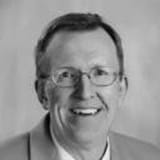
One of University of Northern Colorado’s 2020 Honored Alumni
William H. Benson
Local has provided scholarships for history students for 15 years
A Sterling resident is among five alumni selected to be recognized this year by the University of Northern Colorado. Bill Benson is one of college’s 2020 Honored Alumni.
Each year UNC honors alumni in recognition for their outstanding contributions to the college, their profession and their community. This year’s honorees were to be recognized at an awards ceremony on March 27, but due to the COVID-19 outbreak that event has been cancelled. Instead UNC will recognize the honorees in the fall during homecoming Oct. 10 and 11……
Newspaper Columns

The Duodecimal System
For centuries, the ancient Romans calculated sums with their clunky numerals: I, V, X, L, C, D, and M; or one, five, ten, 50, 100, 500, and 1,000. They knew nothing better.

The Thirteenth Amendment
On Jan. 1, 1863, President Abraham Lincoln signed the Emancipation Proclamation, and by it, he declared that “all persons held as slaves” within the rebellious states “are and henceforward shall be free.” Lincoln’s Proclamation freed some 3.1 million slaves within the Confederacy.

The Fourteenth Amendment
After Congress and enough states ratified the thirteenth amendment that terminated slavery, Congress passed the Civil Rights Act of 1866. This law declared that “all people born in the United States are entitled to be citizens, without regard to race, color, or previous condition of slavery or involuntary servitude.” The Act equated birth to citizenship.

The New-York Packet and the Constitution
Jill Lepore, the Harvard historian, published her newest book a month ago, These Truths: A History of the United States. In a short introduction, she describes in detail the Oct. 30, 1787 edition of a semi-weekly newspaper, The New-York Packet.
Mr. Benson’s writings on the U.S. Constitution are a great addition to the South Platte Sentinel. Its inspiring to see the history of the highest laws of this country passed on to others.
– Richard Hogan
Mr. Benson, I cannot thank you enough for this scholarship. As a first-generation college student, the prospect of finding a way to afford college is a very daunting one. Thanks to your generous donation, my dream of attending UNC and continuing my success here is far more achievable
– Cedric Sage Nixon
Donec bibendum tortor non vestibulum dapibus. Cras id tempor risus. Curabitur eu dui pellentesque, pharetra purus viverra.
– Extra Times
FUTURE BOOKS
- Thomas Paine vs. George Whitefield
- Ralph Waldo Emerson vs. Joseph Smith
- William James vs. Mary Baker Eddy
- Mark Twain vs. Billy Graham
- Henry Louis Mencken vs. Jim Bakker
