
By William H. Benson
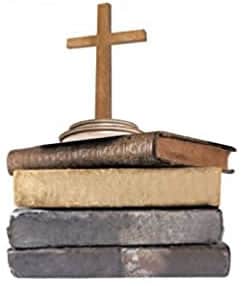
The Parallel Lives
Of The NOBLE AMERICAN RELIGIOUS THINKERS AND BELIEVERS:
Roger Williams VS. Cotton Mathers

NEW ARTICLES

Thoughts on Jack Nicholson
Columbia Pictures released “Easy Rider” on July 14, 1969, fifty-five years ago last Sunday.
I missed seeing it that summer, because I was busy on the farm driving a 92 Massey Harris combine in wheat harvest. I missed the film later, because I was busy my sophomore year in high school running here, there and everywhere: cross country, track, and basketball.
I admit. I have never watched Easy Rider. Other things have crowded out my time.
The film was a runaway success, grossing $60 million, but only cost between $360,000 and $400,000 to shoot, plus another million for licensed music tracks that played throughout.
The songs included: “Born to Be Wild,” by Steppenwolf; “Wasn’t Born to Follow,” by the Byrds; “Groovin,” by the Young Rascals; “With a Little Help From My Friends,” by Joe Cocker; and “Nights in White Satin,” by the Moody Blues.
The actor Peter Fonda produced “Easy Rider,” the actor Dennis Hopper directed it, and Terry Southern wrote the screenplay, along with help from Fonda and Hopper. In the movie, Peter Fonda plays the part of Wyatt, aka Captain America, and Dennis Hopper plays Billy.
Astride chopper motorcycles, sporting lots of facial hair, and bedecked in a U.S. flag, Wyatt and Billy leave the southwest part of the country and head east, aiming for the Mardi Gras.
In New Mexico, police throw the pair into jail, until a young attorney named George Hanson bails them out, played by Jack Nicholson. George Hansen is a straight guy with a white shirt and tie, an establishment guy, even though he drinks to excess.
George finds his place on the back of Wyatt’s motorcycle, ditches his tie, and leaves town.
The film stands yet today as the counter-culture film of the age, an anti-establishment statement of the 1960s and 1970s. “When George Hanson left town, the country did likewise.”
“Rotten Tomatoes” said of the film, “Edgy and seminal, Easy Rider encapsulates the dreams, hopes, and hopelessness of 1960’s counterculture.”
The Academy Awards nominated Jack Nicholson for Best Supporting Actor. Fonda, Hopper, and Southern were nominated for Best Original Screenplay. Yet, none earned an Oscar.
Jack Nicholson did earn an Oscar for Best Actor in the 1975 movie “One Flew Over the Cuckoo’s Nest.” I was then in college, and still busy, now studying, but I did go see that movie.
To the best of my recollection, I have only met one celebrity in my life, one, that is, whom I conversed with person to person, and that was Jack Nicholson.
Three years ago this next week, my wife and I decided to take a quick one-hour flight to Durango, Colorado. On July 17, 2021, on the streets of Durango, surrounded by hundreds of tourists, I opened the door to a shop to allow my wife to enter, looked up, and saw Jack.
I ran after him, caught his attention, and asked, “Is your name Jack?” He nodded his head. I plunged ahead, “Are you Jack Nicholson?” He nodded a second time, as I backed away.
My wife and I saw him and his girlfriend again that day at a pizza shop, where we all ate lunch, but not together, and a third time in the lobby of the Strater Hotel, where my wife and I were staying in downtown Durango.
Jack explained to me that he and his girlfriend were driving to Arizona but veered north to the cooler Colorado mountains.
I took three pictures of Jack Nicholson that day, and in one, he holds his girlfriend’s hand.
Three months later, in October, Jack disappeared from the public’s eye. By then, he was eighty-four years old, and had ceased appearing in movies. It was rumored he could no longer memorize his lines. Jack’s last film, his eightieth, was “How Do You Know,” filmed in 2010.
Dennis Hopper died on May 29, 2010, at 74. Peter Fonda died on August 16, 2019, at 79.
At 87, Jack Nicholson, the Irishman, the ultimate party animal, still an “Easy Rider,” lives on, at 12850 Mulholland Drive, an easy five-mile drive due north of the Beverly Hills Hotel.
Literary Styles in the English Language
Literary Styles in the English LanguageLiterary Styles in the English Language by William H. Benson September 26, 2013 “September 30, 1659. I, poor, miserable Robinson Crusoe, being shipwrecked, during a dreadful storm in the offing, came on shore on this dismal...
Terror on New York’s Streets
Terror on New York's StreetsTerror on New York's Streets by William H. Benson September 12, 2013 A bomb exploded at noon sharp, on September 16, 1920, at 23 Wall Street, at the intersection of Broad and Wall Streets, the address of the J. P. Morgan Bank. The...
The March on Washington for Jobs and Freedom
The March on Washington for Jobs and FreedomThe March on Washington for Jobs and Freedom by Bill Benson August 29, 2013 Back in my preschool years, I and my brothers listened to a stack of 45 rpm records again and again. One was “Oh Danny Boy,” another was...
The French Revolution
The French RevolutionThe French Revolution by William H. Benson August, 15, 2013 King Louis XVI welcomed 1201 delegates into his Hall of Mirrors at his palace in Versailles, ten miles west of Paris, on Saturday, May 2, 1789. The king had called this...
Aware of Where We Are
Aware of Where We AreAware of Where We Are by William H. Benson August 1, 2013 In May 1986 at Harvard's graduation, an interviewer asked twenty-three graduates a simple question: “Why is it warm in the summer and cold in the winter?” Nearly all the graduates...
Egypt and Conquerers
Egypt and ConquerersEgypt and Conquerers by William H. Benson July 18, 2013 Conquerers love Egypt. Alexander the Great, Julius Caesar, and Napoleon Bonaparte each in their own time invaded Egypt, walked upon Egypt's sand, sailed on the Nile River, and stared at...
Older Posts
Civil Wars and Independence
Civil Wars and IndependenceCivil Wars and Independence by William H. Benson July 4, 2013 In George Orwell's book Nineteen Eighty Four, his major character Winston Smith stood in a bar to buy a beer for an old man. The old man appreciated Smith's gesture but said...
Personal Computer
Personal ComputerPersonal Computer by William H. Benson June 20, 2013 Steve Jobs and Steve Wozniak grew up in the sixties, in California's counter culture. The musician Bono explained their influence. “The people who invented the twenty-first century were...
Opposite sides of planet but people suffer for same reason
Opposite sides of planet but people suffer for same reason Opposite sides of planet but people suffer for same reason by William H. Benson December 31, 2014 The two Communist holdouts from the Cold War dominate the news again: Cuba on one page, and North Korea on the...
Father’s Day and the Vikings
Father's Day and the VikingsFather's Day and the Vikings by William H. Benson June 6, 2013 Recent news tells of a cell phone app for Iceland's 325,000 residents. Because nearly all are descendents of about 15,000 Vikings who settled there late in the ninth...
The Movie “The Great Gatsby”
The Movie “The Great Gatsby”The Movie “The Great Gatsby” by William H. Benson May 23, 2013 Last Friday evening I saw “The Great Gatsby.” Playing Jay Gatsby is Leonardo DiCaprio, and he gives his usual rounded and splashy performance. The blonde English actress,...
Afghanistan
AfghanistanAfghanistan by William H. Benson May 9, 2013 “In June 2010, the Afghan War surpassed the Vietnam War as the longest American war in United States history.” Operation Enduring Freedom began on October 7, 2001, a month after Al-Qaeda's attack on the...

One of University of Northern Colorado’s 2020 Honored Alumni
William H. Benson
Local has provided scholarships for history students for 15 years
A Sterling resident is among five alumni selected to be recognized this year by the University of Northern Colorado. Bill Benson is one of college’s 2020 Honored Alumni.
Each year UNC honors alumni in recognition for their outstanding contributions to the college, their profession and their community. This year’s honorees were to be recognized at an awards ceremony on March 27, but due to the COVID-19 outbreak that event has been cancelled. Instead UNC will recognize the honorees in the fall during homecoming Oct. 10 and 11……
Newspaper Columns

The Duodecimal System
For centuries, the ancient Romans calculated sums with their clunky numerals: I, V, X, L, C, D, and M; or one, five, ten, 50, 100, 500, and 1,000. They knew nothing better.

The Thirteenth Amendment
On Jan. 1, 1863, President Abraham Lincoln signed the Emancipation Proclamation, and by it, he declared that “all persons held as slaves” within the rebellious states “are and henceforward shall be free.” Lincoln’s Proclamation freed some 3.1 million slaves within the Confederacy.

The Fourteenth Amendment
After Congress and enough states ratified the thirteenth amendment that terminated slavery, Congress passed the Civil Rights Act of 1866. This law declared that “all people born in the United States are entitled to be citizens, without regard to race, color, or previous condition of slavery or involuntary servitude.” The Act equated birth to citizenship.

The New-York Packet and the Constitution
Jill Lepore, the Harvard historian, published her newest book a month ago, These Truths: A History of the United States. In a short introduction, she describes in detail the Oct. 30, 1787 edition of a semi-weekly newspaper, The New-York Packet.
Mr. Benson’s writings on the U.S. Constitution are a great addition to the South Platte Sentinel. Its inspiring to see the history of the highest laws of this country passed on to others.
– Richard Hogan
Mr. Benson, I cannot thank you enough for this scholarship. As a first-generation college student, the prospect of finding a way to afford college is a very daunting one. Thanks to your generous donation, my dream of attending UNC and continuing my success here is far more achievable
– Cedric Sage Nixon
Donec bibendum tortor non vestibulum dapibus. Cras id tempor risus. Curabitur eu dui pellentesque, pharetra purus viverra.
– Extra Times
FUTURE BOOKS
- Thomas Paine vs. George Whitefield
- Ralph Waldo Emerson vs. Joseph Smith
- William James vs. Mary Baker Eddy
- Mark Twain vs. Billy Graham
- Henry Louis Mencken vs. Jim Bakker
