
By William H. Benson
The Parallel Lives
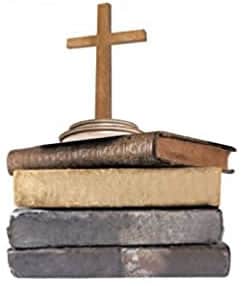
Of The NOBLE AMERICAN RELIGIOUS THINKERS AND BELIEVERS:
Roger Williams VS. Cotton Mathers

NEW ARTICLES
The Odyssey
Matt Damon plays the title role of Odysseus, Anne Hathaway his wife Penelope, Tom Holland their son Telemachus. Charlize Theron plays the role of Calypso, and Samantha Morton is Circe.
About 700 B.C., at the very beginning of Western Civilization’s literary output, an author named Homer collected the Greek’s oft-repeated oral stories about the war against Troy and wrote them down in two books: first “The Iliad” and then “The Odyssey.”
Scholars speculate that Homer may have written the latter perhaps thirty years after the first.
In both epics, Homer relied upon a poetic style called dactylic hexameter. That refers to six feet per line, and each foot includes an initial stressed syllable followed by two unstressed syllables, for a total of eighteen syllables per line of a standard ancient Greek text.
A note: certain English words are dactylic: poetry, difficult, mockingbird, and alphabet.
Homer composed 15,693 lines for “The Iliad,” 12,110 lines for “The Odyssey.” Each book he divided into twenty-four books, that corresponded to twenty-four papyrus scrolls.
In 2018, a British scholar, Emily Wilson, published an English translation of “The Odyssey,” but she used a different poetic style, that of iambic pentameter, only ten syllables per line and each line she divided into five pairs, one unstressed syllable followed by one stressed syllable.
Here is a line of an English translation from “The Odyssey,” written in dactylic hexameter.
“But when he had bathed all, and anointed himself with olive oil.” (VI, 227)
Here is Emily Wilson’s translation of the same passage written in iambic pentameter:
“But when he was all clean and richly oiled.”
Note that Wilson’s translation is shorter, less wordy.
“The Iliad” is a story of war, of the Greeks who sailed across the Aegean Sea to Troy, a city on the western coast of Asia Minor, to besiege that city for ten hard years.
“It covers a few crucial weeks during the tenth and final year of that war. It does not include the inciting cause of the war, the abduction of Helen, nor does it include the Greeks’ means of defeating Troy, by a gift of a wooden horse that contained Greek warriors hidden within.”
“The Odyssey” is a story of a single man, Odysseus, who fought in that Trojan War, but then was forced to struggle for an additional ten years to return to his kingdom in Ithaca, in Greece, and reunite with his wife, Penelope, and his son, Telemachus.
Odysseus’s adversaries included: Poseidon, the god of the sea, who places a curse upon Odysseus. There is a Cyclops, a giant one-eyed monster, whom Odysseus blinds. There is Calypso, a sea nymph who falls in love with Odysseus and holds him captive for seven years.
There is a Greek sorceress, Circe, who transforms Odysseus’s crew into pigs, and there is Charybdis, a ship-destroying whirlpool.
Yet, Odysseus survives all the obstacles that the gods pitch at him and presses toward home.
What does Homer teach us in his two books? That it is hard to vanquish an enemy in a war in a foreign country, and that is as hard to find a path to return home to wife and son.
Emily Wilson begins Book 1, Line 1: “Tell me about a complicated man. Muse, tell me how he wandered and was lost when he had wrecked the holy town of Troy, and where he went, and who he met, the pain he suffered in the storms at sea, and how he worked to save his life.”
Alexander Hamilton vs. Aaron Burr
Last time in these pages, I wrote about the sharp division within George Washington’s Presidential administration, that between Alexander Hamilton, founder of the Federalist Party, and Thomas Jefferson, founder of the Democratic-Republican Party. That division...
The 1790’s: Fierce Political Fights
Last time in these pages, I wrote about the sharp division within George Washington’s Presidential administration, that between Alexander Hamilton, founder of the Federalist Party, and Thomas Jefferson, founder of the Democratic-Republican Party. That division...
Alexander Hamilton vs. Thomas Jefferson
George Washington was sworn in as the first U. S. President at an inauguration ceremony on April 30, 1789, held on the steps of Federal Hall, 26 Wall Street, a block east of what is now the New York Stock Exchange. Vice-President John Adams had been sworn in on April...
“Dunkirk and D-Day”
Nine months after World War II began, the German Nazi war machine drove French, British, and Belgian troops west across France into a town on the English Channel’s coast, called Dunkirk. By late May of 1940, the German army controlled almost all of France. Those...
Gettysburg and Memorial Day
On June 28, 1863, Robert E. Lee, Confederate General, dared to cross the border and invade Pennsylvania, a Union state. Lee hoped to force Lincoln into negotiations to end the war. Lincoln felt dismayed. He understood that Union troops must repel Lee’s advance....
Expatriated Americans
Penguin Press will publish Ron Chernow’s biography on Mark Twain, next week, on May 13. A recent article by Lauren Michele Jackson in this week’s edition of the magazine, the “New Yorker,” reviewed Chernow’s extensive biography on Twain. One sentence jumped out. “In...
Older Posts
Attempts at Thought Experiments: To Assay, To Weigh, To Balance, to Evaluate
“When the debate is lost, slander becomes the loser’s tool.” -Socrates “The propaganda machine is always looking for someone to hate.” -heard on National Public Radio, on Saturday, April 26, 2025 “He who can does; he who cannot teaches.” -George Bernard Shaw. I wonder...
Language and Literary History
In 1804, Meriwether Lewis and William Clark and their forty-three fellow explorers headed west up the Missouri River, bound for the west coast. As they met a succession of different Native American tribes, they were often amazed by the variety in the languages...
Small Pox and Modernity
On May 8, 1980, forty-five years ago, the World Health Organization, a part of the United Nations, announced that officials had eradicated small pox from the world’s population. The last case occurred in Somalia in 1977, and the last case in the United States occurred...
Why Facts Don’t Change Our Minds
James Harvey Robinson, a noted historian at Columbia University in the late 19th and early 20th centuries, wrote the following. “We are incredibly heedless in the formation of our beliefs, but find ourselves filled with an illicit passion for them when anyone...
Thoughts on Kings
In Shakespeare’s play, “Henry IV, Part II,” Act 3, Scene 1, the King, dressed in a nightgown, delivers a monologue. In it, the king asks, “How many thousands of my poorest subjects are at this hour asleep?” Yet, “Nature’s soft nurse,” is not for him. He finishes with...
Huckleberry Finn
On February 15, 1885, 140 years ago next week, Mark Twain’s best work of fiction, “Huckleberry Finn,” was first published in the United States. Critics berated the book. In Concord, Massachusetts, commissioners recommended that the town’s library ban the book....

One of University of Northern Colorado’s 2020 Honored Alumni
William H. Benson
Local has provided scholarships for history students for 15 years
A Sterling resident is among five alumni selected to be recognized this year by the University of Northern Colorado. Bill Benson is one of college’s 2020 Honored Alumni.
Each year UNC honors alumni in recognition for their outstanding contributions to the college, their profession and their community. This year’s honorees were to be recognized at an awards ceremony on March 27, but due to the COVID-19 outbreak that event has been cancelled. Instead UNC will recognize the honorees in the fall during homecoming Oct. 10 and 11……
Newspaper Columns

The Duodecimal System
For centuries, the ancient Romans calculated sums with their clunky numerals: I, V, X, L, C, D, and M; or one, five, ten, 50, 100, 500, and 1,000. They knew nothing better.

The Thirteenth Amendment
On Jan. 1, 1863, President Abraham Lincoln signed the Emancipation Proclamation, and by it, he declared that “all persons held as slaves” within the rebellious states “are and henceforward shall be free.” Lincoln’s Proclamation freed some 3.1 million slaves within the Confederacy.

The Fourteenth Amendment
After Congress and enough states ratified the thirteenth amendment that terminated slavery, Congress passed the Civil Rights Act of 1866. This law declared that “all people born in the United States are entitled to be citizens, without regard to race, color, or previous condition of slavery or involuntary servitude.” The Act equated birth to citizenship.

The New-York Packet and the Constitution
Jill Lepore, the Harvard historian, published her newest book a month ago, These Truths: A History of the United States. In a short introduction, she describes in detail the Oct. 30, 1787 edition of a semi-weekly newspaper, The New-York Packet.
Mr. Benson’s writings on the U.S. Constitution are a great addition to the South Platte Sentinel. Its inspiring to see the history of the highest laws of this country passed on to others.
– Richard Hogan
Mr. Benson, I cannot thank you enough for this scholarship. As a first-generation college student, the prospect of finding a way to afford college is a very daunting one. Thanks to your generous donation, my dream of attending UNC and continuing my success here is far more achievable
– Cedric Sage Nixon
Donec bibendum tortor non vestibulum dapibus. Cras id tempor risus. Curabitur eu dui pellentesque, pharetra purus viverra.
– Extra Times
FUTURE BOOKS
- Thomas Paine vs. George Whitefield
- Ralph Waldo Emerson vs. Joseph Smith
- William James vs. Mary Baker Eddy
- Mark Twain vs. Billy Graham
- Henry Louis Mencken vs. Jim Bakker
