
By William H. Benson
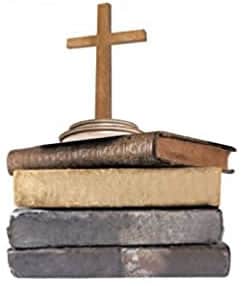
The Parallel Lives
Of The NOBLE AMERICAN RELIGIOUS THINKERS AND BELIEVERS:
Roger Williams VS. Cotton Mathers

NEW ARTICLES
4th Amendment: Sections 4 and 5
Two weeks ago in these pages, I looked at the second and third sections of the 14th Amendment. Today I continue with its two final sections, the fourth and the fifth.
Section 4 clarifies which debts the U.S. Federal government will honor as valid.
The first sentence reads: “The validity of the public debt of the United States, authorized by law, including debts incurred for payment of pensions and bounties for services in suppressing insurrection or rebellion, shall not be questioned.”
In other words, the federal government will continue to pay interest and principal on those debts that it “incurred” through four years of Civil War to crush the rebel states, including Union veterans’ benefits, namely “pensions and bounties.” Those debts, “shall not be questioned.”
The second sentence reads: “But neither the United States nor any State shall assume or pay any debt or obligation incurred in aid of insurrection or rebellion against the United States, or any claim for the loss or emancipation of any slave;
“But all such debts, obligations, and claims shall be held illegal and void.”
In other words, the U.S. Federal government or any state government shall not “assume or pay” any of the Confederacy’s debts incurred during the Civil War. Section 4 declares that the rebel states’ debts are forever “illegal and void.”
Also, this section states that the U.S. Federal government will no longer toy with the idea of reimbursing former slaveholders for the loss of their property because of emancipation.
Prior to the war, two ideas were often bandied about as a means to extricate the country from the grip of slavery: the first was to deport all slaves to a colony in west Africa, and the second was for the Federal government to pay slaveholders for their property and set the slaves free.
Lincoln talked often of colonization, but few black people wanted to migrate to Africa. As the bloody war progressed, Lincoln’s thoughts moved from colonization to emancipation.
Also, few people wanted the Federal government to borrow funds to pay slaveholders market value for their slaves. At an average fair market value of $750 per slave, total funds required to recompense all slaveholders would have approached $3 billion.
The U.S. census of 1860 counted a total population of 31,443,321, and of those 3,953,760 were slaves and an additional 488,070 free blacks. So, one in eight residents were slaves.
By Section 4 of the 14th Amendment, all slaveholders’ claims for reimbursement for loss of their property because of emancipation were pitched aside, and declared “illegal and void.”
Section 5 is a single sentence, the same that concludes the 13th and 15th Amendments: “The Congress shall have power to enforce, by appropriate legislation, the provisions of this article.”
Section 5 leaves the 14th Amendment open to further laws that Congress would deem necessary to ensure all its sections were enforced.
The House passed the 14th Amendment on May 10, 1866, by a vote of 128 to 37, the Senate passed it on June 8 by a vote of 33 to 11, and the House concurred on June 13.
On June 16, 1866, Secretary of State William Seward submitted the 14th Amendment to the governors of the states for ratification. At first, all former Confederate states rejected it.
A year passed. On June 15, 1867, Nebraska ratified it, becoming the 22nd state to do so, but 28 states were needed for it to become law, the required three-fourth’s.
Nine months passed. Then, on March 16, 1868, Iowa ratified it. That same month, on March 2, 1867, Congress passed a law that required each former Confederate state to ratify the 14th Amendment before “said State shall be declared entitled to representation in Congress.”
Seven Southern states changed their vote from rejection to ratification in April, June, and July of 1868: Arkansas, Florida, North Carolina, Louisiana, South Carolina, Alabama, and Georgia.
On July 28, 1868, Secretary Seward certified the adoption of the 14th Amendment, twenty-five months after the House and Senate passed it, and it became law then and ever since.
Bill Benson, of Sterling, is a dedicated historian.
COLONEL MUAMMAR al-GADDAFI
COLONEL MUAMMAR al-GADDAFICOLONEL MUAMMAR al-GADDAFI by William H. Benson February 23, 2012 Machiavelli, the sixteenth century Italian writer and thinker, wrote in his book The Prince the following: “Private citizens who become princes purely by good fortune do...
THE PERILS OF THE CELEBRITY
THE PERILS OF THE CELEBRITYTHE PERILS OF THE CELEBRITY by William H. Benson February 9, 2012 On February 9, 1864, George Armstrong Custer married Elizabeth Bacon, a girl from his hometown of Monroe, Michigan. Libby's father did not approve of the match, because...
VIRTUES VS. VICES
VIRTUES VS. VICESVIRTUES VS. VICES by William H. Benson January 26, 2012 During the Middle Ages, it was decided that human beings suffer from at least seven venial sins or vices, and they include: pride, envy, greed, lust, anger, gluttony, slothfulness. Standing...
THE BETTER ANGELS OF OUR NATURE
THE BETTER ANGELS OF OUR NATURETHE BETTER ANGELS OF OUR NATURE by William H. Benson January 12, 2012 Alexander Hamilton was born 257 years ago yesterday, on January 11, 1755. He was a bright and articulate young man, who had served in George Washington's cabinet...
STEVE JOBS
STEVE JOBSSTEVE JOBS by William H. Benson December 29, 2011 “Steve Jobs was a genius at connecting art to technology, of making leaps based on intuition and imagination. He knew how to make emotional connections with those around him and with his customers.”...
TOOLS OF RHETORIC
TOOLS OF RHETORICTOOLS OF RHETORIC by William H. Benson December 15, 2011 Benjamin Franklin explained in his autobiography that at a young age he desired to learn and master the best literary techniques. “But I found I wanted a stock of words, or a readiness in...
Older Posts
STEPHEN KING & JFK
STEPHEN KING & JFKSTEPHEN KING & JFK by William H. Benson December 1, 2011 Stephen King is not one of my favorite authors, not even close. I have yet to finish anything he has written, mainly because he restricts himself to two genres that fail to satisfy...
JUMPING THE SHARK
JUMPING THE SHARKJUMPING THE SHARK by William H. Benson November 24, 2011 The expression “jumping the shark” refers to that Happy Days' episode that aired on September 20, 1977 when Fonzie, on water-skis and dressed in trunks and his trademark leather jacket,...
THE HUNDRED MOST
THE HUNDRED MOSTTHE HUNDRED MOST by William H. Benson November 10, 2011 Last Monday the British Museum published in the United States its book The History of the World in 100 Objects. Over a four-year stretch a hundred curators at the London museum selected a...
CHARACTER
CHARACTERCHARACTER by William H. Benson October 27, 2011 In its September 18th edition, the New York Times Magazine ran an article on an interesting subject, developing students' character. Dominic Randolph, the headmaster at New York City's Riverdale Country...
CHRISTOPHER COLUMBUS
CHRISTOPHER COLUMBUSCHRISTOPHER COLUMBUS by William H. Benson October 13, 2011 Christopher Columbus completed four voyages to the Western Hemisphere. It was a tribute to his single-minded focus, his daring, his exemplary seamanship skills, his persuasive ability,...
ERROL MORRIS’S “BELIEVING IS SEEING”
ERROL MORRIS'S “BELIEVING IS SEEING”ERROL MORRIS'S “BELIEVING IS SEEING” by William H. Benson September 29, 2011 In the September 4th edition of the New York Times Book Review, I happened to read an interesting review of a new book, Errol Morris' Believing is...

One of University of Northern Colorado’s 2020 Honored Alumni
William H. Benson
Local has provided scholarships for history students for 15 years
A Sterling resident is among five alumni selected to be recognized this year by the University of Northern Colorado. Bill Benson is one of college’s 2020 Honored Alumni.
Each year UNC honors alumni in recognition for their outstanding contributions to the college, their profession and their community. This year’s honorees were to be recognized at an awards ceremony on March 27, but due to the COVID-19 outbreak that event has been cancelled. Instead UNC will recognize the honorees in the fall during homecoming Oct. 10 and 11……
Newspaper Columns

The Duodecimal System
For centuries, the ancient Romans calculated sums with their clunky numerals: I, V, X, L, C, D, and M; or one, five, ten, 50, 100, 500, and 1,000. They knew nothing better.

The Thirteenth Amendment
On Jan. 1, 1863, President Abraham Lincoln signed the Emancipation Proclamation, and by it, he declared that “all persons held as slaves” within the rebellious states “are and henceforward shall be free.” Lincoln’s Proclamation freed some 3.1 million slaves within the Confederacy.

The Fourteenth Amendment
After Congress and enough states ratified the thirteenth amendment that terminated slavery, Congress passed the Civil Rights Act of 1866. This law declared that “all people born in the United States are entitled to be citizens, without regard to race, color, or previous condition of slavery or involuntary servitude.” The Act equated birth to citizenship.

The New-York Packet and the Constitution
Jill Lepore, the Harvard historian, published her newest book a month ago, These Truths: A History of the United States. In a short introduction, she describes in detail the Oct. 30, 1787 edition of a semi-weekly newspaper, The New-York Packet.
Mr. Benson’s writings on the U.S. Constitution are a great addition to the South Platte Sentinel. Its inspiring to see the history of the highest laws of this country passed on to others.
– Richard Hogan
Mr. Benson, I cannot thank you enough for this scholarship. As a first-generation college student, the prospect of finding a way to afford college is a very daunting one. Thanks to your generous donation, my dream of attending UNC and continuing my success here is far more achievable
– Cedric Sage Nixon
Donec bibendum tortor non vestibulum dapibus. Cras id tempor risus. Curabitur eu dui pellentesque, pharetra purus viverra.
– Extra Times
FUTURE BOOKS
- Thomas Paine vs. George Whitefield
- Ralph Waldo Emerson vs. Joseph Smith
- William James vs. Mary Baker Eddy
- Mark Twain vs. Billy Graham
- Henry Louis Mencken vs. Jim Bakker
