
By William H. Benson
The Parallel Lives
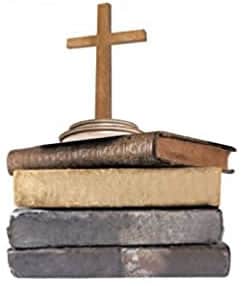
Of The NOBLE AMERICAN RELIGIOUS THINKERS AND BELIEVERS:
Roger Williams VS. Cotton Mathers

NEW ARTICLES
4th Amendment: Sections 2 and 3
Last time in these pages I looked at Section 1 of the 14th Amendment. Today I continue.
The last phrase in Section 1 of the 14th Amendment declares that no state can “deny to any person within its jurisdiction the equal protection of the law.” All races are equal under the law.
Section 2 begins: “Representatives shall be apportioned among the several States according to their respective numbers.” By these words the committee eliminated the 3/5’s rule.
Section 2 continues: “But when the right to vote at any election . . . is in any way abridged, except for participation in rebellion, or other crime, the basis of representation therein shall be reduced in the proportion which the number of such male citizens shall bear to the whole number of male citizens twenty-one years of age in such State.”
What do these words mean? The authors of Section 2 created a mathematical equation and said that if a state refuses to allow most men of age to vote, then that state will suffer a reduction of its representatives to Congress and also within the Electoral College.
Eric Foner, a Reconstruction historian at Columbia University, says that “Section 2 has never been enforced.” No state has suffered a loss of representatives because of restrictive voting rules.
The states knew that without a federal bureaucracy—officials to count the numbers who were denied the right to vote—the Federal government would find Section 2 difficult to enforce.
Akhil Reed Amar, legal scholar at Yale University, points out that Section 2 does introduce into the Constitution the most important words, “the right to vote.” Citizens have a right to vote.
Section 3 says: “No person shall be a Senator or Representative in Congress, or Elector of President and Vice-President, or hold any office, civil or military, under the United States, who . . . shall have engaged in insurrection or rebellion against the same.”
The intent of Section 3, when drafted in 1866, was to push out of Congress ex-Confederates. Again, this Section proved difficult to enforce at first.
In recent days certain people have dusted off Section 3 and applied it to January 6, 2021.
Per the case “Donald J. Trump v. Norma Anderson” that appeared before the U.S. Supreme Court weeks ago, “A group of Colorado voters wanted Secretary of State Jena Griswold to exclude former President Trump from the Republican primary ballot in the State.”
“The Colorado Supreme Court agreed with that contention.”
On March 4, 2024, the U.S. Supreme Court reversed that decision, by pointing to Section 5, of the 14th Amendment, a single sentence that reads: “Congress shall have power to enforce, by appropriate legislation, the provisions of this article.”
The justices reasoned that it is Congress’s duty to determine who has participated in a rebellion, not the individual states. They wrote: “Congress’s Section 5 power is critical when it comes to Section 3.” “States have no power under the Constitution to enforce Section 3.”
The justices dug into the history behind Section 3 and pointed out:
“Indeed, during a debate on enforcement legislation less than a year after the 14th Amendment’s ratification, Senator Lyman Trumbull of Illinois noted that ‘notwithstanding [Section 3] . . . hundreds of men [were] holding office’ in violation of its terms.”
The justices said: “The enforcement mechanism that Trumbull championed was later enacted as part of the Enforcement Act of 1870.” Federal prosecutors then had the power to remove ex-Confederates from their respective offices within the Federal government.
Whereas Section 2 was never enforced, Section 3 was, but not until 1870.
Next time in these pages I will look at certain details within Sections 4 and 5.
Bill Benson, of Sterling, is a dedicated historian.
STEPHEN KING & JFK
STEPHEN KING & JFKSTEPHEN KING & JFK by William H. Benson December 1, 2011 Stephen King is not one of my favorite authors, not even close. I have yet to finish anything he has written, mainly because he restricts himself to two genres that fail to satisfy...
JUMPING THE SHARK
JUMPING THE SHARKJUMPING THE SHARK by William H. Benson November 24, 2011 The expression “jumping the shark” refers to that Happy Days' episode that aired on September 20, 1977 when Fonzie, on water-skis and dressed in trunks and his trademark leather jacket,...
THE HUNDRED MOST
THE HUNDRED MOSTTHE HUNDRED MOST by William H. Benson November 10, 2011 Last Monday the British Museum published in the United States its book The History of the World in 100 Objects. Over a four-year stretch a hundred curators at the London museum selected a...
CHARACTER
CHARACTERCHARACTER by William H. Benson October 27, 2011 In its September 18th edition, the New York Times Magazine ran an article on an interesting subject, developing students' character. Dominic Randolph, the headmaster at New York City's Riverdale Country...
CHRISTOPHER COLUMBUS
CHRISTOPHER COLUMBUSCHRISTOPHER COLUMBUS by William H. Benson October 13, 2011 Christopher Columbus completed four voyages to the Western Hemisphere. It was a tribute to his single-minded focus, his daring, his exemplary seamanship skills, his persuasive ability,...
ERROL MORRIS’S “BELIEVING IS SEEING”
ERROL MORRIS'S “BELIEVING IS SEEING”ERROL MORRIS'S “BELIEVING IS SEEING” by William H. Benson September 29, 2011 In the September 4th edition of the New York Times Book Review, I happened to read an interesting review of a new book, Errol Morris' Believing is...
Older Posts
BILL BRYSON’S “A WALK IN THE WOODS”
BILL BRYSON'S “A WALK IN THE WOODS”BILL BRYSON'S “A WALK IN THE WOODS” by William H. Benson September 15, 2011 Bill Bryson, the writer, moved back to the United States in 1995, with his British-born wife and their four children, and settled in Hanover, New...
SHAY’S REBELLION
SHAY'S REBELLIONSHAY'S REBELLION by William H. Benson September 1, 2011 Daniel Shays was bankrupt and angry. A farmer in rural Massachusetts and a former captain in the army, he gathered about him a number of debt-ridden farmers who had fought in the last war,...
AMERICAN GRAFITTI
AMERICAN GRAFITTIAMERICAN GRAFITTI by William H. Benson August 18, 2011 George Lucas had by 1972 directed only one full-length feature film THX 1138, a science-fiction film that failed, but he had ideas for two other films. The first was autobiographical, of his...
TRIVIAL KNOWLEDGE
TRIVIAL KNOWLEDGETRIVIAL KNOWLEDGE by William H. Benson August 4, 2011 “History is more or less bunk,” said Henry Ford. “We don't want tradition. We want to live in the present, and the only history that is worthwhile is the history we made today.” An interesting...
Domestication
DOMESTICATIONDOMESTICATION by William H. Benson July 21, 2011 It is summer. We know it is so because we see the things we associate with summer: a slice of watermelon, strawberries, corn on the cob, a grilled hamburger, perhaps a fried chicken leg or pork ribs...
STEVE MARTIN
STEVE MARTINSTEVE MARTIN by William H. Benson July 7, 2011 The funniest comic performance I can remember seeing when a child was what happened one night on The Dean Martin Show, perhaps in the year 1964. Dom Delouise, a young comedian then, came out onto the...

One of University of Northern Colorado’s 2020 Honored Alumni
William H. Benson
Local has provided scholarships for history students for 15 years
A Sterling resident is among five alumni selected to be recognized this year by the University of Northern Colorado. Bill Benson is one of college’s 2020 Honored Alumni.
Each year UNC honors alumni in recognition for their outstanding contributions to the college, their profession and their community. This year’s honorees were to be recognized at an awards ceremony on March 27, but due to the COVID-19 outbreak that event has been cancelled. Instead UNC will recognize the honorees in the fall during homecoming Oct. 10 and 11……
Newspaper Columns

The Duodecimal System
For centuries, the ancient Romans calculated sums with their clunky numerals: I, V, X, L, C, D, and M; or one, five, ten, 50, 100, 500, and 1,000. They knew nothing better.

The Thirteenth Amendment
On Jan. 1, 1863, President Abraham Lincoln signed the Emancipation Proclamation, and by it, he declared that “all persons held as slaves” within the rebellious states “are and henceforward shall be free.” Lincoln’s Proclamation freed some 3.1 million slaves within the Confederacy.

The Fourteenth Amendment
After Congress and enough states ratified the thirteenth amendment that terminated slavery, Congress passed the Civil Rights Act of 1866. This law declared that “all people born in the United States are entitled to be citizens, without regard to race, color, or previous condition of slavery or involuntary servitude.” The Act equated birth to citizenship.

The New-York Packet and the Constitution
Jill Lepore, the Harvard historian, published her newest book a month ago, These Truths: A History of the United States. In a short introduction, she describes in detail the Oct. 30, 1787 edition of a semi-weekly newspaper, The New-York Packet.
Mr. Benson’s writings on the U.S. Constitution are a great addition to the South Platte Sentinel. Its inspiring to see the history of the highest laws of this country passed on to others.
– Richard Hogan
Mr. Benson, I cannot thank you enough for this scholarship. As a first-generation college student, the prospect of finding a way to afford college is a very daunting one. Thanks to your generous donation, my dream of attending UNC and continuing my success here is far more achievable
– Cedric Sage Nixon
Donec bibendum tortor non vestibulum dapibus. Cras id tempor risus. Curabitur eu dui pellentesque, pharetra purus viverra.
– Extra Times
FUTURE BOOKS
- Thomas Paine vs. George Whitefield
- Ralph Waldo Emerson vs. Joseph Smith
- William James vs. Mary Baker Eddy
- Mark Twain vs. Billy Graham
- Henry Louis Mencken vs. Jim Bakker
