
By William H. Benson
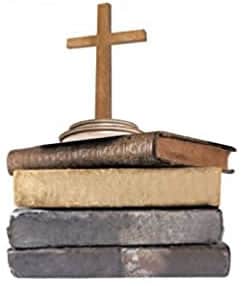
The Parallel Lives
Of The NOBLE AMERICAN RELIGIOUS THINKERS AND BELIEVERS:
Roger Williams VS. Cotton Mathers

NEW ARTICLES
Black History Month: Phillis Wheatley and Billy Lee
Two African-American slaves from the eighteenth century: Phillis Wheatley and William “Billy” Lee. The first a woman, the second a man. The first a poet, the second a valet. The two received their freedom from their respective owners, and they each knew George Washington.
First, Phillis Wheatley was born in Africa in 1753 or 1754, but when a child of 7 or 8, slave traders kidnapped her, sold her into slavery, and transported her to North America aboard the ship “The Phillis.” John and Susanna Wheatley of Boston purchased her in mid-July of 1761.
They gave her the name Phillis and asked their eighteen-year-old daughter Mary to tutor Phillis, who displayed a superb talent for learning English and Greek and Latin, for reading the Bible and classical works, and for composing poems. They encouraged the child’s literary talent.
In 1773, when Phillis turned 20, the Wheatley’s sent her to England, accompanied by their son Nathaniel, and there Phillis found a publisher willing to print her collection of poems that she entitled “Poems on Various Subjects, Religious and Moral.”
It was the first book written by an enslaved Black woman of America.
After Phillis returned to Boston in the fall of 1773, John and Susanna Wheatley set her free.
On Oct. 26, 1775, Phillis wrote a letter to General George Washington and enclosed a poem about him, entitled “His Excellency, General Washington.” Bold and daring she was.
In the cover letter she wrote, “I have taken the freedom to address your Excellency in the enclosed poem, and entreat your acceptance.” Note that her fifth word is “freedom.”
In the poem, she begins, “Celestial choir! enthroned in realms of light, Columbia’s scenes of glorious toils I write.” Then, she ends the poem,
“Proceed, great chief, with virtue on thy side, Thy ev’ry action let the Goddess guide. A crown, a mansion, and a throne that shine, With gold unfading, WASHINGTON! Be thine.”
On Feb. 28, 1776, Washington wrote back to Phillis Wheatley, saying, “I thank you most sincerely for your polite notice of me, in the elegant Lines You enclosed. If you should ever come to Cambridge, I should be happy to see a person so favored by the Muses.”
The historical record is unclear if Washington understood then that Miss Wheatley was a former slave. It is also unclear if Washington ever met the poet in Cambridge, Massachusetts, where he and his army were holding a siege upon Boston that soon drove off the British army.
Phillis Wheatley passed away on December 5, 1784, at the age of 31.
Second, William Lee was George Washington’s slave and valet for two decades, including the years when Washington led the colonial army in a war with Great Britain, 1775-1783. “Billy” Lee rode his horse beside the general, and also set up and took down their tent.
In addition, Billy attended to Washington’s stack of papers, held onto his spyglass, combed his hair, laid out his clothes, mailed his letters, and delivered his messages. He was Washington’s manservant, and the two lived for “more than seven years in close proximity during the war.”
After the war, Billy hoped to continue to serve Washington in New York City, after voters elected Washington as the nation’s first president, but by then Lee’s knees were worn out, and he no longer could act as Washington’s valet. Washington sent him back to Mount Vernon.
There, Billy made shoes “in the small cobbler shop behind the greenhouse.”
George Washington died on December 14, 1799, at Mount Vernon. By his will, he set free one slave of the 317 slaves working then at Mount Vernon, and that was Billy Lee. Washington also stipulated that Billy was to receive “an annual allowance of $30 for the rest of his life, noting,
“This I give him for his faithful services during the Revolutionary War.”
Billy Lee remained at Mount Vernon until he too passed away in 1810.
Two former slaves to reflect upon during Black History Month: Phillis Wheatley and William “Billy” Lee. Also, a former President to consider on President’s Day: George Washington.
GEOGRAPHIC BEE
GEOGRAPHIC BEEGEOGRAPHIC BEE by William H. Benson March 31, 2011 I read in Newsweek last week where certain Republicans are now tentatively campaigning in New Hampshire; specifically those 2012 Presidential hopefuls, such as Tim Pawlenty, and Minnesota's...
THE LUCK OF THE IRISH
THE LUCK OF THE IRISHTHE LUCK OF THE IRISH by William H. Benson March 17, 2011 Jed Clampett of The Beverly Hillbillies once explained to his nephew Jethro how he saw through the intentions of a designing and matrimonial-minded woman. “Well, Jethro,” he said. “Us...
MENTAL ATHLETES
MENTAL ATHLETESMENTAL ATHLETES by William H. Benson March 3, 2011 In last Sunday's New York Times Magazine, I read an interesting article on mental athletes, or M.A.'s for short. These individuals compete at memory games: for example, they memorize thousands of...
MARK TWAIN VS. GARRISON KEILLOR
MARK TWAIN VS. GARRISON KEILLORMARK TWAIN VS. GARRISON KEILLOR by William H. Benson February 19, 2011 Mark Twain is a bestseller—number 4 last week on the New York Times Book Review list—for the publication of the first volume of his autobiography. He would be...
ROGER WILLIAMS
ROGER WILLIAMSROGER WILLIAMS by William H. Benson February 3, 2011 Roger Williams, the English Puritan clergyman, arrived in New England on February 5, 1631, just months after the colony's inception. He was twenty-eight years old, educated at Pembroke Hall,...
IKE
IKEIKE by William H. Benson January 20, 2011 On January 20, 1953, on the steps of the Capitol, General Dwight David Eisenhower, or “Ike” took the oath of office and was sworn in as our nation's thirty-fourth President. Before delivering his Inaugural Address, he...
Older Posts
TRUE GRIT
TRUE GRITTRUE GRIT by William H. Benson January 6, 2011 I am not a fan of the Western. One book by Zane Gray, Riders of the Purple Sage, and one by Louis L'Amour, Sitka, are the only two Westerns I have ever finished. I have started others but invariably found...
COMEDY, HISTORY, OR TRAGEDY
COMEDY, HISTORY, OR TRAGEDGYCOMEDY, HISTORY, OR TRAGEDY by William H. Benson December 23, 2010 Steve Allen was a fixture upon American television for fifty years, from the day his first show, The Steve Allen Show, premiered, which was on Christmas Day of 1950,...
WILLIAM F. BUCKLEY, JR.
WILLIAM F. BUCKLEY, JR.WILLIAM F. BUCKLEY, JR. by William H. Benson December 9, 2010 In The Element's of Style, the authors, William Strunk, Jr. and E. B. White, presented Rule Number 14: “Avoid fancy words. Avoid the elaborate, the pretentious, the coy, and the...
THANKSGIVING
THANKSGIVINGTHANKSGIVING by William H. Benson November 25, 2010 Robert Kosi Tette is an African immigrant now living in Detroit. His relatives, in his home country of Ghana, in 1998 pooled their capital and paid his fare to America, and he arrived with the...
WORLD WAR II
WORLD WAR IIWORLD WAR II by William H. Benson November 11, 2010 For an American soldier or sailor who served during World War II, the words “called to serve for the duration” meant until “death, serious wounds, or captured” rendered that fighting man or woman...
PRE-COLUMBIAN VS. POST-COLUMBIAN AMERICA
PRE-COLUMBIAN VS. POST-COLUMBIAN AMERICAPRE-COLUMBIAN VS. POST-COLUMBIAN AMERICA by William H. Benson October 14, 2010 Published in 1950, Nomads of the Longbow was an anthropological study of the Siriono, one of the tribes of eastern Bolivia, in the upper reaches...

One of University of Northern Colorado’s 2020 Honored Alumni
William H. Benson
Local has provided scholarships for history students for 15 years
A Sterling resident is among five alumni selected to be recognized this year by the University of Northern Colorado. Bill Benson is one of college’s 2020 Honored Alumni.
Each year UNC honors alumni in recognition for their outstanding contributions to the college, their profession and their community. This year’s honorees were to be recognized at an awards ceremony on March 27, but due to the COVID-19 outbreak that event has been cancelled. Instead UNC will recognize the honorees in the fall during homecoming Oct. 10 and 11……
Newspaper Columns

The Duodecimal System
For centuries, the ancient Romans calculated sums with their clunky numerals: I, V, X, L, C, D, and M; or one, five, ten, 50, 100, 500, and 1,000. They knew nothing better.

The Thirteenth Amendment
On Jan. 1, 1863, President Abraham Lincoln signed the Emancipation Proclamation, and by it, he declared that “all persons held as slaves” within the rebellious states “are and henceforward shall be free.” Lincoln’s Proclamation freed some 3.1 million slaves within the Confederacy.

The Fourteenth Amendment
After Congress and enough states ratified the thirteenth amendment that terminated slavery, Congress passed the Civil Rights Act of 1866. This law declared that “all people born in the United States are entitled to be citizens, without regard to race, color, or previous condition of slavery or involuntary servitude.” The Act equated birth to citizenship.

The New-York Packet and the Constitution
Jill Lepore, the Harvard historian, published her newest book a month ago, These Truths: A History of the United States. In a short introduction, she describes in detail the Oct. 30, 1787 edition of a semi-weekly newspaper, The New-York Packet.
Mr. Benson’s writings on the U.S. Constitution are a great addition to the South Platte Sentinel. Its inspiring to see the history of the highest laws of this country passed on to others.
– Richard Hogan
Mr. Benson, I cannot thank you enough for this scholarship. As a first-generation college student, the prospect of finding a way to afford college is a very daunting one. Thanks to your generous donation, my dream of attending UNC and continuing my success here is far more achievable
– Cedric Sage Nixon
Donec bibendum tortor non vestibulum dapibus. Cras id tempor risus. Curabitur eu dui pellentesque, pharetra purus viverra.
– Extra Times
FUTURE BOOKS
- Thomas Paine vs. George Whitefield
- Ralph Waldo Emerson vs. Joseph Smith
- William James vs. Mary Baker Eddy
- Mark Twain vs. Billy Graham
- Henry Louis Mencken vs. Jim Bakker
