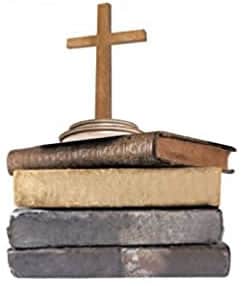

By William H. Benson
The Parallel Lives
Of The NOBLE AMERICAN RELIGIOUS THINKERS AND BELIEVERS:
Roger Williams VS. Cotton Mathers

NEW ARTICLES
Gettysburg and Vicksburg
After three days of fighting—July 1, 2, and 3—the battle at Gettysburg subsided. It had been fierce, ferocious. One soldier described the scene, “The air was all murderous iron.”
On the evening of July 3, Confederate General Robert E. Lee reflected on his men’s brave actions that day, and cried out in deep frustration, “Too bad! Too bad! Oh—too bad!”
On July 4, Lee turned his army south and retreated. His troops could not fight on the fourth.
In Vicksburg, a small town on the river in Mississippi, population 4,500, Confederate General John Pemberton waved a white flag and and asked for terms of surrender, on July 3, 1863.
After 46 days and 45 nights of an ever-tightening siege, Pemberton had reason to believe that Union forces would attack the city the next day, and that his troops had not the strength to fight. For six weeks they had been locked inside the town, living on half and quarter food rations.
Pemberton believed he could extract better terms on July 4, than any other day of the year.
The Union General Ulysses S. Grant replied, “The useless effusion of blood you propose stopping by this course can be ended at any time you may choose, by the unconditional surrender of the city and garrison.” Henceforth, U. S. Grant was known as Unconditional Surrender Grant.
After some discussion, Grant allowed the Union army to parole the Confederate soldiers out of the Confederate army the next day, rather than seize the 30,000 rebels, transport them north to Cairo, in Illinois, and hold them there as prisoners, awaiting an exchange.
In Grant’s “Personal Memoirs,” he described what happened the next day, July 4.
“At the 4th, at the appointed hour, the garrison of Vicksburg marched out of their works, and formed a line in front, stacked arms, and marched back in good order. Our whole army present witnessed this scene without cheering.”
In other words, the Confederate soldiers stacked their rifles, retained their sidearms, received larger food rations, and were free to return to their homes, once paroled from the Confederate army. Most did. Some headed north to escape any further potential enlistment.
In Gettysburg, Lee retreated and would fight for almost two more years, but at Vicksburg, Pemberton surrendered.
Lee had invaded into the north twice. The first was at Antietam, in Maryland, a slave state, but retained within the Union, and the second was at Gettysburg, a Union state. Because both invasions had failed, Robert E. Lee was forced to fight a defensive civil war thereafter.
Whereas Lee’s invasion into Union territory had failed, Grant’s invasion into Confederate territory, all the way south to Vicksburg, had succeeded. Henceforth, the Southern people called America’s Civil War “the War of Northern Aggression.”
Grant had demonstrated that Union resources applied relentlessly would bring victory.
Four months later, in November, Lincoln spoke at Gettysburg. He said, “These dead shall not have died in vain, but this nation, under God, shall have a new birth of freedom.” He may have referred to the unleashing of the economic, political, and intellectual potential of the enslaved.
Indeed, our nation, our people, our government needs more new births, a successive number of “new births of freedom,” repeated each generation, a core essence of America.
A quote by the journalist George Will years ago, “The business of America is not business. Neither is it war. The business of America is justice and securing the blessings of liberty.”
Have a blessed and enjoyable Independence Day, July 4. Ponder on our shared liberties.
Attempts at Thought Experiments: To Assay, To Weigh, To Balance, to Evaluate
“When the debate is lost, slander becomes the loser’s tool.” -Socrates “The propaganda machine is always looking for someone to hate.” -heard on National Public Radio, on Saturday, April 26, 2025 “He who can does; he who cannot teaches.” -George Bernard Shaw. I wonder...
Language and Literary History
In 1804, Meriwether Lewis and William Clark and their forty-three fellow explorers headed west up the Missouri River, bound for the west coast. As they met a succession of different Native American tribes, they were often amazed by the variety in the languages...
Small Pox and Modernity
On May 8, 1980, forty-five years ago, the World Health Organization, a part of the United Nations, announced that officials had eradicated small pox from the world’s population. The last case occurred in Somalia in 1977, and the last case in the United States occurred...
Why Facts Don’t Change Our Minds
James Harvey Robinson, a noted historian at Columbia University in the late 19th and early 20th centuries, wrote the following. “We are incredibly heedless in the formation of our beliefs, but find ourselves filled with an illicit passion for them when anyone...
Thoughts on Kings
In Shakespeare’s play, “Henry IV, Part II,” Act 3, Scene 1, the King, dressed in a nightgown, delivers a monologue. In it, the king asks, “How many thousands of my poorest subjects are at this hour asleep?” Yet, “Nature’s soft nurse,” is not for him. He finishes with...
Huckleberry Finn
On February 15, 1885, 140 years ago next week, Mark Twain’s best work of fiction, “Huckleberry Finn,” was first published in the United States. Critics berated the book. In Concord, Massachusetts, commissioners recommended that the town’s library ban the book....
Older Posts
Mary Beard’s “Emperor of Rome”
What did it mean to be an emperor in ancient Rome? That is the question that Mary Beard sought to answer in her 2023 book, “Emperor of Rome.” She wrote, “Everyone then, including emperors, was trying to construe their idea of what an emperor should be in a...
Quotes on the Ancient Romans
Recognizable quotes on the ancient Romans: “When in Rome, do as the Romans do.” “All roads lead to Rome.” “Rome was not built in a day.” Caesar Augustus boasted, “I found Rome a city of brick and left it a city of marble.” The poet Virgil observed, “So vast...
Mother Nature
Jane Goodall turned 90 years old last April. In the late 1950’s, Jane—then an English girl in her twenties—dared to travel to Africa. There she met the renowned anthropologist, Louis Leaky, who suggested she study chimpanzees at Gombe Stream National Park in...
Fire at Notre Dame
The fire began at 6:30 p.m., Paris local time, on Monday, April 15, 2019. An hour later, people, who watched from a distance, stared in horror as the top portion of the 300 foot spire broke off and crashed down through the cathedral’s roof. Some 400 firefighters,...
The Stamp of Criminality
Fintan O’Toole, a writer for “The New York Review of Books,” wrote in his July 18, 2024 column, that, “Being close to Trump was like being friends with a hurricane.” O’Toole lists a series of people’s names who worked for Trump, believed him, and then faced legal...
Imitating Shakespeare
Strange how certain books captivate my interest, others not as much. I find myself going back again and again to reread Mark Forsyth’s 2013 book, “The Elements of Eloquence.” In Forsyth’s “Preface,” he writes, “Shakespeare was not a genius. He was the most...

One of University of Northern Colorado’s 2020 Honored Alumni
William H. Benson
Local has provided scholarships for history students for 15 years
A Sterling resident is among five alumni selected to be recognized this year by the University of Northern Colorado. Bill Benson is one of college’s 2020 Honored Alumni.
Each year UNC honors alumni in recognition for their outstanding contributions to the college, their profession and their community. This year’s honorees were to be recognized at an awards ceremony on March 27, but due to the COVID-19 outbreak that event has been cancelled. Instead UNC will recognize the honorees in the fall during homecoming Oct. 10 and 11……
Newspaper Columns

The Duodecimal System
For centuries, the ancient Romans calculated sums with their clunky numerals: I, V, X, L, C, D, and M; or one, five, ten, 50, 100, 500, and 1,000. They knew nothing better.

The Thirteenth Amendment
On Jan. 1, 1863, President Abraham Lincoln signed the Emancipation Proclamation, and by it, he declared that “all persons held as slaves” within the rebellious states “are and henceforward shall be free.” Lincoln’s Proclamation freed some 3.1 million slaves within the Confederacy.

The Fourteenth Amendment
After Congress and enough states ratified the thirteenth amendment that terminated slavery, Congress passed the Civil Rights Act of 1866. This law declared that “all people born in the United States are entitled to be citizens, without regard to race, color, or previous condition of slavery or involuntary servitude.” The Act equated birth to citizenship.

The New-York Packet and the Constitution
Jill Lepore, the Harvard historian, published her newest book a month ago, These Truths: A History of the United States. In a short introduction, she describes in detail the Oct. 30, 1787 edition of a semi-weekly newspaper, The New-York Packet.
Mr. Benson’s writings on the U.S. Constitution are a great addition to the South Platte Sentinel. Its inspiring to see the history of the highest laws of this country passed on to others.
– Richard Hogan
Mr. Benson, I cannot thank you enough for this scholarship. As a first-generation college student, the prospect of finding a way to afford college is a very daunting one. Thanks to your generous donation, my dream of attending UNC and continuing my success here is far more achievable
– Cedric Sage Nixon
Donec bibendum tortor non vestibulum dapibus. Cras id tempor risus. Curabitur eu dui pellentesque, pharetra purus viverra.
– Extra Times
FUTURE BOOKS
- Thomas Paine vs. George Whitefield
- Ralph Waldo Emerson vs. Joseph Smith
- William James vs. Mary Baker Eddy
- Mark Twain vs. Billy Graham
- Henry Louis Mencken vs. Jim Bakker
