
By William H. Benson
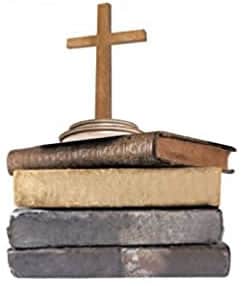
The Parallel Lives
Of The NOBLE AMERICAN RELIGIOUS THINKERS AND BELIEVERS:
Roger Williams VS. Cotton Mathers

NEW ARTICLES

Tunnels and war coincide
Tunnels and war coincide
People burrow into the subsoil, build tunnels, plus storage rooms, and stockpile food and water, for one reason, and that is to stay alive. Atop the ground, in the open air, in the sunshine, they feel oppressed, insecure, and poised to die or suffer an injury.
On July 4, 1863, thirty-one thousand Confederate soldiers, trapped inside Vicksburg, on the Mississippi River, surrendered to the Union’s commanding officer, Ulysses S. Grant, on the forty-eighth day of Grant’s siege of that town.
During the siege, civilians had dug some five hundred caves into the hillsides, and fitted them out with “rugs, beds, and chairs.” One cave dweller said, “We were in hourly dread of snakes. The vines and thickets were full of them.”
The city’s residents sought sanctuary in their inhospitable caves, because, “More than two hundred Union guns pounded the town every day from land, while Admiral David Porter’s gunboats battered it from the river.”
During World War II, the Marines and the U.S. Navy needed nine months to defeat Japanese soldiers dug in on the Pacific island of Iwo Jima. A ferocious naval and air campaign early in the battle caused one U.S. sailor to say, “There can be nothing alive on that island.”
The truth was that the massive U.S. bombing did little damage to the enemy, who, with their ammunition and guns, were hiding in eleven miles of tunnels underground, out of sight.
Once the Marines landed onshore, the fighting changed to “short-sword fighting.”
One veteran of Iwo Jima, Raymond Hart, said, “It was the flamethrowers that got it done.”
In the Vietnam War, smaller U.S. soldiers were assigned duty as Tunnel Rats. Some 700 American boys dared to crawl into a Viet Cong tunnel, armed with pistol and flashlight.
One Tunnel Rat, Nelson Ritter, described a typical outcome of a tunnel battle, “the one who fired first survived.”
In the tunnels, a Tunnel Rat might have encountered a hospital, a surgical ward, a sleeping chamber, a storeroom, supplies of water and food, and plenty of ammunition.
Some two million people live in the Gaza strip, a small strip of land along the Mediterranean Sea, 25 miles long and between 3.5 miles and 7 miles wide. It suffers a high population density, on a par with that of Hong Kong’s. That degree of overcrowding creates unhealthy tension.
Yet, officials estimate that there is an estimated 300 miles of tunnels underground. Some call the system “Gaza’s Metro,” as if it is a subway.
The tunnels are narrow, two meters high and one meter wide. Both “sides and tops are constructed of prefabricated concrete.” There are dozens of access points topside into the system throughout Gaza.
It is believed that the hostages are held within the tunnels. Israeli Military Defense officials are most anxious to find those access points, and one tactic is by “purple hair.”
“Israeli troops drop smoke grenades into a tunnel and then watch for purple smoke to come out of any houses in the area. The smoke signals that a house is connected to the tunnel network, and must be sealed off before soldiers descend into the tunnels.”
One Israeli official said, “They’re probably booby-trapped,” with tripwires and bombs.
Why did the people in Gaza burrow into the ground? One possible reason is that atop the ground they feel oppressed. The Gaza Strip is described as “the world’s largest open-air prison,” because Israel and Egypt block entry into or out of the Strip by land or sea.
Fresh clean water is non-existent for 95% of the population. What water the Strip gets tastes salty. Electricity is rationed, turned off and on whenever, and 46% of the population suffers from unemployment and poverty. Hospitals lack basic equipment and medicine.
Why did the people in Gaza decide to build a munitions stockpile inside the tunnels? They had options. They could have constructed schools, or gymnasiums, or factories, or retail businesses, or devised a new cell phone technology, in or out of the tunnels. They chose war.
I understand that life is hard, even brutal, for the people living in the Gaza Strip, and I cannot imagine the degradation that they endure every day. For them, a tunnel might serve as an escape, a way to cope. What could they achieve if they renounced war and sought peace?
ALZHEIMER’S DISEASE
ALZHEIMER’S DISEASEALZHEIMER’S DISEASE by William H. Benson August 6, 2009 “Alzheimer’s disease is the number one neurological disorder in the United States today,” said Jeanette Worden, a neuroscientist at Vanderbilt. One in eight people over the age of 65 show...
MOONWALK
MOONWALKMOONWALK by William H. Benson July 23, 2009 “Houston, Tranquility Base here. The Eagle has landed,” said Neil Armstrong from within the Landing Module at 4:17 p.m. EDT, Sunday, July 20, 1969, the moment of touchdown on the moon. To his fellow astronaut...
HIV / AIDS
HIV / AIDSHIV / AIDS by William H. Benson July 9, 2009 I first heard about it on the radio in perhaps 1981. Paul Harvey reported that a number of young men in California were suffering from a variety of health problems with strange-sounding names: Kaposi’s...
THOUGHTS ON CUSTER
THOUGHTS ON CUSTERTHOUGHTS ON CUSTER by William H. Benson June 25, 2000 “The defeat of General Custer and the Seventh Cavalry on June 25, 1876, with a loss of 265 men killed and 52 wounded, was the most sensational battle of the western Indian wars.” So wrote...
TELEVISION AND TIANANMEN SQUARE
TELEVISION AND TIANANMEN SQUARETELEVISION AND TIANANMEN SQUARE by William H. Benson June 11, 2009 Television audiences all over the world were focused upon events playing out in Tiananmen Square in Beijing, China in 1989, twenty years ago last week. Angry...
CHOOSING A MAJOR
CHOOSING A MAJORCHOOSING A MAJOR by William H. Benson May 28, 2009 The graduation season is now behind us, and a new school year and college looms ahead for the graduates, some weeks hence. This summer the new crop of high school graduates will arrive at a...
Older Posts
THANK THE TEACHERS
THANK THE TEACHERSTHANK THE TEACHERS by William H. Benson May 14, 2009 Anna Quindlen announced her retirement last week, and I was disappointed. For the past nine years, every other week, she has written the essay, “The Last Word,” on Newsweek’s inside back...
HERBERT HOOVER VS. FRANKLIN DELANO ROOSEVELT
HERBERT HOOVER VS. FRANKLIN DELANO ROOSEVELTHERBERT HOOVER VS. FRANKLIN DELANO ROOSEVELT by William H. Benson April 30, 2009 On Saturday, March 4, 1933, the President, Herbert Hoover, and the President-elect, Franklin Delano Roosevelt, rode together to the...
ALBERT EINSTEIN
ALBERT EINSTEINALBERT EINSTEIN by William H. Benson April 16, 2009 As a child, Albert Einstein had difficulty with language. He did not speak words until he was nearly three, and when he did begin to talk, he exhibited echolalia, repeating phrases and sentences...
CONNECTIONS
CONNECTIONSCONNECTIONS by William H. Benson April 1, 2009 William Manchester, the biographer and historian, was born on April 1, 1922. A Marine, he was wounded at Okinawa during World War II before returning to college where he studied journalism and English. He...
POLITICAL JUDGMENT
POLITICAL JUDGMENTPOLITICAL JUDGMENT by William H. Benson March 19, 2009 On March 19, 2003 at 9:30 p.m. est, two hours past the deadline for Iraqi dictator Saddam Hussein to resign, U.S. and British forces began a concerted air strike against Hussein’s...
MICHEL de MONTAIGNE
MICHEL de MONTAIGNEMICHEL de MONTAIGNE by William H. Benson March 5, 2009 On February 28, 1571, a French nobleman and a lawyer in Paris’s royal court named Michel de Montaigne retired. Coincidentally, it was his thirty-eighth birthday. He had shown no signs of...

One of University of Northern Colorado’s 2020 Honored Alumni
William H. Benson
Local has provided scholarships for history students for 15 years
A Sterling resident is among five alumni selected to be recognized this year by the University of Northern Colorado. Bill Benson is one of college’s 2020 Honored Alumni.
Each year UNC honors alumni in recognition for their outstanding contributions to the college, their profession and their community. This year’s honorees were to be recognized at an awards ceremony on March 27, but due to the COVID-19 outbreak that event has been cancelled. Instead UNC will recognize the honorees in the fall during homecoming Oct. 10 and 11……
Newspaper Columns

The Duodecimal System
For centuries, the ancient Romans calculated sums with their clunky numerals: I, V, X, L, C, D, and M; or one, five, ten, 50, 100, 500, and 1,000. They knew nothing better.

The Thirteenth Amendment
On Jan. 1, 1863, President Abraham Lincoln signed the Emancipation Proclamation, and by it, he declared that “all persons held as slaves” within the rebellious states “are and henceforward shall be free.” Lincoln’s Proclamation freed some 3.1 million slaves within the Confederacy.

The Fourteenth Amendment
After Congress and enough states ratified the thirteenth amendment that terminated slavery, Congress passed the Civil Rights Act of 1866. This law declared that “all people born in the United States are entitled to be citizens, without regard to race, color, or previous condition of slavery or involuntary servitude.” The Act equated birth to citizenship.

The New-York Packet and the Constitution
Jill Lepore, the Harvard historian, published her newest book a month ago, These Truths: A History of the United States. In a short introduction, she describes in detail the Oct. 30, 1787 edition of a semi-weekly newspaper, The New-York Packet.
Mr. Benson’s writings on the U.S. Constitution are a great addition to the South Platte Sentinel. Its inspiring to see the history of the highest laws of this country passed on to others.
– Richard Hogan
Mr. Benson, I cannot thank you enough for this scholarship. As a first-generation college student, the prospect of finding a way to afford college is a very daunting one. Thanks to your generous donation, my dream of attending UNC and continuing my success here is far more achievable
– Cedric Sage Nixon
Donec bibendum tortor non vestibulum dapibus. Cras id tempor risus. Curabitur eu dui pellentesque, pharetra purus viverra.
– Extra Times
FUTURE BOOKS
- Thomas Paine vs. George Whitefield
- Ralph Waldo Emerson vs. Joseph Smith
- William James vs. Mary Baker Eddy
- Mark Twain vs. Billy Graham
- Henry Louis Mencken vs. Jim Bakker
