
By William H. Benson
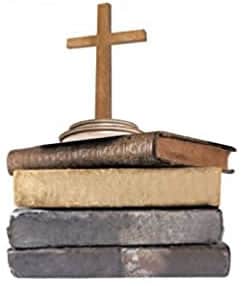
The Parallel Lives
Of The NOBLE AMERICAN RELIGIOUS THINKERS AND BELIEVERS:
Roger Williams VS. Cotton Mathers

NEW ARTICLES

A summer’s day
A summer’s day
Popular song writers will, on occasion, dub into their lyrics references to summer.
In 1970, Mungo Jerry sang, “In the summertime, when the weather is high, you can stretch right up and touch the sky.” In 1972, Bobby Vinton sang, “Yes, it’s going to be a long, lonely summer.” In 1973, Terry Jacks sang about enjoying his “Seasons in the Sun.”
In 1977, in the film Grease, John Travolta and Olivia Newton John sang a back-and-forth duet about their “summer days drifting away, to summer nights.”
Then, in 2002, Sheryl Crow declared, “I’m going to soak up the sun.”
Including references to summer in a song is not a recent innovation. William Shakespeare began his most well-known sonnet, number 18, with familiar words, “Shall I compare thee to a summer day? Thou art more lovely and more temperate.”
He asks a question and then says that the object of his love is “more lovely” and “more temperate” than is a summer day. What is wrong with a summer day?
Shakespeare points out the obvious in the next six lines: that winds can blow in May, that the sun can bear down too hot, that clouds can overshadow the sun, and that “summer’s lease” is over too quickly.
A summer day is not always “lovely” and “temperate,” and it ends too soon.
Then, in line 9, the poet changes course and focuses upon the object of his love, that nameless person to whom he is writing the sonnet. He writes,
“But thy eternal summer shall not fade.” Then, in a couplet, the final two lines of a sonnet, Shakespeare insists “So long as men can breathe, or eyes can see; So long lives this, and this gives life to thee.” By the word “this,” the poet means the sonnet itself.
Once written, a sonnet may live forever. Like a snapshot, it captures in an instant a youth full of life, swept up in a series of blissful summer days. But if this sonnet lives, then it will give an “eternal summer” to that nameless person whom the poet adores.
Structure of a sonnet is rigid.
A poet lays down fourteen lines. He or she rhymes lines one and two, “day and May,” as he or she does in lines two and four, “temperate and date.” This pattern of a rhyme at the end of every other line he or she follows throughout the first twelve lines.
Then, he or she rhymes the last two lines, the couplet, “see and thee.”
A poet writes a sonnet using iambic feet or meters, where each foot or each meter contains two syllables, the first unstressed and the second stressed, like a heartbeat. “So long / as men / can breathe / or eyes / can see.”
Note that in a sonnet, a poet will lay down in each line five of these two alternating stressed and unstressed syllables, creating a pentameter composed of ten syllables, five beats per line. Each sonnet contains 70 beats in total, no more, no less.
Iambic pentameter is the code that the best English poets used with great skill.
Erik Didriksen is a software engineer who lives in Astoria, New York. For a hobby, he takes lyrics of popular songs and converts them into sonnets, using iambic pentameter. He wrote a book, Pop Sonnets: Shakespearean Spins on Your Favorite Songs
For example, Taylor Swift’s song, “Shake It Off,” Erik ends with a couplet, “O gentleman well-coiffed! I thee entreat / to hither come and dance to this sick beat.”
For the Spice Girls’ song, “Wannabe,” Erik ends with a couplet, “I’ve told thee what I want, what I’ve desir’d; / thou want’st a spicy lass, ‘tis what’s requir’d.”
Erik says, “I really love the form of Shakespearean sonnets. Everything from length to word choice is dictated by its requirements.”
I will end with Shakespeare’s different thought on summer and sun and youth, in verse other than iambic pentameter. “Fear no more the heat o’ the sun, nor the furious winter’s rages; Golden lads and girls all must, as chimney sweepers, come to dust.”
ARTHUR C. CLARKE
ARTHUR C. CLARKEARTHUR C. CLARKE by William H. Benson April 3, 2008 I recently read an article by the columnist Ruth Walker, who explained how citizens in New Zealand are frustrated with their cell phones’ software that permits them to text message. The “T9”...
THE TRAGEDY OF LYNDON BAINES JOHNSON
THE TRAGEDY OF LYNDON BAINES JOHNSONTHE TRAGEDY OF LYNDON BAINES JOHNSON by William H. Benson March 20, 2008 On Sunday evening, March 31, 1968, forty years ago, the President of the United States, Lyndon Baines Johnson, appeared on nationwide television and...
WILLIAM F. BUCKLEY, JR.
WILLIAM F. BUCKLEY, JR.WILLIAM F. BUCKLEY, JR. by William H. Benson March 6, 2008 William F. Buckley, Jr., at the age of eighty-two, passed away last week, on Wednesday morning, February 27, at his desk at his home at Stamford, Connecticut, while working on his...
NINE WORLD WARS
NINE WORLD WARSNINE WORLD WARS by William H. Benson February 21, 2008 In Europe, it was named the Seven Years’ War, because it lasted from 1756 until 1763, but in America, it was the French and Indian War, because the English colonists and the British redcoats...
CITIES
CITIESCITIES by William H. Benson February 7, 2008 Cities across the globe attract millions of new immigrants each year. Some of these new arrivals find a much better life than they could have experienced should they have stayed in their rural native hinterland....
THE NUMBER VS. THE WORD
THE NUMBER VS. THE WORDTHE NUMBER VS. THE WORD by William H. Benson January 24, 2008 “Science is vastly more important than art, hands down,” so said a prominent writer in his most recent book. At first glance, and in light of what science and mathematics has...
Older Posts
ACHIEVEMENT
ACHIEVEMENTACHIEVEMENT by William H. Benson January 10, 2008 I watched the presidential candidates debate the issues on television last Saturday evening, prior to New Hampshire’s primary vote on Tuesday, and I was impressed. Each of the Republicans first and then...
THE SELF-HELP INDUSTRY
THE SELF-HELP INDUSTRYTHE SELF-HELP INDUSTRY by William H. Benson December 27, 2007 Advice-givers, distributors of visions of truth, and general all-around merchants of wisdom collectively belong to what I call the “self-help industry.” They all work at a...
DAY OF THE UNDERDOG
DAY OF THE UNDERDOGDAY OF THE UNDERDOG William H. Benson December 13, 2007 On December 21, 2007, we are expected to salute all of the underdogs and unsung heroes—the Number 2 people who contribute so much to the Number One people. We call it Underdog Day, and we...
LINCOLN AND STANTON
LINCOLN AND STANTONLINCOLN AND STANTON by William H. Benson November 29, 2007 Cyrus McCormick, the original inventor of the mechanical reaper, brought a lawsuit against the John Manny Company of Rockford, Illinois in the summer of 1855 for patent infringement....
FREEDOM OF THE PRESS
FREEDOM OF THE PRESSFREEDOM OF THE PRESS by William H. Benson November 15, 2007 On November 17, 1734, New York’s colonial authorities arrested Peter Zenger, a recent immigrant from Germany who had, upon his arrival, begun printing the New York Weekly Journal....
ALIVE
ALIVEALIVE by William H. Benson November 1, 2007 On Thursday, October 12, 1972 forty passengers boarded a Fairchild F-227, a prop-powered aircraft owned by the Uruguayan air force. A rugby team from Montevideo had chartered it to take the team’s members to...

One of University of Northern Colorado’s 2020 Honored Alumni
William H. Benson
Local has provided scholarships for history students for 15 years
A Sterling resident is among five alumni selected to be recognized this year by the University of Northern Colorado. Bill Benson is one of college’s 2020 Honored Alumni.
Each year UNC honors alumni in recognition for their outstanding contributions to the college, their profession and their community. This year’s honorees were to be recognized at an awards ceremony on March 27, but due to the COVID-19 outbreak that event has been cancelled. Instead UNC will recognize the honorees in the fall during homecoming Oct. 10 and 11……
Newspaper Columns

The Duodecimal System
For centuries, the ancient Romans calculated sums with their clunky numerals: I, V, X, L, C, D, and M; or one, five, ten, 50, 100, 500, and 1,000. They knew nothing better.

The Thirteenth Amendment
On Jan. 1, 1863, President Abraham Lincoln signed the Emancipation Proclamation, and by it, he declared that “all persons held as slaves” within the rebellious states “are and henceforward shall be free.” Lincoln’s Proclamation freed some 3.1 million slaves within the Confederacy.

The Fourteenth Amendment
After Congress and enough states ratified the thirteenth amendment that terminated slavery, Congress passed the Civil Rights Act of 1866. This law declared that “all people born in the United States are entitled to be citizens, without regard to race, color, or previous condition of slavery or involuntary servitude.” The Act equated birth to citizenship.

The New-York Packet and the Constitution
Jill Lepore, the Harvard historian, published her newest book a month ago, These Truths: A History of the United States. In a short introduction, she describes in detail the Oct. 30, 1787 edition of a semi-weekly newspaper, The New-York Packet.
Mr. Benson’s writings on the U.S. Constitution are a great addition to the South Platte Sentinel. Its inspiring to see the history of the highest laws of this country passed on to others.
– Richard Hogan
Mr. Benson, I cannot thank you enough for this scholarship. As a first-generation college student, the prospect of finding a way to afford college is a very daunting one. Thanks to your generous donation, my dream of attending UNC and continuing my success here is far more achievable
– Cedric Sage Nixon
Donec bibendum tortor non vestibulum dapibus. Cras id tempor risus. Curabitur eu dui pellentesque, pharetra purus viverra.
– Extra Times
FUTURE BOOKS
- Thomas Paine vs. George Whitefield
- Ralph Waldo Emerson vs. Joseph Smith
- William James vs. Mary Baker Eddy
- Mark Twain vs. Billy Graham
- Henry Louis Mencken vs. Jim Bakker
