
By William H. Benson
The Parallel Lives
Of The NOBLE AMERICAN RELIGIOUS THINKERS AND BELIEVERS:
Roger Williams VS. Cotton Mathers

NEW ARTICLES
70th Anniversary of the Korean Armistice Agreement
70th anniversary of the korean armistice agreement
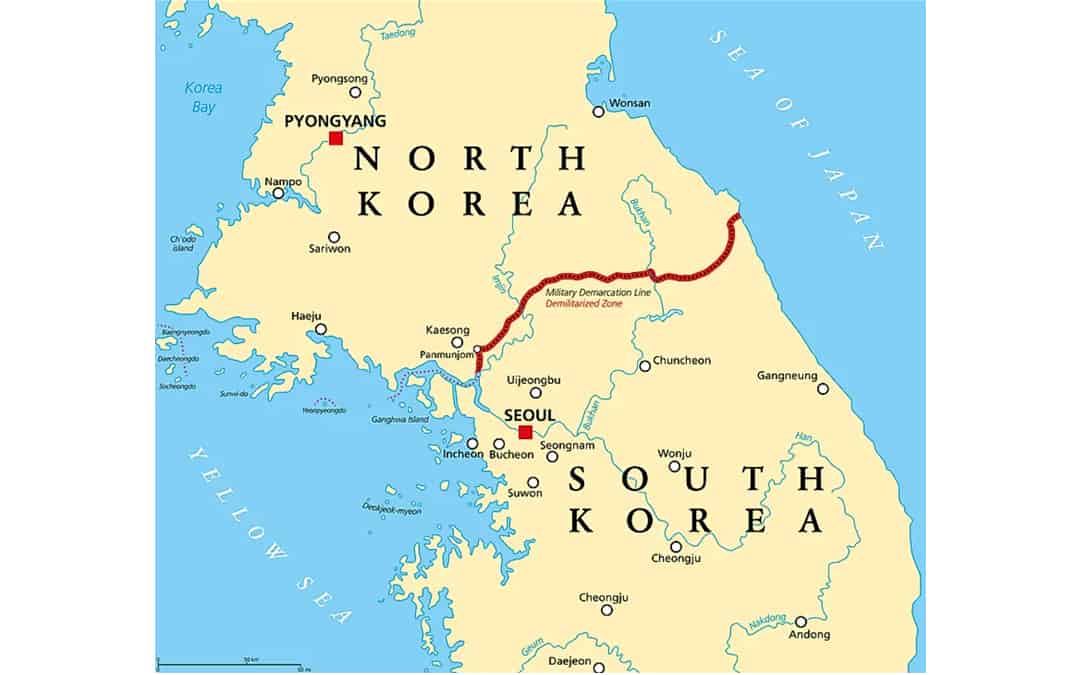
Last Thursday, July 27, 2023, North Korea’s leader Kim Jon Un presided over a military parade that celebrated the 70th anniversary of the signing of the Korean Armistice Agreement that ended the Korean conflict, from June 25, 1950, to July 27, 1953.
North Korea’s Foreign Ministry announced, in bellicose language, that “the 21st century would see the irrevocable termination of the U.S.
“Should the U.S. choose to offend our Republic, we will annihilate them by using all our military power that we have gathered so far.”
The 1953 armistice called for “a complete cessation of hostilities and of all acts of armed forces in Korea, until a final peaceful settlement is achieved.” No official ever achieved a peaceful settlement. No official ever drafted or approved a treaty.
The armistice created a demilitarized zone (DMZ) that runs at an angle through the 38th parallel and separates North Korea from South Korea. It is 2.5 miles wide and is the most heavily defended national border in the world.
Two U.S. / NATO officers, William K. Harrison and Mark W. Clark signed the armistice; as did two North Korean officials, Kim Il Sung and General Nam Il; and Peng Dehuai, a Chinese military official.
No South Korean signed the armistice because South Korea’s leader in 1953, Syngman Rhee, refused. He held fast to a dream that with U.S. help he could recapture the entire Korean peninsula. That never happened.
Because the armistice was only a military document intended to stop the bloodshed, a unique feature of the armistice is that “No nation is a signatory to the agreement.” The armies agreed to an armistice, “a cessation of hostilities.” Nothing more.
The DMZ across the Korean peninsula sticks out like a gaping wound in international affairs, a potential trigger point of conflict with lethal, possible nuclear weapons poised on both sides, aimed at each other. For 70 years, it has remained an unresolved issue.
Two weeks ago, on Tuesday, July 18, a U. S. serviceman, Travis T. King sprinted across the DMZ, into North Korea, “willfully and without authorization.”
A possible motivation for his rash act was that he was facing disciplinary action once back in the U.S. His action raises tensions to a high level again on the Korean peninsula.
A close-to-home story.
On September 1, 1950, in Sterling, Colorado, my dad and mom married. In mid-October, my dad left for basic training at Fort Polk, Louisiana, because the 45th Infantry Division of the Oklahoma National Guard had drafted him.
During the month of April 1951, a ship carried him and his fellow servicemen through the Panama Canal and across the Pacific Ocean to Hokkaido, Japan, where they trained.
By December 1, 1951, he and his unit were based at a U.S. Army camp near the front lines in Korea, and there he remained for the next eight months, working on jeeps in the motor pool. By September of 1952, he was back home, done with the military forever.
The war, the army, and the months away from my mother embittered my dad, but it was his memories of his commanding officers that drove him into paroxysms of rage. He often said, “I never saw one of the officers sober. They were always drunk.”
If he ever heard someone talking in a cantankerous or unreasonable manner, my dad would say, “He talks just about like a first sergeant in the army.”
It is likely that others who served on that cold Korean peninsula came away with a similar bitter attitude. He may have suffered from PSTD, but there was no treatment.
Instead, my dad dealt with his memories his own way, hard work in construction.
Months after those five officials signed that armistice in Korea, I was born.
ACHIEVEMENT
ACHIEVEMENTACHIEVEMENT by William H. Benson January 10, 2008 I watched the presidential candidates debate the issues on television last Saturday evening, prior to New Hampshire’s primary vote on Tuesday, and I was impressed. Each of the Republicans first and then...
THE SELF-HELP INDUSTRY
THE SELF-HELP INDUSTRYTHE SELF-HELP INDUSTRY by William H. Benson December 27, 2007 Advice-givers, distributors of visions of truth, and general all-around merchants of wisdom collectively belong to what I call the “self-help industry.” They all work at a...
DAY OF THE UNDERDOG
DAY OF THE UNDERDOGDAY OF THE UNDERDOG William H. Benson December 13, 2007 On December 21, 2007, we are expected to salute all of the underdogs and unsung heroes—the Number 2 people who contribute so much to the Number One people. We call it Underdog Day, and we...
LINCOLN AND STANTON
LINCOLN AND STANTONLINCOLN AND STANTON by William H. Benson November 29, 2007 Cyrus McCormick, the original inventor of the mechanical reaper, brought a lawsuit against the John Manny Company of Rockford, Illinois in the summer of 1855 for patent infringement....
FREEDOM OF THE PRESS
FREEDOM OF THE PRESSFREEDOM OF THE PRESS by William H. Benson November 15, 2007 On November 17, 1734, New York’s colonial authorities arrested Peter Zenger, a recent immigrant from Germany who had, upon his arrival, begun printing the New York Weekly Journal....
ALIVE
ALIVEALIVE by William H. Benson November 1, 2007 On Thursday, October 12, 1972 forty passengers boarded a Fairchild F-227, a prop-powered aircraft owned by the Uruguayan air force. A rugby team from Montevideo had chartered it to take the team’s members to...
Older Posts
JOHN F. KENNEDY
JOHN F. KENNEDYJOHN F. KENNEDY by William H. Benson October 18, 2007 On October 16, 1962, President John F. Kennedy received evidence that the Russians were installing nuclear missiles in Cuba, ninety miles off Florida’s coast. Photographs taken the day before...
SOUTHERN LITERATURE
SOUTHERN LITERATURESOUTHERN LITERATURE by William H. Benson October 4, 2007 The citizens of Nashville, Tennessee will celebrate the Southern Festival of Books next weekend. It is an event celebrated the second week of October each year, and its purpose is to...
SCHOOL DAYS
SCHOOL DAYSSCHOOL DAYS by William H. Benson September 20, 2007 The calendar and the cooling of the temperatures tell us that another school year has arrived. The fall sports schedule is in full swing, and just beyond the horizon lies the winter schedule. The...
THE GREAT SEPARATION
THE GREAT SEPARATIONTHE GREAT SEPARATION by William H. Benson September 6, 2007 In May of 2006 Iran’s President, Mahmoud Ahmadinejad, sent to President George Bush an open letter in which he began by listing the grievances he had against American foreign policy....
ANTI-HEROES
ANTI-HEROESANTI-HEROES by William H. Benson August 23, 2007 In August of 1967, forty years ago, the movie Bonnie and Clyde opened in the nation’s theatres. It featured two young actors—Warren Beatty as Clyde Barrow, and Faye Dunaway as Bonnie Parker. The movie,...
IN RETROSPECT
IN RETROSPECTIN RETROSPECT by William H. Benson August 9, 2007 Here are the lessons we have learned: We misjudged the geopolitical intentions of our adversaries, and we exaggerated the dangers to the U. S. of their actions. We viewed the people and leaders in...

One of University of Northern Colorado’s 2020 Honored Alumni
William H. Benson
Local has provided scholarships for history students for 15 years
A Sterling resident is among five alumni selected to be recognized this year by the University of Northern Colorado. Bill Benson is one of college’s 2020 Honored Alumni.
Each year UNC honors alumni in recognition for their outstanding contributions to the college, their profession and their community. This year’s honorees were to be recognized at an awards ceremony on March 27, but due to the COVID-19 outbreak that event has been cancelled. Instead UNC will recognize the honorees in the fall during homecoming Oct. 10 and 11……
Newspaper Columns

The Duodecimal System
For centuries, the ancient Romans calculated sums with their clunky numerals: I, V, X, L, C, D, and M; or one, five, ten, 50, 100, 500, and 1,000. They knew nothing better.

The Thirteenth Amendment
On Jan. 1, 1863, President Abraham Lincoln signed the Emancipation Proclamation, and by it, he declared that “all persons held as slaves” within the rebellious states “are and henceforward shall be free.” Lincoln’s Proclamation freed some 3.1 million slaves within the Confederacy.

The Fourteenth Amendment
After Congress and enough states ratified the thirteenth amendment that terminated slavery, Congress passed the Civil Rights Act of 1866. This law declared that “all people born in the United States are entitled to be citizens, without regard to race, color, or previous condition of slavery or involuntary servitude.” The Act equated birth to citizenship.

The New-York Packet and the Constitution
Jill Lepore, the Harvard historian, published her newest book a month ago, These Truths: A History of the United States. In a short introduction, she describes in detail the Oct. 30, 1787 edition of a semi-weekly newspaper, The New-York Packet.
Mr. Benson’s writings on the U.S. Constitution are a great addition to the South Platte Sentinel. Its inspiring to see the history of the highest laws of this country passed on to others.
– Richard Hogan
Mr. Benson, I cannot thank you enough for this scholarship. As a first-generation college student, the prospect of finding a way to afford college is a very daunting one. Thanks to your generous donation, my dream of attending UNC and continuing my success here is far more achievable
– Cedric Sage Nixon
Donec bibendum tortor non vestibulum dapibus. Cras id tempor risus. Curabitur eu dui pellentesque, pharetra purus viverra.
– Extra Times
FUTURE BOOKS
- Thomas Paine vs. George Whitefield
- Ralph Waldo Emerson vs. Joseph Smith
- William James vs. Mary Baker Eddy
- Mark Twain vs. Billy Graham
- Henry Louis Mencken vs. Jim Bakker
