
By William H. Benson
The Parallel Lives
Of The NOBLE AMERICAN RELIGIOUS THINKERS AND BELIEVERS:
Roger Williams VS. Cotton Mathers

NEW ARTICLES
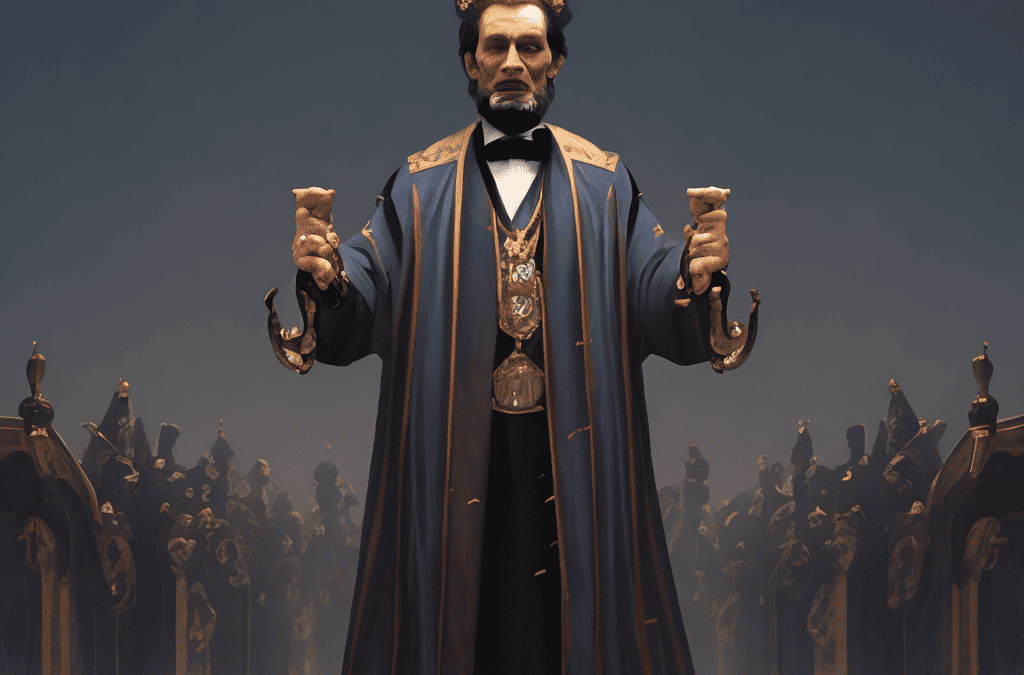
Abraham Lincoln: infidel or faithful?
Abraham Lincoln: infidel or faithful?
The two books that Abraham Lincoln read often and loved the most throughout his life were the King James Bible, published in 1611, and William Shakespeare’s works, first published as the First Folio in 1623, both the best of English literary works.
There were some—including his law partner in Springfield, Illinois, Billy Herndon— who were convinced that Lincoln displayed little religious faith whatsoever, that he was a skeptic, a thinker who scoffed at organized religion.
Hence, Lincoln’s appreciation of Shakespeare’s works. At times Lincoln was a thinker.
Yet, there were others who knew Lincoln, who chose to believe that he was a believer, that he was a Christian martyr, who accomplished an immense amount of good—the obliteration of American Slavery—through his political achievements.
Hence, his appreciation for the King James Bible. At times Lincoln was a believer.
“No sooner was Lincoln dead than some of his countrymen began to fight about his soul,” wrote Richard Current in his 1958 book The Lincoln Nobody Knows.
Where can anyone position the sixteenth president? As a free-thinking skeptic, or as a Christian believer? He was unique because he stood taller than two easy categories.
Current wrote, “Lincoln read the Bible and prayed, but still belonged to no church.”
Lincoln himself wrote, “That I am not a member of any Christian Church, is true; but I have never denied the truth of the Scriptures; and I have never spoken with intentional disrespect of religion in general, or of any denomination of Christians in particular.
“It is true that in early life I was inclined to believe in what I understand is called the ‘Doctrine of Necessity.’ The habit of arguing thus, however, I have, entirely left off from [for] more than five years.”
Scholars now see that Lincoln’s faith changed as he grew older. In the White House, trying to preserve the Union, living with his irascible wife Mary Todd, and working to win a war with a great slaughter on both sides, Lincoln sought direction from the Bible.
In the summer of 1864, Lincoln’s friend Joshua Speed happened to catch Lincoln reading his Bible. Lincoln told Speed, “Take all of this book upon reason that you can, and the balance on faith, and you will live and die a happier and better man.”
The death of Lincoln’s 12-year-old son Willie, drove Lincoln to find solace in the Bible.
The writer Joshua Zeitz just released his newest book, Lincoln’s God: How Faith Transformed a President and a Nation. A review of Zeitz’s book appeared in the New York Times on July 9, 2023.
Ted Widmer, the reviewer, wrote, “Lincoln’s philosophy was anything but certain; he hoped that he was right with God, and that was enough. His faith will never be simple to decipher, and that’s as it should be; it was, as the founders intended, a private matter.
“Zeitz weaves between the [two] dogmas, revealing a complex thinker who deftly merged religious language with political goals, and underwent a spiritual renewal during the Civil War.”
On March 4, 1865, six weeks before John Wilkes Booth assassinated Lincoln, the president delivered his Second Inaugural Address. “One scholar estimated that ‘266 of its 702 words were quoted verbatim from the King James Bible.’”
In it, he tried find a divine purpose as to why the war had lasted for four years.
He said, “The Almighty has his own purposes. Every drop of blood drawn with the lash shall be paid by another drawn with the sword.”
The abolitionist Frederick Douglass listened as Lincoln spoke that day, and later remarked that the Address sounded, “more like a sermon than a state paper.”
Yet, Lincoln also quoted from Shakespeare. From Hamlet, Lincoln would often recite, “There is a divinity that shapes our ends, Rough-hew them how we will.”
King James and William Shakespeare. Lincoln loved the two books’ language the best.
JOHN F. KENNEDY
JOHN F. KENNEDYJOHN F. KENNEDY by William H. Benson October 18, 2007 On October 16, 1962, President John F. Kennedy received evidence that the Russians were installing nuclear missiles in Cuba, ninety miles off Florida’s coast. Photographs taken the day before...
SOUTHERN LITERATURE
SOUTHERN LITERATURESOUTHERN LITERATURE by William H. Benson October 4, 2007 The citizens of Nashville, Tennessee will celebrate the Southern Festival of Books next weekend. It is an event celebrated the second week of October each year, and its purpose is to...
SCHOOL DAYS
SCHOOL DAYSSCHOOL DAYS by William H. Benson September 20, 2007 The calendar and the cooling of the temperatures tell us that another school year has arrived. The fall sports schedule is in full swing, and just beyond the horizon lies the winter schedule. The...
THE GREAT SEPARATION
THE GREAT SEPARATIONTHE GREAT SEPARATION by William H. Benson September 6, 2007 In May of 2006 Iran’s President, Mahmoud Ahmadinejad, sent to President George Bush an open letter in which he began by listing the grievances he had against American foreign policy....
ANTI-HEROES
ANTI-HEROESANTI-HEROES by William H. Benson August 23, 2007 In August of 1967, forty years ago, the movie Bonnie and Clyde opened in the nation’s theatres. It featured two young actors—Warren Beatty as Clyde Barrow, and Faye Dunaway as Bonnie Parker. The movie,...
IN RETROSPECT
IN RETROSPECTIN RETROSPECT by William H. Benson August 9, 2007 Here are the lessons we have learned: We misjudged the geopolitical intentions of our adversaries, and we exaggerated the dangers to the U. S. of their actions. We viewed the people and leaders in...
Older Posts
MIDSUMMER DREAMS
MIDSUMMER DREAMSMIDSUMMER DREAMS by William H. Benson July 26, 2007 Sigmund Freud and Carl Jung, European-trained physicians, each in turn, drew a map of the human mind, and features on that map included their own inventions: psychic agencies (id, ego, superego),...
MARY BAKER EDDY & MARK TWAIN
MARY BAKER EDDY & MARK TWAINMARY BAKER EDDY & MARK TWAIN by William H. Benson July 12, 2007 A social wreck most of her life, Mary Baker Eddy is a classic rags-to-riches story. She was born on July 16, 1821 in rural New Hampshire. At nineteen, she married...
A PEOPLE’S HISTORY
A PEOPLE’S HISTORYA PEOPLE’S HISTORY by William H. Benson June 28, 2007 Oliver Wendell Holmes once said, “Why can’t somebody give us a list of things that everybody thinks and nobody says, and a list that everybody says and nobody thinks?” Next week is...
TEAR DOWN THIS WALL
TEAR DOWN THIS WALLTEAR DOWN THIS WALL by William H. Benson June 14, 2007 On June 12, 1987, twenty years ago this week, Ronald Reagan stood in front of the Brandenburg Gate in West Berlin and declared, “Mr. Gorbachev, tear down this wall.” Two years later...
AMERICA’S RELIGIOUS LEADERS
AMERICA’S RELIGIOUS LEADERSAMERICA’S RELIGIOUS LEADERS by William H. Benson May 31, 2007 Americans have always paid homage to their religious leaders. Indeed, the persuasive influence of the religious leader has remained one of the few constants of America’s...
PALESTINE
PALESTINEPALESTINE by William H. Benson May 17, 2007 By the late 1940s, the British were driven to distraction as to how to solve the problem of Palestine, for both the Arabs and the Jews were contending for ownership of this land. The Arabs, or Palestinians, had...
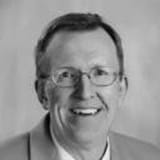
One of University of Northern Colorado’s 2020 Honored Alumni
William H. Benson
Local has provided scholarships for history students for 15 years
A Sterling resident is among five alumni selected to be recognized this year by the University of Northern Colorado. Bill Benson is one of college’s 2020 Honored Alumni.
Each year UNC honors alumni in recognition for their outstanding contributions to the college, their profession and their community. This year’s honorees were to be recognized at an awards ceremony on March 27, but due to the COVID-19 outbreak that event has been cancelled. Instead UNC will recognize the honorees in the fall during homecoming Oct. 10 and 11……
Newspaper Columns

The Duodecimal System
For centuries, the ancient Romans calculated sums with their clunky numerals: I, V, X, L, C, D, and M; or one, five, ten, 50, 100, 500, and 1,000. They knew nothing better.

The Thirteenth Amendment
On Jan. 1, 1863, President Abraham Lincoln signed the Emancipation Proclamation, and by it, he declared that “all persons held as slaves” within the rebellious states “are and henceforward shall be free.” Lincoln’s Proclamation freed some 3.1 million slaves within the Confederacy.

The Fourteenth Amendment
After Congress and enough states ratified the thirteenth amendment that terminated slavery, Congress passed the Civil Rights Act of 1866. This law declared that “all people born in the United States are entitled to be citizens, without regard to race, color, or previous condition of slavery or involuntary servitude.” The Act equated birth to citizenship.

The New-York Packet and the Constitution
Jill Lepore, the Harvard historian, published her newest book a month ago, These Truths: A History of the United States. In a short introduction, she describes in detail the Oct. 30, 1787 edition of a semi-weekly newspaper, The New-York Packet.
Mr. Benson’s writings on the U.S. Constitution are a great addition to the South Platte Sentinel. Its inspiring to see the history of the highest laws of this country passed on to others.
– Richard Hogan
Mr. Benson, I cannot thank you enough for this scholarship. As a first-generation college student, the prospect of finding a way to afford college is a very daunting one. Thanks to your generous donation, my dream of attending UNC and continuing my success here is far more achievable
– Cedric Sage Nixon
Donec bibendum tortor non vestibulum dapibus. Cras id tempor risus. Curabitur eu dui pellentesque, pharetra purus viverra.
– Extra Times
FUTURE BOOKS
- Thomas Paine vs. George Whitefield
- Ralph Waldo Emerson vs. Joseph Smith
- William James vs. Mary Baker Eddy
- Mark Twain vs. Billy Graham
- Henry Louis Mencken vs. Jim Bakker
