
By William H. Benson
The Parallel Lives
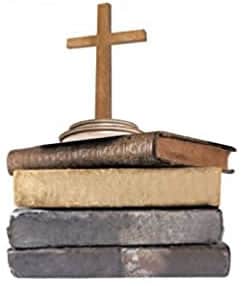
Of The NOBLE AMERICAN RELIGIOUS THINKERS AND BELIEVERS:
Roger Williams VS. Cotton Mathers

NEW ARTICLES

Native Americans and education
Native Americans and Education
In “National Geographic’s” May edition, the writer Suzette Brewer, member of the Cherokee Nation, wrote an article about “the some 500 federally funded boarding schools for Native children opened in the U.S and Canada in the 1800s.”
Catholic or Protestant missionaries, intent on converting the students to Christianity and to white men’s culture, oversaw many of these schools, all designed to indoctrinate the students in the missionaries’ specific theology.
Brewer calls these schools “places of horror and shame.”
The children were separated from their homes, brothers, sisters, parents, aunts, uncles, cousins, and grandparents. They were beat if they spoke their native languages. Their hair and braids were cut. They were told to dress in white people’s clothes.
They were forced to work for long hours for little, if any, pay, in local homes.
Many of the older ones gave up and ran away, but professional trackers tracked them down and brought them back. Thousands died at the schools over the decades due to disease, poor nutrition, suicide, or under mysterious circumstances.
Eugene Herrod attended Carter Seminary in Oklahoma, and says now that, “Corporal punishment was rampant, but the emotional isolation was the hardest.”
“The familial dysfunction that was occurring in our communities and in our families was a result of this government obliterating a well-conceived and well-built tribal society that had lasted and endured for centuries.”
The educational results out of these boarding schools “were abysmal.”
At Carlisle Indian Industrial School in Carlisle, Pennsylvania, Suzette Brewer declared, “Only a few hundred students of the many thousands who were enrolled during the school’s 39-year history received high school diplomas.”
Carlisle’s founder Richard Pratt stated his school’s mission: “Kill the Indian in him and save the man.” There is little evidence he achieved either goal for most of his students.
The most famous alumni out of Carlisle was Jim Thorpe, a gifted athlete with talents in football, baseball, and track and field. He attended Carlisle off and on from 1904 until 1913, but it is questionable if he received a diploma.
One Native American boy who avoided the boarding school route was Sherman Alexie, who was born on the Spokane Indian Reservation in 1966, just three years before Lyndon Johnson’s administration shut down the boarding school program.
Sherman was smart. He read books. In an essay entitled, “The Joy of Reading and Writing: Superman and Me,” he says, “I learned to read with a Superman comic book. A smart Indian is a dangerous person, widely feared and ridiculed.
“We were Indian children who were expected to be stupid. Most lived up to those expectations inside the classroom but subverted them outside. They struggled with basic reading in school but could remember how to sing dozens of powwow songs.
“As Indian children, we were expected to fail in the non-Indian world. I refused to fail. I was smart. I was arrogant. I was lucky. I read books late into the night.”
Sherman chose to attend high school off the reservation, and there he succeeded. He became a writer and a poet. Today, he speaks to students in classes on the reservations, and he challenges them to read and to write, to try to succeed with books.
He says that “some students look at me with bright eyes and arrogant wonder. Then there are the sullen and already defeated Indian kids who sit in the back rows and ignore me. The pages of their notebooks are empty. They carry neither pencil nor pen.”
The boarding school program joined government to church, with the loftiest and noblest of intentions, but the Indian boys and girls who were shoved through that program suffered incalculable damage: isolation, violence, and crushed spirits.
REVOLUTION IN HUNGARY
REVOLUTION IN HUNGARYREVOLUTION IN HUNGARY by William H. Benson November 16, 2006 Josef Toth’s mother passed away in 1954, weeks after her return from a six-month prison confinement, courtesy of the AVO, Hungary’s state police. She had spoken out against the...
ALGERIA, AFGHANISTAN, AND VIETNAM
ALGERIA, AFGHANISTAN, AND VIETNAMALGERIA, AFGHANISTAN, AND VIETNAM by William H. Benson November 2, 2006 Algeria’s rebel army initiated its revolution against the French forces on November 1, 1954, fifty-two years ago. It required eight years but the FLN, the...
YORKTOWN AND LEWIS AND CLARK
YORKTOWN AND LEWIS AND CLARKYORKTOWN AND LEWIS AND CLARK by William H. Benson October 19, 2006 Writing teachers tell us that authors build their most successful stories upon one of two themes: a stranger comes to town or somebody goes on a journey. In each...
MULTICULTURALISM
MULTICULTURALISMMULTICULTURALISM by William H. Benson September 21, 2006 Serendipity catches us unaware. It brings us up short. It happens when we go to watch a fight, and right in the middle of it an ice hockey game breaks out. We are astonished when...
PRESIDENTIAL PARDONS
PRESIDENTIAL PARDONSPRESIDENTIAL PARDONS by William H. Benson September 7, 2006 “The quality of mercy is not strain’d; It droppeth as the gentle rain from heaven upon the place beneath. It is twice blest: It blesseth him that gives and him that takes.” So said...
PLAY
PLAYPLAY by William H. Benson August 24, 2006 The fall sports season at the high schools is now in full swing. The schedules are set, and participants will soon play their first games or compete at their first matches and meets. Some will win, others will lose,...
Older Posts
ALFRED HITCHCOCK
ALFRED HITCHCOCKALFRED HITCHCOCK by William H. Benson August 10, 2006 He began his television show, Alfred Hitchcock Presents, with the words, “Good evening,” which he spoke slowly and precisely with an English accent while standing alone on a stage. When he had...
KOREAN WAR
KOREAN WARKOREAN WAR by William H. Benson July 27, 2006 Following the defeat of the Japanese in 1945, the allies had divided the Korean peninsula into two halves: north and south. The Russian army controlled the north and the Americans the south. An American...
SAM CLEMENS
SAM CLEMENSSAM CLEMENS by William H. Benson July 13, 2006 In July of 1861, Sam Clemens and his brother Orion boarded the sailing packet the Sioux City that departed St. Louis. It took them up the Missouri River, and dropped them off in St. Joseph. There, Sam...
WOMEN’S LIBERATION
WOMEN’S LIBERATIONWOMEN’S LIBERATION by William H. Benson June 28, 2006 Revolution is an overused word today. Its root, “revolt”, refers to a violent confrontation against the existing powers, especially a king: the American, French, or Russian Revolutions. But...
FATHERS AND SONS
FATHERS AND SONSFATHERS AND SONS William H. Benson June 15, 2006 On June 15, 1752 Benjamin Franklin decided to spend some quality time with his son William. Even though it was lightning outside, together father and son flew a kite. Pictures of Franklin holding...
NORMA JEAN BAKER
NORMA JEAN BAKERNORMA JEAN BAKER by William H. Benson June 1, 2006 Norma Jean Baker, also known as Marilyn Monroe, was born June 1, 1926. She would have turned eighty today. She grew up in Los Angeles, during Hollywood’s golden age, a glittering dreamworld...

One of University of Northern Colorado’s 2020 Honored Alumni
William H. Benson
Local has provided scholarships for history students for 15 years
A Sterling resident is among five alumni selected to be recognized this year by the University of Northern Colorado. Bill Benson is one of college’s 2020 Honored Alumni.
Each year UNC honors alumni in recognition for their outstanding contributions to the college, their profession and their community. This year’s honorees were to be recognized at an awards ceremony on March 27, but due to the COVID-19 outbreak that event has been cancelled. Instead UNC will recognize the honorees in the fall during homecoming Oct. 10 and 11……
Newspaper Columns

The Duodecimal System
For centuries, the ancient Romans calculated sums with their clunky numerals: I, V, X, L, C, D, and M; or one, five, ten, 50, 100, 500, and 1,000. They knew nothing better.

The Thirteenth Amendment
On Jan. 1, 1863, President Abraham Lincoln signed the Emancipation Proclamation, and by it, he declared that “all persons held as slaves” within the rebellious states “are and henceforward shall be free.” Lincoln’s Proclamation freed some 3.1 million slaves within the Confederacy.

The Fourteenth Amendment
After Congress and enough states ratified the thirteenth amendment that terminated slavery, Congress passed the Civil Rights Act of 1866. This law declared that “all people born in the United States are entitled to be citizens, without regard to race, color, or previous condition of slavery or involuntary servitude.” The Act equated birth to citizenship.

The New-York Packet and the Constitution
Jill Lepore, the Harvard historian, published her newest book a month ago, These Truths: A History of the United States. In a short introduction, she describes in detail the Oct. 30, 1787 edition of a semi-weekly newspaper, The New-York Packet.
Mr. Benson’s writings on the U.S. Constitution are a great addition to the South Platte Sentinel. Its inspiring to see the history of the highest laws of this country passed on to others.
– Richard Hogan
Mr. Benson, I cannot thank you enough for this scholarship. As a first-generation college student, the prospect of finding a way to afford college is a very daunting one. Thanks to your generous donation, my dream of attending UNC and continuing my success here is far more achievable
– Cedric Sage Nixon
Donec bibendum tortor non vestibulum dapibus. Cras id tempor risus. Curabitur eu dui pellentesque, pharetra purus viverra.
– Extra Times
FUTURE BOOKS
- Thomas Paine vs. George Whitefield
- Ralph Waldo Emerson vs. Joseph Smith
- William James vs. Mary Baker Eddy
- Mark Twain vs. Billy Graham
- Henry Louis Mencken vs. Jim Bakker
