
By William H. Benson
The Parallel Lives
Of The NOBLE AMERICAN RELIGIOUS THINKERS AND BELIEVERS:
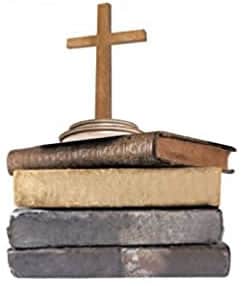
Roger Williams VS. Cotton Mathers

NEW ARTICLES

Stories
Stories
This past week I listened to Craig Wortmann’s book, “What’s Your Story: Using Stories to Ignite Performance and Be More Successful.” Craig encourages readers to place their stories into a matrix of sixteen cells, four columns by four rows.
He identifies four columns, top to bottom: success, failure, fun, and legends. A success story is how a project succeeded. A failure story is how a project failed. A fun story is a joke. A legend story is a once-upon-a-time story, that of a hero.
The idea of a matrix appears too complicated, a spreadsheet to arrange jokes. Ronald Reagan kept it simpler. He wrote his stories on 3 x 5 cards and kept them in boxes. To write a speech, for example, to inspire, he withdrew cards from his stack.
Rodney Dangerfield did not have a matrix, because he told only one type of story, his repeated failures, for he played the role of a born loser. His was a continuous failure.
“When I was a kid, my dad took me hunting, and we shot a deer. He put the deer inside the jeep on the passenger side, and he hung me on the front bumper.”
“When I go out on a date, I invite two girls. That way when I fall asleep, the two girls can talk to each other.”
Rodney’s tale of woe, all fiction of course, was, for some, funny, not for others.
Abraham Lincoln carried in his mind a treasure chest of stories, jokes, and anecdotes to make a legal or political point. At times, he acted as a clown or a jester, to disarm an opponent, to avoid being challenged or bullied into a wrong choice or action.
For example, he told a story about how a dad advised his son to take a wife. “Ok, dad,” the son replied. “Whose wife shall I take?” An example of miscommunication.
Lincoln also told a story about a farmer who suffered from seven skunks, who lived near his chicken house. One night the farmer shot one skunk, but because it caused such a stink, he let the other six go.
By this story, Lincoln justified firing just one cabinet official, rather than all seven.
Lincoln’s Secretary of War, Edwin Stanton, grew exasperated by Lincoln’s repeated use of rural, countrified, low-base stories.
In Stephen Spielberg’s movie Lincoln, Stanton shouts at the President, “Oh, no, you’re going to tell another one of your stories! I can’t stand to hear another one.”
Craig Wortmann says that our lives today lack a balance of appropriate stories, a syndrome he calls SDD, Story Deficit Disorder. We need both failure and success stories.
Instead, we endure a blizzard of bullet points and bytes, a laundry list of dull and boring facts, that lay there on the page or the screen, lifeless and uninspiring.
Like small children, readers cry out, “Come on. Tell me a story!”
The rage today is to tell “a struggle turned to success” story: “low then high; first perseverance, then achievement; all struggle redeemed; the more struggle the more redemption.”
Stephen Marche, A New York Times Book Review writer, stated his opinion.
“I hate those stories. Don’t tell me about how it’s all going to work out. Don’t show me J. K. Rowling scribbling her first Harry Potter book in cafes, a jobless single parent dependent on welfare.” Most storytellers never experience a single moment of success.
I say that the best stories of all are factual stories from the past, in a word “history.”
The historian does her best to get it straight, true, with little opinion tossed in. Her written account reads like a gossip who repeats details drawn from a family’s closet.
Some do not like to read history for that reason. It reveals events too personal and painful. One person said this about the past, “Listen, we know it happened, but why say so? Why tell it? It is unnecessary. So it happened! Fine!”
Every storyteller should know his or her audience and respect their feelings.
Today, tell someone a story: a funny story, or a story that delights, or one that makes a point. It is natural for human beings to want to hear a good story.
ALFRED HITCHCOCK
ALFRED HITCHCOCKALFRED HITCHCOCK by William H. Benson August 10, 2006 He began his television show, Alfred Hitchcock Presents, with the words, “Good evening,” which he spoke slowly and precisely with an English accent while standing alone on a stage. When he had...
KOREAN WAR
KOREAN WARKOREAN WAR by William H. Benson July 27, 2006 Following the defeat of the Japanese in 1945, the allies had divided the Korean peninsula into two halves: north and south. The Russian army controlled the north and the Americans the south. An American...
SAM CLEMENS
SAM CLEMENSSAM CLEMENS by William H. Benson July 13, 2006 In July of 1861, Sam Clemens and his brother Orion boarded the sailing packet the Sioux City that departed St. Louis. It took them up the Missouri River, and dropped them off in St. Joseph. There, Sam...
WOMEN’S LIBERATION
WOMEN’S LIBERATIONWOMEN’S LIBERATION by William H. Benson June 28, 2006 Revolution is an overused word today. Its root, “revolt”, refers to a violent confrontation against the existing powers, especially a king: the American, French, or Russian Revolutions. But...
FATHERS AND SONS
FATHERS AND SONSFATHERS AND SONS William H. Benson June 15, 2006 On June 15, 1752 Benjamin Franklin decided to spend some quality time with his son William. Even though it was lightning outside, together father and son flew a kite. Pictures of Franklin holding...
NORMA JEAN BAKER
NORMA JEAN BAKERNORMA JEAN BAKER by William H. Benson June 1, 2006 Norma Jean Baker, also known as Marilyn Monroe, was born June 1, 1926. She would have turned eighty today. She grew up in Los Angeles, during Hollywood’s golden age, a glittering dreamworld...
Older Posts
THE CULTURAL REVOLUTION
THE CULTURAL REVOLUTIONTHE CULTURAL REVOLUTION by William H. Benson May 18, 2006 In 1966 Chairman Mao Zedong, the leader of the Communist Party in the China, was seventy-three, and he was still very dedicated to the task of seeing the revolution through in China...
FOUR DEAD IN OHIO
FOUR DEAD IN OHIOFOUR DEAD IN OHIO by William H. Benson May 4, 2006 On Thursday, April 30, 1970, President Richard Nixon announced that a massive American / South Vietnamese troop offensive was moving into Cambodia with intentions of inflicting damages upon the...
CIVIL WAR AND EASTER
CIVIL WAR AND EASTERCIVIL WAR AND EASTER by William H. Benson April 20, 2006 The calendar said it was Palm Sunday, April 9, 1865. While truce flags snapped in the breeze outside, Lee met Grant in Wilmer McLean’s brick home in the town of Appomattox Court House,...
TRIBALISM
TRIBALISMTRIBALISM by William H. Benson April 6, 2006 Tribalism seems the scourge of our generation. Scholars and observers find it convenient to carve nations and societies along sectarian, ethnic, and tribal lines. To pigeonhole others seems an easy way...
FILIPINO INSURGENTS
FILIPINO INSURGENTSFILIPINO INSURGENTS by William H. Benson March 23, 2006 President McKinley had won the war without much loss of life. In 1898 in 113 days the U.S. army and navy had defeated the Spanish and driven them out of the Caribbean and Asia. Theodore...
CLARENCE DARROW
CLARENCE DARROWCLARENCE DARROW by William H. Benson March 9, 2006 Clarence Darrow, the Chicago attorney, is most remembered today for his defense of John T. Scopes at the Scopes Monkey Trial in Dayton, Tennessee in 1925. But earlier in his career Darrow had...

One of University of Northern Colorado’s 2020 Honored Alumni
William H. Benson
Local has provided scholarships for history students for 15 years
A Sterling resident is among five alumni selected to be recognized this year by the University of Northern Colorado. Bill Benson is one of college’s 2020 Honored Alumni.
Each year UNC honors alumni in recognition for their outstanding contributions to the college, their profession and their community. This year’s honorees were to be recognized at an awards ceremony on March 27, but due to the COVID-19 outbreak that event has been cancelled. Instead UNC will recognize the honorees in the fall during homecoming Oct. 10 and 11……
Newspaper Columns

The Duodecimal System
For centuries, the ancient Romans calculated sums with their clunky numerals: I, V, X, L, C, D, and M; or one, five, ten, 50, 100, 500, and 1,000. They knew nothing better.

The Thirteenth Amendment
On Jan. 1, 1863, President Abraham Lincoln signed the Emancipation Proclamation, and by it, he declared that “all persons held as slaves” within the rebellious states “are and henceforward shall be free.” Lincoln’s Proclamation freed some 3.1 million slaves within the Confederacy.

The Fourteenth Amendment
After Congress and enough states ratified the thirteenth amendment that terminated slavery, Congress passed the Civil Rights Act of 1866. This law declared that “all people born in the United States are entitled to be citizens, without regard to race, color, or previous condition of slavery or involuntary servitude.” The Act equated birth to citizenship.

The New-York Packet and the Constitution
Jill Lepore, the Harvard historian, published her newest book a month ago, These Truths: A History of the United States. In a short introduction, she describes in detail the Oct. 30, 1787 edition of a semi-weekly newspaper, The New-York Packet.
Mr. Benson’s writings on the U.S. Constitution are a great addition to the South Platte Sentinel. Its inspiring to see the history of the highest laws of this country passed on to others.
– Richard Hogan
Mr. Benson, I cannot thank you enough for this scholarship. As a first-generation college student, the prospect of finding a way to afford college is a very daunting one. Thanks to your generous donation, my dream of attending UNC and continuing my success here is far more achievable
– Cedric Sage Nixon
Donec bibendum tortor non vestibulum dapibus. Cras id tempor risus. Curabitur eu dui pellentesque, pharetra purus viverra.
– Extra Times
FUTURE BOOKS
- Thomas Paine vs. George Whitefield
- Ralph Waldo Emerson vs. Joseph Smith
- William James vs. Mary Baker Eddy
- Mark Twain vs. Billy Graham
- Henry Louis Mencken vs. Jim Bakker
