
By William H. Benson
The Parallel Lives
Of The NOBLE AMERICAN RELIGIOUS THINKERS AND BELIEVERS:
Roger Williams VS. Cotton Mathers

NEW ARTICLES
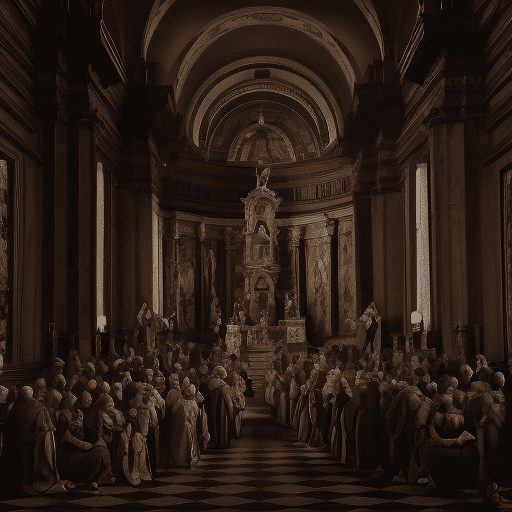
Roger Williams vs. the Puritans
Roger Williams vs. the Puritans
Last time in these pages, I mentioned Jonathan Winthrop’s “city on a hill” sermon, “that all the eyes of all people are upon us.” Winthrop considered himself a type of Moses who was leading his people, like Israel, to a new land, to build a new Jerusalem.
This is spelled out in John Barry’s 2012 book, “Roger Williams and the Creation of the American Soul: Church, State, and the Birth of Liberty.”
Winthrop and his fellow Puritans believed the city on a hill should have a church and a state, and that the two should work together, like left and right hands. In essence, Winthrop wanted to build a theocracy, in New England, in 1630.
The Puritans expected the magistrates to support the church by compelling people to attend worship, to recite oaths, to pray prescribed prayers, and to tithe.
Those who refused to obey their laws paid fines, were jailed, were locked into stocks, suffered the loss of their ears, were banished back to England, or were hung.
In turn, the clergymen were expected to support the magistrates by providing Biblical justification for dispensing punishment, and by confirming the magistrates’ edicts.
John Barry pointed out that one early Puritan to Boston disagreed with this well-oiled theocratic machine, and that was Roger Williams, an Anglican clergyman, who argued for a freer, more liberated, society.
Roger insisted that a wall should separate church from state, creating two spheres of authority, and that one sphere should not overlap or support the other.
Roger’s view was unique in Massachusetts, in England, in the entire world.
He arrived in Boston in 1631, and right away he stirred up controversy. The Puritans heard him out, but they thought his idea dangerous, that their plantation would fail if they implemented his idea.
He told his fellow Puritans that their government has no authority over the first four Ten Commandments, what he called the First Tablet: no other gods, no graven images, no swearing of oaths, no compelling attendance at worship on a Sabbath.
Those four commandments were private, between God and a man or a woman.
Roger explained that he believed that the state did have authority over the last six, the Second Tablet, because those pertain to human beings’ relationships with others.
Winthrop, the magistrates, and the clergyman in Boston could make no sense of this. Why, they wondered, would he divide the Ten Commandments into two tablets, and expect obedience to the second, but not the first.
Roger urged Massachusetts toward religious freedom, to a free conscience, where all can believe what they want and speak what they believe, without state interference.
A twentieth-century colonial American historian Perry Miller said that Roger Williams is “always there to remind Americans [to] no other conclusion but absolute religious freedom was feasible in this society.”
Out of fear of a loss of their power, the magistrates disagreed, brought Roger to a trial in October of 1635, and voted to banish him from Massachusetts. He fled into the wilderness in January of 1636, and alongside the Narragansett Bay began a new colony.
Rhode Island’s government implemented Roger’s idea, wrote freedom of conscience into its charter. Members of other religious faiths heard the welcome news and poured into the colony: Catholics, atheists, Quakers, Jews, Baptists, and others.
Roger welcomed them all. He disagreed with their religious faith, especially the Quakers, but he permitted them to worship as they wanted in Rhode Island, with no harassment or persecution from Rhode Island’s state government.
John Barry wrote, that then Rhode Island was the freest society in the known world.
KING LEAR
KING LEARKING LEAR by William H. Benson June 12, 2004 King Lear wanted to retire and divide his kingdom between his three daughters. As a pre-condition to what each would receive, he conducted a test, asking each how much they loved him. Because Regan and...
D-DAY
D-DAYD-DAY by William H. Benson June 3, 2004 It was 60 years ago this Sunday—on June 6, 1944—that D-Day for Operation Overlord began. From 600 warships and 4000 smaller vessels poured 176,000 troops onto the beaches at Normandy called Utah and Omaha. Like a...
AUGUSTINE ON MEMORY
AUGUSTINE ON MEMORYAUGUSTINE ON MEMORY by William H. Benson May 20, 2004 So much of what we know and do depends upon our memories. We are so accustomed to having at our fingertips the extraordinary power of memory that without it our lives as humans would not be...
SIGMUND FREUD
SIGMUND FREUDSIGMUND FREUD by William H. Benson May 6, 2004 Born May 6, 1856, Sigmund Freud was the medical doctor of Jewish descent in Vienna, Austria who sought to understand the riddle of how and why the human mind worked as it did. His ideas are today...
THE MARCH OF FOLLY
THE MARCH OF FOLLYTHE MARCH OF FOLLY by William H. Benson April 22, 2004 In her book The March of Folly, the historian Barbara Tuchman, identified four types of misgovernment: tyranny, excessive ambition, incompetence, and folly. The latter type she defined as...
ROGER WILLIAMS
ROGER WILLIAMSROGER WILLIAMS by William H. Benson April 8, 2004 By the New Style calendar he was born April 5, 1604, four hundred years ago this week. Scholars since have considered Roger Williams, the Puritan minister in early New England, a champion of freedom...
Older Posts
DANIEL BOORSTIN AND THE QUAKERS
DANIEL BOORSTIN AND THE QUAKERSDANIEL BOORSTIN AND THE QUAKERS by William H. Benson March 25, 2004 The historian and public servant Daniel Boorstin passed away earlier this month in Washington. He was eight-nine years old. In addition to teaching law for...
COMEDY AND TRAGEDY
COMEDY AND TRAGEDYCOMEDY AND TRAGEDY by William H. Benson March 11, 2004 Comedy is about getting the right guy with the right girl, and the play ends with a wedding. It is about light-hearted and romantic emotions, smiles and kisses. It is desire and...
KERRY AND BUSH
KERRY AND BUSHKERRY AND BUSH by William H. Benson February 26, 2004 Scandals, accusations, finger-pointing, denials, justifications, and dirt-digging—all seem to overshadow the run up to elections wherever and whenever across America, and the 2004 Presidential...
MARY TODD LINCOLN
MARY TODD LINCOLNMARY TODD LINCOLN by William H. Benson February 12, 2004 Their friends and family often wondered what they saw in each other. He was tall, 6’ 4”, gangly, ugly, poor, even-tempered, messy, poorly dressed, and given over to melancholy moods. She...
DON QUIXOTE
DON QUIXOTEDON QUIXOTE by William H. Benson January 29, 2004 The most well-remembered scene from Cervantes’s Don Quixote is the Man of La Mancha, a knight suited in steel armor, astride his horse in a full gallop, his lance tilted, in a full-throttled attack upon...
WINSTON CHURCHILL
WINSTON CHURCHILLWINSTON CHURCHILL by William H. Benson January 15, 2004 For Christmas this year I received two books, and coincidentally both were recent biographies on Winston Churchill. Considered the greatest Englishmen who has ever lived and also the...

One of University of Northern Colorado’s 2020 Honored Alumni
William H. Benson
Local has provided scholarships for history students for 15 years
A Sterling resident is among five alumni selected to be recognized this year by the University of Northern Colorado. Bill Benson is one of college’s 2020 Honored Alumni.
Each year UNC honors alumni in recognition for their outstanding contributions to the college, their profession and their community. This year’s honorees were to be recognized at an awards ceremony on March 27, but due to the COVID-19 outbreak that event has been cancelled. Instead UNC will recognize the honorees in the fall during homecoming Oct. 10 and 11……
Newspaper Columns

The Duodecimal System
For centuries, the ancient Romans calculated sums with their clunky numerals: I, V, X, L, C, D, and M; or one, five, ten, 50, 100, 500, and 1,000. They knew nothing better.

The Thirteenth Amendment
On Jan. 1, 1863, President Abraham Lincoln signed the Emancipation Proclamation, and by it, he declared that “all persons held as slaves” within the rebellious states “are and henceforward shall be free.” Lincoln’s Proclamation freed some 3.1 million slaves within the Confederacy.

The Fourteenth Amendment
After Congress and enough states ratified the thirteenth amendment that terminated slavery, Congress passed the Civil Rights Act of 1866. This law declared that “all people born in the United States are entitled to be citizens, without regard to race, color, or previous condition of slavery or involuntary servitude.” The Act equated birth to citizenship.

The New-York Packet and the Constitution
Jill Lepore, the Harvard historian, published her newest book a month ago, These Truths: A History of the United States. In a short introduction, she describes in detail the Oct. 30, 1787 edition of a semi-weekly newspaper, The New-York Packet.
Mr. Benson’s writings on the U.S. Constitution are a great addition to the South Platte Sentinel. Its inspiring to see the history of the highest laws of this country passed on to others.
– Richard Hogan
Mr. Benson, I cannot thank you enough for this scholarship. As a first-generation college student, the prospect of finding a way to afford college is a very daunting one. Thanks to your generous donation, my dream of attending UNC and continuing my success here is far more achievable
– Cedric Sage Nixon
Donec bibendum tortor non vestibulum dapibus. Cras id tempor risus. Curabitur eu dui pellentesque, pharetra purus viverra.
– Extra Times
FUTURE BOOKS
- Thomas Paine vs. George Whitefield
- Ralph Waldo Emerson vs. Joseph Smith
- William James vs. Mary Baker Eddy
- Mark Twain vs. Billy Graham
- Henry Louis Mencken vs. Jim Bakker
