
By William H. Benson
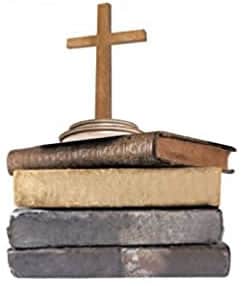
The Parallel Lives
Of The NOBLE AMERICAN RELIGIOUS THINKERS AND BELIEVERS:
Roger Williams VS. Cotton Mathers

NEW ARTICLES

War and peace in Ukraine
War and peace in Ukraine
On February 17, 2023, David Remnick of the New Yorker podcast interviewed Steven Kotkin, history professor at Stanford, and biographer of Joseph Stalin.
Kotkin said, “Let’s think of a house with ten rooms, and let’s say I barge in and take two of those rooms. I wreck those two rooms, and I also wreck your other eight rooms. You try to evict me, but I’m still there wrecking your entire house.
“You need your house. That’s where you live. You don’t have another house. Me, I’ve got another house, and my house has a thousand rooms. So, if I wreck your house, are you winning, or am I winning?”
On Friday, February 24, 2022, the world marked the one-year anniversary of Vladimir Putin’s invasion into Ukraine, in order, he said, “to de-militarize and de-Nazify Ukraine,” an inadequate or invalid reason, if not sheer propaganda.
Some argue that Putin’s true reasons were that he wanted to re-establish the old Soviet Union, or that he wanted to seize more land, or that he was terrified of a united Ukraine joining the European Union.
Whatever his reasons, Putin’s “special military operation” has turned into a tragedy.
Staggering for the Russians is the heavy loss of military equipment: 299 aircraft, 288 helicopters, 3381 tanks, 6615 armored combat vehicles, 5242 vehicles and fuel tankers, and 2037 tactical unmanned aircraft.
Yet, more tragic are the Russian army’s casualties: 148,130 military personnel. In February, the average number of Russian troops killed per day jumped to 842.
Putin’s draft now pulls poorly fed and barely trained conscripts from jails, mental health facilities, hospitals, and warm bodies off the streets, and hands them a gun, with an order to “march forward until they are killed.” This is a brutal, bloody war.
Millions of Ukrainians have fled, living miles from their wrecked country.
Kotkin says, that the war has revealed three pleasant surprises: “Ukraine’s strong resistance, Russia’s poor performance in battle, and the European Union’s unification.”
That the German government is about to send tanks to Ukraine must conjure up terror and nightmares among Russian governing officials and citizens.
Fresh in the Russian people’s collective memory are the 27 million Russian people who lost their lives in World War II, when the German Nazi military machine marched across Central Europe, deep into Russia, causing indescribable destruction.
Kotkin says that Zalensky and Ukrainian officials want three things before peace can happen: “captured Ukrainian territory returned to Ukraine, reparations for property damages, and a tribunal for war crimes.”
Kotkin points out, “that would mean the Ukrainians would have to take Moscow.”
Reparations alone are “estimated at $350 billion in U.S. dollars, when Ukraine’s GDP in 2021, prior to the war, was only $180 billion, just over half of the estimated cost.”
How can anyone stop this bloody war? How can anyone win a peace?
Some possibilities. Start small, with a cease fire for say, a day or a weekend. Draw on a map two red parallel battlelines, and call the land between them, a demilitarized zone. Both sides give up territory in exchange for something else that they want.
According to Kotkin, “a victory for Ukraine” would include entry or “accession into the European Union,” a condition that the Ukrainians crave.
In the podcast, David Remnick reminded Steven Kotkin of Sun Tzu’s quote. The ancient Chinese general said, “Build your opponent a golden bridge to retreat across.”
Kotkin said, “That would be great, but nothing like that is in sight now.”
What is in sight now is a wrecked house.
TUESDAY–SEPTEMBER 11, 2001
TUESDAY--SEPTEMBER 11, 2001TUESDAY--SEPTEMBER 11, 2001 by William H. Benson September 11, 2003 Last week Newsweek reported that Osama bin Laden, hiding in Afghanistan's Kunar province, spoke last January at the funeral of one of his daughters-in-law, who had died...
THE WILL POWER TO WIN
THE WILL POWER TO WINTHE WILL POWER TO WIN by William H. Benson August 28, 2003 The Sixties were years marked by two massive struggles: first, the Black Americans demanded equality and an end to discrimination and second, whether to fight or give up in Vietnam. ...
CALIFORNIA AND ILLEGAL ALIENS
CALIFORNIA AND ILLEGAL ALIENSCALIFORNIA AND ILLEGAL ALIENS by William H. Benson August 14,. 2003 By August 13, 1521 Cortez had effectively conquered the Aztec Indians in present-day Mexico City. He and his fellow conquistadors established a two-tiered class...
HERMAN MELVILLE’S MOBY DICK
HERMAN MELVILLE'S MOBY DICKHERMAN MELVILLE'S MOBY DICK by William H. Benson July 31, 2003 Unlike Jonah's great fish, the White Whale had a name--Moby Dick, and unlike Jonah's short story, Herman Melville wrote a lengthy novel. But like Jonah and the...
THEORIES
THEORIESTHEORIES by William H. Benson July 17, 2003 So much of how we, the members of the Western tradition, see and experience our world is derived from, or at least shaped by, the theories presented by a series of original thinkers. For example, Karl Marx,...
THOMAS PAINE
THOMAS PAINETHOMAS PAINE by William H. Benson July 3, 2003 Thomas Paine has never received a place equal among the other Revolutionary leaders, such as Benjamin Franklin, Samuel Adams, George Washington, John Adams, and Thomas Jefferson, even though Paine's...
Older Posts
STONEHENGE
STONEHENGESTONEHENGE by William H. Benson June 19, 2003 The ancient British built Stonehenge almost 4000 years ago, beginning around 1850 B.C. and completing it in 4 phases over some 300 years. Originally, 30 blocks of gray sandstone, each about 13 1/2 feet,...
THE SIX DAY WAR
THE SIX DAY WARTHE SIX DAY WAR by William H. Benson June 5, 2003 It began at 7:10 a.m., Monday morning, June 5, 1967 when the first of the Israeli fighter jets lifted off and headed toward Egypt, and by 7:30 a.m. some 200 aircraft were aloft. Their only goal was...
FIRST, BEST, AND GREATEST
FIRST, BEST, AND GREATESTFIRST, BEST, AND GREATEST by William H. Benson May 22, 2003 On May 21, 1927 Charles Lindbergh landed his aircraft, The Spirit of St. Louis, near Paris, France, where crowds mobbed his arrival, for his was the first solo airplane flight...
“WHAT SHOULD I DO WITH MY LIFE?”
"WHAT SHOULD I DO WITH MY LIFE?""WHAT SHOULD I DO WITH MY LIFE?" by William H. Benson May 8, 2003 Recently I read the new bestseller, What Should I Do With My Life?, by the young author Po Bronson. He let the word out that he wanted to meet people who had...
EAST VS. WEST
EAST VS. WESTEAST VS. WEST by William H. Benson April 24, 2003 "As far as the east is from the west," so the Scripture reads, and Rudyard Kipling wrote, "The East is the East, and the West is the West." Even though there exists much antagonism between the West...
THEODORE ROOSEVELT
THEODORE ROOSEVELTTHEODORE ROOSEVELT by William H. Benson April 10, 2003 Teddy Roosevelt had six kids--Alice by his first wife, and then five more--Teddy Jr., Kermit, Ethel, Archie, and Quentin, by his second wife, Edith. Four boys and two girls. A year after...

One of University of Northern Colorado’s 2020 Honored Alumni
William H. Benson
Local has provided scholarships for history students for 15 years
A Sterling resident is among five alumni selected to be recognized this year by the University of Northern Colorado. Bill Benson is one of college’s 2020 Honored Alumni.
Each year UNC honors alumni in recognition for their outstanding contributions to the college, their profession and their community. This year’s honorees were to be recognized at an awards ceremony on March 27, but due to the COVID-19 outbreak that event has been cancelled. Instead UNC will recognize the honorees in the fall during homecoming Oct. 10 and 11……
Newspaper Columns

The Duodecimal System
For centuries, the ancient Romans calculated sums with their clunky numerals: I, V, X, L, C, D, and M; or one, five, ten, 50, 100, 500, and 1,000. They knew nothing better.

The Thirteenth Amendment
On Jan. 1, 1863, President Abraham Lincoln signed the Emancipation Proclamation, and by it, he declared that “all persons held as slaves” within the rebellious states “are and henceforward shall be free.” Lincoln’s Proclamation freed some 3.1 million slaves within the Confederacy.

The Fourteenth Amendment
After Congress and enough states ratified the thirteenth amendment that terminated slavery, Congress passed the Civil Rights Act of 1866. This law declared that “all people born in the United States are entitled to be citizens, without regard to race, color, or previous condition of slavery or involuntary servitude.” The Act equated birth to citizenship.

The New-York Packet and the Constitution
Jill Lepore, the Harvard historian, published her newest book a month ago, These Truths: A History of the United States. In a short introduction, she describes in detail the Oct. 30, 1787 edition of a semi-weekly newspaper, The New-York Packet.
Mr. Benson’s writings on the U.S. Constitution are a great addition to the South Platte Sentinel. Its inspiring to see the history of the highest laws of this country passed on to others.
– Richard Hogan
Mr. Benson, I cannot thank you enough for this scholarship. As a first-generation college student, the prospect of finding a way to afford college is a very daunting one. Thanks to your generous donation, my dream of attending UNC and continuing my success here is far more achievable
– Cedric Sage Nixon
Donec bibendum tortor non vestibulum dapibus. Cras id tempor risus. Curabitur eu dui pellentesque, pharetra purus viverra.
– Extra Times
FUTURE BOOKS
- Thomas Paine vs. George Whitefield
- Ralph Waldo Emerson vs. Joseph Smith
- William James vs. Mary Baker Eddy
- Mark Twain vs. Billy Graham
- Henry Louis Mencken vs. Jim Bakker
