
By William H. Benson
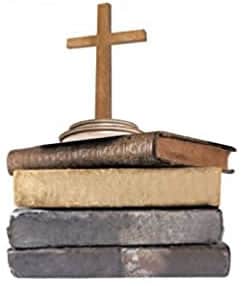
The Parallel Lives
Of The NOBLE AMERICAN RELIGIOUS THINKERS AND BELIEVERS:
Roger Williams VS. Cotton Mathers

NEW ARTICLES

St. Valentine’s Day / Presidents Day
We celebrated St. Valentine’s Day yesterday, February 14, a day when we reflect upon our good fortune that we have that special person in our life, our Valentine.
Next Monday, February 20, government officials grant us a holiday to consider the forty-five Presidents, all men. Because Grover Cleveland served two non-consecutive terms, officials count him twice, as #24 and #26. Thus, we give honor to forty-four men.
First President George Washington was born on February 11, 1731, by the Julian calendar, but after British officials adopted the Gregorian calendar in 1752, his official birthday was moved to February 22, 1732, a full year and eleven days later.
As far is known, Washington loved his wife Martha and was faithful to her. Throughout the American Revolutionary War, 1775-1783, he may have returned to their home in Mount Vernon, Virginia, once, in September of 1781, just prior to the final battle at Yorktown.
Martha though joined him often at the front lines, and then, years later, after George was elected President in 1786, they moved into the Macomb House in New York City, the seat of the Federal Government then, and remained there together for two four-year terms.
If George Washington had a prior Valentine, it was for Virginia, his first and constant love.
Second President John Adams loved Abigail his wife. There is no evidence of any mistress. John and Abigail wrote hundreds of letters to each other throughout their married life, whenever he was away. If John had a Valentine, it was for Independence from Great Britain.
Third President Thomas Jefferson is a more complicated enigma.
He married Martha Skelton, on January 1, 1772, and over the next ten years she gave birth to six children, but just two lived, Martha and Maria. The pregnancies weakened Martha’s body and contributed to her premature passing on September 6, 1782, at the age of thirty-three.
Jefferson was overcome with deep sorrow. Locked in his room, over several days, the future President paced the floor, until his grief began to subside. His daughter Martha wrote, “The violence of his emotion. To this day I cannot describe it to myself.”
Much has been written in recent years about the relationship between Thomas Jefferson and his slave Sally Hemings, after his wife’s passing. Sally also gave birth to six children. What is odd is that Jefferson’s wife Martha and Sally shared the same dad, and thus were half-sisters.
You can read how the historian Fawn Brodie sifted through the data in her 1974 book, Thomas Jefferson, An Intimate History, or how Annette Gordon-Reed did the same in her 2009 book, The Hemingses of Monticello: An American Family.
The two historians, and others, concluded that Thomas Jefferson most likely took a mistress, a young biracial slave girl named Sally Hemings, an example of “the South’s culture, that of immense hypocrisy, and terrific moral problems, not easily solved.” She was his Valentine.
Fourth President James Madison was devoted to his wife Dolley. Raised a Quaker, she displayed a happy personality and a warm heart. “To this day she remains one of the best known and best loved women of the White House.” In Dolley, James won a Valentine.
Sixteenth President Abraham Lincoln was born on February 12, 1809. He and Mary Todd, his wife, shared one thing, their joint ambition for him to attain the Presidency, and that they did.
However, their differences were well defined. His best quality was his sense of humor that he used to disarm his enemies. He failed though with Mary Todd, who had no sense of humor.
Of her husband, she was bitter and said, “He is of no account when he is at home. He never does anything except to warm himself and read. He never went to the market in his life. I must look after all that. He is the most useless, good-for-nothing man on earth.”
It is no wonder that he said, “Most folks are as happy as they make up their minds to be.”
If Lincoln ever had a Valentine, it was his love for his sons and his love for the Union.
If a president can win and retain a sweet Valentine, it helps to ease the burdens of the job.
STONEHENGE
STONEHENGESTONEHENGE by William H. Benson June 19, 2003 The ancient British built Stonehenge almost 4000 years ago, beginning around 1850 B.C. and completing it in 4 phases over some 300 years. Originally, 30 blocks of gray sandstone, each about 13 1/2 feet,...
THE SIX DAY WAR
THE SIX DAY WARTHE SIX DAY WAR by William H. Benson June 5, 2003 It began at 7:10 a.m., Monday morning, June 5, 1967 when the first of the Israeli fighter jets lifted off and headed toward Egypt, and by 7:30 a.m. some 200 aircraft were aloft. Their only goal was...
FIRST, BEST, AND GREATEST
FIRST, BEST, AND GREATESTFIRST, BEST, AND GREATEST by William H. Benson May 22, 2003 On May 21, 1927 Charles Lindbergh landed his aircraft, The Spirit of St. Louis, near Paris, France, where crowds mobbed his arrival, for his was the first solo airplane flight...
“WHAT SHOULD I DO WITH MY LIFE?”
"WHAT SHOULD I DO WITH MY LIFE?""WHAT SHOULD I DO WITH MY LIFE?" by William H. Benson May 8, 2003 Recently I read the new bestseller, What Should I Do With My Life?, by the young author Po Bronson. He let the word out that he wanted to meet people who had...
EAST VS. WEST
EAST VS. WESTEAST VS. WEST by William H. Benson April 24, 2003 "As far as the east is from the west," so the Scripture reads, and Rudyard Kipling wrote, "The East is the East, and the West is the West." Even though there exists much antagonism between the West...
THEODORE ROOSEVELT
THEODORE ROOSEVELTTHEODORE ROOSEVELT by William H. Benson April 10, 2003 Teddy Roosevelt had six kids--Alice by his first wife, and then five more--Teddy Jr., Kermit, Ethel, Archie, and Quentin, by his second wife, Edith. Four boys and two girls. A year after...
Older Posts
ROBERT FROST
ROBERT FROSTROBERT FROST by William H. Benson March 27, 2003 "When April with his showers hath pierced the drought Of March with sweetness to the very root, And flooded every vein with liquid power That of its strength engendereth the flower."...
LABELS
LABELSLABELS by William H. Benson February 27, 2003 In Shakespeare's King Richard II Henry of Bolingbroke tried out various labels to discribe his grab for England's crown. Was it a deposition, in that he was removing Richard from the throne? Or was Richard...
JACK BENNY
JACK BENNYJACK BENNY by William H. Benson February 13, 2003 "I was seventeen years old the first time I saw Jack," Johnny Carson said. "I hitchhiked to California, and went to see one of his radio show tapings at CBS. I was fresh out of high school, and about...
SOLITUDE
SOLITUDESOLITUDE by William H. Benson January 30, 2003 In the book Dances with Wolves Lieutenant Dunbar finds himself alone at Fort Sedgewick, abandoned and forgotten by his superior officers and fellow cavalrymen. He had his horse Cisco, and occasionally...
REPUBLIC OR EMPIRE
REPUBLIC OR EMPIREREPUBLIC OR EMPIRE by William H. Benson January 16, 2003 George Washington never delivered his Farewell Address. Instead, he had it printed on September 19, 1796, and in it he said, "Citizens by birth or choice of a common country, that country...
ISAAC ASIMOV
ISAAC ASIMOVISAAC ASIMOV by William H. Benson January 2, 2003 Isaac Asimov often told the story about the day he met with one of his professors, Joseph Mayer, to discuss the low grade that the professor had given him on a lab report. Dr. Mayer looked at the...

One of University of Northern Colorado’s 2020 Honored Alumni
William H. Benson
Local has provided scholarships for history students for 15 years
A Sterling resident is among five alumni selected to be recognized this year by the University of Northern Colorado. Bill Benson is one of college’s 2020 Honored Alumni.
Each year UNC honors alumni in recognition for their outstanding contributions to the college, their profession and their community. This year’s honorees were to be recognized at an awards ceremony on March 27, but due to the COVID-19 outbreak that event has been cancelled. Instead UNC will recognize the honorees in the fall during homecoming Oct. 10 and 11……
Newspaper Columns

The Duodecimal System
For centuries, the ancient Romans calculated sums with their clunky numerals: I, V, X, L, C, D, and M; or one, five, ten, 50, 100, 500, and 1,000. They knew nothing better.

The Thirteenth Amendment
On Jan. 1, 1863, President Abraham Lincoln signed the Emancipation Proclamation, and by it, he declared that “all persons held as slaves” within the rebellious states “are and henceforward shall be free.” Lincoln’s Proclamation freed some 3.1 million slaves within the Confederacy.

The Fourteenth Amendment
After Congress and enough states ratified the thirteenth amendment that terminated slavery, Congress passed the Civil Rights Act of 1866. This law declared that “all people born in the United States are entitled to be citizens, without regard to race, color, or previous condition of slavery or involuntary servitude.” The Act equated birth to citizenship.

The New-York Packet and the Constitution
Jill Lepore, the Harvard historian, published her newest book a month ago, These Truths: A History of the United States. In a short introduction, she describes in detail the Oct. 30, 1787 edition of a semi-weekly newspaper, The New-York Packet.
Mr. Benson’s writings on the U.S. Constitution are a great addition to the South Platte Sentinel. Its inspiring to see the history of the highest laws of this country passed on to others.
– Richard Hogan
Mr. Benson, I cannot thank you enough for this scholarship. As a first-generation college student, the prospect of finding a way to afford college is a very daunting one. Thanks to your generous donation, my dream of attending UNC and continuing my success here is far more achievable
– Cedric Sage Nixon
Donec bibendum tortor non vestibulum dapibus. Cras id tempor risus. Curabitur eu dui pellentesque, pharetra purus viverra.
– Extra Times
FUTURE BOOKS
- Thomas Paine vs. George Whitefield
- Ralph Waldo Emerson vs. Joseph Smith
- William James vs. Mary Baker Eddy
- Mark Twain vs. Billy Graham
- Henry Louis Mencken vs. Jim Bakker
