
By William H. Benson
The Parallel Lives
Of The NOBLE AMERICAN RELIGIOUS THINKERS AND BELIEVERS:
Roger Williams VS. Cotton Mathers

NEW ARTICLES
Profiles in Courage
Profiles in Courage
John F. Kennedy served in the U. S. Congress for fourteen years, from 1947 until 1960.
Born in Brookline, Massachusetts, JFK was first elected to the House of Representatives in 1946, and he stayed there until 1952, a total of six years. In 1952, he ran for Senate, won the election and stayed there from 1953 to 1960, a total of eight years.
He was elected President of the United States in November 1960, and in January of 1961, he and his wife Jackie, and their two children, Caroline and John, Jr., moved into the White House, where he served three years as President, until his life ended on November 22, 1963.
Takeaways from his career. JFK never lost an election, although the presidential election in 1960, Kennedy vs. Nixon, was one of the closest ever. Nixon chose to concede rather than call for a recount.
Second, when still young, JFK enjoyed rare political success. He was twenty-nine when first elected to the House, thirty-six when elected to the Senate, and forty-three when elected President.
Today, we remember him as a former President, but he was also a former long-time Congressman.
In 1954, when in the Senate, Kennedy endured a second back surgery, an ailment that carried over from his days playing football at Harvard College. The surgery though failed to diminish his pain.
During his leave of absence from the Senate chamber, he came across a quote from Herbert Agar’s book, The Price of Union, about John Quincy Adams’s courage when he served in Congress.
Political courage had long intrigued Kennedy. During his senior year at Harvard College, he wrote his dissertation about “the failure of British political leaders in the 1930’s to oppose popular resistance to rearming, leaving the country ill-prepared for World War II.”
A publisher published that thesis under the title Why England Slept in 1940, and 80,000 copies sold.
Kennedy showed that quote from Herbert Agar’s book to his speechwriter Ted Sorensen, and asked him to find other examples of Senators, who had displayed unusual political courage at crucial times in their careers. Sorensen came back with eight examples.
In addition to John Quincy Adams of Massachusetts, Sorensen included Daniel Webster also of Massachusetts, Thomas Hart Benton of Missouri, Sam Houston of Texas, Edmund G. Ross of Kansas, Lucius Lamar of Mississippi, George Norris of Nebraska, and Robert Taft of Ohio.
Although Ted Sorensen wrote the book’s first draft, Kennedy’s name appeared on the book’s title page as author. Profiles in Courage was a best-seller and won the Pulitzer Prize for Biography in 1957.
Years later, in 1989, the Kennedy family established the “Profiles in Courage” prize, and the next year, prize officials named their first recipient, Carl Elliott, Sr.
In 1999, John McCain received the award, Gerald Ford in 2001, Ted Kennedy in 2009, George H. W. Bush in 2014, Barack Obama in 2017, Nancy Pelosi in 2019, and Mitt Romney in 2021.
Officials defended that last selection, saying, “Romney was the first Senator to have ever voted to convict a President of his own party. Senator Mitt Romney’s courageous stand was historic.”
In May of 2022, prize officials, for the first time, named five individuals: Volodymyr Zelenskyy, President of Ukraine; Liz Cheney, now a former Congresswoman from Wyoming; Jocelyn Benson, (no relation), Michigan’s Secretary of State; Russell Bowers, Arizona’s House Speaker; and Wandrea’ ArShaye Moss, a former elections department employee in Fulton County, Georgia.
Officials gathered the five under the collective title, “Defending Democracy at Home and Abroad.”
Zelenskyy united Ukraine’s citizens to withstand Putin’s aggressive strike at their homeland.
After the 2020 election, Liz Cheney urged “President Trump to respect the rulings of the courts and his oath of office, and to support the peaceful transfer of power. When Trump rejected the 2020 election’s results, she broke with her party, urged fidelity to the Constitution, and stood her ground.”
“Jocelyn Benson, Michigan’s chief elections officer, also did not waver, but defended the will of Michigan voters and assured them that she would protect and defend Michigan’s vote.” As a result of her stand, “she received threats and harassment from then-President Trump and his allies.”
“Russell Bowers endured persistent harassment and intimidation tactics from Trump supporters, and survived an attempt to recall him from Arizona’s legislature.”
Wandrea’ ArShaye Moss “became the target of a vicious smear campaign by then-President Trump and his allies. They falsely accused her of processing fake ballots for Biden in the late-night hours of Election Day. Moss then received so many death threats and racist taunts that she went into hiding.”
For Liz Cheney, the persecution continued after the 2020 election.
“Trump made it his personal mission to defeat her in the August 2022 primary, throwing his weight behind a handpicked Republican opponent, Harriet Hageman.” “Hageman won. Cheney conceded. It was the way democracy worked, once upon a time in America.” She leaves Congress this month.
Conceding an election without drama and theatrics is a prime example of a profile in courage.
PRESIDENTIAL PARDONS
PRESIDENTIAL PARDONSPRESIDENTIAL PARDONS by William H. Benson December 19, 2002 Late on the evening of January 19, 2001, Bill Clinton threw caution and counsel aside and signed his name to a document that granted a presidential pardon to Marc Rich, a fugitive...
WALTER DISNEY
WALTER DISNEYWALTER DISNEY by William H. Benson December 5, 2002 Time's critics say that the new Lord of the Rings movie, The Two Towers, is even better than last year's first installment, The Fellowship of the Ring, a film that I did enjoy. Although fantasy is...
LEE HARVEY OSWALD
LEE HARVEY OSWALDLEE HARVEY OSWALD by William H. Benson November 21, 2002 In the thirty-nine years since the assassination of President John F. Kennedy, the American public has had a difficult time accepting the idea that Lee Harvey Oswald acted alone. The...
KARL MARX
KARL MARXKARL MARX by William H. Benson November 7, 2002 At the age of thirty, Karl Marx fled his native Prussia following the collapse of the 1848 Revolution and migrated to London, where he chose to live the next thirty-five years of his life. There, in...
DUALISM AND VOLTAIRE
DUALISM AND VOLTAIREDUALISM AND VOLTAIRE by William H. Benson October 24, 2002 In 1727 the French authorities banished the philosopher, Voltaire, from his native Catholic France, and so he ventured to Protestant England. What he saw there astonished him, for the...
THE OTHER SIDE OF 1492
THE OTHER SIDE OF 1492THE OTHER SIDE OF 1492 by William H. Benson October 12, 2002 On January 1 and 2, 1492 the last of the Muslim officials abandoned Granada and chose permanent exile in North Africa. All of what is now modern-day Spain was from then on ruled...
Older Posts
WOODROW WILSON
WOODROW WILSONWOODROW WILSON by William H. Benson September 26, 2002 Woodrow Wilson wanted peace. The Great War in Europe had claimed millions of lives, and it was Wilson's dream to create a lasting peace, a world without war. And so he offered Fourteen Points...
CASUALTIES OF WAR
CASUALTIES OF WARCASUALTIES OF WAR by William H. Benson September 12, 2002 On Sunday morning, December 7, 1941, the Japanese airforce attacked and bombed the U.S. military base at Pearl Harbor, killing 2403 Americans, wounding another 1178, and destroying 169...
READING
READINGREADING by William H. Benson August 29, 2002 Last week the columnist Thomas Sowell in two columns pointed out what he considers the obvious failings of America's schools: that American students repeatedly place at or near the bottom on international tests,...
WOODSTOCK
WOODSTOCKWOODSTOCK by William H. Benson August 15, 2002 On the weekend of August 15-18, 1969 Max Yasgur's 37-acre alfalfa field near Bethel, New York in the Catskills was converted into the Woodstock Music and Art Fair. The town of Woodstock, New York had...
“WILD BILL” HICKOK
"WILD BILL" HICKOK"WILD BILL" HICKOK by William H. Benson August 1, 2002 Unlike the Lone Ranger or Roy Rogers or Gene Autry or the myriad other fictionalized Westerners who rode horses and were quick with pistols, Wild Bill Hickok was an actual person who lived...
TRAGEDY
TRAGEDYTRAGEDY by William H. Benson July 18, 2002 On July 18, 64 A.D. a fire started in the Circus Maximus in the city of Rome that raged for the next nine days and laid half of Rome in ruins. The story goes that Nero, the emperor, from a safe place had watched...
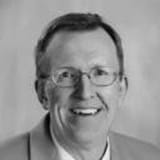
One of University of Northern Colorado’s 2020 Honored Alumni
William H. Benson
Local has provided scholarships for history students for 15 years
A Sterling resident is among five alumni selected to be recognized this year by the University of Northern Colorado. Bill Benson is one of college’s 2020 Honored Alumni.
Each year UNC honors alumni in recognition for their outstanding contributions to the college, their profession and their community. This year’s honorees were to be recognized at an awards ceremony on March 27, but due to the COVID-19 outbreak that event has been cancelled. Instead UNC will recognize the honorees in the fall during homecoming Oct. 10 and 11……
Newspaper Columns

The Duodecimal System
For centuries, the ancient Romans calculated sums with their clunky numerals: I, V, X, L, C, D, and M; or one, five, ten, 50, 100, 500, and 1,000. They knew nothing better.

The Thirteenth Amendment
On Jan. 1, 1863, President Abraham Lincoln signed the Emancipation Proclamation, and by it, he declared that “all persons held as slaves” within the rebellious states “are and henceforward shall be free.” Lincoln’s Proclamation freed some 3.1 million slaves within the Confederacy.

The Fourteenth Amendment
After Congress and enough states ratified the thirteenth amendment that terminated slavery, Congress passed the Civil Rights Act of 1866. This law declared that “all people born in the United States are entitled to be citizens, without regard to race, color, or previous condition of slavery or involuntary servitude.” The Act equated birth to citizenship.

The New-York Packet and the Constitution
Jill Lepore, the Harvard historian, published her newest book a month ago, These Truths: A History of the United States. In a short introduction, she describes in detail the Oct. 30, 1787 edition of a semi-weekly newspaper, The New-York Packet.
Mr. Benson’s writings on the U.S. Constitution are a great addition to the South Platte Sentinel. Its inspiring to see the history of the highest laws of this country passed on to others.
– Richard Hogan
Mr. Benson, I cannot thank you enough for this scholarship. As a first-generation college student, the prospect of finding a way to afford college is a very daunting one. Thanks to your generous donation, my dream of attending UNC and continuing my success here is far more achievable
– Cedric Sage Nixon
Donec bibendum tortor non vestibulum dapibus. Cras id tempor risus. Curabitur eu dui pellentesque, pharetra purus viverra.
– Extra Times
FUTURE BOOKS
- Thomas Paine vs. George Whitefield
- Ralph Waldo Emerson vs. Joseph Smith
- William James vs. Mary Baker Eddy
- Mark Twain vs. Billy Graham
- Henry Louis Mencken vs. Jim Bakker
