
By William H. Benson
The Parallel Lives
Of The NOBLE AMERICAN RELIGIOUS THINKERS AND BELIEVERS:
Roger Williams VS. Cotton Mathers

NEW ARTICLES
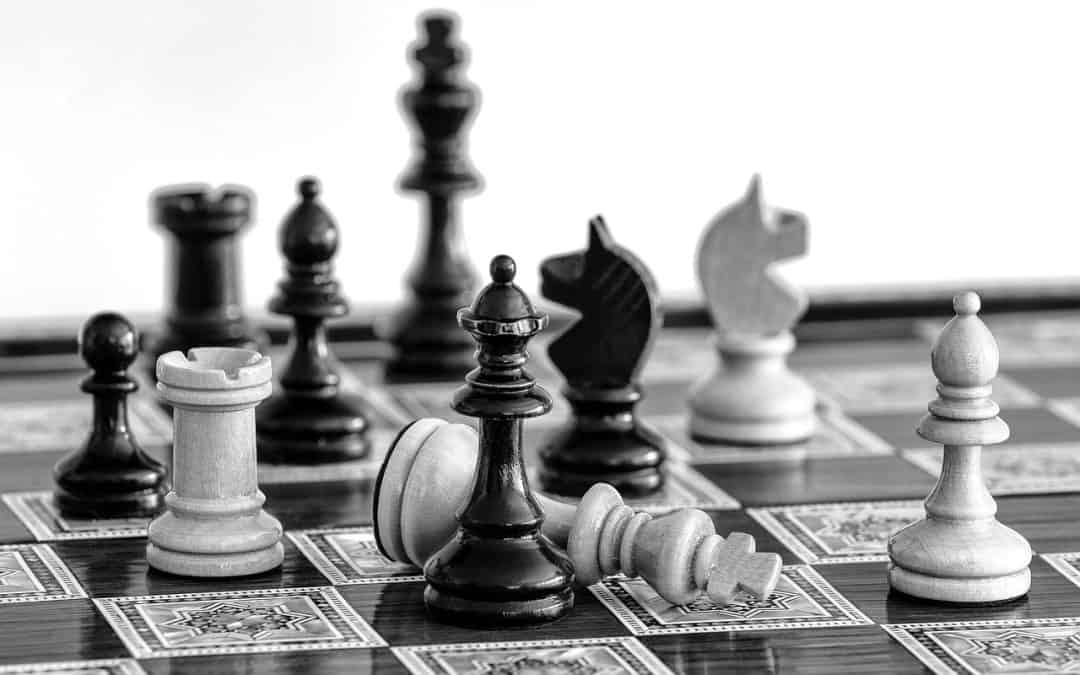
Shortcuts to winning
How does a player cheat at chess?
When playing online chess at home, on his or her computer, a cheater receives instructions, hints, and directions from a second computer, standing beside the first, that contains chess analysis software.
But how does a player cheat at chess over-the-board, or in-person? Often, the cheater will work with an associate, who will access that same software on a hand-held device and will then signal to the player the better moves. Or a cheater hides a cell phone in the restroom, and takes frequent breaks.
Magnus Carlsen, a 32-year-old Norwegian, and reigning World Chess Champion since 2013, lost a game to a brash 19-year-old American, Hans Niemann, on September 4, at the Sinquefield Cup in St. Louis. The next day Carlsen tweeted that he would withdraw from the event.
Then, on September 27, Carlsen issued a statement to the Chess world.
“I believe that cheating in chess is a big deal and an existential threat to the game. I believe that Niemann has cheated more than he has publicly admitted. Throughout our game in the Sinquefield Cup, I had the impression he wasn’t tense or even fully concentrating on the game in critical positions.
“We must do something about cheating, and for my part going forward, I don’t want to play against people who have cheated repeatedly in the past, because I don’t know what they are capable of.”
The scandal prompted Chess.com to restrict Niemann from their website, and also from playing in the Chess.com Global Championship tournament in the fall of 2022.
Hans Niemann admits he has cheated twice, both online, once when he was twelve, and again when he was sixteen, but he declares he is innocent now. He has filed a $100 million defamation lawsuit.
How did Hans Niemann cheat, if he did?
One possibility. Last July, a computer programmer named James Stanley demonstrated that he could cheat at chess by communicating with an associate through vibrations transmitted into his shoes.
If indeed Niemann cheated, the truth as to how he cheated will come out someday.
How did Lance Armstrong cheat at bicycle racing to win seven Tour de France races? He would “remove his blood prior to a race, store it in a fridge, and then transfuse it back into his body during the race. He also took testosterone to aid his recovery between races.” Blood doping gave him an edge.
How did Bernard Maddoff cheat? The short answer: he ran a Ponzi scheme. Like Charles Ponzi, namesake of the scheme, he paid off old customers with proceeds from new customers.
Religious organizations are not exempt. In the 1980s, Jim Bakker overbooked hotel reservations at his “Heritage USA Theme Park, by selling tens of thousands of lifetime memberships that entitled buyers to an annual three-night stay at a single 500-room hotel,” close to an impossibility.
Bakker was indicted on twenty-four counts of mail fraud, wire fraud, and conspiracy. Following a jury’s guilty verdict on all counts, Judge Robert Potter sentenced Bakker to 45 years in prison, and a $500,000 fine. After his sentence was reduced twice, he served 4 1⁄2 years in prison and was released.
This year marks the fiftieth anniversary of the Watergate burglary, which occurred on June 17, 1972. According to Michael W. Pregrine, a Chicago attorney, this crime “exposed the capacity of the most senior of leaders to place ambition and expediency before individual responsibility and morality.”
“These scandals were the byproduct of human failings that never seem to go out of style: unbridled personal ambition, impulsive loyalties, pragmatic ruthlessness, and the absence of a moral compass within the organization.”
This week marks the second anniversary of January 6, 2021, the day when a mob stormed the Capitol building, at an hour when legislators were meeting to certify the 2020 election returns.
Each of the rioters believed and then acted upon Donald Trump’s claim, without evidence, that he had won the election, but that others had stolen it from him. He told the crowd that day, “We will stop the steal. We won the election. We won it by a landslide. This was not a close election.”
His words incited a riot inside the Capitol. Bill Barr, Trump’s attorney general, had told the President that there was no evidence for election fraud, and yet he refused to accept that advice.
“How to strangle democracy while pretending to engage in it?” The answer: dispatch burglars into the opposing party’s campaign headquarters at night, and then try to cover it up, Nixon’s plan; or make up a story about voter fraud, and incite a riot, Trump’s plan.
On December 22, 2022, the thirteen members of the January 6 committee released their 845-page report, and in it, they made four recommendations.
“The former president should be prosecuted for assisting in an insurrection, conspiracy to defraud the United States, making false statements to the federal government, and for obstructing an official congressional proceeding.” It is now up to Jack Smith, special counsel for the Department of Justice.
A game of chess, a bicycle race, a business, a theme park, and two elections, shortcuts to winning.
Bill Benson, of Sterling, is a dedicated historian.
WOODROW WILSON
WOODROW WILSONWOODROW WILSON by William H. Benson September 26, 2002 Woodrow Wilson wanted peace. The Great War in Europe had claimed millions of lives, and it was Wilson's dream to create a lasting peace, a world without war. And so he offered Fourteen Points...
CASUALTIES OF WAR
CASUALTIES OF WARCASUALTIES OF WAR by William H. Benson September 12, 2002 On Sunday morning, December 7, 1941, the Japanese airforce attacked and bombed the U.S. military base at Pearl Harbor, killing 2403 Americans, wounding another 1178, and destroying 169...
READING
READINGREADING by William H. Benson August 29, 2002 Last week the columnist Thomas Sowell in two columns pointed out what he considers the obvious failings of America's schools: that American students repeatedly place at or near the bottom on international tests,...
WOODSTOCK
WOODSTOCKWOODSTOCK by William H. Benson August 15, 2002 On the weekend of August 15-18, 1969 Max Yasgur's 37-acre alfalfa field near Bethel, New York in the Catskills was converted into the Woodstock Music and Art Fair. The town of Woodstock, New York had...
“WILD BILL” HICKOK
"WILD BILL" HICKOK"WILD BILL" HICKOK by William H. Benson August 1, 2002 Unlike the Lone Ranger or Roy Rogers or Gene Autry or the myriad other fictionalized Westerners who rode horses and were quick with pistols, Wild Bill Hickok was an actual person who lived...
TRAGEDY
TRAGEDYTRAGEDY by William H. Benson July 18, 2002 On July 18, 64 A.D. a fire started in the Circus Maximus in the city of Rome that raged for the next nine days and laid half of Rome in ruins. The story goes that Nero, the emperor, from a safe place had watched...
Older Posts
HENRY DAVID THOREAU
HENRY DAVID THOREAUHENRY DAVID THOREAU by William H. Benson July 4, 2002 On July 4, 1845 Henry David Thoreau declared his independence and moved into a cabin beside Walden Pond. Almost 28 years old, for the next two years and two months he lived at Walden Pond...
JAMESTOWN
JAMESTOWNJAMESTOWN by William H. Benson June 20, 2002 By any definition of the word, Jamestown was an abysmal failure. Indian attacks, fires, famine, and disease all contributed to an exceedingly high mortality rate that killed off most of the early settlers. ...
THE PENTAGON PAPERS
THE PENTAGON PAPERSTHE PENTAGON PAPERS by William H. Benson June 6, 2002 What exactly were the Pentagon Papers? In 1967 when Lyndon Johnson was President and the fighting in Vietnam raged on fierce and endless, then Secretary of Defense Robert S. McNamara...
1972 HIGH SCHOOL GRADUATION
1972 HIGH SCHOOL GRADUATION1972 HIGH SCHOOL GRADUATION by William H. Benson May 23, 2002 In February of 1972 President Richard Nixon made his historic trip to China, and then in May he visited the Russians in Red Square. On March 30, 1972 the North...
REBEKAH BAINES JOHNSON
REBEKAH BAINES JOHNSON REBEKAH BAINES JOHNSON by William H. Benson May 9, 2002 Last month Master of the Senate, Robert Caro's third volume in his series Years of Lyndon Johnson, arrived at bookstores, exactly twenty years after he published his first volume The...
THE LIBRARY
THE LIBRARYTHE LIBRARY by William H. Benson April 25, 2002 Although technically under Congressional authority, the Library of Congress serves as our nation's national library. Its contents include books in all languages, a perfect Gutenberg Bible, Presidential...
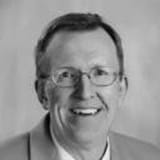
One of University of Northern Colorado’s 2020 Honored Alumni
William H. Benson
Local has provided scholarships for history students for 15 years
A Sterling resident is among five alumni selected to be recognized this year by the University of Northern Colorado. Bill Benson is one of college’s 2020 Honored Alumni.
Each year UNC honors alumni in recognition for their outstanding contributions to the college, their profession and their community. This year’s honorees were to be recognized at an awards ceremony on March 27, but due to the COVID-19 outbreak that event has been cancelled. Instead UNC will recognize the honorees in the fall during homecoming Oct. 10 and 11……
Newspaper Columns

The Duodecimal System
For centuries, the ancient Romans calculated sums with their clunky numerals: I, V, X, L, C, D, and M; or one, five, ten, 50, 100, 500, and 1,000. They knew nothing better.

The Thirteenth Amendment
On Jan. 1, 1863, President Abraham Lincoln signed the Emancipation Proclamation, and by it, he declared that “all persons held as slaves” within the rebellious states “are and henceforward shall be free.” Lincoln’s Proclamation freed some 3.1 million slaves within the Confederacy.

The Fourteenth Amendment
After Congress and enough states ratified the thirteenth amendment that terminated slavery, Congress passed the Civil Rights Act of 1866. This law declared that “all people born in the United States are entitled to be citizens, without regard to race, color, or previous condition of slavery or involuntary servitude.” The Act equated birth to citizenship.

The New-York Packet and the Constitution
Jill Lepore, the Harvard historian, published her newest book a month ago, These Truths: A History of the United States. In a short introduction, she describes in detail the Oct. 30, 1787 edition of a semi-weekly newspaper, The New-York Packet.
Mr. Benson’s writings on the U.S. Constitution are a great addition to the South Platte Sentinel. Its inspiring to see the history of the highest laws of this country passed on to others.
– Richard Hogan
Mr. Benson, I cannot thank you enough for this scholarship. As a first-generation college student, the prospect of finding a way to afford college is a very daunting one. Thanks to your generous donation, my dream of attending UNC and continuing my success here is far more achievable
– Cedric Sage Nixon
Donec bibendum tortor non vestibulum dapibus. Cras id tempor risus. Curabitur eu dui pellentesque, pharetra purus viverra.
– Extra Times
FUTURE BOOKS
- Thomas Paine vs. George Whitefield
- Ralph Waldo Emerson vs. Joseph Smith
- William James vs. Mary Baker Eddy
- Mark Twain vs. Billy Graham
- Henry Louis Mencken vs. Jim Bakker
