Select Page

Learning Methods

May is for graduations, for ceremonies and parties. Some high school graduates will give up on further formal education and instead will enter straight into the work force. Others will pursue a challenging course of study at a university: mathematics, science, history, English, or business.

Whichever course a young person chooses, learning should be and can be a life-long process.

In recent days, I came across a 2016 book, by Anders Ericsson, “Peak: Secrets from the New Science of Expertise.” In it, Ericsson, tells the story of how Benjamin Franklin played chess all his life, and yet he never became very good, even though he played thousands of hours.

Ericsson wrote, “This failing was a source of great frustration to Franklin, but he had no idea why he couldn’t get better.” Ericsson explained, “He never pushed himself, never got out of his comfort zone, never put in the hours of ‘deliberate practice’ it would take to improve.”

A search reveals the following for would-be top chess players. Learn to play a series of moves in response to however your opponent opens. Control the center. Develop your pieces. Castle in the first ten moves. Learn an end game with just a rook and a pawn.

Ericsson said that top players recognize patterns of chess pieces at a glance. “They are old friends. These positions are called ‘chunks,’ that they hold in reserve in long-term memory.”

In addition, Franklin often read a daily magazine called the “Spectator,” that Joseph Addison and Sir Richard Steele wrote. Because Franklin admired those two writers’ literary skills, he set for himself a course of deliberate practice.

On paper he copied down their sentences, broke them apart, mixed up the words, turned them into verse, into poetry, and then re-assembled them. He then compared his sentences with theirs.

Whereas Franklin failed to make much headway with chess, he became a first-rate writer.

A question: Why is it that Asian students win the top awards in mathematics competitions?

A search reveals certain reasons. First, those students spend weeks and even months re-learning the basic fundamentals of fractions, multiplication tables, and long division.

Teachers insist that students solve a problem three ways. For example, to solve a quadratic equation, they will use factorization, the quadratic formula, and completing the square.

Teacher insist that their students keep a mathematics notebook where they solve their assigned problems, rather than on random sheets of paper. They call errors “feedback,” rather than “mistakes,” and they note those mistakes in a special section inside their notebook.

Asian students have frequent timed practices, fifteen questions in ten minutes. Teachers allow Asian students to teach others in the classroom. Because they study mathematics every day, the Asian students’ minds are directed to think often in terms of numbers, processes, solutions.

In a 1989 scholarly article, that Allan Collins, John Seely Brown, and Susan E. Brown wrote, “Cognitive Apprenticeship: Teaching the Crafts of Reading, Writing, and Mathematics,” its three authors presented six methods for an effective apprenticeship.

First is “modeling.” Students watch an expert perform a skill. Second is “coaching.” The expert offers hints and challenges, as the students replicate that skill. Third is “scaffolding.” The expert provides formulas, steps, or equations that guide the students.

Fourth is “articulation.” The students explain their thoughts about the skill. Fifth is “reflection.” The students compare their understanding with those of the expert. Sixth is “exploration.” The students seek out more problems to solve.

The goal is to highlight a practical thinking process.

Best wishes to this year’s crop of graduates. You have choices: deliberate practice and the science of expertise, or cognitive apprenticeship.

Five Useful Books

Take a break from the present, and consider the better books from the past.

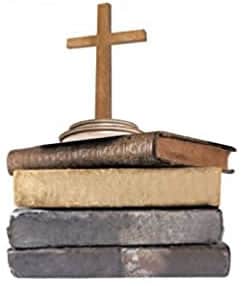
Of all the books published since the days of the ancients, I consider five most useful: Fibonacci’s “Liber Abaci,” Isaac Newton’s “Principia Mathematica,” Charles Darwin’s “On the Origin of the Species,” the “King James Bible,” and William Shakespeare’s plays.

Each added to the world’s body of knowledge an immeasurable amount that affects our modern lives, even yet today.

Leonard de Pisa, or aka “Fibonacci,” was born in Italy in 1170. His father, a customs agent, took Leonardo to Algiers, and there in school he learned the common people’s math skills.

In 1202, he published his book, “Liber Abaci,” and in it he introduced the Hindu-Arabic numeral system of 0 to 9, suggesting that it was superior to Europe’s Roman numerals. He also described methods for converting currencies, for calculating interest, and using fractions.

Everyday, you and I rely upon Fibonacci’s ideas and math tricks.

Isaac Newton—an Englishman, scientist, and mathematician—published his “Principia Mathematica,” on July 5, 1687. Written in Latin, it introduced to the world laws of motion and gravitation. By them, Newton showed how planets and comets cycle through space.

A foundation for modern physics and astronomy, Newton’s book “is considered one of the most important scientific books ever written.” NASA’s Artemis Mission relied upon his book.

Charles Darwin—also an Englishmen, and a scientist—published his “On the Origin of the Species by Means of Natural Selection,” November 24, 1859. It unified the biological sciences into a single working theory. Darwin’s last sentence says much.

“There is grandeur in this view of life, with its several powers, having been originally breathed into a few forms or into one; and that, whilst this planet has gone cycling on according to the fixed law of gravity, from so simple a beginning, endless forms most beautiful and most wonderful have been, and are being, evolved.”

A total of 47 English scholars worked for seven years, 1604 to 1611, on the King James translation of the Bible. Each company of scholars were tasked to translate sections of the Old and New Testaments and the Apocrypha, from Hebrew, Greek, and Aramaic into English.

The King James Bible has endured ever since, because of its “majestic literary style,” its “linguistic beauty,” its “imagery.” If anyone wants to read poetry, turn to the Psalms. If anyone wants to read great stories, turn to Genesis. For spiritual sustenance, read the entire book.

Two English actors from London, John Heminges and Henry Condell, made a diligent search and collected 36 of Shakespeare’s plays and published them under the title, “Mr. William Shakespeare’s Comedies, Histories, and Tragedies, Published According to the Original Copies.”

The year was 1623. Their book is now called the “First Folio.” Some 750 copies were printed, but only 235 are known to exist, and of those, 82 are in the Folger Library in Washington D.C.

Heminges and Condell’s gift to the world occurred 7 years after Shakespeare’s passing at the age of 52 years, on April 23, 1616. He was born the same day, April 23, 1564.

Yes, his words are difficult for readers to understand, and yet within his plays, he explored “universal human emotions, like love, ambition, grief, and jealousy.” He “tackled enduring themes, like tyranny, power, and inequality.” For insights into humanity, read Shakespeare.

Ralph Waldo Emerson wrote, “If we tire of the saints, Shakespeare is our city of refuge.”

Fibonacci, Newton, Darwin, the English Bible, and Shakespeare, I and others consider their works useful. Take a break from the present, and read them, or read about them.

Dilemma

Jeffrey W. Kitchen has taught an intense course on screenwriting to a series of small groups of just six people over the past 35 years. In recent weeks, I came across Kitchen on YouTube, and I was impressed by his skill, that of a classical dramatist.

Kitchen says, “What I teach is plot construction and dramatic principle—the craft of the dramatist, the ancient art of adapting a story for a theatrical presentation, whether in film, on TV, or onstage. It’s about making a story actable so that it will grip an audience.”

He dares to say that Hollywood producers reject 90 to 95% of all screenplays submitted, as unreadable or un-actable. Others say that the percentage of rejects is closer to 98%.

I would suggest that those movies that Hollywood produces, the 2% that make the cut, most are poor to fair. It is rare to see a good movie. I wonder, What makes a good movie?

Kitchen answers by pointing his students back to Aristotle, who lived 2400 years ago in ancient Athens. In Aristotle’s book “Poetics,” he noticed that the better plays, those that thrilled audiences, included at least five elements: Dilemma, Crisis, Decision, Action, and Resolution.

A complication arises, a knot of events occurs that reaches a crisis and then unravels toward a resolution. The play is a unified whole, a series of interconnected actions, not random events.

In addition, Kitchen rediscovered William Thompson Price, a pioneer in American drama, an early authority on play construction. Price wrote at least two books, “The Technique of the Drama,” (1892), and “The Analysis of Play Construction and Dramatic Principle,” (1908).

It was Aristotle, “who searched out the first group of basic principles” but it was “Mr. Price two thousand years and more afterward who was to enlarge, correlate, and define them.”

For years Price taught playwriting in New York City, and edited scripts for producers. “He defined drama as a cohesive, coherent, and compelling series of events that engage an audience’s interest and engenders feelings of suspense throughout the performance.”

Kitchen teaches both Aristotle and Price’s classical techniques. Above all else, he emphasizes the first of Aristotle’s five elements: dilemma.

Dilemma is a Greek word, meaning “a situation requiring a choice between two equally undesirable alternatives,” or a “double premise,” or a “horned argument.” Often both of the dilemma’s two horns conflict with moral principles, and neither option is acceptable.

For example, consider individual rights vs. those of a community, national security vs. men and women’s freedoms, speaking truth to a king who insists upon loyalty, choosing adventure rather than security, or leaving a bad marriage to suffer in a void of loneliness.

In “Training Day,” Denzil Washington plays the role of Detective Alonzo Harris of the LAPD, who introduces Officer Jake Hoyt, played by Ethan Hawke, to the unpolished methods needed, as an undercover cop, to nab criminals in the worst parts of the city, over a single day.

Hoyt is appalled to learn of Harris’s outrageous corruption, his criminality, his use of raw force, his unchecked ambition, and yet Hoyt needs this job. He cannot quit. Harris forces Hoyt to become a criminal to catch criminals. Hoyt choses adventure over security, but should he?

Kitchen writes, “The more powerful the dilemma is, the more powerful the script will be. There is no hiding from a compelling dilemma, no pretending that it is not happening.”

I agree that dilemma within a script is required, but often scriptwriters drench their scripts with unnecessary violence that make them, for me, unwatchable. Scriptwriting is a complex literary exercise, but the final product is entertainment, not as profound as a history or an essay.

Words: “What’s in a Name?”

In Shakespeare’s play, “Romeo and Juliet,” Juliet stands upon her balcony, and complains that Romeo has the wrong last name. Her family, the Capulet’s, and Romeo’s family, the Montague’s, were bitter enemies, locked in a bloody feud. She says,

“’Tis but thy name that is my enemy; Thou are thyself, though not a Montague. What’s Montague? O be some other name! What’s in a name? that which we call a rose by any other name would smell as sweet. So Romeo would, were he not Romeo call’d.”

Shakespeare points out that if a rose carried a different name, for example, “spef,” that name would still fill people’s minds with thoughts of a pleasant smell, a lovely sight, nature’s finest. Change the name, but the effect from hearing remains the same.

Shakespeare liked to coin new words. He is credited with adding 1700 words to the English language. Others may have said them, but he wrote them down first.

He liked to change nouns into verbs, or co-join two words into one word, or add a prefix or suffix to a word. For example, he was fond of adding un- or dis- to an existing word. Hence, “uncomfortable,” and “disturbed.”

In the Bee Gee’s love song, “Words,” they sing, “Talk in everlasting words, and dedicate them all to me. You think that I don’t even mean a single word I say. It’s only words, and words are all I have to take your heart away.”

People choose to drop certain names from common usage. In Germany, since World War II, only fifteen baby boys on average each year receive the name Adolf.

On the night of July 22-23, 1995, in New Mexico, an astronomer named Alan Hale saw a comet slipping into our solar system. At the same time, in Arizona, an amateur astronomer named Thomas Bopp peered through a home-built telescope and saw the same comet.

The International Astronomical Union gave both men credit by naming it “Hale-Bopp.” It was visible from May 1996 until September 1997, eighteen months, a record duration, and was brighter than Sirius, the brightest star in the night sky.

It reached its perihelion, its closet point to the sun, on April 1, 1997, 29 years ago, next week.

Behind Hale-Bopp stretched twin tails, visible with the naked eye: “first, a white, curved dust tail, composed of microscopic grains reflecting sunlight; and also a straight blue ion or gas tail, created by ionized gas blown back by the solar wind.”

Yet, the comet’s name “Hale-Bopp” remains glued to a cult’s name, “Heaven’s Gate.”

On March 26, 1997, an anonymous welfare check call suggested that police should peer inside a mansion in the Rancho Santa Fe subdivision of San Diego. There, police discovered 39 bodies, 21 women and 18 men, disciples of Marshall Applewhite’s cult, including Applewhite.

Each wore black shirts, black sweat pants, and athletic shoes, and were lying on a bed. Police found a $5.00 bill and three quarters inside their pockets.

Each of the dead believed in Applewhite’s UFO religion, New Age plus science fiction. He convinced them that a spaceship was inside Hale-Bopp’s twin tails and that through suicide their souls would leave their “human containers” and ascend to a “Next Level” on a mother ship.

In addition, Applewhite had insisted that followers call him Do (pronounced Doe).

Alan Hale labeled Heaven’s Gate with two words, “ignorance and superstition.” Shall we call it “ignorstition?” Hale said, “Comets are lovely objects, but have no apocalyptic significance. We must use our minds.”

What is in a name? Shakespeare, Montague, a rose, Hale-Bopp, Heaven’s Gate, Applewhite, or Do? “It’s only words, and words are all I have,” the Bee Gee’s sang.

two peace marches

On Sunday, March 7, 1965, some 600 nonviolent, civil rights activists, mostly black, gathered at the Edmund Pettus Bridge in Selma, Alabama, intending to march to Montgomery, Alabama, the state capital, a distance of 54 miles, to demand their constitutional right to vote.

     Jim Crow laws had erased the black peoples’ right to vote decades ago. The whites ignored the fifteenth amendment to the Constitution that guaranteed a citizen’s right to vote.

     At the bridge, white state troopers and county deputies came at the protestors with batons and tear gas. Fifty activists received injuries on “Bloody Sunday.”

     Almost four years later, in early January 1969, across the Atlantic, in the northern part of Ireland, in the city of Belfast, nonviolent activists decided that they too would march, to Derry to demand their civil rights: the right to vote, to fair housing, and an end to gerrymandering.

     On January 4, nearly 300 loyalists, mostly Protestants, armed with stones, sticks, and iron bars, ambushed the roughly 400 marchers, mostly Catholics, at Burntollet Bridge, 6 miles from Derry. Thirteen marchers required medical care, and in Derry that night riots broke out.

     A crucial difference. The outcomes of the two marches ended on different pages. 

     On March 15, 1965, after hearing about the Selma, Alabama attack, President Lyndon Johnson spoke to a joint session of Congress and demanded an immediate passage of voting rights legislation. He said, “Every American citizen must have an equal right to vote.”

     Congress did pass the Voting Rights Act of 1965, and LBJ signed it into law on August 6. This act removed barriers that had excluded black people from voting: poll taxes, literacy tests, and economic reprisals. It put teeth into the fifteenth amendment to the Constitution.

     It also allowed federal examiners to canvas neighborhoods and to “register voters in areas with historical discrimination.” In sum, the American people and their Federal government enfranchised black citizens, gave them the right to vote.

     But in Ireland, a thirty-year civil war, called the Troubles, engulfed Northern Ireland. Some 3700 people died and tens of thousands were maimed between January 1969 and April 10, 1998, a Good Friday, when the combatants signed the Belfast Agreement.

     Why the Troubles? Why the bombings, the assassinations, the guns, the rock-throwing?

     On December 6, 1922, the British government permitted self-rule to the isle of Ireland as “a self-governing dominion of the British Commonwealth.” Of the 32 counties in Ireland, 26 received independence, but 6 counties in the north chose to remain inside the United Kingdom.

     The Republic of Ireland is Catholic, and many Irish in the late twentieth-century wanted the entire island to fly the tricolor flag of Ireland: green, white, and orange.

     The Irish Republican Army, the IRA, were nationalists, those who wanted to unite the 6 counties in the north of Ireland with the other 26, but the 6 counties had a mostly Protestant population, with a Catholic minority, and the two factions, often lived side-by-side. 

     Centuries ago the English migrated to the north of Ireland and brought with them their Protestant faith. Soon, the British Protestants controlled the 6 counties, held most of the power, and called themselves loyalists, because they wished to remain loyal to the UK, to the Queen. 

     The English Protestant loyalists discriminated against the Irish Catholic nationalists, who lacked access to housing, to jobs, and were subjected to rampant gerrymandering, redrawing electoral boundaries to ensure Protestant control of local councils. This enraged the Catholics.

     To achieve some peace, the British Army built Peace Walls, iron and concrete structures, that segregated Catholic from Protestants neighborhoods within Belfast.

     They stand today, making Northern Ireland a very segregated state, a relic of the Troubles.

     St. Patrick’s Day arrives next week, on Tuesday.