
Select Page
Immigration

Immigration

Immigration

Immigration is not for the faint of heart.

With high school diploma in hand, a young African from Ghana named Robert Kosi Tette came to the United States in 1998, leaving behind family, friends, and “a simple life of blissful innocence.”

Ten years later, he described his decade in America, in an article that appeared in the March 1, 2008 issue of Newsweek, that he entitled “An Immigrant’s Silent Struggle.”

In it, he said, “It was as though I had run ten consecutive marathons, one for each year abroad.

“I now hold a graduate degree, and have a successful professional career, but every inch of progress has been achieved through exhausting battles. My college education had been financed partly through working multiple minimum-wage jobs.

“I was fortunate to secure a job upon graduation, but I found myself putting in twice the effort just to keep up. I feigned assertiveness, after I learned I would not be taken seriously otherwise.

“I went to graduate school part time. I have spent a small fortune in legal fees and endured stressful years grappling with the complexities of securing permanent residency in America.

“My body screams for rest.”

I would expect that Robert Kosi Tette’s experiences are not unlike those of most serious immigrants to America. They arrive. They seek jobs. They struggle to speak English. They pursue the best college education. They are fueled by an ambition to own a part of the American dream, and they succeed.

A Russian immigrant, Vitaliy Katsenelson, marked his thirtieth anniversary in America, in an article that appeared in Barron’s, on December 27, 2021, entitled, “Capitalism’s Imperfect Promise.” He said,

“On December 4, 1991, my family landed at JFK, our stop on the way to Denver. I was eighteen. Denver was flat, sunny, and unusually warm. Days before we were freezing our bones in Moscow in negative 30 degree weather. It was 65 degrees in Denver.

“We were picked up at the airport by half a dozen strangers, members of my aunt’s synagogue. Six of us stood there, holding thirty duffle bags. These strangers had furnished an apartment to people they didn’t know! That was shocking to me.

“I had been brainwashed into believing that Americans—capitalist pigs—would sell their brothers to supersize their happy meals. I think it took me six months to understand spoken American English.

“Getting a job was difficult. I was rejected by fast food restaurants on multiple occasions. I found a job bussing tables at a restaurant on Friday and Saturday nights. Everything I earned, down to the last penny, including tips, I gave to my parents. This money went for food and rent.

“Once I went on a date with a girl to a Chinese restaurant. She ordered kung pao chicken. I ordered water. It was embarrassing. I had to postpone dating for a while.

“In Soviet Russia everyone was equally poor. My family lived from paycheck to paycheck. Going to a restaurant was a big event for us. Our understanding of money was very limited. We never had any.

“Those were difficult years, but I would not trade them for anything. Those years taught me to work harder than anyone else.”

Robert Kosi Tette and Vitaliy Katsenelson are just two examples of countless others, who found a way to migrate to America. Once here, they learned that to buy groceries at a local store, and avoid the shame of homelessness, they had to find a job, and then they had to work harder than others.

Each can now look back at their no small successes. All young and ambitious people dare to climb a difficult and dangerous mountain, and now and then they stop and stare back with pride at the vast distance that they have climbed. For immigrants without English skills, it is doubly difficult, or more.

There are those who call for “securing our borders,” a phrase that often means “shut the door and not allow in any other young, driven, intelligent, law-abiding person,” a sure prescription to starve the American economy of the men and women who will start and build the nation’s newest businesses.

Of those immigrant entrepreneurs, Vitaliy Katsenselson says, “At first these competitors are content with breadcrumbs, but eventually they eat your lunch and dinner.”

Capitalism is imperfect. It makes promises that sometimes remain unfulfilled, due to bad luck, or injury, or poor choices, or lack of sufficient work. But for the lucky few who strike out on their own in America and succeed, it offers immense rewards, for both owner and customer.

For Americans, immigration is always a work in progress. Not quite correct, imperfect, flawed, and yet, for some, necessary.
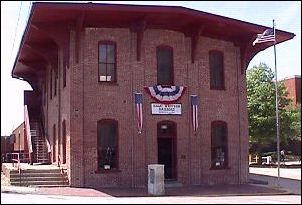
Abraham Lincoln’s farewell to Springfield

Abraham Lincoln’s farewell to Springfield

Abraham Lincoln’s farewell to Springfield

A favorite Lincoln biographer of mine is Carl Sandburg. In 1926, he published a two-volume work, Abraham Lincoln, The Prairie Years, and then in 1939, he published a four-volume work, Abraham Lincoln, The War Years. This latter work won Sandburg the Pulitzer Prize for History in 1940.

Although fellow historians have pointed out that Sandburg did a poor job citing his sources, his readers find his biography “exhaustively researched, and magnificently illuminating.” One reviewer called the six volumes, “The best written biography of Lincoln ever.”

One reviewer cautioned though, “It is a dense read; don’t be in a hurry. You won’t be able to plow through it quickly anyway. It is slow food.”

In the final chapters of The Prairie Years, Sandburg covers in quick succession the grim details that Lincoln faced between November 6, 1860, the day his 180 electoral votes won him the election, and March 4, 1861, the day Chief Justice Roger Taney administered the oath of office to Lincoln.

During those four months as President-elect, seven Southern states—South Carolina, Mississippi, Florida, Alabama, Georgia, Louisiana, and Texas—seceded from the Union, because he opposed the extension of slavery into the western territories, and because he considered slavery immoral, wrong.

The first sentence in Sandburg’s chapter “The House Dividing,” he writes, “Lincoln’s election was a signal.” On February 8, 1861, the seceding Southern pro-slavery states formed their own provisional government, the Confederate States of America, with President, Congress, and Courts.

Alas, people now spoke of war less as a possibility, and more as a surety, imminent, and inevitable.

No less hurtful was the hate-mail. Sandburg writes, “In the day’s mail [in Springfield], for Lincoln came letters cursing him for an ape and a baboon who had brought the country evil. He was a buffoon and monster; an idiot; they prayed he would be flogged, burned, hanged, tortured.”

Lincoln spoke little of his plans, except to advise those in Washington that, “they must stand for no further spread of slavery. ‘On that point hold firm, as with a chain of steel,’ he counseled, and warned, ‘The tug has to come, & better now, than any time hereafter.’”

In the last chapter of The Prairie Years, entitled “I Bid You an Affectionate Farewell,” Sandburg describes Lincoln’s final days in Springfield. First, he visited his step-mother, Sarah Bush Lincoln.

“They held hands and talked. They talked without holding hands. Each looked into eyes thrust back in deep sockets. She was all of a mother to him. He was her boy more than any born to her. He gave her a photograph of her boy, a hungry picture of him standing, and wanting, wanting.”

People noticed a change in Lincoln. “He is letting his whiskers grow,” men were saying in January.

Then, Sandburg writes, “Between seven and twelve o’clock on the night of February 6, there came to the Lincoln home several hundred ‘ladies and gentlemen.’ It was the Lincolns’ good-bye house party. The President-elect stood near the front door shaking hands, and nearby was Bob, and Mrs. Lincoln.”

On February 10, “he and Billy Herndon sat in their office for a long talk about their 16 years as law partners.” Lincoln had stuck with Herndon, even though the partner had a powerful thirst for alcohol.

Then, it was the day. Sandburg writes,

“A cold drizzle of rain was falling February 11 when Lincoln and his party of 15 were to leave Springfield on the eight o’clock at the Great Western Railway station. He spoke slowly.

‘My friends—No one, not in my situation, can appreciate my feeling of sadness at this parting. To this place, and the kindness of these people I owe every thing. Here I have lived a quarter of a century, and have passed from a young to an old man.

‘I now leave, not knowing when, or whether ever I may return, with a task before me greater than that which rested upon Washington. Without the assistance of that Divine Being, who ever attended him, I cannot succeed. With that assistance I cannot fail.’”

At Lincoln’s inauguration on the steps of the Capitol’s east front, he said, “In your hands, my dissatisfied fellow-countrymen, and not in mine, is the momentous issue of civil war. The Government will not assail you. You can have no conflict without being yourselves the aggressors.

“You have no oath registered in heaven to destroy the Government, while I shall have the most solemn one to ‘preserve, protect, and defend it.’ I am loath to close. We are not enemies, but friends.”

A month later, on April 12, a Civil War began when Southern forces bombed the Union’s Fort Sumter, near Charleston, South Carolina, forcing its surrender. Lincoln called up Union troops, as four more states seceded: Virginia, Arkansas, Tennessee, and North Carolina.

Sandburg recognized that no President ever faced as dire a situation as did Lincoln, and he knew that Lincoln never returned alive to his beloved home town of Springfield, Illinois. Lincoln’s body though was returned there for burial after his assassination four years later, on April 15, 1865.

Alex Haley and Roots

Alex Haley and Roots

Alex Haley and Roots

Roots, the television miniseries, aired over eight nights, from Sunday, January 23, through Sunday, January 30, in 1977, forty-five years ago. It proved wildly successful, despite ABC executives’ fears about showing white men kidnapping, buying, selling, and whipping black men, and women.

It made television history though. Some 30 million people watched it every night, although I missed the episodes, something I now regret, because I was busy studying in college.

Based loosely upon Alex Haley’s book of the same name that he published the year before, the miniseries followed the lives of four generations of enslaved African-Americans late in the eighteenth and into the nineteenth centuries.

There was Kunta Kinte, a teenaged boy who was kidnapped in Gambia, Africa, and transported across the Atlantic on a brutal, smelly slave ship to Annapolis, Maryland; Kunta Kinte’s daughter Kizzy; Kizzy’s son, Chicken George; and Chicken George’s son, Tom Harvey.

The cast included dozens of well-known black actors and actresses: LeVar Burton, as Kunta Kinte, later young Toby; Louis Gossett, Jr., as Fiddler; Leslie Uggams, as Kizzy; Ben Vereen, as Chicken George Moore; and Cicely Tyson, as Binta. Even O. J. Simpson starred as an African, Kadi Touray.

Among the white cast members were: Lorne Greene, of Bonanza; Vic Morrow, of Combat; Edward Asner, of The Mary Tyler Moore Show; Lynda Day George, of Mission: Impossible; Chuck Connors, of The Rifleman; Ralph Waite, of The Waltons; and Robert Reed, of The Brady Bunch.

As for the book, Haley devoted twelve years of steady work before completing Roots: The Saga of a Family. The most difficult part—Kunta Kinte’s ordeal when handcuffed to a board on a slave ship—Haley wrote nights, when at sea, on a freighter.

The book sold millions, and made Haley rich and famous.

Yet, it is still a question today, as it was in 1976, “Where in a library or a bookstore would you find Roots, in fiction or non-fiction?” I would lean toward fiction, in that Roots resembles James Michener’s novels: for example, The Source, Hawaii, Texas, Alaska, and Tales of the South Pacific.

Like Michener, Haley created memorable characters, placed them in a certain time and place, and recorded what he believed they said and did.

A writer named Michael Patrick Hearn wrote a lead essay last month in The New York Times Book Review, and in he described his relationship with Alex Haley, when both were at Hamilton College in Clinton, New York, in the late 1960’s, Hearn as a student, and Haley as his instructor.

Hearn says that at some point during the writing, “Haley’s ‘nonfiction’ book became a novel, though both author and publisher insisted that it was the unadulterated truth.” Haley was convinced that in Kunta Kinte, he had found his African ancestor, albeit back several generations.

Hearn though is more matter-of-fact. He writes, “Haley was not a scholar. He was not a genealogist. He was not even a novelist. What he was was a professional journalist always on the lookout for a good story. And he never found a better one than that of his own family history.”

Hearn quips, “Haley was not a historian, but he made history.” In 1977, Pulitzer Prize officials awarded him a “special award and citation” for journalism.

After his fabulous success, Haley was drug into court twice in 1978, on charges of plagiarism.

Margaret Walker Alexander, director of black studies at Jackson State College in Mississippi, brought a case against Haley, arguing that there existed “similarities between Roots and her novel Jubilee, that re-counted the life of her great-grandmother from 1835, into the Reconstruction era.”

Judge Marvin Frankel disagreed. On September 21, 1978, he issued “a 15-page opinion,” and said, that “no actionable similarities exist between the works.”

Then, on December 14, 1978, Haley agreed to a settlement, after a six-week trial, with Harold Courlander, a prodigious author who had written and published in 1967 a similar novel, The African.

Courlander’s novel tells of, “a slave’s capture in Africa, his horrific experience as cargo on a ship, and his struggle to hold on to his native culture in a harsh new world.”

Courlander’s suit alleged that, “Without ‘The African,’ ‘Roots’ would have been a very different and less successful novel.” A literary expert testified that, “The evidence of copying from ‘The African’ in both the novel and the television dramatization of ‘Roots’ is clear and irrefutable.”

Haley insisted that, “he did not plagiarize, but he admitted that some sections of ‘Roots’ appeared to have originally appeared in ‘The African.’” The settlement Haley paid was for a reported $650,000.

Despite the two trials’ negative publicity, Haley’s Roots “described the brutalities that one race inflicted on another.” Alex Haley passed away on February 10, 1992, at the age of seventy.

Insurrection on the Capitol: January 6, 2021

Insurrection on the Capitol: January 6, 2021

Insurrection on the Capitol: January 6, 2021

January 6, 2021

Donald Trump lost the 2020 election on Nov. 3, 2020. Although some 74.2 million voters voted for him, 81.2 voted for Biden, a difference of over 7.0 million. Then, Biden won 306 electoral votes to Trump’s 232. Despite those facts, Donald Trump vowed he would never concede.

Instead of acting as a gracious political contender who had lost an election, he acted otherwise.

Trump claimed that the election was stolen, that ineligible voters had mailed in ballots. He rallied his supporters with, “Stop the Steal!” and “This election was rigged!” He tried to throw out the votes and overturn the results, even begging an election official in Georgia to “find him the votes.”

Yet, Attorney General William Barr and officials in each of the 50 states found no evidence to support Trump’s claims. Attorney’s who brought to court accusations of voter fraud or of possible irregularities failed to produce a scintilla of evidence to support the allegations.

On Wednesday, Jan. 6, 2021, a joint session of Congress met to count electoral votes that would verify President-elect Joe Biden’s victory. At the same time, Donald Trump spoke at a “Save America” rally on the Ellipse, the park south of the White House, west of the Capitol.

Thousands arrived to hear the President speak, to cheer him on, to nod in agreement to his baseless claims that he had won the election, and to insist that Congress overturn the 2020 election and give it to Trump. Near noon, he began his speech.

“We won in a landslide. This was a landslide. They said it’s not American to challenge the election. This is the most corrupt election in the history, maybe of the world.” “This is not just a matter of domestic politics. This is a matter of national security.”

“With your help over the last four years, we built the greatest political movement in the history of our country, and nobody ever challenges that.” “We must stop the steal, and then we must ensure that such outrageous election fraud never happens again, can never be allowed to happen again.”

“Together, we will drain the Washington swamp, and we will clean up the corruption on our nation’s capital.” “And we fight. We fight. And if you don’t fight, you’re not going to have a country anymore.”

Near his closing, he said, “So we’re going to, we’re going to walk down Pennsylvania Avenue. I love Pennsylvania Avenue. And we’re going to the Capitol, and we’re going to try and give.”

Yet, he did not walk beside the crowd. Instead, he rode back to the White House, where he turned on a television and watched as the crowd of thousands—by then an angry mob—stormed into the Capitol, shouting “Hang Mike Pence!” This was an insurrection and a direct attack on democracy.

Because of that mob’s attack on the Capitol, five people lost their lives.

A Capitol Police officer shot and killed Ashli Babbitt, as she climbed through a broken window. Roseanne Boyland was crushed to death by her fellow rioters. A rioter named Kevin Greeson suffered a heart attack and died, and a rioter named Benjamin Philips suffered a stroke, and he also died.

Also, the rioters overpowered and beat a Capitol Police officer named Brian Sicknick, who suffered a severe gash to his head. Carried away to receive medical care, he nonetheless suffered two strokes the next day, and at the age of 42, he passed away, the most tragic outcome of this provoked melee.

People in a crowd will do and say things that they would hesitate to do or say when alone.

Days later, after the riot, the House impeached Donald Trump for “incitement of insurrection.” On Saturday, Feb. 13, 2021, the Senate voted 57 to 43 to convict Donald Trump, less than the two-thirds needed to convict, but by then he was no longer President.

Mitch McConnell spoke for 20 minutes to his fellow Senators on Saturday after the vote and said, “Former President Trump’s actions that preceded the riot were a disgraceful dereliction of duty.”

“The riot was unsurprising given the lies that Trump had fed to his supporters about the election being stolen.” He was “practically and morally responsible” for the insurrection.

“This was an intensifying crescendo of conspiracy theories orchestrated by an outgoing president who seemed determined to either overturn the voters’ decision or else torch our institutions on the way out.” This vote “does not condone anything that happened.”

Democracy is not a right. It is tenuous, here today and gone tomorrow. It demands protection, and the voters’ allegiance, plus a willingness to respect and obey laws, and to step aside when voters insist.

Yet, certain officials—those who thirst for power and then work to grip it forever once they have it—rely upon timeless tricks. For example, they can declare a national emergency, discard an election’s results, shove aside their opponents, and proclaim themselves all powerful.

May it not ever happen in America anytime soon.

Stars

Stars

Stars

The ancient Greeks pointed to as many as 88 constellations spread across a night sky, and then they pinned names to them that they took from their religion of stories and myths. They wanted to see order in a night sky, because it seemed chaotic, a jumble, pinpoints of light splashed helter-skelter.

The ancient Greeks gave mythological names to the zodiac’s 12 signs. They include: Aries, Taurus, Gemini, Cancer, Leo, Virgo, Libra, Scorpius, Sagittarius, Capricornus, Aquarius and Pisces.

The ancient Greeks saw a bull in a certain constellation and called it Taurus, their word for a bull. In Sagittarius, they saw an archer, in Aquarius a water bearer, and in Pisces a fish.

Their word “cosmos” meant “order,” because they wanted to believe that the gods who lived on Mount Olympus had set the world in order, in a harmonious mix of stars, earth, moon, and planets.

The one constellation I can identify without much effort is Ursa Major, “the greater or larger Bear,” or the Big Dipper, in the northern sky.

Last time in these pages, I talked about Ralph Waldo Emerson’s fruit trees, and that the wise men, who came from the east to Judea, came bearing expensive gifts, three minerals, and yet today we give three types of foods—fruits, nuts, and sweets—to our children on Christmas Day.

Emerson mentioned the stars in his first book, “Nature.” He wrote,

“But if a man would be alone, let him look at the stars. Seen in the streets of cities, how great they are! If the stars should appear one night in a thousand years, how would men believe and adore; and preserve for many generations the remembrance of the city of God which had been shown!

“The stars awaken a certain reverence, because though always present, they are inaccessible.”

Emerson’s strange friend, Henry David Thoreau mentioned a star in the final paragraph of the final chapter of his most well-read book, “Walden.” A series of cryptic words, almost poetry, he wrote.

“The light which puts out our eyes is darkness to us. Only that day dawns to which we are awake. There is more day to dawn. The sun is but a morning star.”

Founders of the International Dark Sky Places Program came together 20 years ago in 2001, and began to name certain locations across Earth, as Dark Sky Parks, where people can stare up at the stars without much interference from light pollution emanating from a nearby urban area.

Last June, officials certified that Mesa Verde National Park in extreme southwest Colorado was an International Dark Sky Park. The closest cities, Cortez and Durango, are 25 miles and fifty miles away, respectively, from the park.

A month later, in mid-July, I visited Mesa Verde for the first time. My spouse and I stayed at the Far View Lodge, a solitary hotel and restaurant, stuck high on a mesa, at 8,000 feet elevation. I was most anxious to see the stars, but it was overcast and it rained, almost an unheard-of event on that mesa.

Perhaps next time, if I visit that area, I will see the stars. I am now receiving emails from the Far View Lodge, telling me, “Bookings for 2022 are now open!”

When I read Tony Hillerman’s crime novels set in the Four Corners area, his characters will try to describe the awesome spectacle when they look up and see the stars for the first time at that high elevation. “Always present, but inaccessible.” Others would say, almost indescribable.

A travel journalist named Stephanie Vermillion recently mentioned in “Outside” magazine a new program at Mesa Verde. Now that the national park has a Dark Sky Place certification, rangers there, who belong to a Native American tribe, present stargazing programs to curious tourists.

But they point to a constellation and prefer to say its Native American name, not its Greek name. The hunter Orion is known as Wintermaker, “a figure that signals that cold weather is on the horizon.”

Park ranger and Laguna Pueblo member T. J. Atsye, said, “If you look up, you have this whole immense universe. The sky is alive, and the cosmos is another aspect of the park. They hold meaning for contemporary indigenous people, just like they did for our ancestors.”

This week we celebrate Christmas, a time when families gather to give gifts, to eat a Christmas meal, to enjoy time with smiling children and grandchildren, to sing carols, and to remember the Christmas story as the gospel writers told it.

The three wise men from the east saw a single star, and they followed it to their destination in Judea, but, one wonders, “How?” The gospel writers fail to tell us, only that the star guided the three wise men. Their eyes were on that star, but in their hands they each clutched an expensive gift.

Have a very Merry Christmas.

Fruits

Fruits

Fruits

In 1905, the USDA published a bulletin: Nomenclature of the Apple: A Catalog, that listed 17,000 names. After removing the duplicate names, it still listed 14,000 different varieties of the apple.

Between Captain John Smith in Jamestown, Virginia, in 1607, and the beginning of the 20th century, American settlers planted thousands of fruit trees, and produced thousands of varieties. Horticulturists now consider those three centuries the Golden Age of pomology, the science of fruit-bearing trees.

The most famous of the early planters was John Chapman, aka Johnny Appleseed. “By the 1830’s, he owned a string of apple-tree nurseries across Pennsylvania, Ohio, and Indiana.”

Most fruit that we eat comes from trees first cultivated in Europe and Asia, and carried to America.

As for native American fruit trees, they include: the Juneberry, the Red Mulberry, persimmon, may haw, wild cherry, and pawpaw. Also, the few plum and crabapple trees native to America produce a tart fruit, good only for making preserves.

Sixty years before the USDA published its bulletin, a young and enthusiastic pomologist named Andrew Jackson Downing wrote a most interesting book, first published in 1847, The Fruits and Fruit Trees of America: The Culture, Propagation, and Management.

An enthusiastic lover of fruit trees, Downing is almost lyrical when he writes: “It is the most perfect union of the useful and the beautiful that the earth knows: trees full of soft foliage; blossoms fresh with spring beauty; and fruit, rich, bloom-dusted, melting, and luscious.”

“I heartily desire that every man should cultivate an orchard, or at least a tree of good fruit.”

Downing points out that each generation of living men and women possess fruit trees because of the countless hours of work that previous generations undertook and completed. For decades, they each tested by trial and error, and then grafted, cultivated, and pruned their fruit trees.

He then declares that there are two tendencies within every fruit tree, “a tendency to improve, but a stronger tendency to return to a natural or wild state.” It is men and women’s duty to fight off a fruit tree’s tendency to return to that wild, more primitive, albeit natural state.

He writes, “If the arts of cultivation were abandoned for only a few years, all the annual varieties in our gardens would disappear and be replaced by a few original wild forms,” and, “In the midst of thorns and sloes, Man the Gardener arises and forces nature to yield to his art.”

Downing connects “culture” back to its original meaning, “a piece of tilled land, or to cultivate,” before it became known as “intellectual training and refinement.” Indeed, the word “culture” has its roots in agriculture and arboriculture, “the grafting and pruning and training,” of human beings.

A current-day biographer of Ralph Waldo Emerson, Robert D. Richardson, Jr., said of Downing’s book, that “it is proof that one person can change things. No orchard keeper can be a believer in fate.”

Ralph Waldo Emerson—writer, thinker, essayist, and poet extraordinaire—read Downing’s book when first published, and took to heart Downing’s call to plant fruit trees. He first planted grape vines, and then over a hundred trees in the acres beside his house in Concord, Massachusetts.

He planted thirty apple trees, a dozen quince trees, plus plenty of plum, peach, and pear trees.

Richardson says that Emerson’s trees died long ago, and that today most of those acres, “have run wild. Only a few steps from the house the land is densely overgrown, abandoned, and impenetrable.”

That stronger tendency to return to a natural or wild state superseded that weaker tendency to improve. At least that is what happened on Emerson’s soil.

For those who like to catch and digest trivia, Concord grapes were named after Emerson’s town, but not due to Emerson’s efforts, but due to Ephraim Bull’s, the town’s fire chief, who “planted and evaluated 22,000 seedlings before he found his perfect grape,” a well-documented effort on his part.

Certain people find the time to take on substantial tasks that result in profound achievements.

For centuries, at Christmas time, adults have presented to their children— after they have sang carols and acted out the nativity scene in a Christmas program—a Christmas sack, filled with unshelled peanuts, almonds, cashews, and pecans; an apple or an orange; and a candy cane or two and chocolates.

Sweets, nuts, and fruit, the better things that men and women who work with and through nature, can and will create. The three wise men came from the east bearing gifts of gold, frankincense, and myrrh, but children today receive that “union of the useful and the beautiful,” fruit from a tree.

The French writer Voltaire, in his fictional novel Candide, tells of a tireless old man who explains to Candide, “I only worry about the fruits of the garden which I cultivate off to be sold. I and my children cultivate them; and our labor preserves us from three great evils: weariness, vice, and want.”

Candide commented, “I know that we must cultivate our garden.” And our orchard too.