
By William H. Benson
The Parallel Lives
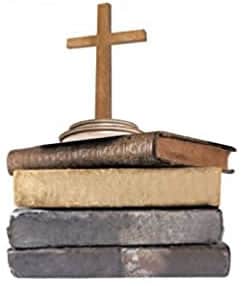
Of The NOBLE AMERICAN RELIGIOUS THINKERS AND BELIEVERS:
Roger Williams VS. Cotton Mathers

NEW ARTICLES
Bill Russell and Retirement
Bill Russell and Retirement
Three weeks ago, on July 31, 2022, the former Boston Celtics’ imposing center, Bill Russell, passed away, at age eighty-eight. Over thirteen seasons at Boston, from 1957 to 1969, he collected a total of eleven championship rings, a record never since eclipsed or matched.
When he retired in 1969, he moved to Mercer Island, in Seattle, Washington, and it was there he passed away. For fifty-three years, he enjoyed a well-deserved retirement in the cool Pacific Northwest, although he coached seven seasons in the NBA in the 70s and 80s.
Thirty years ago, today, on August 18, 1992, Larry Bird, another Boston Celtic great, announced his retirement from the NBA.
Michael Jordan, spectacular shooting guard for the Chicago Bulls, retired three times from the NBA. After ten years with the Bulls, he quit before the start of the 1993-1994 season, to play for, of all things, a Minor League baseball team.
Then, in March of 1995, he returned to lead the Bulls to three more NBA championships.
In 1998, Jordan retired a second time from the Bulls, but then in 2001, at age 38, he returned to the NBA, playing for the Washington Wizards for two seasons, before retiring for good in 2003.
Last week, on August 11, Tom Brady, Tampa Bay Buccaneers’ premier quarterback, announced that “he would take a break during training and miss two pre-season games.” Last February, he announced his retirement from the NFL, but then a month later, he thought otherwise and tweeted, “I’m coming back for my 23rd season in Tampa. Unfinished business.”
Like Bill Russell, Tom Brady achieved fame and fortune in Boston, winning six Super Bowls for the New England Patriots, over twenty seasons. For the past two seasons, 2020 and 2021, he has played for the Tampa Bay Buccaneers. At 45, he must be the oldest player in the NFL.
Forty-one-year-old Serena Williams announced last week that she is stepping away from tennis, saying, “I’ve been reluctant to admit that I have to move on from playing tennis. Maybe the best word to describe what I’m up to is evolution. I’m evolving away from tennis, toward other things.”
Age catches up with all players, even the superstars, because their bodies cannot perform at the extreme level required to win. Some retire. Some are let go. Some evolve.
One day the boxing champion Sugar Ray Leonard saw floaters in an eye. A doctor diagnosed a detached retina. Sugar Ray cancelled his next fight, had the surgery to repair the retina on May 9, 1982, and on November 9, 1982, announced his permanent retirement from boxing.
Politicians, on the other hand, have a longer runway for their careers than do athletes. Voters and elections force politicians into retirement, or they are termed out and per law cannot run again.
For example, in the presidential election of 1980, Ronald Reagan defeated Jimmy Carter, who, with his wife Rosalyn, returned to their home in Plains, Georgia, where for forty-two years, they have lived a quiet and long retirement.
Born August 18, 1927, Rosalynn Carter turns 95 this year, and Jimmy will turn 98 on October 1.
Bill Clinton served two terms, eight years, as President, and because he could not run a third time, he and Hillary purchased a home north of New York City, at Chappaqua, New York, where they have lived for the past twenty-two years. Clinton marks his seventy-sixth birthday this week, on August 19.
George W. Bush also served two terms, and then he and Laura returned to their home in Texas, where they have lived for fourteen years.
Barack Obama also served two terms, and for the past six years, he and Michelle divide their time between a mansion at Martha’s Vineyard, in Massachusetts, and a home in Washington D.C.
Donald Trump left the White House in January 2021, and returned to his homes, one in New York City and another at Mar-a-Lago in Florida.
One point of all this is that the winners in life—athletes, politicians, or even business owners—can slip anytime, and find themselves outside the game, watching from the stands, while others play the game that they once loved to play. The sword of Damocles hangs over all the stars.
Another point is that retirement can last a long time, often far longer than a person’s working career. For Bill Russell, fifty-three years. For Jimmy Carter, forty-three years.
Yet, some never step aside. Warren Buffett is ninety-one years old, and his business partner, Charlie Munger is ninety-eight years old. Neither are in a hurry to let others assume their positions.
After President Harry Truman fired General Douglas MacArthur during the Korean War, Congress invited the general to speak. He closed his speech to the joint session with an old Army ballad. “Old soldiers never die, they just fade away.” Some do not retire. Some evolve. Some just fade away.
NATIONAL RELIGIOUS LEADERS
NATIONAL RELIGIOUS LEADERSNATIONAL RELIGIOUS LEADERS by William H. Benson June 22, 2000 Those religious leaders from America's past who achieve notoriety on a national scale are not always well treated and accepted. It is a sobering footnote in our nation's...
FREEDOM OF THE PRESS
FREEDOM OF THE PRESSFREEDOM OF THE PRESS by William H. Benson June 7, 2000 Wednesday of this week, June 7th, is Freedom of the Press Day. Originally designated by the Inter-American Press Association, it is not a widely celebrated day, but the Founding...
DINOSAURS
DINOSAURS DINOSAURS by William H. Benson May 25, 2000 Human intelligence is naturally fascinated by prehistoric life, especially the dinosaurs, and a child will tell you why. "They're big, fierce, and extinct." Dinomania peaked in 1993 with the movie...
BOOKS
BOOKSBOOKS by William H. Benson May 10, 2000 We need the stimulus of differing opinions and opposing ideas. Human beings are mortal; they die, but the ideas and thoughts that they can conceive and propose can then live forever. Certain ideas that...
WILLIAM SHAKESPEARE
WILLIAM SHAKESPEAREWILLIAM SHAKESPEARE by William H. Benson April 26, 2000 Because William Shakespeare was baptized on April 26, 1564, historians hypothesize that he was probably born on either April 22 or 23. But they definitely know that he died exactly...
FLAGS
FLAGSFLAGS by William H. Benson April 13, 2000 Last week the two major news items continued to puzzle. Elian Gonzalez's father arrived on Thursday in Miami demanding his son's return to Cuba with him. And then, the Confederate flag is still popping in the wind...
Older Posts
ELECTIONS
ELECTIONSELECTIONS by William H. Benson March 30, 2000 Vladimir Putin is Russia's newest President, officially elected last Sunday. He has been the acting President since last December 31st when Boris Yeltsin had had enough of the job and resigned and appointed...
INTELLIGENCE AND SOCIAL CLASS
INTELLIGENCE AND SOCIAL CLASSINTELLIGENCE AND SOCIAL CLASS by William H. Benson March 16, 2000 Recently, I came across The Bell Curve, a 1994 book by Richard Herrnstein and Charles Murray, in which they argued most forcefully that intelligence is the...
LINDBERGH & CHILDREN
LINDBERGH & CHILDRENLINDBERGH & CHILDREN by William H. Benson March 2, 2000 The newborn are helpless, innocent, without the physical, emotional, or psychological arsenal needed to play the adult games; so, humankind concluded ages ago that protecting the...
THE PRESIDENT
THE PRESIDENTTHE PRESIDENT by William H. Benson February 24, 2000 George Washington's successful revolution against King George in 1776 eradicated the British crown and the trappings of royalty from the colonies, but in their place the Founding Fathers...
THE BEATLES
THE BEATLESTHE BEATLES by William H. Benson February 10, 2000 In early February of 1964 I was in the fourth grade. One evening I was sitting in the chair at Don's Barbershop getting my hair cut and watching television when I heard Walter Cronkite announce that...
SYSTEMS
SYSTEMSSYSTEMS by William H. Benson January 27, 2000 All parts of a system must work for the life form/organization/machine to function, to thrive, to win. Building a tried-and-true winning system is not easy. It is the part of the system ignored or forgotten...

One of University of Northern Colorado’s 2020 Honored Alumni
William H. Benson
Local has provided scholarships for history students for 15 years
A Sterling resident is among five alumni selected to be recognized this year by the University of Northern Colorado. Bill Benson is one of college’s 2020 Honored Alumni.
Each year UNC honors alumni in recognition for their outstanding contributions to the college, their profession and their community. This year’s honorees were to be recognized at an awards ceremony on March 27, but due to the COVID-19 outbreak that event has been cancelled. Instead UNC will recognize the honorees in the fall during homecoming Oct. 10 and 11……
Newspaper Columns

The Duodecimal System
For centuries, the ancient Romans calculated sums with their clunky numerals: I, V, X, L, C, D, and M; or one, five, ten, 50, 100, 500, and 1,000. They knew nothing better.

The Thirteenth Amendment
On Jan. 1, 1863, President Abraham Lincoln signed the Emancipation Proclamation, and by it, he declared that “all persons held as slaves” within the rebellious states “are and henceforward shall be free.” Lincoln’s Proclamation freed some 3.1 million slaves within the Confederacy.

The Fourteenth Amendment
After Congress and enough states ratified the thirteenth amendment that terminated slavery, Congress passed the Civil Rights Act of 1866. This law declared that “all people born in the United States are entitled to be citizens, without regard to race, color, or previous condition of slavery or involuntary servitude.” The Act equated birth to citizenship.

The New-York Packet and the Constitution
Jill Lepore, the Harvard historian, published her newest book a month ago, These Truths: A History of the United States. In a short introduction, she describes in detail the Oct. 30, 1787 edition of a semi-weekly newspaper, The New-York Packet.
Mr. Benson’s writings on the U.S. Constitution are a great addition to the South Platte Sentinel. Its inspiring to see the history of the highest laws of this country passed on to others.
– Richard Hogan
Mr. Benson, I cannot thank you enough for this scholarship. As a first-generation college student, the prospect of finding a way to afford college is a very daunting one. Thanks to your generous donation, my dream of attending UNC and continuing my success here is far more achievable
– Cedric Sage Nixon
Donec bibendum tortor non vestibulum dapibus. Cras id tempor risus. Curabitur eu dui pellentesque, pharetra purus viverra.
– Extra Times
FUTURE BOOKS
- Thomas Paine vs. George Whitefield
- Ralph Waldo Emerson vs. Joseph Smith
- William James vs. Mary Baker Eddy
- Mark Twain vs. Billy Graham
- Henry Louis Mencken vs. Jim Bakker
