
By William H. Benson
The Parallel Lives
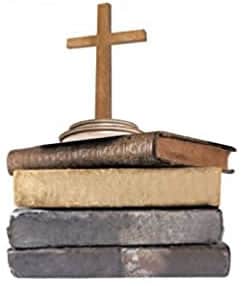
Of The NOBLE AMERICAN RELIGIOUS THINKERS AND BELIEVERS:
Roger Williams VS. Cotton Mathers

NEW ARTICLES

IN RETROSPECT: Pestilence
IN RETROSPECT: Pestilence
On June 26, 1284, officials in a German town called Hamelin hired a musician to rid the town of its rats. The “rat-catcher’s magical flute” hypnotized the rats that followed the piper out of Hamelin’s gates and into the Weser River, where they all drowned.
Although the story is based upon verifiable historical facts, it has since passed into folklore, as a fairy tale once told by the Brothers Grimm. One can only wish for as simple a solution as a magic flute to drown and destroy all forms of pestilence.
For example, the wheat stem sawfly severely reduced yields in this year’s winter wheat crop.
Long a threat to spring wheat production in the northern plains of North and South Dakota, and Montana, “it has now emerged as a significant pest of winter wheat as well,” in southeastern Wyoming, Nebraska’s Panhandle, and also, since 2010, in northeastern Colorado.
The female sawfly, “wasplike in appearance, with a shiny black body with three yellow bands around her abdomen,” lays 30 to 50 eggs” inside a wheat stem. The larvae then crawl down the stem towards soil level, where it cuts a notch in the stem. The upper stem then breaks off just before harvest.
Various forms of insect infestations have plagued the western states since the first settlers arrived.
Brigham Young arrived in the Great Salt Lake area on July 24, 1847. He and his fellow Mormons were determined to build farms there, but the crickets, actually katydids, most impressed them.
“The ground seems alive with very large black crickets crawling around the grass and bushes,” said one farmer. Brigham Young said, “Mammoth crickets abound in the borders of the Valley.”
Early the next spring they plowed the soil and planted seeds, hopeful of a good crop. A farmer said, “wheat, corn, beans, and peas are all up and looking grand, and grass is 6 inches high.”
Then, in mid-May, a swarm of the dreaded crickets attacked the tender young green plants.
One of Young’s wives said, “the crickets came by millions, sweeping everything before them. They first attacked a patch of beans, and in twenty minutes, there was not a vestige of them to be seen. They next swept over the peas. We went out with a brush to drive them out, but they were too strong for us.”
Horrified, the Mormons tried to combat this army of invaders with noise, mallets, fire, and water. One technique they tried was for two guys to pull a rope back and forth across the tops of the grain to knock the climbing crickets off the stem, before they reached the heads and devoured the grain kernels.
Nothing seemed to work though, because of the crickets’ vast numbers. Then, on June 9, they witnessed, what they later called, a miracle, when seagulls arrived and began consuming the crickets.
In a letter to Brigham Young, his fellow farmers wrote, “The sea gulls have come in large flocks from the lake and sweep the crickets as they go.” The Mormons claim that those gulls saved the Mormons’ crop that season.
Utah’s state bird is now the California gull, and a monument to that gull stands in front of the Salt Lake Assembly Hall on Temple Square, in Salt Lake City, Utah.
Another insect invasion occurred, but this time on the Great Plains. Called the Locust Plague of 1874, it began on July 20, when a swarm of the Rocky Mountain locusts — migratory and destructive grasshoppers — fled east, from the mountains onto the plains, in a frantic search for food.
The swarm soon stretched from Canada and the Dakotas in the north, to as far south as Texas. Residents throughout the Dakotas, Nebraska, Kansas, eastern Colorado, Minnesota, Iowa, Oklahoma and Missouri all witnessed the locusts’ destructive talent.
An editor of a Wichita newspaper wrote,
“They came upon us in great numbers, in untold millions, in clouds upon clouds, until their fluttering wings looked like a sweeping snowstorm in the heavens, until their dark bodies covered everything green upon the earth.
“In a few hours many fields that had hung thick with long ears of golden maize were stripped of their value and left only a forest of bare yellow stalks that in their nakedness mocked the farmer.”
A New York Times reporter, in Kansas, said, “The air is literally alive with them. They beat against the houses, swarm in at the windows, covering the passing trains. They work as if sent to destroy.”
Bad news soon turned good. The next spring, “a late snowstorm and a hard frost killed most of the immature insects, trillions of them, allowing farmers time to replant their crops.” As the years passed, the Rocky Mountain locust thinned, disappeared, and went extinct. It was last seen in 1902.
Of pestilence, the poets write, “The locust has no king, just noise and hard language.” “He who desires, but acts not, breeds pestilence.” I say, find that magic flute, and pay the piper.
STEPHEN FOSTER & JEFFERSON DAVIS
STEPHEN FOSTER & JEFFERSON DAVISSTEPHEN FOSTER & JEFFERSON DAVIS by William H. Benson January 13, 2000 Thursday of this week, the thirteenth, is noted as Stephen Foster Memorial Day. Composer and lyricist, he died on that day in 1864 at...
THE GHOST DANCE
THE GHOST DANCETHE GHOST DANCE by William H. Benson December 30, 1999 Fifty years ago anthropologists believed that the number of Native Americans living in North America, north of the Rio Grande, in 1492 was somewhere between one and three million. In recent...
EBENEZER SCROOGE
EBENEZER SCROOGEEBENEZER SCROOGE by William H. Benson December 16, 1999 "You fear the world too much," a woman tells Ebenezer Scrooge. "All your other hopes have merged into the hope of being beyond the chance of its sordid reproach." And so he had poured...
THE CHRISTMAS PARTY
THE CHRISTMAS PARTYTHE CHRISTMAS PARTY by William H. Benson December 2, 1999 The annual Christmas party season has arrived, a ritual as interwoven into the Christmas fabric as is singing "Silent Night". The "party" predominates in some people's lives. ...
TOM SUTHERLAND
TOM SUTHERLANDTOM SUTHERLAND by William H. Benson November 18, 1999 "'The eyes. The eyes. Cover the eyes!'" And immediately one of them produced a regular blindfold and tied it around my head. Another young man then produced what turned out to be, when...
TY COBB
TY COBBTY COBB by William H. Benson November 4, 1999 Thirty men were named to the All Century Team. Lou Gehrig was named Player of the Century beating out both Babe Ruth and Ted Williams, but it was Pete Rose who received the longest ovation on Sunday...
Older Posts
O. J. SIMPSON
O. J. SIMPSONO. J. SIMPSON by William H. Benson October 7, 1999 The evidence all pointed to him. The LAPD found drops of Simpson's blood at the murder scene. A stocking cap with hairs matching his was found next to Ron and Nicole's dead bodies. One of...
RONALD REAGAN
RONALD REAGANRONALD REAGAN by William H. Benson October 21, 1999 Ronald Reagan's enemies called him the Teflon President--slick, without substance. Walter Cronkite said that of all the Presidents he knew, the most knowledgeable by far was Jimmy Carter who...
THE SALEM WITCH TRIALS
THE SALEM WITCH TRIALSTHE SALEM WITCH TRIALS by William H. Benson September 23, 1999 Dave Barry, the syndicated columnist, in last week's column volunteered a rather dreary opinion of the recent and wildly successful movie--"The Blair Witch Project". He...
HAYMARKET SQUARE AFFAIR
HAYMARKET SQUARE AFFAIRHAYMARKET SQUARE AFFAIR by William H. Benson September 9, 1999 By May of 1886 conditions in Chicago were tense and volatile. The previous winter had been extremely cold, and thousands were without work. The bread lines were long, and the...
JULIUS CAESAR
JULIUS CAESARJULIUS CAESAR by William H. Benson August 26, 1999 Born in 100 B.C., Julius Caesar was by training a politician and an orator (second only to Cicero). But he understood that to achieve the kind of immense power he wanted, he needed military fame. ...
THE GREAT WAR
THE GREAT WARTHE GREAT WAR by William H. Benson August 12, 1999 It was 1914, and the guns of August exploded that year, sending shock waves that were heard around the world. The assassination of the Archduke Franz Ferdinand, heir to the throne of the...

One of University of Northern Colorado’s 2020 Honored Alumni
William H. Benson
Local has provided scholarships for history students for 15 years
A Sterling resident is among five alumni selected to be recognized this year by the University of Northern Colorado. Bill Benson is one of college’s 2020 Honored Alumni.
Each year UNC honors alumni in recognition for their outstanding contributions to the college, their profession and their community. This year’s honorees were to be recognized at an awards ceremony on March 27, but due to the COVID-19 outbreak that event has been cancelled. Instead UNC will recognize the honorees in the fall during homecoming Oct. 10 and 11……
Newspaper Columns

The Duodecimal System
For centuries, the ancient Romans calculated sums with their clunky numerals: I, V, X, L, C, D, and M; or one, five, ten, 50, 100, 500, and 1,000. They knew nothing better.

The Thirteenth Amendment
On Jan. 1, 1863, President Abraham Lincoln signed the Emancipation Proclamation, and by it, he declared that “all persons held as slaves” within the rebellious states “are and henceforward shall be free.” Lincoln’s Proclamation freed some 3.1 million slaves within the Confederacy.

The Fourteenth Amendment
After Congress and enough states ratified the thirteenth amendment that terminated slavery, Congress passed the Civil Rights Act of 1866. This law declared that “all people born in the United States are entitled to be citizens, without regard to race, color, or previous condition of slavery or involuntary servitude.” The Act equated birth to citizenship.

The New-York Packet and the Constitution
Jill Lepore, the Harvard historian, published her newest book a month ago, These Truths: A History of the United States. In a short introduction, she describes in detail the Oct. 30, 1787 edition of a semi-weekly newspaper, The New-York Packet.
Mr. Benson’s writings on the U.S. Constitution are a great addition to the South Platte Sentinel. Its inspiring to see the history of the highest laws of this country passed on to others.
– Richard Hogan
Mr. Benson, I cannot thank you enough for this scholarship. As a first-generation college student, the prospect of finding a way to afford college is a very daunting one. Thanks to your generous donation, my dream of attending UNC and continuing my success here is far more achievable
– Cedric Sage Nixon
Donec bibendum tortor non vestibulum dapibus. Cras id tempor risus. Curabitur eu dui pellentesque, pharetra purus viverra.
– Extra Times
FUTURE BOOKS
- Thomas Paine vs. George Whitefield
- Ralph Waldo Emerson vs. Joseph Smith
- William James vs. Mary Baker Eddy
- Mark Twain vs. Billy Graham
- Henry Louis Mencken vs. Jim Bakker
